
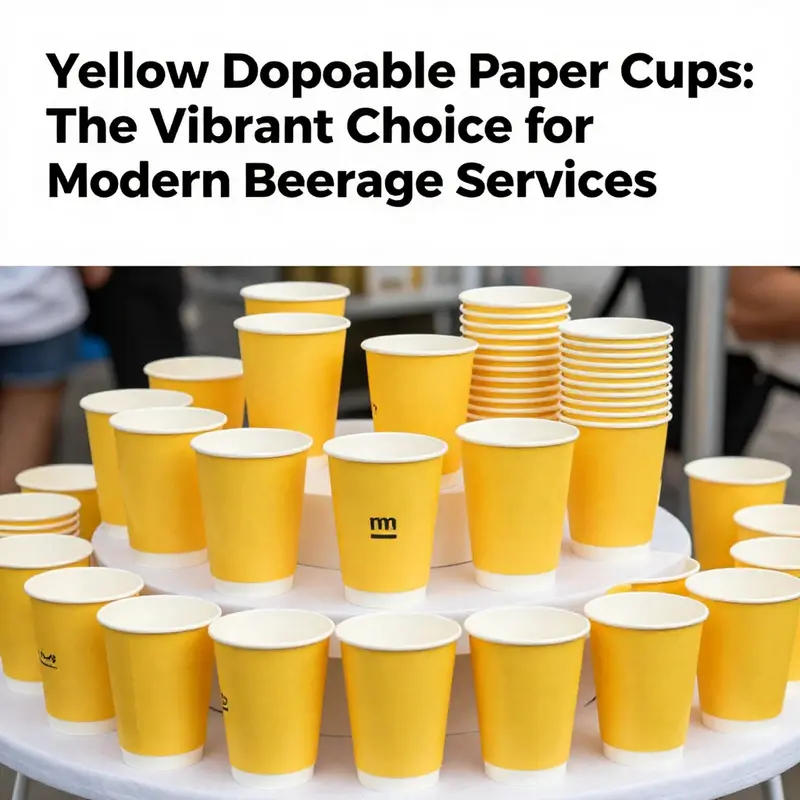
Yellow disposable paper cups are becoming increasingly popular in various sectors, offering a practical and visually appealing solution for serving beverages. Their bright color not only enhances presentation but also aligns with the growing consumer demand for eco-friendly options. Throughout this piece, we will explore the market trends and supply chain dynamics that influence the availability of yellow disposable paper cups, delve into their environmental impact and sustainability features, examine consumer preferences and the practical applications of these cups, and shed light on the regulatory standards and compliance requirements governing their use. This comprehensive overview aims to equip beverage industry stakeholders, such as bubble tea shops, restaurants, food trucks, catering services, event planners, and corporate procurement teams, with valuable insights into employing yellow disposable paper cups effectively.
Yellow Cups, Bold Narratives: Trends, Sustainability, and Supply Chains in Disposable Paper Cups
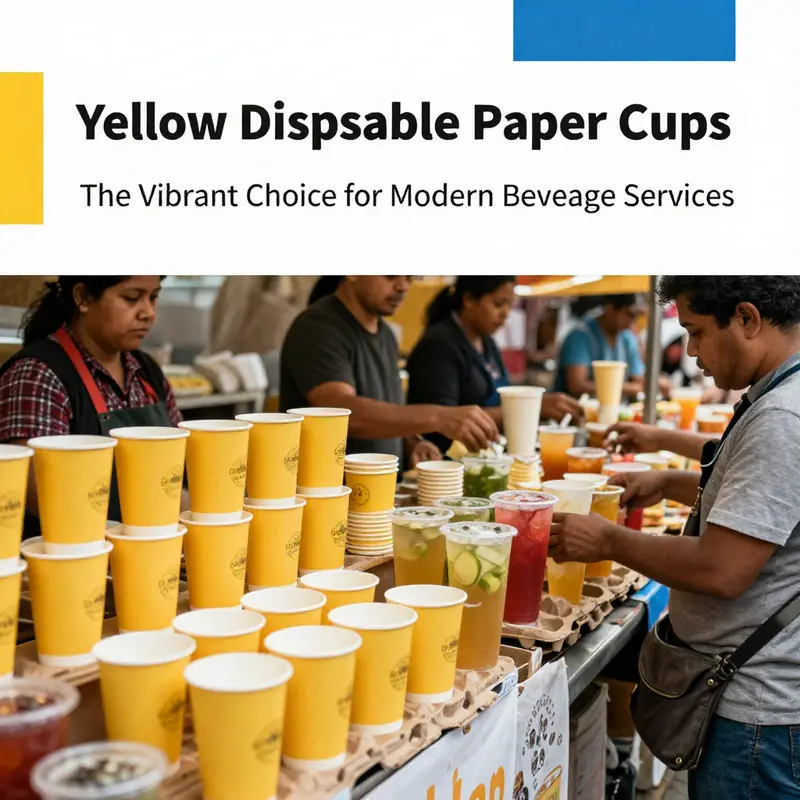
Yellow disposable paper cups have emerged from the realm of simple utilitarian objects into a vivid, brand-reinforcing element of the modern foodservice landscape. Their color is more than a visual cue; it is a design language that helps venues anchor a guest’s memory of a moment, whether it’s a brisk morning coffee run, a family-style event, or a bustling counter in a quick-service setting. In analyzing the market, it becomes clear that these cups are not just patterned pulp with a coating; they are the intersection where aesthetic appeal, sustainability commitments, and intricate logistics converge. The broader disposable paper cup market, valued at roughly eight and a half billion U.S. dollars in 2025, is projected to grow at a rate just north of nine percent annually through 2033. This signals a durable appetite for single-use packaging in the foodservice world, but with a decisive tilt toward choices that offer branding leverage and responsible production. In premium and branded applications, color—especially yellow—plays a pivotal role in enhancing visibility and shaping the customer experience in coffee shops, cafés, and fast-fire outlets that aim to communicate warmth, optimism, and approachability at a glance. The color becomes a tactile extension of a brand’s personality, reinforcing consistency across in-store experiences, takeout, and social sharing, where a familiar shade can become a visual shorthand for quality and care. Yet the story of yellow disposable paper cups is not only about what happens at the beverage station. It is equally about where and how these cups are made, how their materials are sourced, and how producers balance design with environmental responsibility in a complex global marketplace.\n\nSustainability trends are no longer a footnote in any packaging chapter; they are the operating system. In key production hubs, especially in China—the largest center for disposable paper cup manufacturing—suppliers are increasingly adopting practices that align with stricter environmental expectations and consumer demand for greener packaging. The adoption of FSC-certified paper is steadily expanding, ensuring that the core material comes from responsibly managed forests rather than distant, less traceable sources. Biodegradable coatings, including PLA-based systems, are being explored to reduce end-of-life impact while maintaining the necessary barrier properties to protect beverages. These coatings are paired with energy-efficient production methods that reduce power consumption and emissions across the manufacturing line. The net effect is a product category that can meet both regulatory requirements and the evolving social contract around waste, while still delivering the performance needed for hot and cold drinks. The sustainability narrative around yellow cups is particularly important because color and environmental signals often travel together in consumer perception. A bright yellow cup can communicate cheer and energy, but it must also carry the assurance that the packaging has been produced with a lower environmental footprint. Brands and foodservice operators are increasingly seeking suppliers who can offer transparency around material sourcing, coating technology, and the lifecycle impact of each cup. The result is a more educated marketplace where design decisions and environmental credentials are weighed in tandem, not as separate considerations.\n\nFrom a supply chain perspective, the geography of production matters as much as the color itself. China’s dominance in the global disposable paper cup supply chain is underpinned by densely integrated industrial clusters in provinces such as Hubei, Hunan, and Sichuan. These regions provide end-to-end capability—from pulp sourcing and paper production to printing, coating, and final assembly. The vertical integration present in these clusters translates into tangible advantages for international buyers: clearer visibility across the production timeline, tighter quality control, and the ability to scale quickly to meet spikes in demand. Lead times for international orders typically range from about two weeks to a little over a month, depending on order size, customization, and the supplier’s fabrication capacity. In practice, producers can sustain monthly outputs in the tens of millions when market demand aligns with capacity, enabling large distributors and beverage brands to fulfill promotional campaigns or seasonal demand without compromising on speed or consistency. This scalability, paired with the ability to customize—whether through color shade, print motifs, or branding elements—gives yellow cups a unique value proposition. The same production ecosystems that enable quick turnaround and high-volume output also necessitate careful procurement management. Raw material costs, particularly for kraft paper, can fluctuate with global pulp markets and exchange rates. Labor costs, while relatively stable, are not immune to regional shifts, wage policy changes, or transport costs that ripple through the supply chain. The net effect is a dynamic pricing environment where lead times, bulk discounts, and MOQs (minimum order quantities) must be actively negotiated to optimize cost, inventory, and cash flow. In this ecosystem, the color and branding opportunities offered by yellow cups are the bridge between design intent and commercial viability; they justify the investment in robust supply chains that can deliver in both scale and speed.\n\nThe narrative of supply, however, is incomplete without acknowledging the challenges that accompany the ascent of any mass-produced consumer good. A particularly salient issue in this sector is the volatility of raw material costs, which can compress margins when paper pulp or kraft fibers swing unfavorably. Labor costs, too, can shift with regional dynamics or broader macroeconomic pressures, adding a layer of hedging and forecasting to procurement planning. Beyond price, the distribution network itself can be disrupted by global events, port bottlenecks, or regulatory changes that alter import duties and compliance requirements. Currency fluctuations can widen the gap between quoted prices and landed cost, forcing buyers to be more disciplined in negotiating terms, lead times, and payment schedules. In response, leading suppliers have moved toward more transparent pricing models, longer-term contracts, and flexible packaging solutions that allow customers to align color and branding with evolving demand without being locked into rigid, single-source arrangements. The strategic implication for brands and operators is clear: invest in partnerships that offer not only color and coating options but also risk-sharing arrangements, production visibility, and rapid reconfiguration capabilities in response to shifting consumer preferences or regulatory landscapes.\n\nColor is more than a cosmetic choice; it is a strategic asset when integrated with the production and distribution framework. Yellow cups, with their high visibility, support marketing and promotional campaigns by acting as a portable billboard wherever they are used. They convey a sense of warmth and energy that can elevate the perceived quality of a beverage, particularly in the afternoon lull or early morning rush. In the coffee-and-snack segment, yellow cups can complement branding messages that emphasize freshness, vibrancy, and a friendly, approachable experience. When embedded in a broader packaging strategy, these cups enable a multi-channel experience: in-store display, curbside pickup, and social media posts all benefit from a consistent color language. For operators who value branding consistency, color coordination across cup, sleeve, lid, and napkin sets can reinforce a memorable guest journey. The capacity to customize, including the possibility of printing logos, slogans, and decorative motifs at scale, makes yellow disposable paper cups a practical yet expressive component of a brand’s packaging toolkit. This combination of branding power and manufacturing practicality explains the sustained demand and price resilience observed in the market, particularly for buyers who view packaging as an extension of the hospitality experience rather than a disposable afterthought.\n\nAs the market expands, the dialogue between sustainability and branding grows more intricate. Suppliers are increasingly able to offer credible options that satisfy both life-cycle considerations and the need for a visually distinctive cup that reinforces a brand’s identity. A notable pricing insight in this space highlights how cost efficiency can still be compatible with customization: when ordering large volumes—on the order of tens of thousands of pieces—some custom 50-millimeter diameter yellow paper cups can be priced in the low single digits per piece. While such figures are highly contingent on the specifics of the order, including coating choice, print complexity, and whether lids are included, they illustrate that scale can unlock pricing that makes color-driven branding a real possibility for a wide range of operators, from regional chains to independent venues. For hot beverages, the market also shows a shift toward higher-end options, such as single-wall cups designed for take-away use, where minimalist aesthetics align with high usability and clean disposal experiences. In this segment, manufacturers highlight advances in flexographic printing and other cost-efficient decoration methods that preserve a crisp color impression on a wax- or PLA-based coating while maintaining the integrity of the cup under heat and moisture.\n\nTo connect these trends with practical steps for readers who are considering yellow disposable paper cups for their businesses, a few guiding principles emerge. First, prioritize material provenance and coating chemistry as part of supplier selection. Consumers increasingly demand traceability, and brands cannot rely on a color alone to signal responsibility. Second, weigh the total cost of ownership, not just the upfront price. Lead times, quality consistency, and the ability to scale are essential, especially for operators planning campaigns or seasonal promotions. Third, leverage color strategically. Yellow can be used not only to attract attention but also to communicate a brand’s values—cheer, warmth, and approachability—if paired with a coherent packaging ecosystem. Finally, keep an eye on the broader regulatory and environmental landscape. As packaging standards evolve, the most successful operators will be those who pair color with credible sustainability claims, backed by third-party certifications and transparent supply chain data. In this context, the yellow cup becomes a conduit for storytelling as much as a vessel for beverages, weaving together aesthetics, ethics, and logistics into a single, coherent experience.\n\nFor readers seeking further context on how suppliers approach these intersections, this resource offers a practical exploration of theme-driven packaging and disposable tableware. It provides a direct view into how brands are aligning design choices with promotional needs, while also highlighting the importance of reliable delivery timelines and quality control in a competitive market. You can explore this resource here: custom takeaway packaging supplies—disposable tableware for theme party. The link offers a window into how suppliers present options that merge vivid color with customizable messaging, a combination that can be particularly potent for yellow cups used in events and venues seeking to reinforce a specific mood or brand statement.\n\nThe supply chain story also invites consideration of global sourcing dynamics and regional specialization. The clustered production model in central Chinese provinces fosters a modular approach to manufacturing, where paper stock, printing, and coating can be tuned to demand without breaking the rhythm of regular delivery schedules. Buyers who plan on large campaigns benefit from the predictability these ecosystems offer, especially when tied to flexible MOQs and scalable production facilities that can adjust to fluctuating demand. Conversely, buyers must remain vigilant about potential disruptions—be they raw material price shifts, labor market changes, or international trade conditions—that can translate into lead-time variances or price re-forecasting. Building resilience into procurement plans is thus as essential as investing in the branding power of yellow. This means establishing multi-sourcing strategies when feasible, negotiating favorable terms for long-term commitments, and maintaining buffer stock for peak periods. The goal is to ensure that the bright promise of yellow cups—visibility, warmth, and a positive guest experience—does not become shadowed by supply chain volatility.\n\nIn sum, yellow disposable paper cups sit at a fascinating junction of design, sustainability, and global logistics. They are not a single-use afterthought but a strategic asset that can reinforce brand identity while meeting evolving environmental expectations. They also underscore the reality that color, material science, and supply chain discipline must travel together to deliver value in a crowded, price-conscious marketplace. As brands continue to seek vivid, responsible packaging solutions, yellow cups are well positioned to serve as a focal point for creative merchandising that is economically viable, operationally reliable, and environmentally more transparent. The market signals a steady expansion, with a clear trajectory toward smarter coatings, traceable sourcing, and production models that emphasize both efficiency and ecology. In the hands of careful buyers and capable suppliers, yellow disposable paper cups become more than containers; they become ambassadors of a brand’s promise, one cup at a time.\n\nExternal reading: https://www.linkedin.com/pulse/exploring-dynamics-disposable-paper-cup-market-jiqyv/
Bright Cups, Green Ambitions: Navigating the Environmental Realities of Yellow Disposable Paper Cups
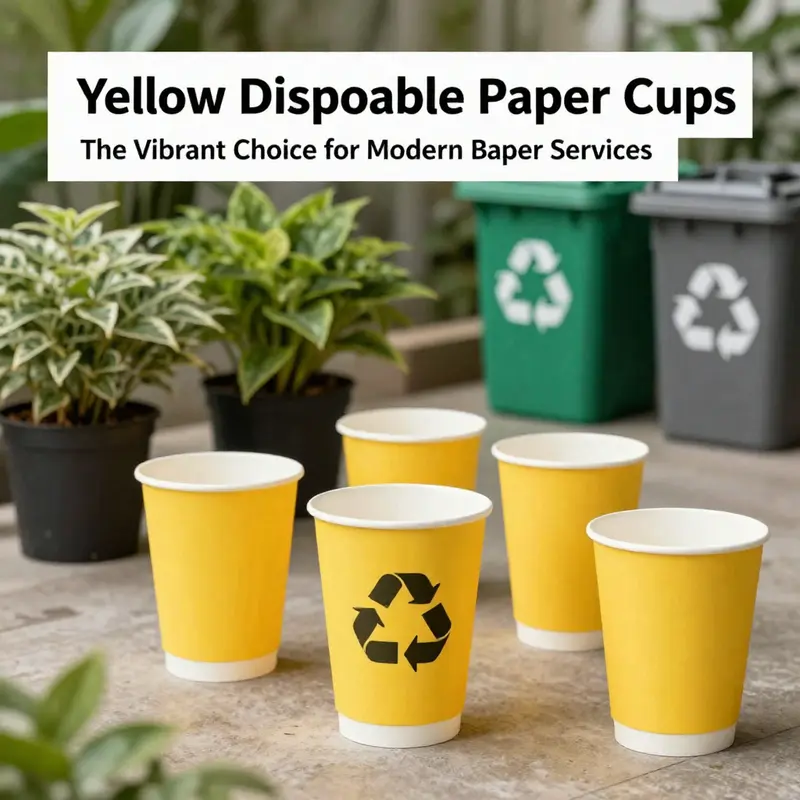
Yellow disposable paper cups captivate with their bright, inviting hue and practical convenience. They are designed to feel cheerful in a crowd, whether at a café counter, a conference lounge, or a brings-your-own-event. Yet behind that surface of everyday usefulness lies a dialogue about sustainability, infrastructure, and responsibility. This chapter follows that dialogue, tracing how materials, manufacturing choices, and disposal practices converge to shape the true environmental footprint of yellow disposable paper cups. It is a story about color and composition, about the way a modest single-use item can become a touchstone for broader questions of circularity, waste streams, and the capacities of our systems to separate useful function from environmental cost. In this context, the color is more than aesthetic; it signals a product family that aims to balance performance with responsibility, and it invites readers to examine how design decisions translate into downstream realities that either support or undermine a circular economy.
The heart of these cups lies in their material composition and the design choices that make them suitable for hot or cold beverages. Many yellow cups are crafted from paper supplied with a coating or lining that is intended to resist moisture and prevent leakage. The coating can range from traditional polymer-based laminates to more modern bioplastics derived from renewable resources. A notable trend has been the adoption of polylactic acid (PLA) linings, a bioplastic fashioned from plant-based feedstocks such as corn starch. PLA offers a route away from petroleum-based plastics, and in many contexts it yields a product that appears compostable under specific conditions. The inner lining thus becomes a crucial hinge between performance and environmental claims, mediating water resistance while raising questions about end-of-life options and certification. Alongside the lining, the outer paper stock can be treated with water-based inks and pigments to achieve the characteristic yellow tone. The non-toxic dyes used for bright hues are selected to minimize harmful residues, yet the interaction of color, coating, and inner laminate matters for both safety and compostability. The visual appeal of the yellow is not incidental; it is a deliberate branding and consumer-experience choice that must be weighed against the realities of disposal infrastructure. A well-designed cup also pays attention to tactile cues—embossed bases that add stability and a flat, smooth edge to improve handling—features that improve usability while remaining compatible with recycling and composting systems. In this way, the cup becomes a compact piece of a larger puzzle: a disposable item whose performance and afterlife are shaped as much by engineering as by aesthetics.
The environmental story of these cups cannot be told without turning to their coatings and laminates. PLA is often cited as a more sustainable alternative to conventional plastic linings because it is derived from renewable feedstocks and is marketed as compostable under controlled conditions. However, compostability is not universal; it depends on the availability of industrial composting facilities that can achieve the temperatures and residence times required for PLA to break down. The practical implication is that a PLA-lined cup can be environmentally favorable only if it is collected and processed in facilities that accept compostable packaging and if the facility actually reaches the necessary operating conditions. When such infrastructure is absent or overwhelmed by contamination, PLA may behave less like a closed-loop solution and more like a confusing misfit in mixed waste streams. This is why labeling, sorting, and consumer education are not merely ancillary details but essential components of sustainability programs. The inner PLA lamination, while improving moisture resistance, becomes a focal point for end-of-life decisions, because it can complicate recycling if the facility lacks the capacity to separate paper from plastic or fails to maintain appropriate temperatures and residence times during processing.
Beyond the chemistry, the design of yellow disposable cups often includes thoughtful details intended to optimize both function and environmental outcomes. Some variations feature embossed bases that enhance stability on crowded tabletops, reducing the risk of tipping and spillage at events and in high-traffic spaces. A flat, well-formed rim contributes to a more comfortable drinking experience and reduces the likelihood of awkward handling that could lead to leaks or dropped cups. These mechanical refinements may seem modest, but they influence the durability of the cup during use and the likelihood that the cup will be discarded promptly after a single serving rather than carried forward in a reuse mindset that these products generally discourage. The aesthetic aspect—how the color and print align with a brand’s message—also has a subtle environmental dimension. When a cup communicates quality and care, it can encourage responsible disposal behavior, because consumers are more likely to view such items as worthy of proper end-of-life treatment rather than as disposable clutter. The interplay of tactile design, color psychology, and end-of-life thinking illustrates how sustainability is not a single material choice but a package of decisions that includes manufacturing, labeling, and consumer engagement.
Disposal realities remain a central, sometimes stubborn, constraint on the environmental benefits of yellow disposable cups. The claim that a product is compostable or recyclable depends on more than the product itself; it depends on the surrounding waste system. If food residues remain on the cup, they can contaminate compost streams and undermine processing efficiency. Conversely, if cups are placed in recycling streams without proper separation or if the facility’s capabilities are insufficient to handle laminated papers, the cup can fail to contribute to recycling goals. These challenges underscore the need for clear, accurate labeling and for robust communication between producers, waste managers, and consumers. A growing body of research has highlighted that some single-use packaging might contain trace elements or other contaminants of concern when assessed under certain conditions. A 2025 study noted that potential toxic elements and radiological impacts warrant rigorous quality control and responsible manufacturing practices to minimize risk and ensure that disposal pathways remain viable. While this finding does not condemn all compostable or paper-based cups, it does emphasize that environmental performance is conditional and requires ongoing vigilance across the supply chain. In practice, this means that the sustainable promise of yellow cups hinges on a combination of material choices, manufacturing controls, and, crucially, the availability of certified composting facilities or well-managed recycling streams that can accommodate laminated papers.
To translate these considerations into everyday practice, the end-of-life pathway matters as much as the initial design. When a facility can sort and process compostable packaging efficiently, PLA-lined cups have a better chance of contributing to a closed loop. But if the system treats them like ordinary waste, the environmental gains may be eroded. This is not a call to abandon plant-based coatings or to reject yellow cups; rather, it is a call to align product design with the realities of local waste streams and to invest in infrastructure that supports proper disposal. Labels that clearly indicate compostability in industrial facilities, plus consumer guidance on where to drop off or how to prepare cups for composting, can help ensure that the cups find their intended fate. The circular economy is not a single technology or a single policy; it is a coordinated network of materials, processes, and behaviors that together determine whether a given cup becomes a resource or a problem.
In this light, industry standards and certifications matter. Organizations that certify compostable products provide criteria that help distinguish truly compostable packaging from products marketed as such without substantiation. Adherence to standards can reduce confusion at the consumer level and improve the reliability of composting streams. For businesses, certifications serve as a reliable signal when negotiating with suppliers, waste-management partners, and customers. When a yellow cup carries a verifiable certification, it communicates a shared commitment to responsible production and a feasible end-of-life option. This does not eliminate the need for proper disposal behavior, but it does reduce ambiguity and supports the broader transition toward sustainable packaging ecosystems. The practical takeaway is that color and form should be aligned with credible lifecycle considerations, rather than serving as a superficial marker of sustainability alone.
As markets evolve, opportunities for more responsible use of yellow disposable cups expand. Supply chains may explore alternative coatings that balance moisture resistance with compatible recycling or composting pathways. Innovations in barrier technologies and adhesive systems can enhance performance while simplifying separation at end-of-life. The role of brand and venue in steering disposal choices should not be underestimated; messages that encourage proper sorting and acceptance of cups in certified streams can drive meaningful improvements in recovery rates. At the same time, cost considerations remain a reality. Customization, bulk pricing, and fast delivery make these cups attractive for large events or high-traffic venues. The challenge for decision-makers is to weigh short-term convenience against long-term environmental costs and to negotiate arrangements that support both business needs and systemic sustainability.
One practical way to approach selection is to evaluate not only the cup’s material composition but also the procedural ecosystem around it. Are there certified composting facilities within a reasonable radius? Do the suppliers provide clear documentation about the coating, the lining, and the printing inks? Is there a credible end-of-life pathway that aligns with local regulations and recycling or composting capabilities? If the answers suggest a robust, traceable system, a yellow cup can be part of a responsibly managed package that supports waste reduction goals and informs consumers about their role in proper disposal. Conversely, if the answers reveal gaps in facility capacity or unclear labeling, buyers should seek alternatives or complementary strategies, such as encouraging takeaway programs that use reusable containers or investing in on-site disposal options that direct cups to appropriate streams. The goal is not to prescribe a single solution but to encourage a thoughtful alignment of product design, supply chain practices, and waste-management infrastructure that collectively strengthen environmental outcomes.
From a business and cultural perspective, the choice of yellow cups can be part of a broader sustainability narrative. Color can be a branding asset, signaling warmth, energy, and hospitality. When used responsibly, that color can accompany clear guidance on disposal and a visible commitment to environmental stewardship. The conversation around yellow disposable cups thus becomes a conversation about collaborative responsibility: producers refining materials and processes; suppliers fostering transparency and certification; waste managers ensuring infrastructure; and consumers embracing disposal practices that maximize the chance for resource recovery. In this sense, the cheerful yellow of the cup carries with it not just a mood but a responsibility that, when lived out across the lifecycle, contributes to a more sustainable way of serving beverages in public and private settings. The story is ongoing, evolving with science, policy, and market readiness, and it invites ongoing attention to how we design, use, and finally treat the packaging that comes with our everyday drinks.
For readers seeking a deeper dive into sustainable product standards and certification, credible sources provide a framework for what to look for in responsibly made packaging. These standards help translate bright color and convenient form into verifiable environmental performance. As the field progresses, the emphasis remains on aligning product attributes with end-of-life capabilities, ensuring that the cup’s journey from factory floor to composting facility contributes to reducing pollution and conserving resources. In this way, yellow disposable paper cups can continue to serve as practical, adaptable containers while becoming more consistently aligned with circular-economy principles. The key is a shared commitment to transparency, proper disposal, and ongoing improvement across the lifecycle of the product.
External resource: https://www.bpiweb.org/
Internal link: eco-friendly takeout boxes for food packaging
Bright Cups, Bright Choices: Reading Consumer Hearts and Real-World Uses of Yellow Disposable Paper Cups
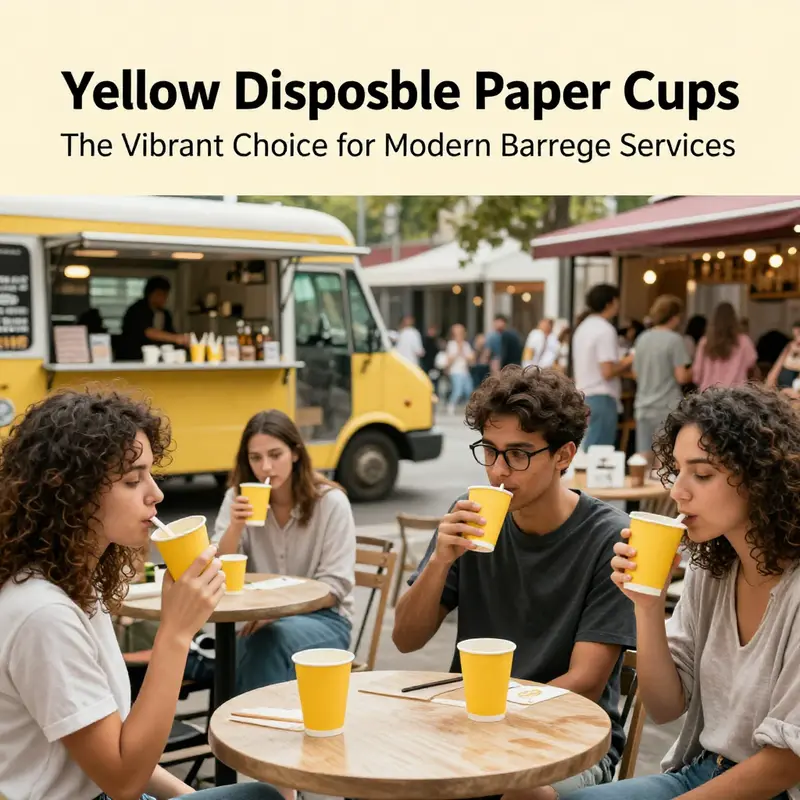
Yellow disposable paper cups are more than simple vessels for beverages; they are signals in fast-paced service environments. The bright color catches the eye in a crowded line, helping customers distinguish cup choices at a glance and nudging decisions toward speed, consistency, and warmth. Beyond aesthetics, yellow cups embody practical design choices: heat resistance, reliable lids, and a disposal path that aligns with local recycling or composting capabilities. In many venues, color becomes part of a brand language that communicates approachability and readiness to serve, while still respecting safety and sustainability standards.\n\nDesign and material choices matter as much as color. Modern yellow cups often use double-layer constructions to create an insulating air gap, reducing heat transfer and improving customer comfort. The choice of paperboard from responsibly sourced materials, along with BPA-free linings and non-toxic coatings, supports customer health and environmental goals. When suppliers pair color with responsible sourcing and end-of-life options, yellow becomes a visible signal of a broader commitment.\n\nMarket dynamics reflect a blend of performance, branding, and sustainability. Consumers expect cups that perform well in hot and cold applications, resist leaks and sweating, and can be disposed of responsibly. Color helps manufacturers stand out on shelves and at the point of purchase, but the value proposition rests on safety, recyclability or compostability, and transparent supply chains. Regional variations in recycling infrastructure mean buyers must evaluate end-of-life options for their locale, balancing cost with environmental impact and brand integrity.\n\nFor event planners and operators, the practical use of yellow cups extends to size selection, counting on consistent fill lines, and minimizing waste through matched cup sizes to serving flows. The cheerful hue supports a positive mood at gatherings, while the durability and cleanliness of the cups reinforce trust with guests. In the broader context, yellow cups illustrate how color, form, and function converge to support efficient service, memorable branding, and responsible consumption.
Bright Rules: How Regulatory Standards Shape Yellow Disposable Paper Cups
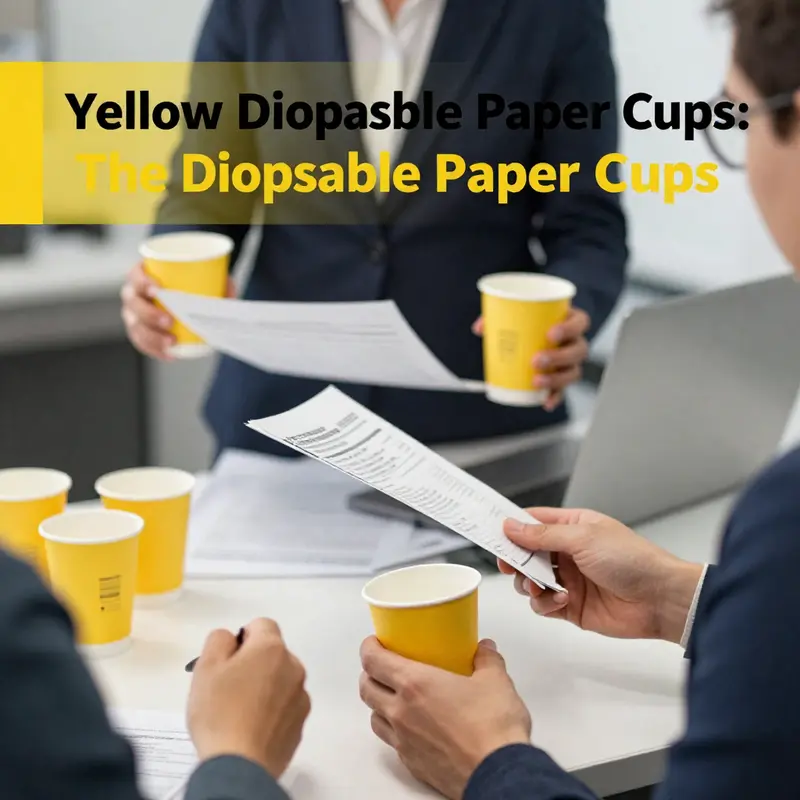
A color can attract the eye, but sound regulation keeps it from becoming a risk. In the world of yellow disposable paper cups, brightness is matched not just by vibrancy but by a framework of rules that protect consumers, guide manufacturers, and influence the choices of buyers from cafés to conference centers. The regulatory landscape surrounding food-contact materials sets a high bar for safety, material composition, and environmental responsibility. It is a landscape that rewards diligence and transparency, because the same cups that carry a sunny hue also carry the potential to affect health, waste streams, and brand integrity. So the story of yellow disposable paper cups is not only about color and convenience; it is about the careful alignment of formulation, production, testing, and disclosure with established standards that ensure the cups perform their job—holding beverages—without unintended consequence. The journey through these rules reveals how color, coating, printing, and lid design must all harmonize with the expectations carved into food-safety laws and environmental norms.
At the core of regulatory attention is food-grade safety. Any cup destined to hold a beverage that will contact human mouths must comply with rules that govern materials intended for food contact. In the United States, the FDA is the primary authority ensuring that the paper, the coatings, and any barrier layers used in cups can do their job without leaching harmful substances. The FDA’s framework for food-contact materials focuses on ensuring that components coming into contact with food—whether paper, ink, adhesive, or a polymer coating—are appropriate for such contact, stable under normal use, and free from contaminants that could pose a risk to health. When a yellow cup is printed with a vivid color, the inks become part of that regulatory story. The inks must be non-toxic and approved for contact with food; the pigments used to achieve that sunshine shade must be compatible with the chosen coating system and not migrate into beverages. This is not merely a matter of aesthetics. It is about ensuring a safe hallway between the raw design concept and the consumer’s cup-hand experience.
The European Union presents a parallel, but sometimes more explicit, set of expectations through its own regulations on food-contact materials. The EU’s approach, like the U.S. framework, demands that the materials used for cups and lids meet criteria for safety, durability, and inertness in contact with a wide array of beverages. In practical terms, this means that the polyethylene or other moisture barriers used to resist leaks and grease must not contribute harmful substances or degrade under typical serving temperatures. It also means that if a cup is designed for hot drinks, the combination of cup, coating, and lid must withstand the heat without releasing substances into the liquid. The interplay of these standards guides what constitutes a compliant single-use cup and which design choices are permissible when the goal is to maintain taste, aroma, and color without compromising safety.
Material composition sits at the nexus of performance and compliance. Traditional yellow disposable paper cups are coated with a thin layer of polyethylene (PE). This coating acts as a moisture and grease barrier, preserving both the cup’s integrity and the beverage’s quality. The coating must be applied in a way that does not create unanticipated migration of substances into drinks. In many markets, this calls for a coating that is recognized as safe for contact with food, with clear documentation about its composition, thickness, and overall behavior under varying temperatures. As consumers demand more sustainable options, the conversation shifts toward alternatives to conventional PE coatings. Bioplastics and compostable or recyclable barrier layers are increasingly discussed as potential routes to reduce environmental impact while maintaining safety. When yellow cups are paired with lids, the lid material—often a recyclable polypropylene (PP)—must also be evaluated for compatibility and safety. Lids are not standalone safety features; their material and design influence the cup’s performance, especially for hot beverages where thermal expansion and pressure change can affect sealing and spill resistance.
Printed patterns and additives form another layer of regulatory scrutiny. The bright yellow color, the branding marks, and any decorative elements must be implemented with non-toxic inks and approved chemical additives. In the end, a color may be striking, but the regulatory question remains: will the ink or additive stay within safe limits during the cup’s useful life, including any foreseeable contact with liquids, steam, or heat? The printing process itself can introduce variables that regulators scrutinize: solvent choices, curing methods, and potential for residual solvents or impurities to migrate. For manufacturers, this means that the selection of inks, printing processes, and post-print finishing must align with safety standards that protect consumers across the entire supply chain.
Beyond safety, environmental compliance has tidal waves pushing toward traceability and recyclability. There is a growing expectation that materials used in disposable cups be traceable to their raw materials and that end-of-life outcomes be clarified in labeling and documentation. This traceability supports responsible sourcing, helps consumers make informed disposal choices, and assists recyclers in maintaining clean streams. The environmental conversation also intersects with regulatory momentum toward, or at least the encouragement of, compostability where feasible, or at minimum, recyclability. Different jurisdictions have varying degrees of emphasis on end-of-life outcomes, and manufacturers often navigate multiple sets of rules when positioning a yellow cup for global markets. It is here that a company’s ability to document material streams, production steps, and third-party verifications becomes a strategic asset, not just a compliance burden.
A notable historical benchmark in this space is China’s early national regulation on disposable cups, enacted in 2012. That regulation set benchmarks for raw materials and additives, signaling a global shift toward standardized expectations for single-use packaging. It highlighted the importance of a coherent framework that covers materials, adhesives, coatings, and inks, while also signaling a push toward accountability in the packaging supply chain. Although regulatory landscapes differ across countries, the overarching themes persist: ensure safety for food contact, confirm compatibility of all components, and promote environmental responsibility through clearer material identification and end-of-life pathways.
The practical impact of these standards on yellow disposable paper cups can be understood through the lens of design, testing, and documentation. Design choices—such as the thickness of the paper, the type and thickness of the barrier coating, and the fit of the lid—must be chosen with regulatory compatibility in mind. For hot beverages, the ability of a cup to resist heat without compromising barrier integrity or releasing substances becomes essential. For cold beverages, the focus shifts to moisture resistance and ink stability. In both cases, the packaging must perform predictably under typical handling conditions, including stacking, transport, and consumer use. The testing regimes that support conformity often involve evaluating chemical migration, heat resistance, mechanical strength, and compatibility with common beverage constituents. These tests, in turn, feed into the documentation that regulatory bodies require—certificates of compliance, declarations of conformity, and product dossiers that articulate the exact materials, coatings, inks, and adhesives used in each cup design.
The regulatory conversation is not limited to safety alone. It extends to the design of the entire packaging system, including lids and their compatibility with the cup. Snap-on or press-fit lids, frequently made from recyclable PP, must be assessed for dimensional compatibility, seal integrity, and safety. The aim is to prevent leaks, spills, and heat transfer that could pose consumer risks or degrade user experience. Here, regulatory guidance helps ensure that the combination of cup and lid does not introduce new hazards, such as unexpected pressure build-up or detachment during transport. The consequence of misalignment can be immediate: a compromised seal, a spill, or a hazard in a crowded setting. Hence, the regulatory framework encourages clear specifications and consistent manufacturing tolerances to minimize such risks.
Within this regulatory ecosystem, the role of credible suppliers becomes central. Buyers seeking compliant yellow cups often turn to suppliers who can demonstrate verifiable certifications, transparent material disclosures, and robust quality control processes. The supply chain must be able to provide evidence of conformity to applicable food-contact regulations, including any regional variations in standards. This is where documented traceability, batch-level testing, and third-party verification become indispensable. For buyers and operators, the implication is clear: align procurement with suppliers who prioritize safety, consistency, and environmental stewardship, and demand documentation that roofs the design in regulatory assurance. In the modern marketplace, such alignment is not optional but essential for risk management and brand trust. When a buyer requests a bulk order of yellow disposable cups, the assurance that the cups meet FDA, EU, or other relevant standards becomes a talking point that supports operational continuity and consumer confidence.
The stories that regulatory standards tell are also stories about responsibility. They remind manufacturers that color does not exist in isolation from safety. The same shade of yellow that communicates energy and optimism must coexist with predictable performance and safe materials. The interplay of design, chemistry, and policy shapes what is possible in retail environments, cafeterias, and event spaces. It explains why a seemingly simple product—yellow disposable paper cups—carries a weight of accountability that extends from the factory floor to the consumer’s kitchen and beyond to the waste stream. When compliance is built into each stage—from sourcing and formulation to production and labeling—it becomes a story of sustainability as well as safety. That is why many operators look not only at the price per cup or the speed of delivery but also at the provenance of materials, the clarity of safety documentation, and the end-of-life pathways that colorfully designed cups can support or complicate.
To connect this broader regulatory context with practical choices, consider the sourcing and procurement lens. Buyers increasingly seek partners who can articulate the full compliance narrative of their yellow cups. This includes material declarations, barrier makeup, printing inks, and the heat tolerance of any coatings. It also includes information about the recyclability or compostability of the finished product and any regional limitations on disposal. The ability to provide such information can influence supplier selection, price negotiations, and the speed with which a business can scale its packaging program for large events or chain operations. When a customer asks for bulk options, suppliers who can supply detailed compliance data and durable packaging designs gain a competitive edge. Meanwhile, the buyer who needs a single answer about whether a particular yellow cup meets all regulatory requirements will find that documentation is the most persuasive tool in the decision-making process.
For those seeking compliant takeaway packaging options that align with the regulatory expectations described above, a practical route is to explore suppliers who can share a comprehensive compliance dossier and offer packaging designed with heat and content safety in mind. A careful evaluation of a cup’s paper grade, coating type, ink system, and lid compatibility can reveal whether a given design is likely to pass muster in multiple jurisdictions. When such due diligence is performed, a yellow cup transcends its role as a simple beverage container. It becomes a responsible packaging choice that supports safe consumption, minimizes environmental impact, and reinforces consumer trust in the brands that use it. This is precisely why many operations invest in training their procurement teams to read material safety data sheets, traceability records, and conformity certificates as part of the standard purchasing process.
In this context, it is worth returning to the practical note that a single URL can be a gateway to broader, compliant options. For readers who want to explore compliant takeaway packaging options that also offer customization and theme-party versatility, there is a resource worth visiting. The link provides a pathway to a range of disposable tableware and packaging solutions that can be tailored for events while maintaining safety standards. It exemplifies how suppliers present clear compatibility with regulatory expectations, while also offering the design flexibility customers seek when choosing a bright, yellow cup for branding and atmosphere. This approach to supplier selection—combining safety credentials, material transparency, and customizable aesthetics—helps ensure a packaging program that is not only visually appealing but also robust from a compliance standpoint.
For readers who want to examine official guidance directly, the FDA’s Food Contact Materials page remains a cornerstone of regulatory understanding. It provides detailed information on what constitutes safe materials, how migration testing is conducted, and what kinds of documentation buyers and manufacturers should expect. Engaging with such official resources supports the practical governance of a yellow cup program and helps ensure that every batch of cups travels from production to consumer with confidence. As the industry continues to innovate, this alignment between regulatory clarity and product design will remain essential to maintaining high safety standards without compromising the vibrancy and usability that customers rightly expect from yellow disposable paper cups.
In sum, regulatory standards for yellow disposable paper cups weave safety, material science, and environmental stewardship into a single, ongoing conversation. The color is a symbol of consumer appeal, but the rules behind the color ensure that appeal does not come at the expense of health or sustainability. Cups must be designed and manufactured with a clear understanding of food-contact safety, the inertness of coatings and inks, the integrity of lids and seals, and the pathways for waste management. By embracing this integrated approach, producers can deliver cups that perform reliably, suppliers can demonstrate their compliance credentials with competence, and buyers can make informed, responsible choices that protect both people and the planet. The bright, cheerful moment of choosing a yellow cup becomes a moment of confidence—confidence that the color will not only delight at the point of service but will also respect safety, comply with standards, and align with a broader commitment to sustainable packaging.
External reference for further official guidance: FDA’s Food Contact Materials page provides detailed information about safety standards and compliance expectations for materials and coatings used in food-contact products. https://www.fda.gov/food/food-contact-materials
Internal citation for related supplier context: For readers seeking compliant takeaway packaging options with a theme-party orientation, consider exploring custom-takeaway-packaging-supplies-disposable-tableware-for-theme-party. This resource illustrates how packaging choices can be aligned with color, branding, and regulatory considerations all in one package, which is essential for events, cafes, and other settings where yellow cups might be used to create a memorable experience.
Final thoughts
In summary, yellow disposable paper cups have carved out a significant niche in the beverage service industry, appealing to both vendors and consumers alike. As we examined throughout each chapter, the market trends reflect a growing demand driven by eco-consciousness and aesthetic appeal. Understanding the environmental implications and sustainability practices associated with these cups is crucial for businesses looking to align themselves with modern consumer values. Furthermore, recognizing consumer preferences and the multitude of use cases for yellow disposable cups can enhance event planning and beverage service. Lastly, staying informed about regulatory standards ensures compliance, allowing businesses to operate confidently. As stakeholders in this vibrant market, embracing these insights can lead to robust service offerings and enhanced customer experiences.