
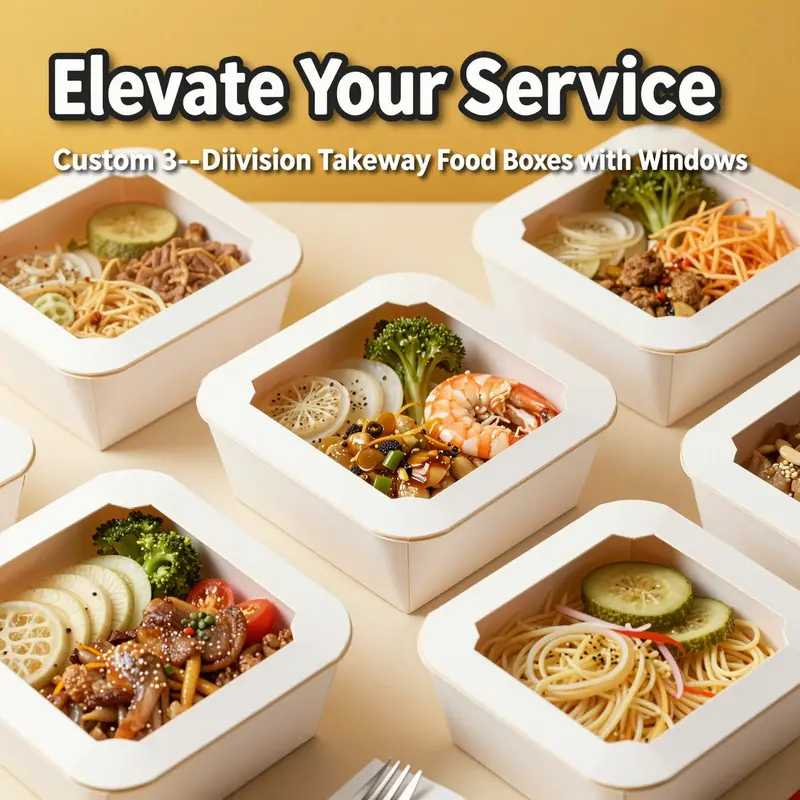
In today’s competitive market, the presentation and functionality of food packaging can significantly influence customer perception and purchasing decisions. The rise in demand for hygienic and visually appealing takeaway solutions has drawn attention to custom 3-division takeaway food boxes with windows. These innovative boxes are not just about aesthetics; they fulfill the needs of numerous businesses from bubble tea shops to catering services. Through careful consideration of the features, manufacturing insights, and strategic sourcing methods, this guide aims to provide you with a comprehensive understanding of these versatile takeaway boxes, ensuring you choose the best solutions for your business.
Windowed Precision: Designing the 3-Division Takeaway Box for Hygiene, Brand Equity, and Sustainable Service
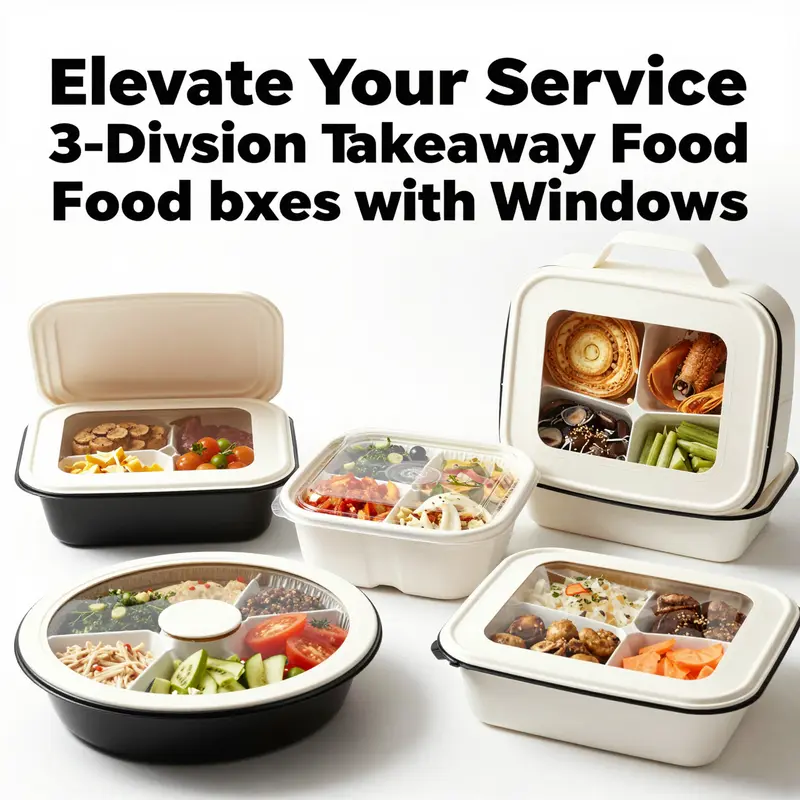
The demand for a takeaway box that can carry a complete meal in one container without compromising on hygiene, presentation, or sustainability has pushed designers and manufacturers to reimagine the three-compartment windowed box as more than just packaging. It is now a strategic touchpoint between kitchen craft and consumer perception. The three-compartment layout—the main course, a sides or starch, and a dedicated space for sauces or condiments—addresses a practical need: the ability to keep components separate during transport while delivering a visually compelling impression at the moment of purchase or delivery. A window integrated into the lid elevates this proposition by letting customers glimpse the meal before they bite, reinforcing perceptions of freshness and quality without the need to unwrap the box. In the modern foodservice landscape, where speed, hygiene, and environmental responsibility are non-negotiable, the windowed, tri-partite takeaway box has emerged as a durable, versatile, and brand-friendly solution that aligns operational efficiency with customer expectations.
The design begins with the multi-compartment concept, which is more than a simple subdivision. Each chamber serves a distinct purpose and protects the integrity of the contents. For operators, this separation reduces cross-contact of flavors and mitigates the risk of sogginess in sensitive components, such as sauces seeping into crusty sides or vegetables. The three compartments can be sized to fit a balanced meal—commonly a larger enclosure for the main protein or centerpiece, a mid-sized compartment for sides, and a smaller pocket for condiments or garnishes. The precise geometry matters. Panels must be shaped to maximize space utilization in delivery bags while preserving a compact footprint on shelves. A well-executed layout also supports portion consistency. When a kitchen scales recipes to a standard 300ml or 500ml cup or tray, the outer shell and inner dividers should work in concert to maintain uniform volumes and predictable performance across thousands of orders.
The integrated window changes the consumer’s relationship with the product at the first glance. A transparent film—often PET or a cellulose-based substitute—lets the customer assess color, texture, and doneness. This transparency, however, is not merely decorative. It creates a sense of honesty and trust, signaling that the contents are prepared with care and delivered in a state close to its appearance in the kitchen. The window must be carefully positioned to maximize visibility while maintaining structural integrity. It often sits in the lid or upper panel, with the sealing layer ensuring that the window does not compromise the box’s leak resistance or heat retention. The choice of window material is a balance between visibility, barrier properties, and sustainability. PET offers clarity and stiffness, but cellulose-based films can present compostability advantages. Each option nudges the product toward a different sustainability narrative, a key consideration for brands seeking to align packaging with environmental commitments while still meeting performance requirements in heat exposure and transport stress.
The materials used for these boxes determine not only their environmental footprint but also their operational resilience. Recyclable kraft paper remains a popular baseline because it signals a commitment to sustainability, can be produced at scale, and is compatible with a wide range of inks and laminates for branding. Compostable or biodegradable substrates, such as polylactic acid (PLA) films or bagasse (sugarcane fiber) composites, add a pathway to certified end-of-life outcomes. Each substrate has its tradeoffs. Kraft paper is resilient to handling and transport wear, but it may require additional coatings or barrier layers to resist moisture for certain foods. PLA, while compostable in industrial facilities, introduces considerations about home composting viability and supply chain infrastructure. Bagasse brings a rustic, natural aesthetic and a robust barrier, yet its supply can be tied to seasonal feedstock availability. The modern 3-compartment windowed box often concatenates multiple material streams into a packaging solution that can be recycled or composted, depending on regional capabilities and consumer behavior. This alignment with sustainability goals resonates with a growing base of restaurants, bakeries, cafes, and catering services that seek to reduce plastic consumption and transition toward circular packaging systems.
From a branding perspective, the box is more than a container; it is a canvas. In-house printing, whether through flexography or offset lithography, enables full-color branding directly on the box. A company’s logo, color palette, and design motifs can be integrated across surfaces, with inks engineered for food-contact safety and durability under heat and moisture. The printing process also invites creative strategies for consumer engagement. For instance, designers can exploit the three-compartment topology to tell a visual story about a meal—one pane for the main course art, a contrasting band for sides, and a subtle accent for the sauce compartment—creating a cohesive pack that reinforces brand identity at the moment of choice and receipt. On-site lamination and window sealing add the final layers of finish and protection. Lamination enhances gloss, scratch resistance, and moisture protection, while a well-executed seal around the window ensures a tight barrier against leaks and maintains a clean, professional appearance, even after transit.
Beyond aesthetics and branding, the box must endure the rigors of daily operations. The construction typically features a self-locking mechanism or a simple fold-and-lock design that supports quick assembly without tools. This is crucial in high-volume kitchens and busy takeaway chains where speed is essential. The closure must resist accidental opening during transport, while still offering a straightforward user experience for customers who may wish to reclose the box or reuse it for storage. It is a delicate balance: the packaging must be sturdy enough to protect hot or saucy foods, yet not so rigid that it becomes difficult to handle or dispose of. Some designs incorporate venting features or perforations to manage steam and moisture, reducing condensation that could otherwise degrade the appearance or integrity of the contents. The choice of seals, adhesives, and coatings matters here; manufacturers often test various lamination schemes and adhesive technologies to optimize leak resistance without compromising recyclability or compostability.
The manufacturing ecosystem that supports these sophisticated containers is concentrated in regions with established plastics processing, paper converting, and packaging technology capabilities. In the context of global sourcing, it is not enough to select a box based on appearance and price. Buyers increasingly seek direct relationships with manufacturers who can demonstrate scale, reliability, and traceability. A direct-manufacturer relationship reduces markup and yields greater transparency in material specifications, process controls, and test data. It also enables tighter feedback loops for customization, from initial prototyping through iterative design refinements. In regions with mature packaging industries, such as the southern and eastern coastal belts, suppliers offer end-to-end services—from concept development to molding, printing, lamination, and international shipping. This integrated approach is especially valuable for brands that intend to scale rapidly while maintaining consistent packaging performance across multiple markets.
Sustainability and regulatory compliance are now inseparable from packaging decisions. Certifications such as FSC for paper-based components and compostability certifications like OK Compost or TÜV Austria for compostable substrates provide third-party assurance that packaging aligns with environmental standards and consumer expectations. For product developers, it is essential to verify these claims directly with the supplier. This involves requesting certification documents, verifying the scope of certifications (which components are certified and under what conditions), and where possible, obtaining material test data that demonstrate performance under real-world conditions—heat exposure, moisture, mechanical stress, and transport scenarios. The goal is to deliver a packaging system that not only looks trusted but also delivers measurable outcomes in terms of waste reduction, recycling compatibility, and end-of-life options for customers.
The supply chain for these boxes benefits from high-capacity manufacturing hubs that can support rapid prototyping and large-scale production. In particular, regions with specialization in advanced thermoforming, eco-innovation, and green substrates provide advantages for brands pursuing sustainability without sacrificing performance. The manufacturing narrative emphasizes a cycle: design inspiration, material choice, process optimization, print integration, seal and window integrity, and final quality checks. For a buyer, the most effective path is a direct partnership with a factory that has a proven footprint, a capable team, and a robust quality-control culture. Such suppliers can accommodate a range of sizes and configurations, from compact 300ml top-entry boxes to larger formats, all while preserving the aesthetics and functional criteria that define the windowed three-compartment concept.
At the procurement level, the decision is not merely about selecting a container. It is about designing a packaging ecosystem that can scale with a brand’s product lineup. The three-compartment windowed box becomes a central piece of a broader strategy that links menu engineering, delivery logistics, and sustainability initiatives. For example, a brand might standardize on a particular box size for a core meal, with modular adjustments for side dishes or specialty items, ensuring consistency across channels and regions. The packaging then supports the brand’s storytelling about nutrition, portion control, and responsible sourcing. In practice, this translates into a supplier evaluation framework that emphasizes direct production capacity (a footprint greater than a threshold, a dedicated team, and a demonstrable track record in food-grade packaging), transparent sustainability claims supported by independent certifications, and a commitment to supply continuity that aligns with the brand’s service level expectations. The emphasis shifts from a single purchase decision to a strategic sourcing relationship that can adapt to shifts in consumer demand, regulatory changes, and evolving sustainability targets.
The consumer experience is at the heart of why this packaging concept endures. The window offers a glimpse into the dish that is about to be eaten, signaling quality and freshness. The separation of meals within the same container prevents flavors from colliding and textures from compromising one another. The box’s weight, balance, and ease of opening contribute to a sense of care in the overall dining experience. A well-designed lid and closure minimize spills, a critical concern for delivery services that must maintain order integrity from kitchen to doorstep or desk drawer. When the user finishes the meal, the packaging remains a reminder of the brand’s values, from its commitment to sustainability to its attention to culinary detail. A box that looks and acts as promised strengthens trust and fosters repeat orders. This link between tangible packaging performance and intangible brand equity is a cornerstone of modern packaging strategy, where a product’s first impression is as important as the meal itself.
The path to achieving this ideal is not without challenges. Heat management is one area of focus. Hot foods can stress the integrity of packaging, particularly in shared compartments where sauces may liquefy or containers may deform if the lid is forced to press against a hot surface. Design solutions include venting features, hinge reinforcements, and optimized wall thickness that provides thermal insulation without adding unnecessary bulk. Another challenge is moisture management. The barrier properties of the chosen materials must resist steam and condensation, preserving both appearance and functionality. This is where lamination choices and surface coatings play a vital role, offering a balance between barrier performance and recyclability. The window itself must withstand repeated opening and closing or remain securely sealed during transit without fogging or tearing. Clear, durable films that resist scratching and allow a true view of the food are essential, yet they must be compatible with the chosen substrate and printing inks. Finally, the end-of-life story matters. Consumers increasingly want packaging that can be easily recycled or composted. Clear labeling and straightforward separation of components help achieve that. The packaging must be designed with the end user in mind, not only the production line, to ensure harmony across use, disposal, and brand messaging.
In embracing the three-compartment windowed box, therefore, a brand is choosing more than a container. It is selecting a platform that communicates care, quality, and responsibility across the entire lifecycle of a meal. The box becomes a bridge between kitchen craft and consumer perception, a tangible artifact that speaks to the brand’s values as clearly as a menu description or a chef’s signature. And as more companies pursue eco-conscious packaging, the windowed, tri-compartment concept is likely to evolve with smarter materials, more efficient manufacturing processes, and more refined printing techniques that bring vivid branding into a box designed for reliability, clarity, and sustainability. The synergy between form, function, and fidelity to a brand promise is what makes this packaging concept enduring in a market that prizes speed, cleanliness, and ethical stewardship as much as it prizes taste.
For readers seeking a practical example of where this kind of packaging is headed in the online supplier ecosystem, consider a resource that highlights customization options, material specifications, and the capacity for direct-manufacturer engagement. The page outlines a 3-compartment takeaway box with a window and emphasizes the customization workflow—from initial design through prototyping, printing, and on-site finishing. It also stresses the value of selecting suppliers that can demonstrate verified factory footprints, robust sustainability certifications, and the ability to deliver at scale while maintaining consistent quality. This combination of features reflects the core principles discussed here: clear visibility of contents, disciplined separation of meal components, durable construction, and a strong alignment with environmental goals. The resource serves as a practical benchmark for brands as they evaluate partners who can translate these architectural ideas into reliable, market-ready packaging.
For deeper context on the eco-conscious and scalable dimensions of this packaging approach, readers can explore the following resource: eco-friendly-disposable-3-compartment-food-grade-packaging-box-for-fast-food-high-quality-takeout-boxes-for-fried-chicken-french-fries-packaging.
As a closing note, the evolution of the 3-division takeaway box with a window encapsulates a broader shift in food packaging: the fusion of practical delivery functionality with expressive branding, underpinned by a commitment to sustainability and consumer trust. It is not merely a box; it is a strategic interface between a kitchen’s craft and a diner’s experience, designed to perform under pressure, protect what matters, and tell a brand’s story in a single, elegantly simple gesture. The best iterations of this packaging achieve a balance that feels inevitable—an arrangement where three compartments, a transparent window, and a conscientious choice of materials work together to deliver meals that look as good as they taste, and that travel with a narrative of care from the moment they are packed to the moment they are enjoyed. In that balance lies the promise of packaging that does not merely contain food but enhances the entire moment of dining.
External resource for broader market context: https://www.alibaba.com/product-detail/3-Compartment-Takeaway-Food-Boxes-with_1600588423149.html
null
null
Sourcing Strategies for 3-Division Takeaway Boxes with Window Customization: From Guangdong Hubs to Global Demand

In the evolving landscape of foodservice packaging, the infrastructure that closes the loop between a plate of food and a satisfied customer sits in a single, well-designed box. For operators seeking to deliver balanced meals with visual appeal, a 3-division takeaway box with a window is more than a vessel; it is a brand touchpoint, a promise of hygiene and order, and a practical tool for ensuring that main course, side dish, and condiments arrive intact and appetizing. The sourcing strategy behind these boxes is a blend of engineering precision, sustainability stewardship, and meticulous supplier collaboration. When done well, it transforms a commodity item into a scalable capability that supports menu innovation, operational efficiency, and customer trust. The chapter that follows weaves together the practical threads of this strategy, drawing on the realities of manufacturing ecosystems in China and the evaluation criteria that matter most to large- and mid-sized buyers who are scaling up or testing new concepts in the market.
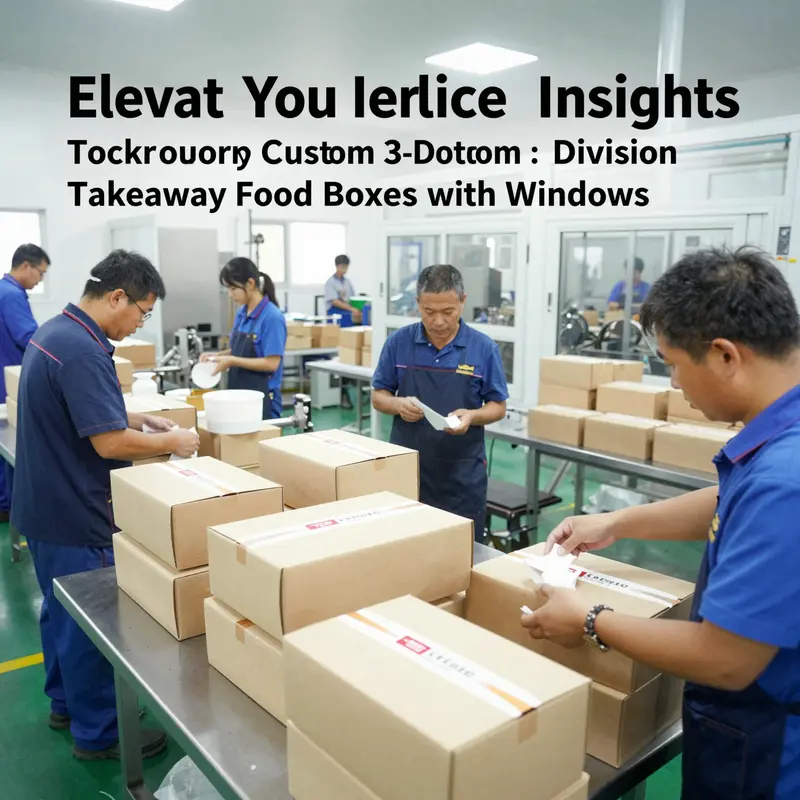
At the heart of a robust sourcing strategy is understanding where the boxes come from and how the supply chain is organized to translate an idea into mass-produced, on-time deliveries. In China, Guangdong stands out as a pivotal hub for packaging because of its vertically integrated facilities, which can manage the entire cycle from resin or pulp sourcing to thermoforming, window lamination, printing, and final assembly. This vertical integration is not merely a matter of cost control; it represents a mechanism for quality governance and lead-time reliability. A factory footprint that exceeds 10,000 square meters often signals a mature operation capable of handling large quantities while maintaining consistent process controls. When buyers seek stability and scale, these facilities offer a combination of capacity and operational discipline that is hard to match in smaller shops or in markets where supply chains are more fragmented.
Within Guangdong, districts and cities drill into different manufacturing strengths. In Guangzhou and Shenzhen, the emphasis is typically on high-volume plastics production and advanced thermoforming lines, coupled with the logistics muscle needed for export. Chaozhou, known for specialty packaging capabilities, often serves as a source of innovative substrate choices and nuanced finishing options. The broader regional ecosystem also enables more rapid prototyping and tighter feedback loops between designers and manufacturers, which matters when a brand is testing a new box concept or a novel window treatment. For a purchaser, this means the ability to iterate quickly on the window size, the clarity of the see-through window, or the sealing method without sacrificing throughput.
The material palette available for a windowed, three-compartment design is a decisive factor in both performance and perception. The box body typically leverages recyclable kraft paper, compostable polylactic acid (PLA), or biodegradable bagasse made from sugarcane fiber. Each option carries trade-offs. Kraft paper is robust, cost-effective, and familiar to most kitchens; it offers grease resistance with appropriate coatings but can be heavier and less film-friendly than plastic alternatives. PLA, being compostable under industrial conditions, aligns with circular economy goals but can require stricter waste-management workflows to realize its environmental benefits. Bagasse presents a similar compostability promise with a more rigid courtship between rigidity and heat tolerance, which can be advantageous for hot foods that may push against starch-based composites. For the window, the common films are PET or transparent cellulose; the choice influences visibility, moisture barrier performance, and sealing integrity during transit. PET windows deliver durability and crisp visibility, but require lamination considerations to prevent delamination in warm weather or during stacking. Cellulose windows offer a more sustainable appearance and may appeal to brand storytelling around compostability, yet they sometimes trade off resistance to moisture or heat compared to PET.
A sophisticated sourcing program treats these materials as a system rather than as isolated components. The supplier must demonstrate not only a capability in forming the box and laminating a window, but also a coherent plan for sourcing sustainable input materials. Certifications like FSC for paper, OK Compost for compostability, or ISO 14001 for environmental management become important signals of a supplier’s commitment to sustainability. For buyers with a corporate mandate to reduce environmental impact, aligning the supply chain to verifiable certifications reduces risk and supports marketing claims with credible third-party validation. Some buyers also explore circularity by requesting end-of-life data on packaging formats and discussing take-back or composting programs with their suppliers. The reality is that sustainability is not a single checkbox but a continuum of choices across materials, coatings, and end-of-life pathways, all of which must be harmonized with cost, performance, and brand promises.
Branding and presentation play a central role in the value proposition of the windowed, three-compartment design. An in-house printing capability—whether flexographic or offset—enables full-color logo integration, custom artwork, and promotional messaging on the box surface. The connectivity between the brand message and the customer’s unboxing experience is powerful: a well-printed lid or side panel can communicate dietary values, seasonal campaigns, or loyalty offers even before the packaging is opened. Suppliers who provide on-site lamination and window sealing contribute to durability in transit, ensuring that the window remains intact and the imagery remains legible from the moment of packaging until the box is opened by the consumer. It is essential that pre-press proofs are part of the workflow. Color accuracy, layout fidelity, and print stability under the heat and moisture conditions typical of takeout take on a new level of importance when a brand is using highly saturated colors or fine text. The ability to approve a digital or physical proof before mass production reduces the risk of costly misprints or misalignments and supports a smoother scale-up.
From a product-design perspective, the three compartments must be engineered to preserve separation, prevent cross-contamination, and minimize the impact of heat transfer between sections. The layout—often structured as main course, side, and condiments—benefits from a modular approach that accommodates different menu configurations. The top footprint commonly falls into about 125 by 110 millimeters, with a bottom around 110 by 90 millimeters and a height of roughly 45 millimeters; these dimensions are typical for mid-sized meals but can be adjusted to 300 ml or 500 ml capacities depending on customer needs. The interior walls should incorporate dividers that can be configured for different portion sizes and that resist grease migration. A well-conceived design also anticipates stacking and nesting efficiency; cardboard inserts, graded folds, and precise tolerances ensure that large runs of boxes can be packed and shipped with minimal waste and maximal throughput at the factory and in the restaurant.
To source such a package with confidence, a structured supplier-vetting process is essential. The most effective strategy begins with identifying direct manufacturers rather than trading companies. A direct manufacturer reduces the markup and provides greater accountability for quality, lead times, and after-sales service. Buyers should look for factories with verified footprints greater than 10,000 square meters and teams of more than 100 employees. This scale signals not only capacity but also a formal corporate structure, quality control teams, and established risk-management practices. A direct factory relationship supports a transparent dialogue about material sourcing, process controls, and continuous improvement initiatives, which are critical as brands demand greater consistency as volumes grow.
Verification of sustainability claims is another non-negotiable. Buyers should seek certifications such as FSC for paper-based components, OK Compost for compostability claims, and third-party validation from organizations like TÜV Austria or similar bodies relevant to compostability and recycling. These certifications do more than satisfy regulatory or corporate social responsibility objectives; they give teams confidence that the packaging will perform in real-world waste streams and that the stated environmental benefits have credible verification. Given the increasingly rigorous environmental expectations in many Western markets, this credibility matters, particularly when the packaging is intended for premium or branded experiences where consumers will scrutinize every touchpoint.
Samples are the practical battlefield where theory meets reality. Before committing to bulk production, buyers should request a full set of samples that demonstrate window clarity, seal integrity, and structural stability. It is essential to test the packaging under expected operating conditions: exposure to heat and moisture, rough handling during transport, and stacking pressures in a warehouse or on a delivery vehicle. If a design will bear heavy sauces or fatty foods, the coating system on the inner surface and the grease resistance of the outer layer must be validated through real-world trials. The evaluation should extend to how the box behaves in a cold chain scenario if cold items are part of the offering. The feedback loop created by testing and refinement often yields changes in wall thickness, the shape of dividers, or the thickness of the window film, all of which can materially affect performance at scale.
Platforms that support supplier vetting, such as verified manufacturer programs and trade-assurance mechanisms, can be valuable filters. It is prudent to screen for both technical capabilities and cultural fit. A factory audit—virtual or on-site—gives a holistic view of the operation: hygiene standards in production areas, automation levels, waste-management practices, and the robustness of the supply chain to absorb demand shocks. A well-run facility will not only produce consistent parts but will also be able to share data on material testing, compatibility with coatings and inks, and evidence of ongoing process improvements. The right supplier relationship is a partnership; it rests on mutual clarity about specifications, timelines, quality thresholds, and the willingness to iterate toward better outcomes.
A practical framework for evaluating suppliers centers on a handful of KPIs that matter most when scale and consistency become the baseline expectations. On-time delivery rate is a top priority; a target of greater than 95% signals that manufacturing and logistics processes are reliable enough to support committed production schedules. Response time—ideally under 24 hours—reflects vendor attentiveness and the agility needed to handle design questions, material substitutions, or last-minute changes in orders. Quality consistency is measured by the supplier’s ability to provide samples that pass stress testing, including drops, stacking, heat exposure, and moisture challenges. This criterion is a proxy for the supplier’s internal QA protocols and for the resilience of the packaging under the pressure of real-world use. Sustainability compliance, demonstrated by certifications and ongoing audits, is a separate but equally important KPI. Together, these KPIs form a holistic view of supplier performance that aligns with corporate goals around quality, reliability, and environmental responsibility.
As the sourcing journey moves from supplier selection to commercialization, the workflow should emphasize a clear, repeatable process. The path begins with design alignment: the buyer and supplier agree on materials, window specifications, color schemes, and print quality. Next comes prototyping and pre-production runs, where small quantities validate tooling, binding methods, and tolerances before committing to full-scale production. The pre-press stage is critical; it ensures that color profiles, logo placement, and text layout translate correctly from digital files to physical prints on a curved, often non-uniform substrate. The proofing step—whether digital or physical—helps prevent costly missteps and ensures the final product meets the brand’s vision. After a successful pilot, the project scales up, with phased ramp-ups that test logistics, warehouse storage, and the compatibility of the new packaging with existing workflows in restaurants, cafes, or catering operations.
Beyond the technical and operational dimensions, the sourcing strategy for 3-division windowed boxes is deeply linked to market expectations. The global demand for hygienic, visually appealing, and eco-conscious packaging continues to grow. Brands increasingly seek not only reliable performance but also a packaging narrative that resonates with sustainability-minded consumers. The window component enables consumer engagement by letting them see a portion of the meal, which can elevate perceived freshness and portion integrity. The three-compartment design supports balanced meals, reducing the likelihood of cross-contact between sauces and entrees and enabling operators to present a complete, compartmentalized experience. When a supplier can offer customization at scale—with reliable color fidelity, robust window seals, and a choice of substrates tied to sustainability credentials—the buyer gains a powerful, differentiating capability that can be infused into menus, loyalty messaging, and marketing campaigns across channels.
To keep the narrative grounded in practical action, consider the following consolidated approach. First, map the supply chain to identify direct manufacturers with substantial scale and a proven track record. Second, define the material and window strategy early, balancing performance with environmental goals and cost. Third, specify branding and print requirements with a robust pre-press process, including proofing and color stability checks. Fourth, implement a rigorous sample-testing regime that simulates real-world conditions and captures feedback for iterative refinement. Fifth, establish KPIs that reflect both operational reliability and sustainability commitments, and incorporate regular audits and certifications into supplier management. Finally, cultivate a collaborative relationship with suppliers that goes beyond price and terms, embracing joint problem-solving on packaging innovations that align with evolving consumer expectations and regulatory environments.
The practical payoff of this approach is not merely a better box; it is a more reliable platform for meal presentation and brand storytelling. When a three-compartment window box is designed and manufactured with thoughtful attention to the interplay of materials, printing, and sealing, it becomes an efficient tool that reduces waste, enhances customer satisfaction, and supports a scalable business model. The supplier’s capability to manage customization at volume without compromising quality is a strategic asset. Buyers who invest in direct-manufacturer relationships, verify sustainability claims, test thoroughly, and measure performance with clear KPIs position themselves to meet rising demand while preserving margins and maintaining brand integrity. In this sense, the box transcends its functional role and becomes a key enabler of innovation in the foodservice packaging ecosystem.
To connect this synthesis with concrete resources and pathways, consider the following practical touchpoints. For teams exploring packaging options and customization, a direct reference to a supplier’s seasoned capabilities in eco-friendly, three-compartment packaging demonstrates the feasibility of aligning sustainability with performance. A relevant example of such a resource is the eco-friendly disposable 3-compartment packaging page, which highlights materials, printing, and packaging features that support branding and customer experience while respecting environmental considerations. This internal reference is a useful starting point for teams that want to compare substrate options, window designs, and print approaches at a glance while maintaining a rigorous evaluation framework for mass production. eco-friendly disposable 3-compartment packaging.
In addition to internal sourcing considerations, external resources offer broader guidance on best practices for evaluating and engaging with suppliers in the 3-compartment windowed box space. A comprehensive sourcing guide from a leading B2B marketplace outlines a structured approach to supplier vetting, material selection, and customization workflows tailored for foodservice packaging buyers seeking reliable, scalable solutions from manufacturers in high-volume hubs. This external resource provides actionable insights into aligning procurement processes with production realities, helping buyers translate strategic intent into practical, repeatable procurement programs. External resource: https://www.alibaba.com/news/3-compartment-food-box-sourcing-guide-20260129?spm=a2700.12085929.0.0.1c1b3d1fXkWpPv
Taken together, the sourcing strategies described here illuminate a path from regional capability to global availability. The Guangdong corridor and its adjacent manufacturing ecosystems offer the capacity to deliver windowed, three-compartment boxes at scale, while an emphasis on sustainable materials, rigorous printing, and transparent supplier relationships makes compliance with environmental expectations more straightforward. The best practice is to treat packaging development as a cross-functional project where procurement, product development, operations, and marketing collaborate from the outset. This ensures the final product not only meets functional requirements—such as pour control, leak resistance, and heat tolerance—but also aligns with brand positioning, customer experience goals, and sustainability commitments. In this sense, a well-sourced 3-division takeaway box with a window is more than a packaging component; it is a strategic asset that supports growth, differentiation, and responsible packaging in a competitive market.
Final thoughts
Choosing the right custom 3-division takeaway food boxes with windows is pivotal for enhancing your brand’s image and meeting customer expectations. From understanding core features that maximize appeal and functionality to examining the manufacturing insights that help ensure quality, each aspect plays a critical role in your selection process. Implement effective sourcing strategies to navigate and partner with reputable manufacturers, ultimately leading to meals packaged in a way that delights your customers. By prioritizing these elements, you position your business for success and stand out in a crowded marketplace.