
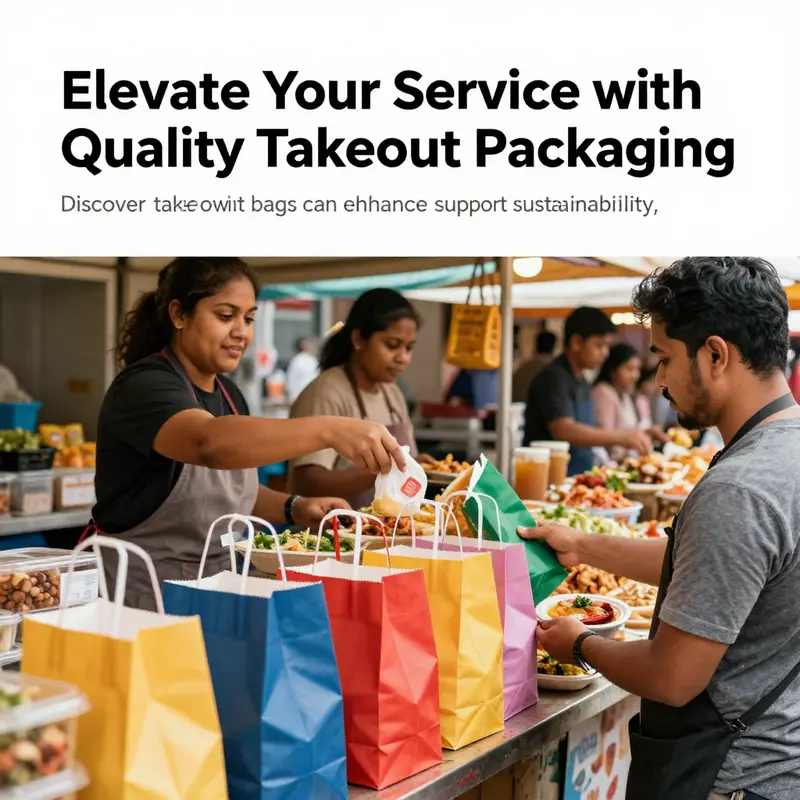
Takeout bags are more than just containers; they are vital in ensuring food safety and quality while reflecting a business’s commitment to sustainability. For bubble tea shops, restaurants, food trucks, and catering services, these bags are essential tools that contribute to an enjoyable customer experience. This article delves into the key aspects of takeout bags, starting with their role in food safety and quality, followed by innovative eco-friendly materials changing the packaging landscape, and concluding with economic considerations for restaurants and consumers alike. Each chapter reveals insights that not only enhance operational efficiency but also resonate with the growing consumer demand for responsible business practices.
Guardians at the Counter: How Takeout Bags Preserve Safety, Temperature, and Flavor on the Move

A takeout bag is more than a simple carrier. It is a careful convergence of function, material science, and practical craft that keeps a meal intact from the moment it leaves the kitchen until it graces a dining table, or a couch, or a park bench. In the modern dining landscape, where meals travel through busy streets and crowded elevators, the bag becomes a quiet partner in every bite. It carries the confidence of food safety, the promise of flavor, and the subtle assurance that the experience will not be ruined by a torn seam, a greasy fingerprint, or a lukewarm surprise. The best takeout bags are designed with intention, balancing cost, performance, and the environmental realities that shape consumer choices today. They are at once common and essential, a backstage crew member that never seeks the spotlight but whose influence is felt with every lifted lid and every unwrapping moment.
The first order of business for any takeout bag is protection from contamination. Food is not a single item but a constellation of components—hot entrees, delicate salads, sauces, sides, and sometimes beverages—that could easily mingle and cross paths in transit. A sturdy bag with a strong seam, clean interior surface, and a layout that minimizes movement can prevent spillage and cross-contamination. This is especially important when several different items share the same order. A well-designed bag uses a material and structure that separate components, absorb moisture, and resist leaks. The goal is to prevent any contact between foods with different contamination risks while keeping the outer surface clean from accidental drips. A thoughtful approach to packaging recognizes that the risk of contamination is not just about the food itself but about the path the food travels from kitchen to customer, including the bag’s handling during pickup, loading into a vehicle, and the occasional bounce of a curbside stop.
Temperature control stands as the central pillar of food safety in the takeout chain. The human palate expects meals to arrive hot enough to feel freshly prepared or cold enough to remain crisp and safe. In technical terms, hot foods should be kept above 60°C (140°F) and cold foods should be kept below 4°C (39°F). Insulated liners, multi-layer films, and thermal bricks or pouches are common tools that help maintain these temperatures. The interior design of the bag matters just as much as its exterior. A bag that holds heat well must slow heat loss while preventing condensation that could compromise the texture of a sandwich, a pastry, or a cup of soup. Conversely, keeping cold items cold involves minimizing heat gain from the surrounding air and reducing the risk of sogginess as ice packs slowly transfer their chill. The practical reality is that delivery times can vary, and bags must tolerate a range of environmental conditions—from brisk winds to a warm interior of a car. In the best cases, the packaging acts like a tiny climate chamber, prolonging the moment when a meal remains at its peak flavor and texture.
Physical damage prevention rounds out the core function of takeout bags. The journey from kitchen to door can involve jostling, stacking, and accidental pinching. Bags that provide structural support prevent delicate items from shifting, crushing, or tipping. The interior layout often includes compartments, inserts, or reinforced panels that help items stay in place. Even simple features like a medium-thick bottom panel and sturdy handles contribute to keeping the contents intact. A fragile pastry or a boxed salad can survive a short ride with the right blend of rigidity and flexibility. In turn, consumers benefit from receiving food that looks the same as when it left the kitchen, with minimal leakage and no odd odors or greasiness that would betray poor handling. The overall design philosophy here is to create a sense of reliability. When a bag feels substantial and purposeful, it signals that care was invested in the entire process, from the packing station to the doorstep.
Beyond contamination, temperature, and protection, the handling practices surrounding takeout bags are equally important. Food safety does not end with the physical bag; it begins long before a bag is ever filled. Clean storage areas, sanitized packaging stations, and disciplined procedures for packaging are foundational. The moment staff handle food and its packaging, they become part of a chain of custody that viewers seldom notice but people rely on every day. Packaging materials must be appropriate for contact with food, free from contaminants, and compatible with the temperatures of the items they hold. The cleanliness of the environment in which the bag is assembled matters as much as the cleanliness of the bag itself. A well-run kitchen that enforces hygiene standards naturally translates into safer takeout because the bag is the vehicle that carries those standards forward. When the ride from kitchen to customer is built on consistent handling practices, the risk of introducing external contaminants drops, and the consumer gains confidence in what they are about to eat.
Consumers, for their part, contribute to this safety equation by following practical guidelines when receiving and consuming takeout. Prompt consumption is often the simplest act that can reduce risk. Food that sits in a bag for too long can become a playground for bacteria, especially in warm environments. While it can be tempting to inspect an order and reheat it later, the safest approach tends to be to enjoy it soon after arrival or to refrigerate promptly and reheat thoroughly when appropriate. In this sense, the bag becomes a reminder of time as a crucial factor in food safety. The romance of convenience must be balanced with the knowledge that time can erode the safety margins built into the packaging and the kitchen practices that created the meal. A culture of awareness—knowing when to refrigerate, how to reheat, and what temperatures to aim for—complements the physical design of the bag and the standards embedded in the food production system. The bag is not a sterile barrier by itself; it supports a safe food experience when paired with sound handling and mindful consumption.
As the materials and design of takeout bags evolve, the environmental footprint of packaging becomes inseparable from discussions of safety and quality. Consumers increasingly weigh the trade-offs between durability and environmental impact. Plastic films, aluminum foils, and multi-layer laminates deliver exceptional performance for temperature retention and contamination resistance, yet they can complicate recycling and raise durability concerns for the environment. In response, many packaging designers and foodservice operators experiment with compostable papers, recyclable films, and plant-based alternatives. Each material brings its own performance profile. Some provide excellent insulation but require careful disposal to realize their environmental benefits. Others are easy to recycle but may not perform as robustly in the damp environment of a hot meal. The choice is rarely binary. Instead, it is a nuanced decision that considers the nature of the meal, the length of transport, the expected weather, and the post-use habits of customers.
The conversation about takeout bags also intersects with broader public health guidelines and regulatory expectations. Packaging is part of the overall system of safeguards that protect food from the moment it is prepared to the moment it is consumed. Standards help ensure that materials come into contact with food safely, that packaging does not introduce toxins, and that it remains intact during typical handling scenarios. The reference to official guidelines underscores the fact that packaging is not a mere afterthought but a critical component of public health. For instance, comprehensive resources outline how meal delivery services should manage packaging to minimize contamination risks, how to maintain temperature integrity during transit, and how to guide consumers in safe handling after delivery. These guidelines serve as a compass for restaurants and suppliers as they refine their packaging architectures and operating procedures.
In a broader cultural sense, takeout bags shape the experience of eating out without sitting down. They influence expectations about quality, convenience, and reliability. The bag is the visible, tangible extension of a restaurant’s commitment to safety and freshness. It offers reassurance in the form of an elegant, sturdy, and well-sealed enclosure. Even the sounds and textures of opening a bag can affect how a meal is perceived. A crisp unwrapping, a clean edge, and a bag that offers a comfortable grip all contribute to a positive sensory experience. When a bag performs well, the first moments of the meal feel deliberate and cared for, setting a tone of satisfaction that travels with the consumer through the rest of the dining experience. That sense of care can be subtle, but it matters. It builds trust between the customer and the food provider, and that trust translates into repeat business, word-of-mouth recommendations, and a calmer relationship with the inevitable messes and mishaps that accompany life on the go.
To illustrate how these design principles translate into everyday practice, consider a brief detour into a seemingly unrelated example that reveals the same impulse toward durable, functional packaging. A catalog page for a plant accessory site shows multiple packing choices for fragile items. The product page, such as the old-lady-cactus page, highlights how even non-food packaging prioritizes balance, protection, and ease of transport. The parallel is not accidental. In both cases, the goal is to deliver a product in the best possible condition, despite the uncertainties of handling, weather, and time. The underlying design ethos is consistent: anticipate risk, provide safeguards, and create a user experience that feels reliable from the first touch to the moment of use. For takeout bags, this ethos translates into materials that resist moisture, seams that hold under pressure, insulation that minimizes heat loss, and shapes that optimize stacking and carrying comfort. For casual shopping or plant accessories, it translates into sturdy, protective packaging that reduces returns and enhances satisfaction. The connection may seem unlikely at first glance, but it underscores a shared principle: packaging is a language of care written in material choices, structural decisions, and practical features.
As packaging technology advances, we see continued experimentation with layers, coatings, and closures that refine the balance between safety, usability, and sustainability. Some bags incorporate breathable vents to manage steam and moisture, preventing sogginess while maintaining warmth. Others employ resealable features that support consumer reuse and reduce waste. Insulation materials become more sophisticated, sometimes using phase-change substances that better regulate temperature across longer delivery windows. Yet every innovation comes with questions. How does the new layer affect recyclability? Will it complicate compostability for customers who want to dispose of packaging responsibly? How will suppliers communicate proper disposal and reuse instructions to a broad audience with varying levels of awareness? These questions reflect the ongoing negotiation between performance and responsibility. They remind us that takeout bags occupy a unique niche at the intersection of food science, design, and environmental ethics.
In practice, the most successful takeout bags operate as a seamless extension of the kitchen’s care. They are a product of thoughtful collaboration between chefs who understand the needs of different dishes, packaging engineers who optimize materials and shapes, and logisticians who anticipate the realities of last-mile delivery. The resulting bag is not simply a means of transport; it is a system with built-in safeguards that travel with the meal. While a bag can never guarantee perfect outcomes in every possible scenario, it can dramatically reduce the frequency and severity of problems. It can minimize heat loss for a hot bowl of soup, reduce condensation that sogs a crust, and prevent cross-contamination when multiple items are packed together. The overall effect is a higher standard of quality that customers can feel in every bite and aroma. As the industry continues to refine these systems, the bag will remain a central touchpoint for safety, flavor preservation, and responsible stewardship of resources. It is easy to overlook, yet it is indispensable in the chain that delivers nourishment from kitchen to table.
For readers who want to reflect on the broader implications of packaging design, consider examining the principles that guide everyday choices in other non-food contexts. A single product page about a plant container may reveal the same design instincts: durability, protection, and user-friendly handling. The underlying idea is straightforward: clear purpose, robust construction, and a experience that honors the object and the person who uses it. In the world of takeout, those same ideas translate into a bag that feels sturdy, travels well in diverse environments, and leaves a minimal footprint when it reaches its end of life. The result is a practical, reliable, and humane form of packaging that aligns with a growing expectation that even ordinary objects—like a bag on a doorstep—reflect thoughtfulness and care.
As a closing reflection, the takeout bag emerges as a silent steward of the meal. It is there at the moment of cradle-to-table transfer, quietly performing its duties so that the focus can remain on the food—the color, scent, texture, and story behind each dish. It is easy to forget packaging exists, yet when a bag performs as intended, it elevates the entire dining moment. The story of the bag is, in many ways, the story of food safety and quality itself: a continuous dialogue between design, science, and everyday life that keeps meals safe, tasty, and accessible in every corner of modern life. In this sense, the bag is not merely a container but a partner in the culinary journey, worthy of attention and appreciation even when it sits unobtrusively by the door.
To see a concrete, unrelated example of design thinking that echoes these concerns, one can explore a product page for a decorative plant container that likewise prioritizes protection and utility. For instance, the old-lady-cactus page offers a glimpse into how packaging decisions translate into practical, user-centered outcomes. This cross-disciplinary reflection helps illuminate why takeout bags matter beyond the immediate meal; they embody a shared design language about safety, care, and respect for the user’s time and experience. As the field evolves, these insights will continue to shape packaging strategies that safeguard health, preserve quality, and align with the growing expectations of sustainability and responsible consumption.
External resource: For official guidelines on food safety in online meal delivery, see the Food Safety Guidelines for Online Meal Delivery (Published January 13, 2026) at https://www.food.gov.hk/eng/food/foodsafety/onlineordering.htm.
Internal reference note: A related discussion on practical packaging considerations can be explored further through the plant accessory page linked here: old-lady-cactus page.
From Film to Forest: Eco-Friendly Takeout Bag Innovations

Takeout bags are more than wrappers—they are a frontline of sustainability in a world moving toward responsible consumption. The evolution of bag materials and manufacturing is driven by the need to protect food while minimizing environmental impact.
Material shifts, from conventional plastics to biodegradable polymers like PLA and PBAT, aim to balance barrier performance with end-of-life options. These bio-based films require supportive composting infrastructure and consumer participation to realize their advantages. Researchers optimize heat resistance, seal integrity, and food safety testing to ensure reliable performance through the delivery journey.
Manufacturing advances in automated, sensor-equipped bag-making lines improve quality, reduce waste, and enable scalable production of eco-friendly options. Paper-based bags from recycled content and responsibly sourced fibers continue to offer recyclability and lower lifecycle impact, with coatings engineered to resist moisture without compromising recyclability.
Ultimately, the success of sustainable takeout packaging hinges on an ecosystem: clear disposal guidance for consumers, robust waste-management infrastructure, and supplier collaboration that aligns material choices with real-world end-of-life options.
Carrying Cost, Carrying Change: The Economic Ripples of Takeout Bags
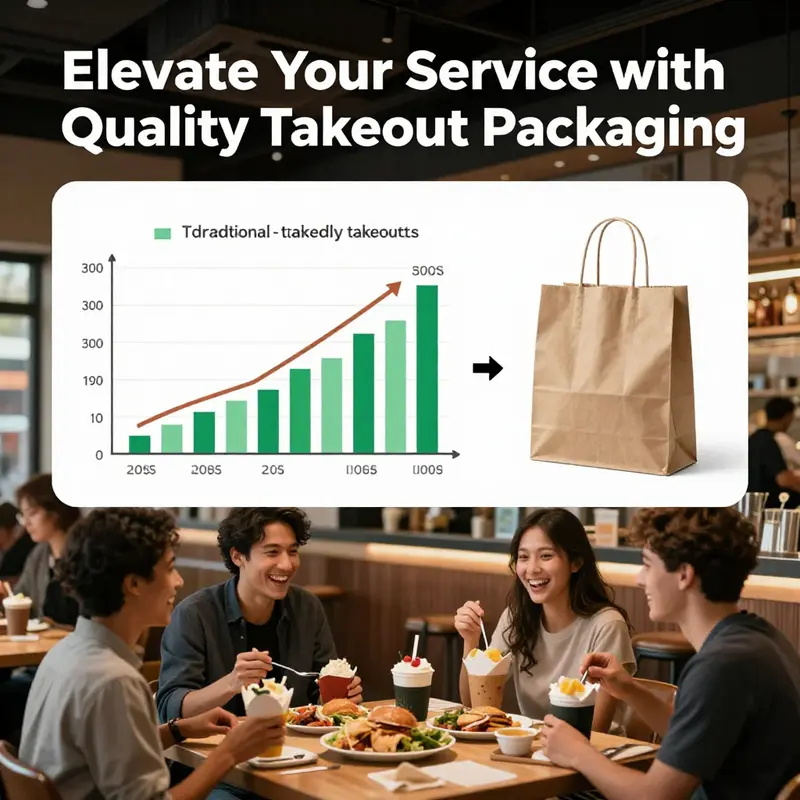
The takeout bag is more than a simple carrier; it is a small, moving interface between a restaurant’s kitchen and a customer’s home, a fragile vessel that carries not just food but also the economics of dining in a shifting policy climate. When a customer places an order for pickup or delivery, the bag becomes a packaged extension of the restaurant’s brand and a micro-economy in its own right. The costs embedded in that bag—material choices, insulation, leak resistance, and the logistics of distribution—flow through the price of the meal and into the consumer’s willingness to pay. In modern markets, where the line between on-premises dining and off-premises consumption has blurred, the economic footprint of takeout bags reflects broader tensions among cost containment, sustainability expectations, and policy constraints. The act of packaging is not a trivial afterthought but a core component of the total cost of delivering food away from the premises. The bag, then, is a small but consequential node in a larger system that includes supply chains, producer pricing, restaurant margins, consumer budgets, and environmental considerations that increasingly influence corporate reputation and consumer choice.
Policy interventions illuminate how sensitive this node is to external forces. When plastic bags face bans or mandatory fees for alternatives, the ripple effects extend beyond the checkout line. Research detailing these dynamics shows that bans paired with fees for paper or alternative materials can shift consumer behavior in meaningful ways. A notable implication is a measurable pivot from food-at-home to food-away-from-home purchases. In practical terms, the statistics translate to a modest yet sustained increase in spend on takeout or dine-out experiences, even as the base cost of packaging climbs for retailers. A 1.8% decline in food-at-home sales alongside a 1.9 percentage-point rise in food-away-from-home consumption signals that policies designed to curb plastic waste also reshape how people allocate their dining budgets. Restaurants, in turn, absorb the operational cost and adjust menus, service formats, and inventory strategies to accommodate the new normal, while consumers recalibrate their daily routines around accessible and convenient meals. The interaction between policy design and consumer behavior matters because it reveals how quickly the economics of packaging can become a strategic variable for hospitality operators.
From the restaurant perspective, the cost burden of packaging often travels downstream to the customer. When a business opts for more durable, reusable, or recyclable packaging, it can add a material premium to the unit cost of each takeout bag. At first glance, this is a straightforward price transmission: the cost of the bag is embedded in the price of the meal or absorbed by the business in the hopes of protecting margins. In practice, the price dynamics are more nuanced. Some customers notice and push back against price increases tied to sustainability initiatives; others, particularly environmentally conscious consumers, are willing to pay a premium for packaging that aligns with their values. This divergence creates a both-and scenario in which restaurants can widen their appeal by marketing sustainability without necessarily eroding demand from price-sensitive segments. The long-run payoff for this strategy is not only a more favorable brand reputation but also a potential reduction in waste disposal costs and a more efficient use of resources if the packaging is designed for reuse or easy recycling. In the short term, however, the up-front cost reallocation can reduce short-term profitability, especially in highly competitive markets where price wars are common and customer price sensitivity is high.
Consumer preferences contribute a countervailing force to these dynamics. A subset of diners places a premium on packaging quality, insulation, and the credibility of a restaurant’s environmental commitments. For these consumers, packaging is a signal—an indicator of a restaurant’s broader values and its willingness to bear higher costs to reduce waste and improve sustainability. This willingness to pay can create a distinct niche of loyal customers who believe that good packaging outcomes are part of a holistic dining experience, not merely a practical necessity. It also prompts restaurants to experiment with packaging configurations that optimize food safety, temperature retention, and ease of transport. For instance, better insulation can preserve food quality during transit, reducing the probability of soggy fries or lukewarm soups upon arrival. While the marginal benefit to the consumer may seem intangible, it converges with a restaurant’s broader objectives: consistency, trust, and the long arc of repeat business.
The story, however, is not simply one of price and taste. It is increasingly a narrative of behavioral nudges—the subtle cues that influence how customers use the packaging they receive. Nudges that promote sustainable practices, such as social norm messaging that highlights the prevalence of reusing bags or returning containers for future use, have shown promise in reducing waste without turning away customers. Consider how a well-placed reminder about reuse or recycling within the ordering flow can shift behavior at modest cost to the business. Such nudges, while seemingly small, can compound over thousands of orders to yield meaningful reductions in waste and disposal expenses. The economic logic extends here: reducing waste lowers the total cost of operation and demonstrates a restaurant’s commitment to stewardship, which may translate into stronger customer loyalty and favorable word-of-mouth.
Every practical decision about takeout packaging sits at the intersection of supply chain discipline and customer expectations. Restaurants must negotiate with packaging suppliers to secure materials that meet safety standards—leak resistance, heat containment, and durability—while managing the variability of demand across peak hours and promotional campaigns. The procurement process becomes a balancing act. More expensive, sustainable materials might offer better environmental performance and brand alignment, but they can compress margins if the price differential is not offset by higher average check sizes or increased patronage. Conversely, cheaper alternatives may preserve short-run profitability but invite criticism from policymakers and a segment of customers who consider sustainability a core choosing factor. The challenge, then, is to design packaging configurations that deliver reliability at a predictable cost, with the flexibility to adapt to evolving regulations and shifting consumer expectations. This requires a thoughtful approach to supplier relationships, inventory management, and process design in the back of the house, as well as visibility into the end-to-end lifecycle of a given packaging option—from raw material sourcing to drop-off at the customer’s doorstep.
Incumbent cost structures also interact with external developments in sustainability and waste management infrastructure. When a city or region expands recycling programs or improves composting capacity, the economics of choosing certain materials shift. A packaging solution that previously carried a higher perceived cost may become relatively more attractive if end-of-life processing becomes easier or cheaper for consumers to navigate. In such contexts, the environmental cost story converges with the financial one. If waste disposal costs are internalized by a business or passed through to customers, a shift toward recyclable or compostable packaging can be defended not only on ecological grounds but also on economics. Restaurants may realize cost savings through reduced waste handling, lower landfill fees, or even rebates from local authorities that encourage sustainable packaging adoption. The net effect is a reinforcing loop: better packaging reduces waste, which lowers costs, which in turn supports broader sustainability investments and stronger customer trust.
The dynamics become more intricate when policy instruments interact with consumer psychology. For instance, a policy that nudges consumers toward using reusable or returnable packaging could be coupled with incentives for participating restaurants. Such a pairing can magnify behavioral changes beyond what a standalone policy would achieve. The research cited in the policy landscape suggests that even modest policy nudges can shift consumer spending patterns toward more sustainable modes of consumption. If a city offers small credits or loyalty points for customers who bring their own bag or opt for a returnable container, restaurants stand to benefit from higher frequency of visits and larger average orders as customers perceive greater value in participating. Yet the friction costs must be managed. Return logistics, cleaning, and the administrative overhead of tracking containers can erode the savings unless carefully designed. The challenge, again, is to align incentives: make sustainable choices straightforward for customers, economically sensible for restaurants, and transparent in terms of environmental impact. When done well, such alignment generates trust, increases patronage, and creates a competitive edge that is not easily replicated by price reductions alone.
Another layer of complexity arises from the life-cycle thinking that increasingly informs packaging decisions. The full environmental and economic profile of a takeout bag includes the material’s production footprint, durability during transport, the potential for reuse, the ease of recycling, and the implications for landfills and emissions. The decision calculus for operators now routinely includes a thorough assessment of these factors, sometimes aided by third-party certifications or life-cycle analyses. In practice, a hotel of choices governs the bag’s role in the dining experience: a lighter, more recyclable packaging option may be preferable for simple meals, while a robust, insulated system might be valued for foods that demand tighter temperature control. The operator’s choice is partly pragmatic—will the bag reliably protect the product?—and partly strategic: does the packaging signal a commitment to quality and sustainability that resonates with target customers? The tension between pragmatism and principle, between margin protection and brand signaling, defines much of the modern takeout packaging decision-making process.
Ultimately, the economic implications of takeout bags cannot be reduced to a single variable, such as price or material cost. They are the sum of policy design, consumer willingness to adapt, operational efficiency, and the evolving social contract around waste and resource use. The policy environment can accelerate or dampen changes in consumer behavior, but it is the responsive, values-driven management of packaging by restaurants that translates policy into performance. A restaurant that anticipates shifts in material costs, builds flexibility into its packaging architecture, and communicates clearly with customers about its sustainability commitments stands to gain on multiple fronts: preserved margins, steadier demand, and a reputation for responsible business practices. The incremental costs associated with better packaging can yield outsized returns if they foster loyalty, reduce waste, and position the establishment as a forward-looking player in a dining ecosystem that increasingly views packaging as a strategic asset rather than a cost center.
As markets continue to evolve, so too will the economics of the takeout bag. The shift toward more sustainable materials and smarter design will push operators to innovate in ways that optimize both performance and price. The most durable takeaway in this field may be not the bag itself but the resilience of a business model that interpretively balances cost, convenience, and care for the environment. In this sense, a bag becomes a lens through which we can view a broader transformation in how we think about food, transport, and value. That lens reveals a set of practical choices with tangible consequences: a decision tree in which every bag is both a container and a calculator, a small but telling indicator of how modern food service negotiates price, policy, and purpose. For readers who seek deeper empirical grounding for these relationships, the literature on disposable carryout bag policies and their impact on consumer behavior offers a rigorous articulation of how these forces interact in real markets. See the external resource for further context on the policy-economic interface that frames these decisions: https://www.sciencedirect.com/science/article/pii/S095965262500378X
Final thoughts
Understanding the multifaceted value of takeout bags highlights their essential role in the food service industry. From ensuring food safety and quality to supporting environmental sustainability and economic viability, these bags are crucial for all businesses in the food sector. As consumer expectations evolve, adopting innovative and eco-friendly takeout solutions not only benefits your brand’s reputation but also caters to the growing demand for responsible practices. Embrace the opportunity to enhance your service with quality takeout packaging that prioritizes both safety and sustainability.