
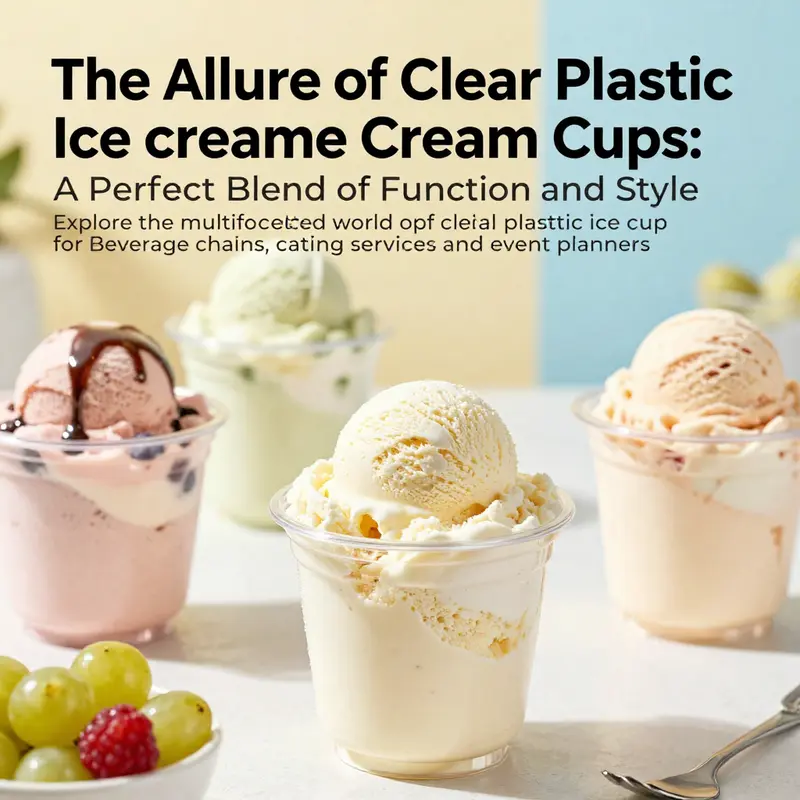
Clear plastic ice cream cups are more than just functional containers; they serve as a canvas for creativity in the frozen dessert market. Their transparency allows for maximum visibility of colorful, delicious products, making them an ideal choice for bubble tea shops, restaurants, food trucks, and catering services. Beyond aesthetics, these cups come equipped with practical features that enhance customer experience and operational efficiency. This article delves into the material composition of these cups, illustrating their suitability for various applications. It will also address critical environmental considerations surrounding their use, as well as current market trends and evolving consumer preferences. By unpacking each of these elements, businesses can better understand how to integrate clear plastic ice cream cups into their service offerings effectively.
Seeing Through Clarity: The Material Science behind Clear Plastic Ice Cream Cups

Clear plastic ice cream cups do more than hold dessert. They are a visual contract between product and consumer, signaling quality through the light that passes through. When a spoon meets a peak of vanilla, a swirl of chocolate, or a ribbon of berry sauce, the cup itself becomes part of the tasting experience. The choice of material governs not only how clearly that dessert is seen, but how well the cup holds up under freezing, handling, transport, and eventual disposal. Behind the glossy surfaces and flawless edges lies a concise decision tree shaped by three principal plastics that dominate the market for these cups: polystyrene, polypropylene, and, in some premium lines, polyethylene terephthalate. Each material brings a distinct blend of clarity, toughness, temperature tolerance, and recyclability, and each carries its own set of tradeoffs that brands must weigh against cost, supply chain constraints, and environmental goals. In practice, a brand may lean toward one resin for standard single serve cups and switch to another for certain applications such as set displays, self service stations, or premium dessert lines. The logic of this material mix starts with the near perfect optical clarity that clear cups demand. Polystyrene, or PS, has long been favored for its ability to mimic glass. It can deliver a transparent, high gloss appearance that makes the color and texture of ice cream pop, inviting the consumer to imagine the taste before the first bite. But this optical virtue comes with caveats. PS hardens in cold temperatures and can become brittle when the cup is subjected to very low temperatures or rough handling. In a busy self serve setting, cracks or fractures are more than cosmetic; they can leak or fail the user experience at the moment of service. Another structural consideration is rigidity. PS walls can feel stiff enough to support a tall scoop without warping, yet this rigidity can also transfer stress if the cup is squeezed or dropped. A common but important nuance is recyclability. In many curbside programs PS is not as easily accepted as other plastics, and its recycling streams are uneven across regions. This means a brand that seeks the lowest possible waste footprint must map local infrastructure and consumer sorting habits, recognizing that aesthetics and functionality may come at the cost of straightforward end of life management. Yet PS remains a go to option when the goal is maximum clarity with minimal color distortion, a factor that keeps it in the conversation for everyday serveware, school events, and quick service operations where a simple, economical product is essential. When a brand weighs durability, heat resistance, and process compatibility, polypropylene, or PP, emerges as a compelling alternative. PP shares PS’s ability to be clear but offers greater toughness and resilience. This material handles temperature fluctuations better, which matters in environments that move from a freezer to a display case or a counter where cups may sit in direct sunlight. PP’s impact resistance makes it less prone to cracking under rough handling or minor impacts, a practical advantage for bulk dispensing and self service machines. It also resists oils and many cleaning agents that could otherwise degrade a cup’s surface over time. Perhaps most relevant to sustainability conversations, PP is generally more recyclable in many regional streams than PS, though still not universally accepted in curbside programs. For brands that prioritize durability and a lighter environmental footprint, PP often represents a best of both worlds option: clear enough for product visibility while offering robustness for everyday use. PET, or polyethylene terephthalate, occupies a more selective niche in the clear cup category. While less common for ice cream cups than PS or PP, PET is prized for its superior clarity and toughness, along with a high level of chemical resistance. PET’s optics are exceptional, sometimes delivering a brilliance that edges toward what consumers expect from a premium dessert presentation. In some cases PET cups are paired with lids made from PET or other food grade materials to preserve transparency across the entire packaging system, a synergy that enhances the perception of quality from the first glimpse to the last bite. PET’s recyclability is well established, and its compatibility with widely established recycling streams can be a selling point for brands attempting to balance convenience with sustainability. Yet PET comes with tradeoffs. It can be more expensive to produce and ship due to tighter processing tolerances and material costs. In crowded markets or high volume operations, these price considerations can influence the decision to default to PS or PP for most lines while reserving PET for premium or special edition cups that promise superior clarity. The choice of resin also echoes through the design and fabrication of the cups, influencing wall thickness, rigidity, sealing behavior, and even the shape of the base. The wall thickness must be optimized to resist deformation when the cup is filled with cold dessert, yet thin enough to minimize material use and cost. The selection of resin impacts the molding process itself. PS and PP are often molded by thermoforming or injection molding, with the former allowing for efficient high throughput and the latter offering flexibility in wall geometry and lid compatibility. The lid, frequently made of PET or a similar transparent material, forms a practical duet with the cup. A seamless seal can be achieved when both components share compatible thermal properties, reducing the risk of delamination or warping during transport in variable temperatures. The investment in this pairing is not trivial, because a misalignment between cup and lid can result in spill risks, compromised freshness, and a negative consumer experience. Beyond the aesthetics and handling, materials also guide how brands approach safety and compliance. Food grade status is non negotiable, and the chosen resins must meet stringent standards for contact with frozen or semi frozen foods. Migration of additives, residual monomers, or plasticizers is monitored to ensure that the dessert’s flavor and aroma remain unaltered after storage and during consumption. In practice, this means resin suppliers provide documentation, certificates, and testing data that reassure manufacturers and retailers that their cups will perform in real world conditions without compromising safety. In this context, the capacity for the cups to withstand extreme temperatures—ranging from -40 degrees Celsius in deep freezers to as high as 90 degrees Celsius in hot beverage scenarios—emerges as another differentiator. While most ice cream cups are designed to endure freezing, a significant portion of the market also expects performance in environments where cups are warmed or exposed to heat during service. The material’s response to temperature shifts—whether it becomes brittle, softens, or warps—affects not just the cup’s integrity but the consumer’s confidence in the brand. The optical properties of these materials deserve particular attention as well. Clarity is not merely about a clean, transparent surface; it is about color neutrality and the absence of haze that could dull the visual appeal of the ice cream. In practice, producers test resins for haze, tint, and brilliance to ensure that the product’s appearance remains consistent across batches. This is especially important for multi colored or layered desserts, where the translucence of a cup can accentuate the swirl of flavors and entice customers to choose a particular option. Yet, despite the allure of transparency, the debate around single use packaging weighs heavily on the decision matrix. The environmental footprint of clear plastic cups has become a central topic for retailers, event organizers, and fundraisers alike. Although the resin choice can influence recyclability and post consumer waste outcomes, overall waste management hinges on consumer behavior, local recycling infrastructure, and corporate commitments to sustainability. In many regions, PP may offer a clearer path toward recycling because its resin properties align with more robust processing streams, while PS often becomes a more challenging candidate due to fewer accepted streams and a greater propensity for brittle failure during handling. PET, with its established recycling networks, may be favored for premium lines that justify a higher price point and a stronger environmental narrative, though its higher material cost and sometimes stricter processing requirements must be balanced against anticipated volumes. The practical implications of these material choices extend to branding and marketing as well. The material’s natural clarity can become an integral part of the product’s storytelling. A dessert that relies on vivid colors or elaborate layering gains an extra dimension when the cup itself seems nearly invisible, letting the dessert be the sole star. For brands that want to reinforce a premium image, a transparent cup that reads as high quality can contribute to the perception of value, even before the first bite. Conversely, some operators may opt for a slightly tinted or semi clear option for a more subtle presentation or to reduce the appearance of ice crystals in certain formulations. The end result is a packaging system that is not just a container but a performance partner in the consumer journey. It must protect the product during freezing and transit, present it in its best light on shelf or counter, and align with a retailer’s waste and sustainability commitments. Within this framework, the decision to choose PS, PP, or PET becomes less a search for a single best material and more a strategic alignment of performance, cost, and environmental responsibility with the specific use case. A typical workflow begins with clear objectives: what is the dessert style, what is the service scenario, what are the temperature and duration of display, and what end of life pathway is most feasible in the markets served. From there, procurement teams and packaging designers collaborate to map out the resin that will deliver the required clarity, rigidity, and seal integrity at the most favorable total cost of ownership. In this process, small but meaningful details matter. The method of plastic processing can influence optical properties, with surface finishes and molding conditions affecting light diffusion and perceived transparency. The connection between cup and lid material becomes more than a closed loop; it becomes a function of compatibility, seal strength, and user experience. The end result is that material choices for clear plastic ice cream cups resonate through the entire value chain, shaping everything from the dessert’s perceived appeal to the ease of handling in crowded venues. For designers and brand owners, the insight is clear: the decision to use PS, PP, or PET is not purely about price or appearance. It is about resilience in real world use, about the confidence customers place in a product that looks so pristine, and about a commitment to responsible packaging that aligns with consumer expectations for sustainable practices. For those exploring this topic further, a practical guide to disposable clear plastic cup resources offers additional context on usage scenarios and material performance in field settings. (disposable-clear-plastic-cup-outdoor-picnic-pet-cup-drinking-cup-for-parties-birthdays-weddings-camping-utensils) See also how a full packaging system can be optimized for reliability and visual impact without sacrificing safety or environmental responsibility. As the conversation continues to evolve, brands will increasingly weigh the tradeoffs between clarity, toughness, recyclability, and lifecycle impact, choosing a path that best balances consumer appeal with practical realities on the ground. For a broader view on food grade plastics and how they apply to cups and other servingware, external resources provide data and standards that help anchor these decisions in industry practice. External resource: https://www.plasticsindustry.org/resource/food-grade-plastics
Seeing Through the Scoop: How Clear Plastic Ice Cream Cups Shape Real-World Service
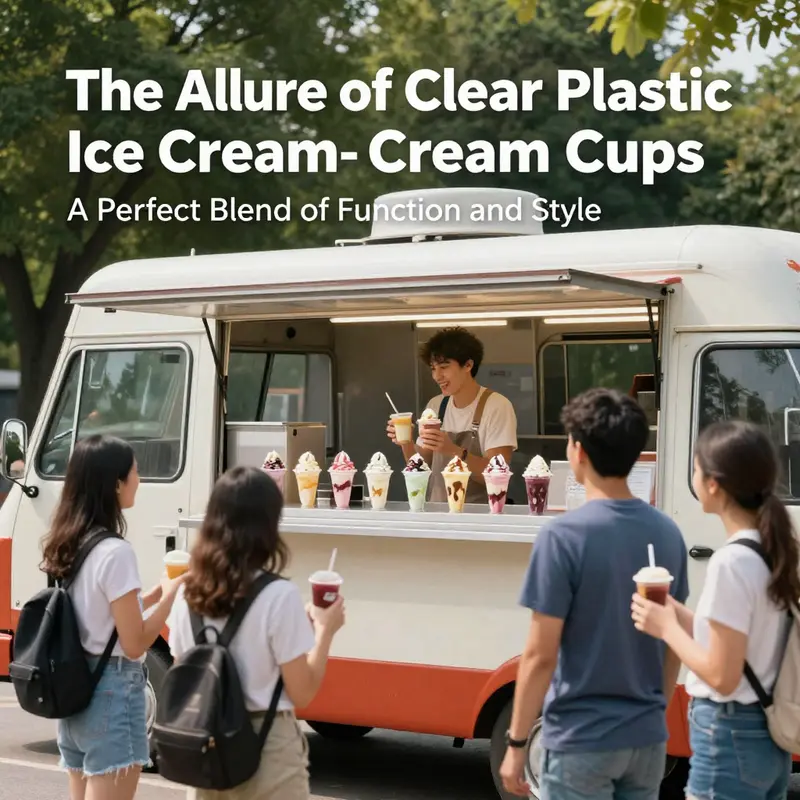
A dessert served in a cup should delight just as much as the flavor inside. With clear plastic ice cream cups, the visual truth of a product—the marbling of vanilla, the swirl of chocolate, the dense color of sorbet—becomes part of the tasting experience. The container is more than a vessel; it is a bridge between the frozen product and the consumer’s perception of quality. When the cup is transparent, the dessert speaks for itself, inviting scrutiny and anticipation in equal measure. This transparency is a strategic asset in a crowded market where first impressions are quick, and the eyes often decide before the palate has a chance to react. Yet the appeal of these cups goes beyond aesthetics. Their material choices, design features, and distribution-friendly attributes shape how they are used across a spectrum of settings, from self-serve kiosks to neighborhood fundraisers, and from food trucks to boutique dessert shops. The narrative of application is thus as much about logistics and experience as it is about material science and branding. As we move through the common scenarios, a pattern emerges: the same cup that makes a single scoop look irresistible is also the workhorse that supports speed, hygiene, and consistency in high-volume environments.
In the realm of self-serve ice cream machines and kiosks, the value of a clear cup becomes especially evident. In these high-traffic spaces, customers make rapid decisions based on what they can visually inspect. The transparency allows shoppers to gauge portion size, assess texture, and confirm that their chosen flavor is indeed visible and ready for sampling. The cup’s lightweight, disposable nature reduces the burden on staff and eliminates the overhead of repackaging, which is essential when service intervals are tight. From a design standpoint, semi-clear or clear polypropylene (PP) cups with compatible lids strike a balance between rigidity and ease of handling. The lid, often a food-grade PET, not only seals the product but also protects it from airborne contaminants in a bustling mall corridor or an energetic amusement park line. The temperature resilience of these materials—ranging from freezing temperatures to hot beverages in some configurations—ensures the cup remains performative across a day that may begin with a cold dessert and end with a warm strawberry sauce topping.
Mobile vendors, including food trucks and street pods, rely on economy and portability. In this corner of the market, the cups’ lightness translates into lower transport costs and easier stacking. The clear body helps photographers and social-media-savvy operators capture vivid, appetizing visuals for menus and promotional posts. A durable wall thickness minimizes breakage during transport and when customers hand the cup to themselves or to a server in a packed lineup. The absence of elaborate insulation is a trade-off; however, many operators mitigate melt-through by offering thinner layers of insulating accessories or by promoting prompt consumption, a practical solution for mobile sales where speed is as vital as flavor. In these settings, the cups are not merely containers; they are part of the logistics chain that drives throughput and customer satisfaction. The ability to print branding on the flat area beneath the cup is a quiet but powerful promotional tool, turning ordinary packaging into a moving advertisement that travels from cart to curb and back into a social feed.
Temporary events and festivals represent a different scale of operation. Here, the cups must perform in large volumes while remaining easy to store, transport, and distribute. The stacking efficiency of clear cups is a practical boon, enabling event organizers to pre-pack thousands of servings without the need for extensive warehousing. The shallow but broad design of many cups makes them comfortable to hold in a crowded venue, while the absence of a heavy, rigid lid reduces the risk of accidents in open-air settings where gusts and crowd flow can disrupt service. At such gatherings, the cups also serve as a medium for experiential branding: people sip, photograph, and share, their impressions amplified by the unobstructed view into the cup. The design also accommodates a range of frozen-dairy products, from dense gelatos to lighter sorbets, with the rigid outer wall providing a crisp barrier that keeps condensation at bay on hot festival days. These attributes collectively foster a sense of reliability about the product, a crucial factor when numerous vendors compete for attention in a single field.
Trade fairs and product launches turn cups into ambassadors for a brand’s story. A clear cup offers editorial clarity: your logo sits on the lid or on the cup’s flat area, and the dessert inside remains the protagonist. In this context, the cups become a controlled canvas for experiential marketing, blending aesthetics with the tactile pleasure of tasting. The option to customize—via logos, color accents, or even texture on the cup wall—enables exhibitors to maintain a consistent brand narrative across multiple touchpoints. The disposable nature of the cups supports generous sampling, a cornerstone of successful product introductions, while their cost-effectiveness keeps campaigns scalable. Guests leave with a tangible memory of the flavor and the brand, a combination that helps translate curiosity into trial and, eventually, into repeat purchases.
Cafés and dessert shops harness clear plastic cups for a different set of operational considerations. When serving frozen yogurt, gelato, sorbet, and similar dense desserts, staff appreciate the cups’ stability and the ease with which spoons or other utensils can be integrated into the service sequence. However, the dialogue around durability intensifies here. Thicker-walled variants are favored to resist cracking under pressure and to withstand condensation that can occur when cold desserts meet a warmer room. The cups’ transparency remains a selling point, especially when the shop’s signature colors or toppings are visible through the cup, inviting customers to customize their treat with a visually appealing array of sauces, fruit, or crunch. In this setting, the service experience hinges on a smooth handoff from scoop to lid to tray, and the cups’ design must support quick, clean assembly to avoid slowing down a busy counterside operation.
Smaller tasting sessions and delivery services leverage the clear cup’s ability to convey quality in bite-sized portions. For testers and pilots—whether at a culinary event, a consumer goods expo, or a neighborhood tasting—the visibility of the product helps reassure participants about freshness and portion integrity. When paired with a reliable lid that seals securely, these cups also support hygienic delivery, a factor that matters in increasingly health-conscious markets. The cups fulfill a dual role: they are both a mechanism for sampling and a conduit for brand storytelling as the consumer anticipates the first taste, aided by the glass-like clarity of the cup that frames the dessert in pristine focus.
Community outreach programs and giveaways further demonstrate the cups’ value beyond commerce. When organizations orchestrate promotional campaigns or charitable tastings, these containers deliver maximum reach at minimal cost. The ability to print or emboss branding on the flat area beneath the cup ensures that even a single bite or sip carries a message. Moreover, the disposability of the cups simplifies logistics for volunteers, enabling them to stage quick, hygienic tastings with minimal cleanup burden. Yet as these cups proliferate in public spaces, sustainability considerations come to the fore. While PET, PP, and PS variants offer different advantages in clarity, rigidity, and recyclability, manufacturers increasingly emphasize recyclable streams and responsible end-of-life practices. This shift aligns with broader consumer expectations that even everyday packaging can be part of a circular economy, provided that the materials and processes support efficient sorting and recycling.
The broader implications of choosing clear plastic cups extend into custom packaging decisions. For many operators, branding on the cup is not merely cosmetic; it is a way to extend a brand’s story to the consumer’s hands. A well-placed logo, a consistent color accent, or a subtle pattern imprinted on a flat area beneath the cup can transform a simple dessert into a branded experience that travels from the point of sale to social media and beyond. This is a relatively modest design investment with outsized marketing leverage, particularly in venues where the product’s appearance is the primary driver of impulse purchases. In addition to branding, designers consider practical features that influence the consumer experience. Built-in spoons or lids that double as small plates reduce mess and streamline service, turning a simple cup into a more complete dessert service system. The compatibility between cup and lid is crucial, as a misfit can delay service or compromise freshness. Temperature tolerance remains a practical constraint as well: while many cups perform well from -40°C to +90°C, operators must still verify that the chosen configuration aligns with the expected serving temperatures, topping strategies, and seasonal variations.
In sum, the application scenarios for clear plastic ice cream cups reveal a versatile, cost-conscious, and visually compelling packaging option that supports a wide range of business models. The cups’ transparency amplifies product appeal, while their physical properties address the realities of fast service, mobile sales, seasonal events, and promotional campaigns. The ideal cup harmonizes several goals: maximize product visibility, ensure reliable sealing and handling, enable branding opportunities, and fit within sustainable, economical distribution systems. The result is a packaging choice that not only protects a frozen dessert but also participates in the consumer’s sensory journey, from the moment the cup is chosen to the instant a spoon meets the first bite. For operators crafting a modern dessert program, the appeal lies in a seemingly modest asset whose impact compounds as it travels through the service chain—from display case to hand to mouth—and finally into memory.
External resource: For a concise overview of the broader landscape of ice cream cup varieties and their composition, see this external resource: Overview of 100ml Ice Cream Cups – Composition, Grades, and Industry Applications.
Internal reference note: In practice, many operators find value in aligning cup choices with their event and venue needs by exploring portable, ready-to-distribute options such as clear plastic cups designed for parties and events, which can be found online in supplier catalogs that emphasize both function and branding opportunities. See this example page for a sense of how clear cups can be positioned for event settings: clear plastic cup for parties and events.
From Clarity to Footprint: Navigating the Environmental Realities of Clear Plastic Ice Cream Cups
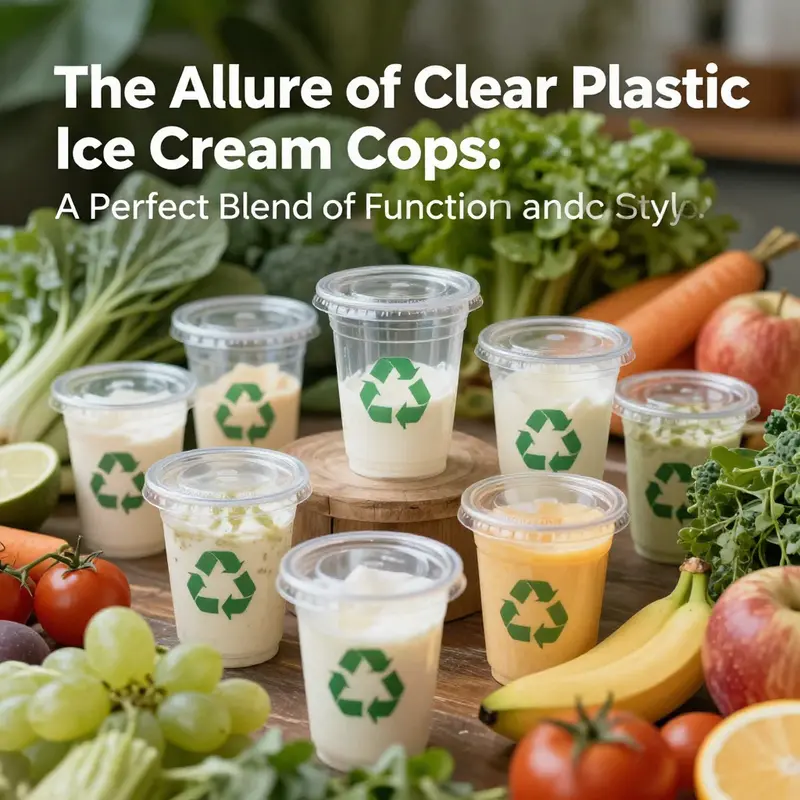
Clear plastic ice cream cups have become a staple of modern dessert service. Their transparency offers an immediate visual appeal; the sight of swirls of vanilla, ribbons of caramel, or a fleck of fruit suspended in cream can be as persuasive as the aroma wafting from the scoop. In fast-casual settings, at festivals, or in school cafeterias, these cups simplify handling, branding, and portion control. They are lightweight, easy to dispose of, and often affordable in bulk. Yet behind their practicality lies a longer, more complicated conversation about the environmental footprint of single-use plastics. The dominant materials—polypropylene (PP) and polystyrene (PS)—are chosen for clarity, rigidity, and surface finish, but they carry a set of consequences that can complicate the imagined convenience of an instant dessert service. The story of these cups is a reminder that appearance and functionality do not exist in a vacuum; they are inextricably linked to how a product is produced, used, and ultimately managed after the last bite is gone.
Material choice matters most at the production gate. PP and PS are derived from fossil fuels, and their manufacture consumes energy, often in energy-intensive processes that release greenhouse gases and other pollutants. The emphasis on clarity in PS and the stiffness in PP makes these plastics particularly suitable for cups and lids, yet it also means that the end-of-life pathways for these materials are tightly constrained. In many regions, recycling infrastructure for PS is limited, and even where it exists, the economic signals rarely favor recycling over new resin. The consequence is that a substantial share of these cups ends up in landfills, or as litter that travels with wind and water and can infiltrate rivers, beaches, and urban landscapes. The lightweight design that makes them efficient to ship and stock becomes a liability when discarded irresponsibly, contributing to the pervasive problem of micro- and macro-litter in environments that people and wildlife depend on.
The environmental narrative grows more nuanced when we consider end-of-life. The rapid fashion in which frozen textures melt and reform means that cups are often used for short periods and then discarded. The hot-cold tolerance of these materials is advantageous for various uses, yet the same resilience that helps them withstand temperature extremes also slows their degradation in natural environments. In a world that values streamlined service, it is easy to forget that the path from production to disposal travels through a landscape shaped by waste management policies, consumer habits, and corporate choices. The result can be a disconnect between the convenience offered by these cups and the persistence of plastics in ecosystems. Even in regions with robust recycling programs, contamination—think leftover dessert, lids slick with dairy, or labels and coatings that complicate processing—can undermine the quality of recyclable streams. In such cases, a seemingly simple cup becomes part of a broader system that struggles to close the loop.
Against this backdrop, the industry has begun to explore alternatives that aim to preserve the user experience while reducing environmental harm. Biodegradable or compostable options, often built around plant-based materials such as polylactic acid (PLA), promise to align consumer expectations with a more sustainable end-of-life. But the reality is more complicated than a simple substitution. Biodegradable and compostable products require specific conditions to decompose, typically industrial composting facilities that maintain controlled temperatures, moisture, and microbial activity. In many places, those facilities are not universally available, or they are limited to municipal or private networks that do not accept all compostable packaging. Without reliable industrial composting, even seemingly greener cups can linger in landfills for years, or worse, contribute to contamination in recycling streams that are not designed to handle multiple resin types. The result is a gap between ideal outcomes and practical implementation, a gap that businesses and consumers must navigate with care and honesty.
Another layer of complexity emerges when we consider the broader lifecycle and the behaviors that shape it. The shipments surrounding these cups—raw resins, pellets, finished cups, and lids—are part of a global supply chain that is sensitive to shifts in fossil fuel prices, transportation costs, and regulatory regimes. The economic calculus of packaging often prizes low unit costs and minimal weight, but those metrics can obscure the true cost to communities, ecosystems, and future generations. In this context, some companies begin to adopt more sustainable practices that go beyond the product itself. They pursue certified compostable packaging, invest in returnable or reusable systems for events and businesses, and experiment with refillable service models where feasible. The core idea is not to eliminate plastic entirely but to redesign how packaging is used, recovered, and reincorporated into a circular economy. The challenge is to balance performance with responsibility, ensuring that the cups still meet food-safety standards, provide the visual appeal customers expect, and do so without creating new burdens for waste management systems that may already be overtaxed.
Businesses contemplating a shift toward sustainability confront a spectrum of options, and the path is rarely linear. Reusable containers, for instance, can dramatically reduce single-use waste when paired with a robust return-and-clean system. The upfront investment in durable, reusable cups and the logistics of collection, sanitization, and redistribution can be significant, but the long-term environmental benefits often justify the costs. For operations that cannot deploy a full reuse framework, certified compostable packaging represents a compromise—one that aligns with composting infrastructure in places where such systems are mature and accessible. Yet certification alone is not a panacea. The industry must ensure that compostable materials are clearly differentiated from ordinary plastics, that waste streams are properly sorted, and that consumers understand how to dispose of the packaging in ways that actually lead to biodegradation rather than contamination. Consumer education thus becomes as important as product design. Clear, consistent labeling, transparent end-of-life instructions, and accessible disposal options can empower individuals to participate meaningfully in reduction efforts.
The consumer has a pivotal role in shaping outcomes. When customers choose brands that emphasize sustainability, support for systemic changes grows. This can drive manufacturers to invest in more responsible materials, better labeling, and more efficient end-of-life solutions. The dialogue between consumer behavior and corporate strategy matters, because the most sustainable packaging is the one that actually gets disposed of properly and recovered for reuse or safe composting. That requires not only reliable waste management but also clear communication at the moment of purchase. Packaging that communicates its end-of-life path—whether it is recyclable in standard streams, compostable in industrial facilities, or reusable through return programs—helps demystify the process and reduce the guesswork that leads to improper disposal.
For businesses exploring a more sustainable horizon, the practical steps can be incremental yet meaningful. First, assess the existing packaging portfolio with a lifecycle lens. Identify which cups are most frequently used, which require the most energy in production, and which have the least favorable end-of-life outcomes. Second, consider a phased transition to materials that align with regional waste infrastructure. If local facilities can process PLA or other compostables, a switch may yield real benefits, provided the product is properly labeled and disposed of in appropriate streams. If composting options are sparse, a pivot toward more durable, reusable systems can offer substantial waste reductions in environments where customer returns or centralized dishwashing are feasible. Third, partner with suppliers who provide transparency about material composition, certifications, and end-of-life pathways. This transparency helps ensure accountability and builds trust with consumers who want to make responsible choices.
On the consumer side, participation can be as simple as looking beyond price to understand packaging lifecycles. Seek out brands that publish clear sourcing information and explain how their cups are intended to be disposed of. Look for packaging that offers guidance about whether it is recyclable, compostable in industrial facilities, or part of a return program. When possible, support initiatives that publish outcomes—such as percentages of materials diverted from landfills or the share of packaging recovered for reuse. In doing so, consumers contribute to a market signal that rewards sustainability and incentivizes innovation. Even small shifts, like choosing a cup that is designed for easy stacking and reduced packaging volume, can cumulatively reduce the environmental burden of dessert service. And for those who operate events or venues, investing in a coordinated waste-management plan that includes clear collection points, trained staff, and pre-labeled bags can transform the end-of-life experience from a potential problem into a system-level success.
As the industry continues to evolve, the underlying truth remains: the environmental impact of clear plastic ice cream cups is not an isolated issue. It intersects production choices, consumer behavior, waste management capacity, and regulatory frameworks. The goal is not to vilify a convenient product but to encourage deliberate design and responsible use. The transparent cup can stay a symbol of accessibility and quality, provided it is paired with a thoughtful lifecycle approach. That approach acknowledges the array of trade-offs implicit in any packaging decision and invites collaboration among manufacturers, retailers, waste managers, and customers. When this collaboration is genuine and sustained, the result is packaging that serves the dessert, respects the planet, and remains faithful to the values of clarity and care that attracted many to this simple yet iconic form of containment in the first place.
For brands seeking practical pathways, consider exploring the options that balance performance with responsibility. There is merit in adopting packaging strategies that emphasize durability where reuse is possible, and that favor materials with proven end-of-life solutions in the local context. The shift toward sustainability is not a single leap but a series of measured hops, each designed to reduce environmental impact while preserving the customer experience. In that spirit, the conversation around clear plastic ice cream cups becomes a gateway to broader choices about how products are packaged, delivered, and remembered in a world increasingly attentive to resource stewardship. If a company can articulate a credible plan that addresses production emissions, material recyclability, consumer disposal, and infrastructure constraints, it stands a better chance of transforming a practical tool into a responsible solution that aligns with modern expectations for sustainability.
Internal link note: For brands seeking alternatives that emphasize environmental responsibility, explore options described under eco-friendly packaging solutions, which highlight how disposable packaging can align with broader waste-management goals while preserving the user experience. eco-friendly disposable packaging options
External resource for further reading: A comprehensive examination of how single-use plastics shape environmental outcomes, including policy contexts and consumer behavior, can be found at National Geographic. External link: https://www.nationalgeographic.org/encyclopedia/single-use-plastics/
Crystal Clear Demand: Trends, Personalization, and Sustainability Shaping the Clear Plastic Ice Cup Market
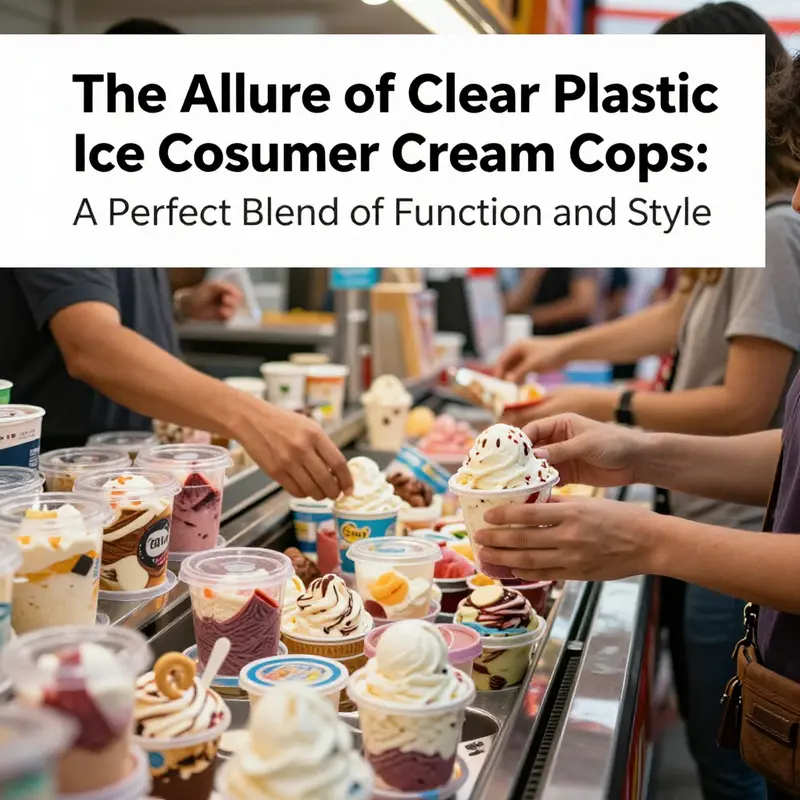
Crystal clear demand is more than a visual cue in today’s dessert and beverage ecosystems. The clear plastic ice cup, once a humble, disposable vessel, has become a focal point where convenience, presentation, and social behavior converge. Its transparency does more than showcase contents; it communicates freshness, quality, and a moment of pause in a fast-moving day. In markets shaped by rapid on-the-go consumption, that visual advantage translates into measurable preference. Consumers gravitate toward vessels that let them see the product’s color, texture, and even the tiny artisan details of crushed ice or shaped ice. When the cup itself becomes part of the sensory experience, it can elevate a simple scoop into a narrative moment—one that is easy to film and share, amplifying the product’s perceived value without additional marketing spend. This dynamic has amplified the appeal of the clear cup in a landscape that prizes immediacy, customization, and a tangible sense of freshness. The visual clarity also interacts with price perceptions. In many urban settings where disposable cups are a routine touchpoint, the cost of the cup and its lid is folded into the total experience. If the ice remains visually appealing and the lid seals well, consumers feel they are getting a premium moment even in a low-cost setting. This amplification of perceived quality occurs at the moment of choice, long before taste testing finishes; the clear cup serves as the mirror that frames the dessert’s appeal and invites curiosity.
The market around clear plastic ice cups is not just about volume; it is increasingly about the behavioral cues that make a purchase feel personal. In large, modern cities—where pace and novelty drive impulse decisions—the cup becomes a platform for personalization, not merely a container. The simplest forms of customization involve the cup’s body and lid, but there is a whole ecosystem of add-ons and design options that retailers and manufacturers are experimenting with to capture and extend the user experience. Some cups pair with integrated lids that double as small plates, reducing mess and sides of service counters. Others allow branding on the flat under-cup area or feature lids with windows that let the consumer glimpse the ice’s geometry—an almost tactile reassurance of quality. All of these small design decisions contribute to a broader trend toward experiential retail: the act of serving becomes an event that people want to photograph and narrate.
In this broader context, consumer preferences are shifting toward tools that support customization and social expression. A sizable share of buyers now look for options that enable them to craft a drink or dessert that reflects personal taste or mood. Whether layering flavored syrups, fruit bits, or milk-based bases, the vessel becomes a stage for self-expression. The clear cup’s transparency helps reveal the layers’ composition and the splash of color from syrups or crushed fruit, making each serving a tiny work of edible art. This alignment of form and function helps explain why demand for clear cups remains resilient even as other disposable packaging options evolve. It is not only about the contents but about how those contents are perceived and shown to the world. Consumers increasingly expect a seamless handoff from shop to street, and the cup is an integral part of that tempo—a vessel that supports quick service without compromising the visual integrity of the product inside.
A defining driver behind recent growth is the desire for chilled, refreshing experiences. More than four in ten consumers report a preference for beverages and beverages-enhanced experiences served cold, a trend that directly expands the utility of clear ice cups. The cup’s light weight, low cost, and compatibility with a range of temperature exposures—from freezers to display chillers—make it an attractive option for retailers seeking speed and simplicity. This practical match between product condition and container design ensures that the frost or condensation seen at the rim is a sign of immediate consumption rather than a service lapse. The cup’s material choice, often a food-grade polymer such as polypropylene or polystyrene, provides a reliable balance between stiffness, ease of handling, and cost, while allowing a crisp, near-invisible clarity that highlights the inner contents.
The cultural propulsion behind this category’s acceleration is hard to ignore. A phenomenon colloquially dubbed the “ice cup assassin” captures the paradox at the heart of the market: a product that is inexpensive on paper can command premium attention because the experience is elevated through presentation, social engagement, and the thrill of individual mixology. The term signals a price-to-experience dynamic. It is not about the cup alone; it is about the ritual of assembling and sharing a visually striking beverage or dessert. In consumer communities that emphasize creativity and rapid digital storytelling, a simple drink can become a shared moment with a name, a color combination, and a custom ice shape. The social gravity of these moments is magnified by the feedback loop of content creation: people post, others are inspired to try, and the cycle reinforces the value of the cup as a storytelling vessel.
This storytelling is increasingly shaped by online communities where ideas about ice shapes, flavor pairings, and even branding get exchanged at scale. The appeal of a visually compelling drink or dessert is not accidental; it is supported by a pipeline of citizen-generated content that makes every cup a potential influencer. Even without naming specific platforms, the pattern is clear: audiences want to see how a simple base can become something unique through clever combinations and eye-catching presentation. This has pushed manufacturers to consider not only the cup’s clarity but its potential as a branding canvas and a social media prop. The result is a thriving ecosystem where the cup is designed to look good in photos, hold up under hot and cold extremes, and travel well from vendor to consumer without compromising form.
From a market perspective, these shifts cohere into a set of clear growth signals. First, penetration in premium channels is increasing, with stores and micro-operations integrating ice-cup lines into broader snacking and dessert assortments. These channels value the cup’s ability to convey quality and consistency across multiple SKUs. Second, there is a marked emphasis on visibility and merchandising: the transparent body offers immediate shelf impact, enabling consumers to compare options at a glance and choose based on perceived freshness. Third, the supply chain shows a willingness to invest in durable, temperature-tolerant designs and lids that seal effectively during transport, all while keeping the element of ease that is essential for high-volume settings. These dynamics help explain why sales trajectories have surged in urban markets and why retailers continue to expand offerings that combine value with the ability to create shareable moments.
Alongside these commercial and experiential developments lies a critical sustainability narrative that cannot be ignored. The clear cup is often used in high quantities, which places it at the center of environmental considerations about single-use plastics. Industry observers and policymakers alike are increasingly focused on biodegradable and compostable alternatives, as well as reformulations that reduce environmental impact without sacrificing performance. Materials such as PLA and PBS-based plastics are gaining attention as potential avenues for balancing consumer demand with eco-conscious objectives. The regulatory environment in major markets has begun to reflect this shift, pushing manufacturers to explore more sustainable options while retaining the clarity and reliability customers expect. Consumers respond to these changes with a growing willingness to support brands that demonstrate environmental responsibility, especially when such commitments are paired with the ability to maintain product quality and usability. In this sense, the clear plastic ice cup becomes a focal point where convenience, aesthetics, and responsibility intersect.
The coming years are likely to intensify these currents. Projections point toward continued expansion in both urban and peri-urban settings, with total market value climbing toward sums in the tens of billions as the category matures. The 2026 outlook contends that value will be driven by innovations in materials, design flexibility, and the integration of branding opportunities that turn every serving into a marketing touchpoint. Yet this growth is not without risk. The environmental costs of disposable packaging are a potent counterforce that could slow momentum if not addressed with credible sustainability strategies and visible circularity commitments. In response, manufacturers are increasingly testing recyclable or compostable formats, while retailers seek to communicate the end-of-life options clearly to customers. The balance between speed, accessibility, and environmental stewardship will shape winners and losers in the clear cup arena.
For readers who want a closer look at product-level opportunities aligned with these trends, consider exploring the disposable clear plastic cup product page linked here as a practical example of how form, function, and branding can be harmonized in a single offering. disposable-clear-plastic-cup product page. This page illustrates how manufacturers balance transparency with lid design, stacking efficiency, and printing surfaces, all of which are critical when catering to a market that prizes visual appeal and performance in equal measure.
In sum, the market for clear plastic ice cups is riding a wave of visual appeal, personalization, and social-driven demand, all while navigating an evolving sustainability agenda. The cup is no longer merely a container; it is a strategic instrument for creating experiences that can travel—from street stalls to online feeds—without losing its clarity of purpose. As the category continues to grow, the challenges and opportunities will hinge on maintaining a delicate equilibrium among cost, quality, environmental accountability, and the ever-present human desire to share something beautiful with others. External observers and practitioners alike will watch how the industry translates these trends into scalable, responsible packaging solutions that keep the act of enjoying a dessert or cold drink as refreshing in the mind as it is on the lips. External resource: https://www.weimingchao.com/reports/2026-plastic-ice-cream-cup-market-report
Final thoughts
Clear plastic ice cream cups stand out in the consumer market as a reliable and visually appealing option for frozen desserts and beverages. Their strategic use across various sectors—from food trucks serving artisan ice cream to event planners looking for elegant serving solutions—highlights their versatility. While environmental impact is indeed a consideration, advancements in sustainable practices offer a path forward for businesses seeking to minimize their ecological footprint. As trends shift towards customization and branding, clear plastic ice cream cups prove that functionality does not have to compromise style. Leveraging these insights can empower businesses to create memorable consumer experiences, ensuring they remain competitive in the ever-evolving landscape of food service.