
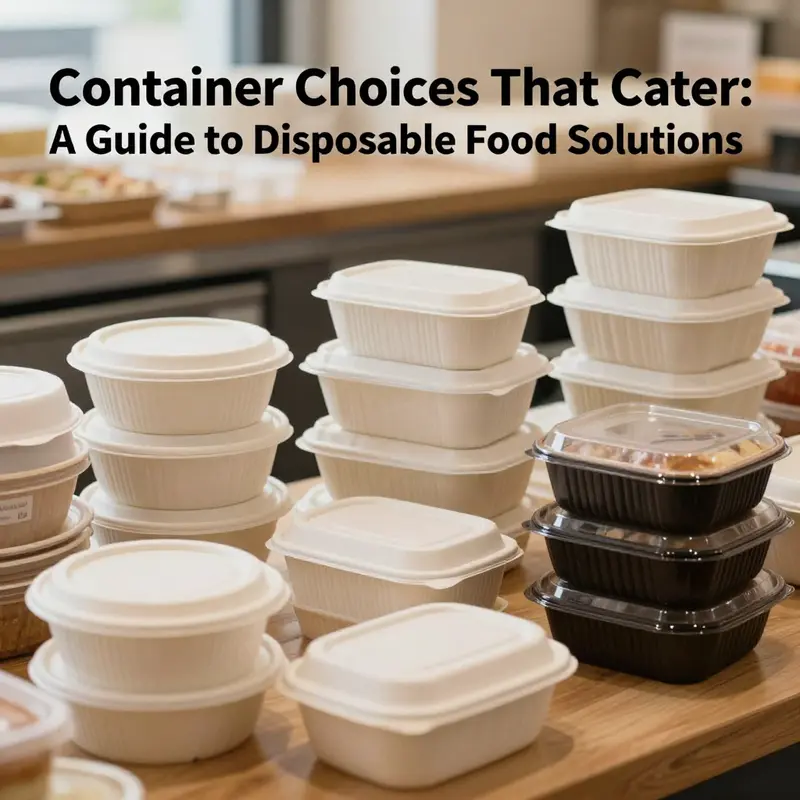
In the ever-evolving food service industry, choosing the right disposable food containers is crucial for businesses ranging from bubble tea shops to catering services. These containers not only serve practical purposes but also reflect a brand’s commitment to sustainability and efficiency. Understanding the material properties and applications of various container types allows businesses to make informed decisions that align with their operational needs. Moreover, addressing the environmental impact ensures that companies contribute positively to a greener planet while meeting consumer demands for eco-friendly solutions. Lastly, evaluating the economic considerations helps ensure that procurement choices are both cost-effective and aligned with long-term business goals. Let’s dive deeper into each of these essential aspects.
Materials in Motion: How Disposable Container Choices Shape Food Safety, Quality, and Sustainability
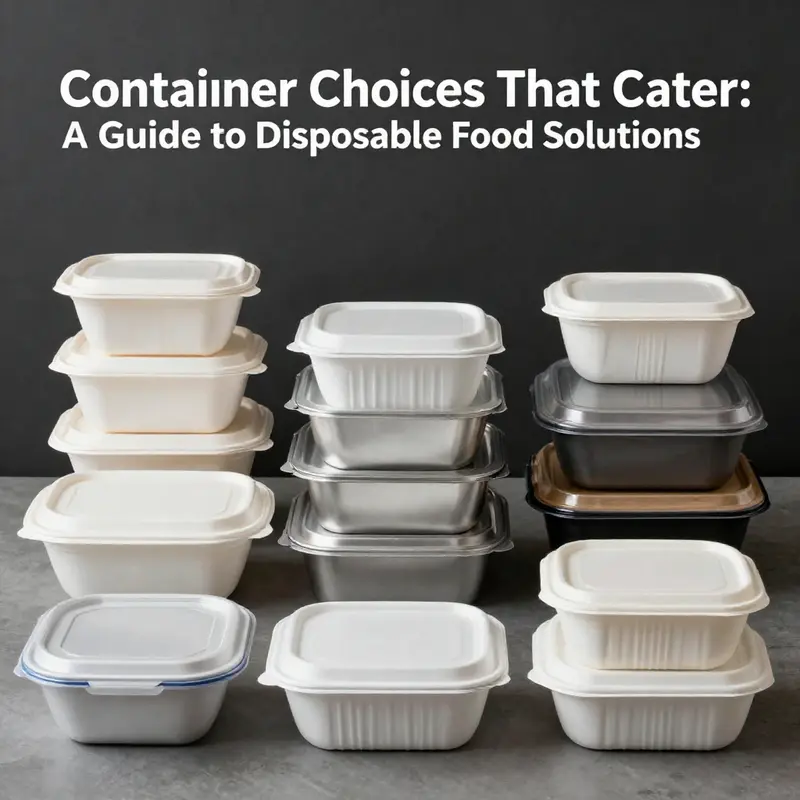
Material choices in disposable food containers do more than keep food sealed. They determine temperature management during transit, moisture handling, and how the package behaves across climates and service styles. Businesses select a container with a bundle of performance traits that affects safety, quality, waste streams, and even brand perception. This chapter connects material properties to real world applications from kitchen to curbside to recycling bin, emphasizing tradeoffs, nuance, and evolving expectations.
Expanded polystyrene, or EPS, provides strong thermal insulation and light weight but faces scrutiny about recyclability. Its cellular structure slows heat exchange, benefiting hot takeout during longer deliveries. However, exposure to high heat can lead to deformation, and end of life is challenging in many circularity programs.
Polypropylene endures higher temperatures and resists crushing, making it common for sturdy boxes and lids. Its barrier against moisture is reliable, and it stands up to stacking. Yet, depending on local systems, PP may have variable recyclability, and some uses are less compatible with reuse in single-use contexts.
PET is favored for cold foods and beverages, offering clarity and a strong moisture barrier. Its heat tolerance is limited, so hot items may not be ideal. Recyclability depends on municipal programs, and rPET can enable a circular path when contamination is managed.
Aluminum foils provide an excellent barrier to moisture, oxygen, and light and can function from oven to table. They perform with both hot and cold foods but are typically single-use, with disposal implications and evolving recycling streams that can support circularity where infrastructure exists.
Paper based containers derived from wood pulp carry renewability and compostability advantages, especially for drier items. They generally offer less insulation and must be designed to resist humidity and leakage. Industrial composting facilities enable end-of-life options where available.
Dividers, liners, and container geometry influence leakage control, portion integrity, and stacking efficiency. A well designed lid seal reduces spills and preserves appearance and aroma during transit.
Procurement requires balancing supply reliability, lead times, and scale. CE-certified bulk solutions help verify specifications and safety. The supplier’s ability to deliver consistent performance under peak conditions and to meet heat, barrier, and moisture requirements matters as much as price.
In fast service, PP is often the default for hot noodles and saucy items. EPS may be chosen to maximize insulation for longer deliveries when sustainability goals align. In cold chains, PET or rPET can provide crisp presentation with adequate barrier properties. Compostable options are attractive if industrial facilities exist.
Recycling rates and infrastructure determine how much value remains after disposal. Recycled PET and aluminum recycling can support circularity when programs manage contamination. Paper packaging may require moisture management in design to preserve integrity, and compostables depend on industrial facilities and consumer disposal behavior.
Practical guidelines include asking about the food temperature and acidity, transit time, moisture exposure, leakage tolerance, and the fit with a broader sustainability program such as recycling or composting.
Educators and operators benefit from understanding material tradeoffs and applying a disciplined approach to container selection. The material properties are a toolkit for aligning product safety, quality, and environmental goals with brand expectations and regulatory requirements.
Overall, material choice is a hypothesis about how a meal travels from kitchen to consumer. When performance facts such as insulation, barrier properties, mechanical resilience, and end-of-life pathways are considered, packaging decisions become more predictable and responsible, helping to safeguard safety, quality, and the planet.
Foam, Film, and Footprints: Reassessing Disposable Food Containers for a Sustainable Future
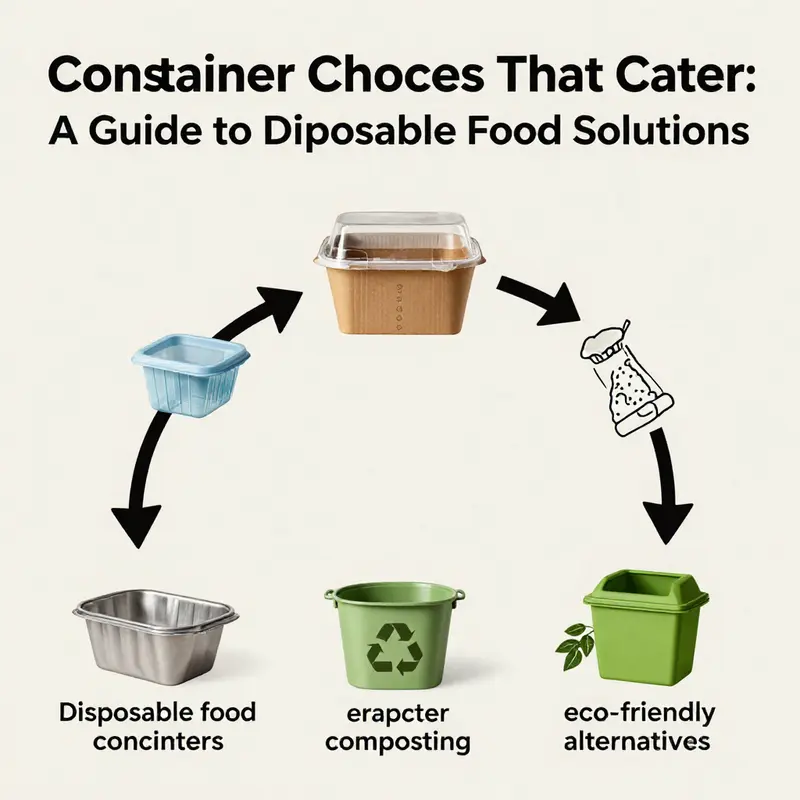
Disposable food containers sit at the intersection of convenience, hygiene, and logistical efficiency. They are the unseen workhorses of modern food services, from quick-service restaurants to school lunch programs and home meal kits. Yet their ubiquity does not come without cost. The same choices that allow a bustling kitchen to operate smoothly—stackability, lightness, and cost-effectiveness—also determine how much waste remains once the last bite is taken. In this chapter, we navigate the materials, the trade-offs, and the evolving strategies that shape the environmental profile of disposable containers, and we consider how businesses and communities can move toward a future where the same convenience is paired with stewardship of resources and ecosystems.
The spectrum of disposable container materials reveals clear divides in performance and environmental footprint. Polystyrene, in its expanded form, has long held appeal for its insulating properties. A hot curry wrapped in a foam container can remain steaming for a surprisingly long stretch, while a chilled dessert can stay firm after a trip through a bustling handoff line. The material is remarkably lightweight and inexpensive in bulk, and it stacks efficiently for storage and logistics. These practical advantages explain why foam remains common in fast food and takeout contexts where speed and cost per unit dominate. However, the advantages of insulation and low weight do not come without limits. Foam is not well suited to high-temperature use beyond roughly 100°C, where structural integrity and safety concerns begin to surface, and the material’s environmental profile is challenging. When discarded, EPS can persist for hundreds of years in landfills and in the natural environment. The ecological cost of production, coupled with the difficulties of recycling a contaminated stream, underscores a tension between short-term utility and long-term sustainability.
Polypropylene, another stalwart in the takeout and meal-prep space, offers a more durable alternative that tolerates higher temperatures. Containers made from PP can withstand hot foods and are commonly considered microwave-safe, expanding the range of applications from steam-warmed meals to soups and stews. The material’s higher heat resistance is not merely a culinary convenience; it translates into safer handling and reduced risk of leakage, which matters for both customers and food-service staff. Yet PP is not a universal panacea. Its recyclability varies by location, and even when recyclable, a significant fraction of PP containers ends up in landfills or is downcycled into products with lower value. The lifecycle energy use of PP hinges on manufacturing intensity, transportation, and the efficiency of local recycling streams, all of which differ across regions and regulatory environments.
Petroleum-based polyethylene terephthalate containers have carved a niche in cold foods and beverages, where clarity and lightness appeal to consumer perception and brand aesthetics. PET’s recyclability is often favorable in modern municipal programs, though it remains inappropriate for high-heat applications. The clear, leak-resistant properties of PET containers support a wide array of cold items—from salads to yogurts and beverages—but the same plasticity that enables their versatility can also complicate end-of-life outcomes if the local infrastructure does not capture them effectively. In truth, the fate of PET is closely tied to how well a jurisdiction can collect and sort post-consumer plastics, and how the economics of recycled PET align with production costs and demand for recycled content.
Aluminum foil containers demonstrate the other end of the spectrum. They are sturdy, versatile, and capable of transporting both hot and cold items with a barrier that protects contents from light and moisture. The microwave-safety profile of aluminum is sometimes misunderstood; many containers are designed to be microwave-safe in certain configurations, though care must be taken with foil-based products. Aluminum’s appeal lies in its heat tolerance and barrier properties, which make it a straightforward option for single-use packaging in catering and events. Yet aluminum containers are almost always single-use, and their disposal hinges on the availability of recycling streams capable of reclaiming metal efficiently. When not disposed of properly, aluminum contributes to litter and resource strain, despite being highly recyclable where systems exist.
A rising tide of alternative materials reflects growing consumer and regulatory interest in environmental stewardship. Compostable and biodegradable options, including those derived from cornstarch (PLA), wheat straw, and bamboo, are gaining traction. These materials promise a path to reduced persistent waste by enabling industrial composting. The concept is compelling: if the container can be composted rather than landfilled, its environmental impact can be substantially diminished. But the reality is nuanced. Industrial compost facilities that can process these materials are not universally available, and consumer behavior—encompassing proper disposal and separation at the point of use—becomes a major determinant of outcome. When compostable containers end up in ordinary municipal waste streams, the advantage dissolves, and the material may behave like any other plastic or fiber-based product, complicating the sorting process and potentially contaminating recycling streams. The lifecycle benefits of such materials are, therefore, intimately tied to the surrounding waste management infrastructure and to the degree of consumer understanding and participation in proper disposal.
The Environmental Hygiene and Food Safety discourse adds an important dimension to this examination. A joint study conducted years ago by public-health bodies examined whether disposable food containers could pose food safety risks when sourced from reputable suppliers and used appropriately. The finding was reassuring: properly used containers that meet established standards do not inherently compromise food safety. The critical takeaway is that the temperature and acidity of the stored food must align with the container’s design parameters. This is not a mere regulatory footnote; it is a reminder that packaging choice is not only about end-of-life outcomes but also about the safety of the food in the hands of consumers and the people who handle it in transit and service.
In practice, the procurement of these containers—whether for a national school lunch program, a bustling high-volume kitchen, or a campus meal service—often hinges on more than material composition. It requires evaluating the specific food context, including temperature ranges, acidity, and potential for leakage. It also involves logistics: how easily a container nests for storage, how weight affects transport costs, and how much space is needed for bulk orders. Modern procurement platforms that offer CE-certified solutions for 200-ml and 300-ml containers, frequently with dividers for portion control, illustrate the way in which markets attempt to harmonize performance with scale. These considerations reveal a broader truth: the impact of disposable containers cannot be fully understood without looking at the entire system—production, distribution, use, and end-of-life handling.
As sustainability concerns intensify, the conversation expands beyond single-use items to broader systems changes. Biodegradable and compostable options hold promise, but their success rests on more than technology. Public awareness and the infrastructure for proper disposal are critical. If a consumer does not know how to separate compostable materials from conventional plastics, or if industrial facilities capable of processing these materials are scarce, the envisioned benefits falter. The challenge is not simply to replace one material with another but to reconfigure the entire post-consumer chain so that the new materials have a legitimate path to recovery rather than ending up as residual waste. This systemic shift is the core of a transitioning economy in which materials are kept in circulation and the environmental footprint of packaging is reduced across the full life cycle.
A practical way to frame this transition is to consider three intertwined strategies. First, reduce reliance on disposable containers through redesign and process improvements that favor reuse and return systems. The logic is straightforward: if a business can offer a durable, cleanable, and reusable option, it reduces per-meal waste while preserving the operational efficiencies that customers expect. Second, invest in reuse ecosystems that encourage customers to bring their own containers or to participate in take-back programs. Such programs, when well designed, can sustain high participation rates and deliver meaningful reductions in waste. Third, implement policy and incentive structures that reward sustainable choices. These may include standards for compostability that align with available facilities, or incentives for customers and operators who participate in reusable packaging programs. Each of these strategies is not a standalone fix; they are mutually reinforcing elements of a broader design for a circular economy around food packaging.
From the supplier side, there is a growing emphasis on designing packaging with end-of-life considerations in mind. The debate is no longer about cost and performance alone but about how a container will fare after its use phase. Companies that pursue cradle-to-cradle thinking examine how residual materials can be reincorporated into new products, reducing the demand for virgin resources and lowering energy consumption tied to new material production. The challenge lies in aligning supplier capabilities, consumer expectations, and municipal recycling or composting infrastructure. When these elements align, containers can be part of a net-positive cycle rather than a net-negative one. The complexity of this alignment explains why progress tends to be incremental and regionally diverse; what works in one city’s waste system may not be feasible in another’s.
In the meantime, practical procurement decisions can still make a difference. For instance, choosing materials with higher recyclability in a given locale, or prioritizing products that minimize food residue contamination, can improve recovery rates. Packaging that seals well, resists grease, and holds up under typical transit conditions reduces the likelihood of leakage and contamination, which in turn supports recycling or composting streams. The decision matrix for buyers in schools, hospitals, and commercial kitchens becomes a map of trade-offs—between insulation, heat resistance, weight, cost, and end-of-life outcomes. The real challenge is not to chase a single silver bullet but to choose configurations that optimize performance while supporting systemic improvements in waste management.
Amid these considerations, there remains a practical question of how to scale responsible packaging in a cost-conscious industry. The answer often involves a mix of standardization, supplier diversification, and a granular understanding of local waste facilities. Standardization can reduce complexity in operations and enable bulk purchasing with predictable outcomes. Supplier diversification helps spread risk and fosters competition that can drive innovation in materials research and recycling compatibility. A nuanced grasp of local facilities—what kinds of plastics are collected, what percentages are actually recycled, and whether industrial composting is available—can guide decisions that have tangible environmental benefits. In settings like school lunch programs or large cafeteria services, this translates into clear guidelines for what types of containers to stock, how to manage leftovers, and how to implement a simple, repeatable disposal workflow for students and staff alike.
In addition to material choices and lifecycle considerations, the user experience surrounding these containers matters. A container that accommodates portion control through dividers, that seals cleanly to prevent leaks, and that is easy to handle for both end users and food handlers, contributes to a smoother, more reliable service. When a packaging system is intuitive and consistent, it reduces mishandling, minimizes spillage, and can improve the overall perception of quality. These design cues may seem elective, but they influence how customers interact with packaging and, by extension, how likely they are to engage with reuse programs or proper disposal practices. The psychology of packaging—perceived value, cleanliness, and convenience—therefore intersects with environmental outcomes, underscoring that sustainability is not a single technical fix but a relationship between product design, human behavior, and infrastructure.
The procurement and design landscape is not static. As new materials and processing techniques emerge, so too do evolving expectations around safety, performance, and environmental accountability. Industry stakeholders, researchers, and policymakers increasingly push for transparent lifecycle data, standardized testing, and robust certification schemes that clarify what it means for a container to be truly sustainable. This push toward transparency is critical; without accessible lifecycle information, decisions become guesses rather than informed choices. When businesses can compare cradle-to-grave impacts across materials—energy use, emissions, water consumption, and end-of-life recovery—they can prioritize options that align with broader sustainability targets and public commitments.
To bring this discussion back to practical realities, consider the role of information and collaboration in shaping outcomes. A growing ecosystem of resources—ranging from academic reviews to industry white papers and supplier catalogs—helps decision-makers weigh trade-offs and adopt better approaches. For example, studies that compare the environmental trade-offs of different container types, including the relative energy demands of production and the nuances of recycling, can illuminate which configurations work best in particular contexts. These insights are especially valuable when layered with regional waste-management realities and consumer disposal behavior. A holistic perspective recognizes that the environmental profile of disposable containers is not solely determined by their material composition but by the entire chain—from manufacturing plants to municipal facilities and back again as materials re-enter circulation through recycling or composting. The outcome is a more nuanced view of what “sustainability” means in the context of everyday packaging choices: it is not a single material; it is a system that requires alignment across design, use, and recovery.
In this spirit, the journey toward a more sustainable packaging future is a continuous process of improvement, experimentation, and adaptation. It requires that food-service operators not only select appropriate materials but also foster environments where customers understand and participate in proper disposal or reuse. It requires that policymakers craft regulations that are pragmatic, enforceable, and responsive to local infrastructure. It requires researchers to refine lifecycle assessments so stakeholders can compare options with confidence. And it requires manufacturers to innovate in ways that lower energy use, minimize waste, and enable higher recovery rates for packaging materials. The endgame is a packaging ecosystem where the convenience of disposable containers does not eclipse the health of the planet they inhabit. This is a collective ambition, achievable when attention to material science, waste management, human behavior, and policy converges into coherent action rather than isolated gains.
For those seeking a deeper, data-driven exploration of the environmental trade-offs across takeaway packaging, a comprehensive scientific review offers a detailed lifecycle analysis and a nuanced look at the environmental footprint of different container types. Such resources provide the methodological clarity needed to evaluate trade-offs and to present stakeholders with transparent, comparable information. They remind us that every choice—whether it favors insulation, strength, or recyclability—has downstream consequences that ripple through ecosystems, economies, and communities. As the conversation matures, the focus shifts from choosing a single “best” material to designing systems that maximize recovery, minimize energy use, and celebrate reuse where feasible. In practical terms, this means embracing a broader, systems-based view that integrates product design, consumer behavior, and municipal waste capabilities into a single, coherent strategy. The result is not a definitive endpoint but a pathway toward packaging that serves people and the planet with equal regard.
To illustrate the ongoing dialogue between practice and research, consider how procurement platforms and certification schemes can steer buyers toward better choices. For organizations responsible for mass distributions of meals and snacks, the ability to source CE-certified, bulk-packaged containers that meet specified temperature ranges and dividers for portion control is more than a convenience—it is a mechanism for standardizing quality and improving end-of-life outcomes. Such procurement choices can support waste reduction by enabling more predictable recycling streams and by encouraging suppliers to invest in materials with higher recovery rates. They also create market signals that reward innovations in design, compostability, and processing efficiency. The net effect is a gradual, market-driven shift toward packaging that balances the imperatives of safety, functionality, and environmental responsibility. In this sense, the path forward is incremental and collective, anchored in informed decision-making, cooperative infrastructure development, and ongoing evaluation of trade-offs.
For readers who want to explore concrete, practical examples of how these ideas translate into everyday operations, a range of resources is available. One internal reference that can guide better packaging choices is a resource focused on eco-friendly takeout packaging designed for microwave safety and grease resistance. This material highlights how thoughtful design can reconcile thermal performance with end-of-life considerations. It serves as a practical reminder that even within the constraints of single-use systems, there are design strategies that can ease disposal, support recycling, and inspire consumer confidence. Within the broader dialogue, such resources reinforce the principle that packaging decisions are not isolated acts of procurement but catalysts for behavior change, infrastructure alignment, and policy dialogue. This interconnected perspective helps explain why progress in disposable container sustainability often proceeds in fitful, iterative steps rather than dramatic, one-shot shifts.
Ultimately, the story of disposable food containers is a story about how societies manage resources, health, and waste. It is about balancing the undeniable need for clean, convenient food delivery with the urgent imperative to reduce environmental harm. It is about recognizing that every container is part of a system that begins at the point of manufacture and ends only when the material is reintroduced into the economy. It is about choosing materials and designs that maximize safety and performance while enabling better recovery, reuse, or composting wherever possible. It is about building the partnerships, infrastructures, and consumer norms that allow disposables to function without leaving a long-term, pervasive imprint on land, water, and air. In that sense, the future of disposable packaging will be written not just by engineers and designers but by a shared commitment to systems thinking, continuous learning, and practical action that makes sustainability a foundational capability of modern food service.
For readers seeking additional evidence and deeper context, an external resource compiles rigorous analyses of takeaway container systems and their environmental trade-offs. This body of research provides a rigorous grounding for decisions at every level—from policy makers to kitchen managers—helping translate complex lifecycle data into actionable insights. As these conversations mature, the path forward will likely involve an integrated approach that respects safety and convenience while embedding circularity into core packaging strategies. The result will be a packaging landscape that serves people well today and preserves resources for future generations, ensuring that the convenience of disposables does not outpace the planet’s ability to sustain it. For those who want to delve further, the ScienceDirect lifecycle analysis offers a comprehensive foundation for understanding where benefits and costs accumulate across different container types and end-of-life scenarios.
External reading: https://www.sciencedirect.com/science/article/pii/S0956053X18304527
Between Convenience and Cost: Navigating the Economic Currents in the Disposable Food Container Market
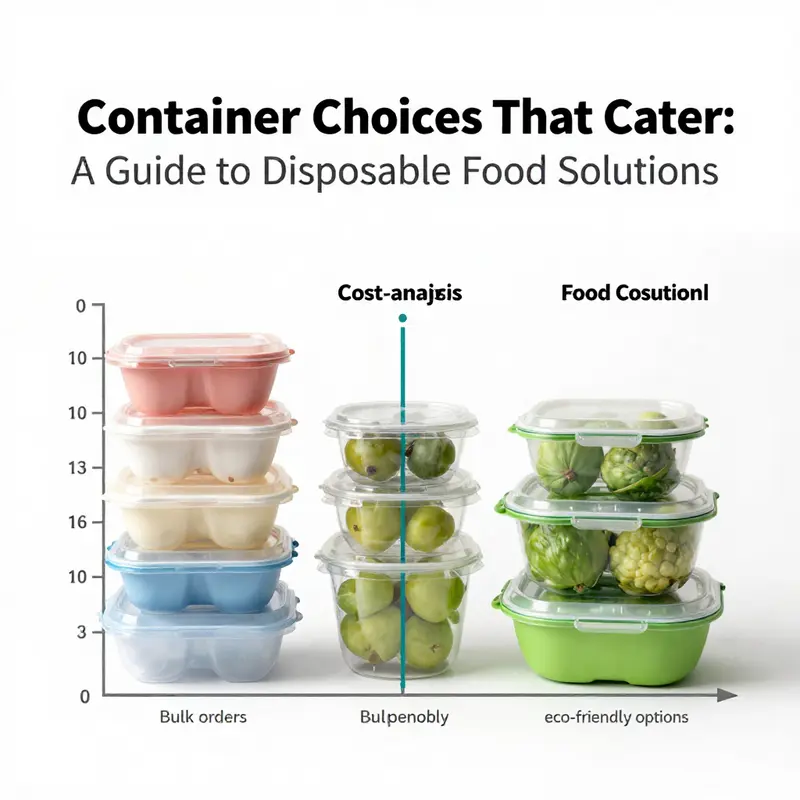
The market for disposable food containers has become a quiet, relentless engine behind the modern food economy. It supports the rapid rise of takeout, delivery, meal kits, and school lunch programs by supplying packaging that can preserve safety, maintain temperature, and present food in a way that feels convenient to busy lives. Yet beneath the surface of this seemingly simple product category lies a complex web of economic forces. These forces shape decisions across the supply chain, from raw material selection and manufacturing investments to procurement strategies and regulatory compliance. A holistic view reveals how growth in demand for convenience is matched by a tug-of-war between price pressures, sustainability expectations, and the evolving framework of waste management and environmental policy. It is a story not just of plastic versus paper, but of how value is created, captured, and sometimes relinquished in a market that must balance speed, safety, and stewardship in a world that increasingly measures success by both profit and responsibility. As urban centers continue to drive takeout and grocery home delivery, the appetite for single-use containers remains robust. The impulse toward convenience is reinforced by a network of services that rely on mass production, standardized sizes, and predictable performance. Yet this very standardization confronts a spectrum of cost realities that can tilt the economics of a container from a simple commodity into a strategic asset or a potential liability. The chapter that follows pulls these threads together, describing how rising input costs, sustainability narratives, and imperfect waste infrastructure interact with procurement practices, regulatory pressures, and the scale advantages of large manufacturers. It is not a deterministic story of doom or triumph but a nuanced exploration of how firms can navigate the terrain by aligning operations with market signals, consumer expectations, and policy incentives. In so doing, the discussion remains anchored to the practical realities of the market rather than abstract ideals, recognizing that every choice—material, process, logistics, or end-of-life pathway—carries a price tag and a potential reward in reputational capital as well as bottom-line performance.
The first thread in this economic tapestry is the cost of raw materials, which has become a central driver of profitability for producers of disposable containers. Virgin plastics, long the workhorse of many traditional designs, are particularly sensitive to the ebbs and flows of crude oil prices and global manufacturing demand. When oil prices rise or when supply chains tighten, the cost of resin can climb quickly, compressing margins for manufacturers that compete mainly on price and scale. In response, many producers have started to diversify their material portfolios, moving toward options that promise improved sustainability profiles or that offer resilience in face of price shocks. Paper-based solutions, bamboo and other biobased materials, and bioplastics such as polylactic acid are increasingly featured in product lines that were once dominated by conventional plastics. These shifts are not merely about environmental appeal; they reflect a strategic hedging against the volatility of virgin plastic markets. However, alternatives come with their own set of economics. Upfront investments in new machinery, process changes to handle different fibers, and adjustments to curing or forming technology can be substantial. In some cases, equipment modernization is not only desirable but necessary to achieve the performance standards that customers expect for hot or greasy foods, or to ensure compatibility with microwave or industrial dishwasher use. The capital expenditure required to transition away from established plastics can be a barrier, particularly for small and mid-sized producers who face tighter liquidity and shorter planning horizons than mega-manufacturers. Even when the long-run cost per unit may be lower, the near-term cash flow implications can delay or complicate adoption, creating a bifurcation where the most aggressive players gain an early lead in price and supply certainty, while others lag behind and lose competitiveness on price. Within this dynamic, procurement teams must continually assess total cost of ownership rather than unit price alone. They weigh material cost against performance metrics—heat resistance, grease resistance, and shelf-life stability—alongside manufacturing efficiency, waste, and post-use disposal considerations.
The second thread is the sustainability narrative that has reshaped consumer expectations and the policy environment around packaging. It is no longer enough for a container to perform technically; it must also align with broader environmental goals. Brands, retailers, and food service operators increasingly view packaging through the lens of corporate responsibility. The push toward recyclable or compostable designs, the preference for renewable or rapidly renewable materials, and the desire for designs that minimize life-cycle environmental impact influence every step of the value chain. This shift has tangible economic consequences. Even when sustainable alternatives are technically feasible, they can demand higher upfront costs, more complex supply chains, and greater investment in certification, labeling, and end-of-life infrastructure. The creation of a recycled-content or compostable demand stream depends on markets and policy instruments that can reward responsible choices with subsidies, tax incentives, or preferential procurement standards. Absent strong incentives or robust infrastructure for sorting, collection, and industrial composting, the advantageous cost balance of greener materials may be offset by higher processing costs or lower end-of-life value. At the same time, consumer willingness to pay a premium for sustainability—whether through direct price, perceived brand value, or social signaling—can tilt demand in ways that justify these investments. The result is a market where sustainability no longer sits at the periphery but informs core decisions about materials, product design, and partner ecosystems. It也 is in this context that the literature from health and safety authorities remains relevant. The evidence that properly used containers from reputable suppliers pose no significant food safety risks under varying temperatures and acidity reinforces the practical practicality of scaling up the safe use of disposable packaging even as environmental considerations become paramount. For procurement decisions, this interplay between safety assurances and sustainability commitments means risk management becomes a strategic discipline. Buyers must reconcile the assurances of safety with the reputational and financial benefits of greener solutions, all within the constraints of supply reliability and regulatory expectations.
The third thread is the evolving waste management and recycling infrastructure, which can dramatically alter the economics of packaging choices. In regions where recycling facilities are robust, and where there is an established post-consumer collection stream, the incentive to opt for recyclable materials grows stronger. Conversely, in environments where recycling rates are low or where contamination rates are high, the cost of end-of-life handling can be a hidden but substantial burden on producers and retailers. Companies that invest in better labeling, consumer education, and standardized packaging formats often find themselves rewarded with smoother reverse logistics and lower waste disposal costs over the life of the product. However, the real-world complexity of waste streams, varying contamination standards across municipalities, and the uneven geographic distribution of composting facilities means that end-of-life performance is not uniform. This asymmetry adds risk to the investment calculus and can slow the adoption of alternative materials, especially when the anticipated financial returns rely on favorable regulatory regimes or subsidy programs that may be unevenly distributed. The interplay between material choice and waste management is not purely a local concern; it is a global supply chain question. Sourcing from a single region or supplier network may simplify logistics, but it can also concentrate exposure to policy changes or environmental tariffs that affect end-of-life processing. Diversifying supplier bases, investing in standardized packaging formats, and building data-driven tracking of material flows become practical measures to mitigate these risks. The narrative here is not one of inevitability but of strategy: the more a company views packaging as an integrated system—design, materials, manufacturing, logistics, and end-of-life—the more adept it becomes at navigating the price volatility inherent in the market and at leveraging sustainability imperatives as a value differentiator rather than a cost center.
Against this backdrop, the economics of scale begin to matter in a new light. Large manufacturers often enjoy cost advantages through higher utilization of equipment, more favorable terms with raw material suppliers, and more efficient logistics networks. Their ability to amortize capital investments across greater volumes can make transitions to new materials economically viable sooner than for smaller players. Yet scale also brings complexity: coordinating multiple material streams, maintaining consistent quality across product lines, and ensuring compliance with a growing matrix of regional standards and certifications can increase overhead. For small and regional players, niche specialization, tighter customer relationships, and rapid responsiveness to local demand can sustain profitability even as they face higher per-unit costs. The challenge is to balance market share and profitability when input prices are volatile and regulatory horizons are expanding. In practice, this often means a portfolio approach: maintaining a core line of traditional containers to serve price-sensitive segments, while gradually expanding into greener, higher-margin options for customers who value sustainability and brand alignment. The decision is not simply about which material wins on a price-per-unit basis, but about which combination of products, partnerships, and service models yields the most resilient and predictable cash flows over time.
Procurement behavior mirrors these structural shifts. The moment a buyer looks beyond the sticker price, the landscape becomes more nuanced. The environmental, social, and governance expectations associated with packaging choices influence contract terms, audit requirements, and supplier qualification processes. In many markets, regulators are increasingly attentive to packaging waste, with policies that encourage recycling or composting, set standards for material safety, and sometimes require labeling about end-of-life pathways. Compliance costs are not merely a line item but a strategic consideration that can affect supplier selection, inventory management, and product development timelines. Compliance also intersects with consumer trust. When brands are able to demonstrate clear commitments to sustainability and safety, they can command stronger loyalty, higher willingness-to-pay from certain customer segments, and more favorable negotiation positions with retailers and distributors. Yet the path to such advantages demands credible reporting, transparent supply chains, and consistent performance across the product lifecycle. The result is a market where procurement teams must blend supply economics with strategic risk management, balancing the near-term necessity of affordable packaging with the long-term value of sustainable, compliant, and reputationally strong solutions.
The economic narrative of disposable containers is further enriched by what can be described as a policy-enabled market dynamic. Governments and local authorities increasingly recognize that packaging waste represents a significant environmental and municipal challenge. As a consequence, policy instruments such as bans on certain single-use plastics, mandates for recyclability, and subsidies or incentives for compostable packaging become part of the economic calculus for manufacturers and buyers. When such policies align with consumer preferences and corporate strategies, they create a supportive environment for investment in new materials and processes. Conversely, abrupt policy shifts or inconsistent enforcement can introduce uncertainty, making capital budgeting more risk-averse and slowing the pace of transition. Companies that navigate this landscape well tend to establish close collaborations with policymakers, invest in robust environmental reporting, and adopt flexible production platforms that can pivot as rules evolve. In practical terms, this may translate into modular manufacturing lines, adaptable supplier contracts, and design practices that simplify end-of-life processing without sacrificing performance. It is through this ongoing alignment between market needs, policy signals, and technological capability that the disposable container industry can sustain growth while also addressing the broader aims of resource stewardship and environmental responsibility.
A key takeaway from this economic panorama is that profitability in the disposable container segment does not hinge on a single lever. It emerges from a tapestry of interrelated choices—material selection, manufacturing efficiency, procurement discipline, end-of-life outcomes, and strategic engagement with policy frameworks. The most resilient players are those who view packaging as an integrated system rather than a collection of discrete parts. They design with end-of-life in mind, seeking formats that lend themselves to recycling or industrial composting, while still delivering the temperature control, grease resistance, and barrier protection that food businesses rely upon. They invest in data-driven supply chains that track material flows, monitor performance, and reveal opportunities for optimization across the product lifecycle. They maintain flexibility in their portfolios to respond to price swings, regulatory changes, and shifting consumer expectations. In short, the economics of disposable containers demand that companies balance cost efficiency with strategic foresight, recognizing that today’s cost savings may be tomorrow’s missed opportunity if they do not adapt to a market characterized by rapid change and rising environmental consciousness.
Within this broader frame, a practical example of how the economics unfold can be seen in procurement and supply chain planning. Buyers often face a choice between sticking with familiar material formats that deliver predictable margins and experimenting with greener options that promise longer-term brand value but require higher transactional effort and sometimes higher upfront capital. The decision is rarely binary. It is instead a continuum along which teams negotiate supplier terms, assess risk, and design product lines that can be scaled up or down with market demand. The procurement strategy may include multiple suppliers for different materials, hedging against price moves in any single raw material market. It may also involve collaborative product development with suppliers to optimize formulations, improve processing efficiency, and ensure that new materials meet safety and performance requirements. As the industry tightens its focus on sustainability, suppliers that can offer credible sustainability credentials, transparent supply chains, and reliable post-use handling will increasingly become preferred partners. In turn, purchasers may find that these attributes come with price premiums that are justified by the reduction in environmental risk, improved customer perception, and the potential for subsidies or incentives that reward responsible packaging.
The chapter’s core argument is not simply that costs rise or that sustainability is fashionable. It is that the economics of disposable containers are best understood as a dynamic system where demand, supply, policy, and environmental outcomes mutually shape each other. Many in the industry acknowledge that the most durable financial performance will come from smart, integrated approaches that treat packaging as a strategic asset rather than a disposable expense. This means designing for compatibility with recycling and composting streams, choosing materials that strike the right balance between performance and environmental footprint, and creating procurement and manufacturing models that can weather volatility without sacrificing the quality, safety, and reliability demanded by food service operators. It also means recognizing that consumer-facing brands benefit when packaging not only preserves food but also communicates a commitment to responsible stewardship through clear labeling and visible sustainability claims. In that sense, the economic narrative converges with the broader social contract around packaging: it is a shared responsibility that rewards those who align operational excellence with environmental accountability and transparent governance.
For readers curious about practical procurement implications and supplier options, consider a representative sourcing channel that highlights how buyers can access CE certified bulk containers while maintaining cost control and compliance. The following resource provides a concrete example of the type of product specification and certification that buyers seek when expanding or upgrading their packaging fleets: CE-certified bulk disposable containers. This kind of procurement touchpoint illustrates how networks of manufacturers and distributors frame price, performance, and regulatory alignment in a global market. It also underscores the importance of due diligence, supplier verification, and certification in ensuring that packaging not only performs on day one but remains trustworthy as operations scale and end-of-life pathways become more critical to stakeholders.
In sum, the economic terrain of disposable food containers is shaped by a triad of forces: volatility in raw material prices that encourages material diversification and process flexibility, a rising emphasis on sustainability that both elevates costs and creates new value propositions, and the evolving waste infrastructure and policy environment that determine the true cost and feasibility of end-of-life pathways. The interaction of these forces creates a market where strategic rigor and adaptive capacity are essential. Firms that invest in flexible manufacturing, transparent material sourcing, and end-of-life collaboration stand to gain not just on price but on resilience and reputational capital. As demand for convenience persists, the real challenge—and opportunity—lies in aligning short-term cost management with long-term value creation built on sustainable packaging practices that can endure changing policy landscapes and evolving consumer expectations. The resulting economic logic is clear: profitability in the disposable container sector emerges from balancing cost discipline with sustainability ambition, each reinforcing the other as the market evolves.
External resource: https://www.grandviewresearch.com/industry-analysis/disposable-food-containers-market
Final thoughts
Selecting the right disposable food containers goes beyond mere functionality; it encompasses a deep understanding of material properties, environmental impacts, and economic factors. Food service professionals must weigh these considerations to create an optimal combination that maintains food safety, aligns with sustainability goals, and meets budget constraints. Engaging with reliable suppliers and staying informed about the latest trends can further enhance the quality and effectiveness of the products used. Ultimately, the right choice in disposable containers can elevate a business’s service, improve customer satisfaction, and pave the way for a sustainable future.