
Introduction
In today’s fast-paced culinary landscape, the right disposable food containers are more than just packaging; they are essential tools for operational success. For bubble tea shops, restaurants, food trucks, and catering services, choosing the right containers significantly impacts both customer satisfaction and efficiency. High-quality containers ensure that meals arrive at their destination fresh and visually appealing, leaving a lasting impression on customers. Moreover, efficient packaging solutions streamline operations, allowing businesses to serve more customers swiftly and effectively. As such, investing in the right disposable containers is crucial for enhancing the customer experience while optimizing your operational workflow. This article will explore various options available from reputable suppliers, like Eco Cup Bowl, and highlight their importance in the food service industry.
Benefits of Using Disposable Food Containers for Restaurants, Food Trucks, and Catering Services
The modern food service industry increasingly relies on disposable food containers due to their numerous advantages. These containers streamline operations while ensuring quality service and safety. Below are some key benefits:
-
Convenience:
Disposable food containers eliminate the need for dishwashing. This is particularly beneficial for busy restaurants and food trucks where quick service is essential. With no dirty dishes to manage, staff can focus on customer service and food preparation, thus improving operational efficiency. -
Hygiene:
These containers are pre-sanitized and sealed, significantly reducing the risk of contamination. Each meal is served in a clean, uncontaminated container, which is essential for maintaining health standards and building customer trust. Proper hygiene practices are particularly crucial in catering services, where the food must be kept safe during transport and service. -
Cost-Effectiveness:
Using disposable containers can save money on labor and water usage typically associated with washing reusables. This can be an important consideration for businesses aiming to lower operational costs. Furthermore, there’s no need to invest in valuable storage space for reusable dishes, allowing for more efficient inventory management. -
Eco-Friendly Options:
Many disposable food containers are now made from biodegradable or compostable materials, such as recycled paper, bamboo, and plant-based plastics. Choosing eco-friendly options can help businesses attract environmentally conscious customers. According to the Green Dining Institute, using these sustainable materials allows food services to meet their sustainability goals while still enjoying the benefits of disposable products. -
Customized Solutions:
Many suppliers offer customizable disposable containers, allowing businesses to align packaging with their brand identity. This adds a unique touch to food service while maintaining functionality. For instance, see options like Kraft Disposable Paper Food Containers that can be tailored to suit specific needs.
These benefits demonstrate why disposable food containers are a preferred choice for food industry professionals, enhancing overall service while ensuring safety and compliance with health regulations.
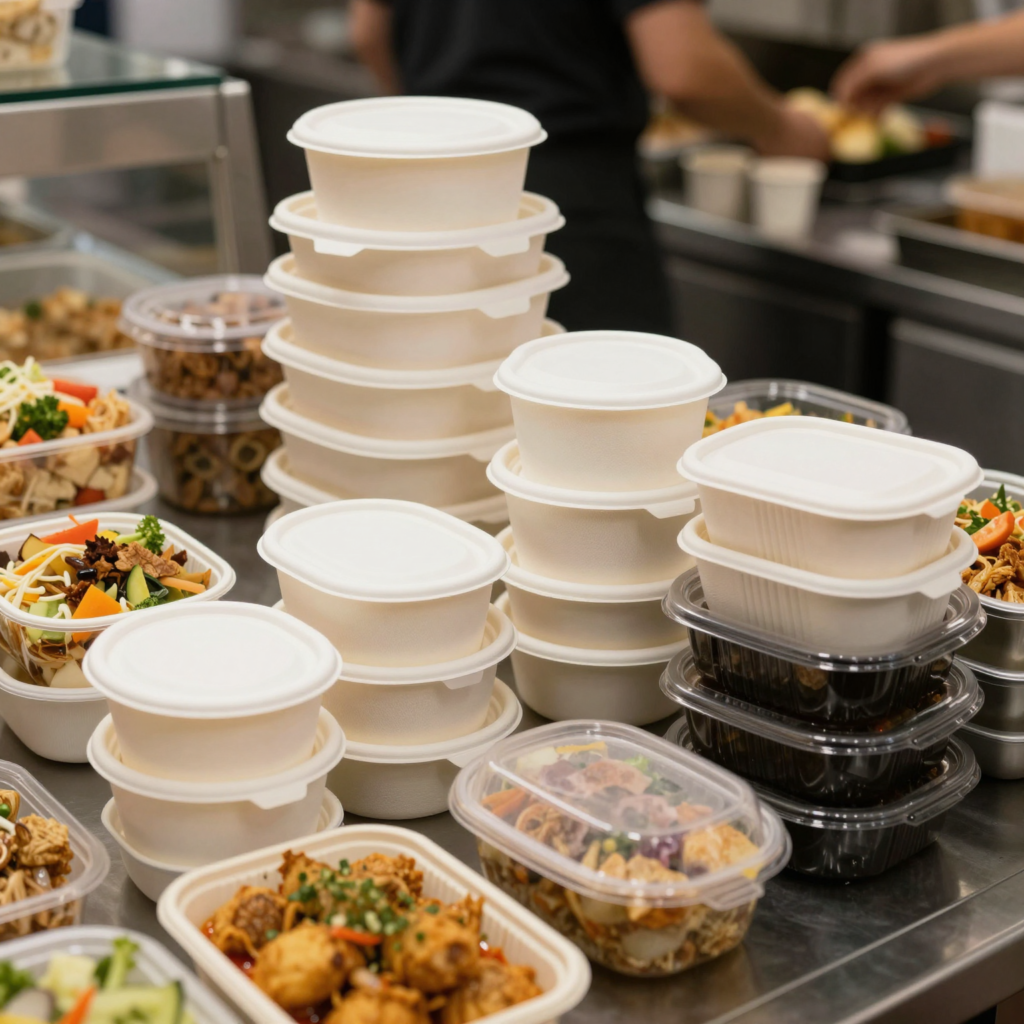
Here’s a visual representation of the diverse range of disposable food containers used in various settings, including restaurants and food trucks. This image showcases containers of different sizes and materials such as paper bowls, plastic jars, and takeaway boxes, effectively conveying usability and versatility. These containers are ideal for businesses looking to enhance their food presentation while maintaining convenience for customers. To explore more about the various types of containers suitable for food service, check out disposable food packaging options and Kraft paper box packaging.
Safety Standards and Regulations for Disposable Food Containers
When it comes to disposable food containers, safety standards and regulations are key considerations for businesses in the food industry. These standards ensure that the materials used in disposable containers are safe for food contact, minimizing health risks both for consumers and food service operators.
Understanding Important Standards
Several safety standards govern disposable food containers worldwide:
- GB 4806.1-2016: This Chinese standard addresses food contact materials and sets safety requirements for all food contact containers. It mandates compliance to specific migration limits for substances from containers into food, ensuring safety during consumption. Learn more about the requirements here.
- FDA Guidelines: In the United States, the Food and Drug Administration (FDA) regulates materials used in food containers to ensure they do not contain harmful chemicals that could leach into food.
- ISO Standards: The International Organization for Standardization (ISO) also provides guidelines that manufacturers must follow to ensure their products are both safe and effective in packaging food.
Why Compliance Matters
For businesses sourcing disposable food containers, adhering to these safety standards is crucial due to several reasons:
- Consumer Safety: Meeting safety standards protects consumers from harmful substances that may cause health problems.
- Regulatory Compliance: Non-compliance can lead to legal issues and damage a brand’s reputation.
- Quality Assurance: Suppliers who exceed these standards often deliver higher-quality products, enhancing customer satisfaction and trust.
At EcoCupBowl, we pride ourselves on exceeding safety standards. We ensure that all our disposable food containers comply with relevant regulations. This commitment not only protects your customers but also helps build a sustainable and trustworthy business relationship.
Eco-Friendly Materials in Disposable Containers: A Sustainable Choice
In an era where environmental consciousness is rising, the food service industry is increasingly shifting towards eco-friendly materials for disposable food containers. These materials not only minimize environmental impact but also align with the growing demand from consumers for sustainable practices. Here’s an overview of the common eco-friendly materials used for disposable food containers along with their environmental advantages.
Common Eco-Friendly Materials
- Kraft Paper
- Description: Made from recycled paper or wood pulp, Kraft paper is biodegradable and compostable.
- Uses: Commonly found in lunch boxes and takeaway containers.
- Advantages: Non-toxic and safe for food contact, Crop-to-Container lifecycle reduces plastic usage, applicable in various food service settings.
- Bagasse
- Description: A byproduct of sugarcane processing, bagasse is 100% biodegradable and compostable.
- Uses: Ideal for hot and cold food containers, especially in takeout scenarios.
- Advantages: Provides a sustainable alternative to traditional plastics, reducing reliance on petroleum-based materials while being sturdy enough for moist foods.
- Bamboo Fiber
- Description: This renewable resource is collected from bamboo plants and can be molded into various container shapes.
- Uses: Suitable for a range of culinary presentations from salads to baked goods.
- Advantages: Completely biodegradable and renewable, bamboo fiber adds a natural aesthetic appeal to food packaging.
- Corn Starch (PLA)
- Description: Derived from corn, this material is often used to create rigid containers and utensils.
- Uses: Fast food containers, cutlery, and other single-use products.
- Advantages: Compostable under industrial conditions, it significantly cuts down on landfill waste compared to plastic.
Environmental Advantages
- Biodegradability: Most eco-friendly materials decompose naturally, reducing long-term environmental pollution.
- Lower Carbon Footprint: Sourcing from renewable plant sources minimizes carbon emissions, contributing to climate change mitigation.
- Compliance and Safety: Many eco-friendly materials comply with health and safety regulations, ensuring safe food contact. Certifications like EPR ensure adherence to environmental standards, making these products suitable for widespread commercial use.
Aligning with Company Values
Adopting eco-friendly disposable containers not only enhances a company’s environmental footprint but also resonates with consumers who are increasingly supporting sustainable brands. This shift supports the goal of reducing waste and promotes a culture of responsibility in the food service sector. If you want to learn more about how eco-friendly containers can improve your sustainability practices, check out our article on non-plastic disposable food containers that provides further insights into sustainable packaging solutions.
By integrating these materials into your retail and food service offerings, companies can lead by example, demonstrating commitment to sustainability while meeting consumer demands.
This article emphasizes how eco-friendly materials not only benefit the planet but also enhance the business’s reputation, fostering loyalty among clientele.
| Container Type | Durability | Price per Unit | Environmental Impact |
|---|---|---|---|
| Biodegradable | Low to Medium (degrades in heat) | $0.08 – $0.16 | Best for environment; compost within 90 days |
| Recyclable | Medium, depends on recycling | $0.03 – $0.10 | Can improve environmental impact if recycled |
| Traditional Plastic | High (durable materials) | $0.03 – $0.10 | Harmful; persists in ecosystems for years |
Choosing the right disposable food containers is essential for any food service operation, especially for businesses aiming to balance cost, durability, and environmental responsibility. As shown in the table above, biodegradable containers offer an environmentally friendly choice, albeit at a higher price per unit, while traditional plastic is cost-effective but poses significant environmental challenges. To explore more about biodegradable options, you can learn more about non-plastic disposable food containers. Additionally, if you’re curious about the safe use of plastic containers, check this informative article on plastic food storage container safety.
Eco-Friendly Materials for Disposable Food Containers
In today’s environmentally conscious world, choosing the right materials for disposable food containers is more important than ever. Many businesses, such as bubble tea shops, restaurants, and catering services, are moving towards sustainable options. Here are some popular eco-friendly materials:
- Bamboo: A fast-growing, renewable resource that is sturdy and compostable.
- Recycled Paper: Made from post-consumer waste, reducing landfill impact while being biodegradable.
- Compostable Plastics: These are made from natural materials that break down in composting environments, offering a sustainable alternative to traditional plastics.
Utilizing these materials not only helps the environment but also appeals to eco-conscious customers looking for sustainable choices in packaging. To explore more about diverse non-plastic disposable food containers, visit our blog!
“We’ve been using EcoCup’s disposable food containers for our bubble tea shop, and the feedback from our customers has been overwhelmingly positive. The containers are sturdy and perfect for both hot and cold beverages. Plus, their eco-friendly nature aligns with our brand values!”
- Jessica, Owner of Bubble Bliss Tea
“The reliability of EcoCup’s food packaging has truly impressed us. As a catering service, we need containers that not only hold up but also keep our food fresh. EcoCup delivers on both counts, and we appreciate their commitment to sustainability.”
- Mark, Catering Manager at Gourmet Gatherings
“Switching to EcoCup’s disposable containers has been one of the best decisions for our restaurant. Not only do they look professional, but they are also incredibly functional for takeaway orders. Our clients appreciate the quality, and that’s reflected in their feedback!”
- Sarah, Restaurant Owner at Tasty Treats Diner
These testimonials showcase not only the functionality and quality of EcoCup’s disposable food containers but also their appeal to a conscientious consumer base that values sustainability. Such credibility can decisively encourage potential clients to trust your products.
In conclusion, choosing the right disposable food containers is more than just a matter of convenience; it’s an investment in quality, sustainability, and your brand image. At EcoCup Bowl, we pride ourselves on offering a diverse range of reliable and eco-friendly disposable food containers that are perfect for bubble tea shops, restaurants, food trucks, catering services, event planners, and corporate procurement teams. Our products, made from sustainable materials, not only ensure the safety and quality of your food but also align with eco-conscious trends that resonate with today’s consumers.
By opting for our disposable food containers, you’re not just choosing practicality; you’re actively contributing to a greener planet. Our containers are recyclable, compostable, and designed to minimize waste-making them an excellent choice for businesses that prioritize environmental responsibility.
We invite you to elevate your brand with our high-quality, eco-friendly disposable food containers that will impress your customers and reflect your values. For a tailored quote and to explore our complete product range, contact our team today. Let us help you find the perfect solutions to meet your food service needs!
Market Growth of Disposable Food Containers
The disposable food containers market has seen substantial growth over the past few years, a trend that is expected to continue. As the demand for convenient dining options rises, especially among restaurants and food trucks, suppliers are uniquely positioned to cater to this expanding market. The global market size for disposable food containers in 2023 is estimated to be around $148.3 billion and it is projected to grow at a 4.5% CAGR, reaching approximately $215.1 billion by 2032.
This growth is primarily driven by several key factors:
- Rising Demand for Takeout: As businesses adapt to changing consumer habits, more restaurants are offering takeout and delivery services. This trend is particularly beneficial for food trucks, which rely on disposable containers for serving their dishes.
- Increasing Popularity of Food Trucks: Food trucks offer a unique twist on traditional dining experiences, often using disposable containers to serve customers on the go, resulting in increased demand.
- Health and Safety Concerns: The preference for disposable items has heightened due to hygiene concerns, making containers a vital component for safe food delivery.
To visually emphasize this market growth, the chart below illustrates the projected increase in market size over the next decade.

Source: Grand View Research
For further insights into the types of containers that cater to this market, feel free to explore our blog.