

Celebrating special moments with a champagne toast invokes elegance and charm. Yet, using disposable paper cups for this purpose may undermine the quality of the experience. As beverage professionals, understanding the intricacies of taste, effervescence, and health concerns can significantly improve service offerings. This article delves into the impact on taste and aroma, the compromised effervescence, health risks, and best practices for an authentic champagne toast, ensuring you deliver a toast that delights every palate.
The Fragile Toast: How Disposable Paper Cups Shape Champagne’s Taste, Aroma, and Ceremony
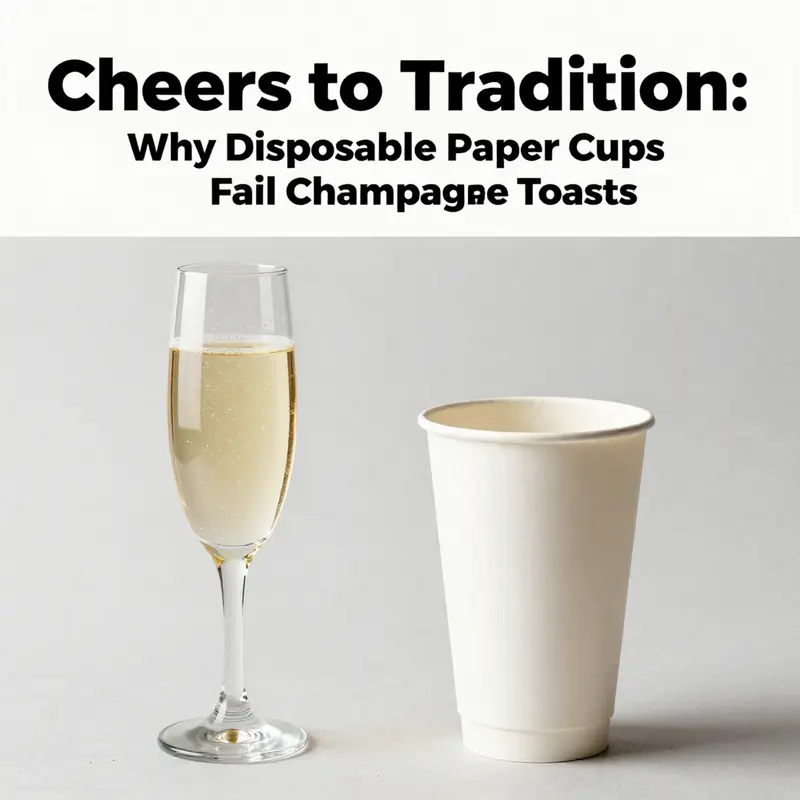
A champagne toast is more than a simple beverage moment; it is a ritual that carries meaning through scent, sound, and sight as much as through the liquid itself. In many settings, disposable paper cups offer a cheap, quick, and convenient way to manage large crowds. Yet when the glass must be replaced by a cup, the ceremonial edge of the toast can be dulled without a host realizing it. The sensory arc of champagne—its delicate bouquet, its crisp acidity, and its signature sparkle—depends on a vessel that respects and reveals those traits. The chapter that follows examines what happens when the most common disposable option steps into that role. It is not a blanket condemnation of disposables, but a careful accounting of the sensory and perceptual shifts that occur when aroma, flavor, and visual drama are mediated by a cup whose shape and lining were never meant for a sparkling wine of this character. In thinking through this, themes of practicality, health, and ceremony converge, revealing how a simple cup can influence more than just the act of drinking.
The aroma of champagne is a stored memory, an evolving story that unfolds as the wine meets air. A flute concentrates those volatile compounds in a narrow opening, guiding the scent gently toward the nose and heightening the perception of fruit, yeast, citrus, and mineral notes that define a vintage or a cuvée. A paper cup, by contrast, invites a broader, less controlled exposure to air. Its wide rim and interior texture encourage a swifter exchange of aromas with the room, which can dissipate the bouquet before the first sip is taken. The research results for disposable cups frame this reality in practical terms: aroma is less effectively preserved, and the aromatic finale—the part of the scent that cues the palate for what is to come—can slip away more readily into the surrounding chatter and warm room. The sensory asymmetry is subtle at first, but in the quiet moments between toasts it becomes meaningful: guests inhale less of the wine’s promise, and the expectation of what is in the glass grows dimmer as a result.
Flavor follows aroma, and here too the cup leaves its mark. Champagne’s perceived flavor shifts with aroma, but it also depends on how cleanly the wine can interact with the mouth and the sense of freshness that bubbles convey. Paper cups are lined with wax or plastic to prevent leakage, a necessity for cost-effective disposables. Alcohol acts as a solvent, and although the risk of substantial chemical migration is generally low, the potential for a faint off-note or altered finish exists when a beverage of champagne strength sits against a coating that is not inert in contact with alcohol. The result is not a dramatic chemical revelation but a qualitative drift: a sip that might have carried a bright yeast character or a chalky minerality can instead read as flatter or slightly altered, dampening the expected pristine zest. In a tasting sense, this is not about poisoning or overt danger, but about the integrity of the intended flavor profile—the notes that a winemaker and tasters alike prize when champagne is savored with attention.
The visual spectacle—perhaps the most immediate cue of quality in a champagne moment—also suffers when disposables take the stage. The glass, with its clarity and form, refracts light and shows the wine’s color, clarity, and the graceful ascent of bubbles. A paper cup conceals these cues behind an opaque or translucent surface, depending on the finish, and often disrupts the elegant, continuous thread of bubbles that defines a proper effervescence. In practice, the roughness and porosity of a paper cup create innumerable, irregular nucleation sites. Bubbles form in bursts rather than in a steady stream, rising not in a coordinated column but as a sporadic spray. The visual cue of persistence—the sense that the wine remains lively on the palate and in the glass—wanes, and with it the immediate impression of freshness that accompanies a well-poured flute. The sensory story that a guest expects to read in the glass is thereby rewritten by the cup’s material character, turning a celebration into something that, aesthetically, reads as more ordinary than extraordinary.
Beyond aroma, flavor, and appearance lies a more subtle, social dimension: the ritual aura that surrounds any toast. The clink of glasses, the lifted glass at eye level, the shared breath and smile that travel through the group—all of these hinge on a vessel that feels appropriate for a moment of elevated ceremony. Paper cups evoke, whether intentionally or not, a pragmatic, functional setting rather than a ceremonial one. In crowded events where cleanliness and speed trump ceremony, the cup can be a rational choice; in more intimate or ceremonial contexts, it becomes a missed opportunity to honor the wine and the guests. The host’s intention matters here: if the aim is to create a sense of occasion, the vessel should reinforce that aim rather than undermine it. When the cup’s design works against the subtleties of aroma and the drama of bubbles, guests can sense a tension between the stated purpose of the toast and the practical constraint imposed by disposables. The effect is not merely about taste; it is about the psychological and emotional climate of the moment, which, in turn, shapes memory so that later recollections hinge on the quality of the sensory theater as much as on the liquid itself.
Health considerations, sometimes overlooked, deserve attention in this context. The discussion around disposables is often framed in terms of convenience and price, yet the health implications—though not catastrophic—are worth noting. Alcohol’s solvent-like properties can increase the likelihood that coatings used in paper cups migrate into the beverage. Fluorescent whitening agents, sometimes used to brighten paper, raise concerns about exposure if ingested repeatedly over time. Even when the risk is small for a single toast, repeated exposure at a large event can accumulate concerns, especially for people with sensitivities. The central message from the research is practical: be mindful that the cup can contribute more than a simple container; it can become part of the exposure profile guests experience. This reality invites a careful assessment of whether the immediate gains in convenience and reduced cleanup justify any potential compromise to health and flavor integrity. The risk calculus is not a moral judgment but a professional judgment about preserving the wine’s purity and the guests’ well-being in a setting that values hospitality and care.
The decision to toast with paper cups also intersects with broader values about sustainability, access, and event logistics. Paper disposables reduce breakage risk and simplify cleanup, which matters at large gatherings, but they also generate waste and can obscure the importance of the moment if the ceremony is perceived as overly casual. Organizers who privilege ceremony often seek a balance: the desire to minimize hassle without surrendering the wine’s character. The tension is not resolved by a single choice; it requires a broader perspective on event design. In recognizing this, hosts can, where feasible, allocate resources toward glassware for the core moments of a reception or toast, while reserving disposables for ancillary service or for moments when the atmosphere must be supercharged with speed and practicality. The aim is to keep the central toast anchored in a vessel that honors aroma, flavor, and the visual drama of bubbles while still offering practical options for other service needs. Related considerations may include packaging and presentation choices that align with a party’s theme or sustainability goals, and resources that illustrate how straightforward packaging decisions influence the overall experience. For readers who want to explore the wider landscape of theme-party presentation and disposable tableware, a resource such as custom takeaway packaging supplies and disposable tableware for theme party can be informative, offering insights into how packaging and presentation shape guest perception and event flow: custom takeaway packaging supplies and disposable tableware for theme party.
In keeping with the overall aim of the article—shining a light on the practical and perceptual implications of using disposable paper cups for champagne toasts—the discussion here has attempted to present a balanced view. The sensory profile of champagne benefits from a vessel that preserves its most delicate attributes, and the ceremonial weight of a toast is enriched by a glass that honors its lineage. Paper cups, while valuable for some contexts, introduce a cascade of effects that reframe aroma, taste, sight, and social meaning. The choice, then, becomes a question of priority: is the moment worth preserving in its fullest sensory form, even if that demands more planning and a higher level of logistics? Or is the event better served by maximized convenience, with an acceptance that some sensory intricacy will be foregone? The answer may differ from one gathering to the next, but the guiding principle remains clear: the vessel should serve the moment, not merely house the wine. For readers seeking a broader scientific framing of vessel shape and its effect on champagne, a deeper dive is available here: Why Champagne Is Served in Flutes – The Science Behind the Shape
Preserving the Pulse: How Disposable Paper Cups Undermine Champagne’s Effervescence
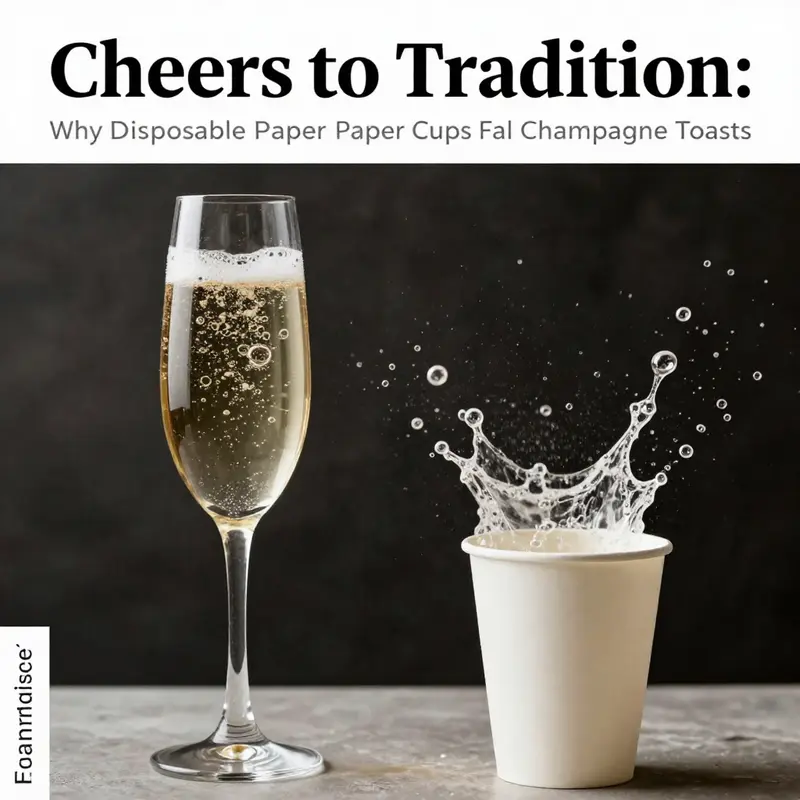
The ritual of a champagne toast hinges on more than the act of raising a glass. It rests on a delicate balance of aroma, temperature, texture, and the gentle, sustained fizz that defines the drink’s character. The flute, with its narrow bowl and slender stem, is more than a vessel; it is a design crafted to choreograph sensation. The aroma is kept close and concentrated, the temperature remains cooler longer, and the bubbles are coaxed into a steady stream that draws the drink to life rather than letting it slip away. When the setting calls for disposables, the temptation to replace glass with a simple paper cup is strong, especially in large gatherings, pop-up events, or quick-service contexts. Yet the sensory reward of a true champagne experience is fragile. The moment you swap a stemmed glass for a disposable paper cup, you begin a cascade of subtle changes that cumulatively dull the scene you hoped to create. And while convenience is not to be dismissed, it is worth tracing exactly where that convenience clashes with quality, so the toast can still feel intentional and meaningful even in less-than-ideal circumstances.
From the outset, the most obvious difference lies in the mouth opening and the interior surface. Paper cups are designed for practicality and economy, not for the orchestration of scent and sparkle. Their wide mouths invite an immediate, unencumbered access to air, which, in turn, allows the champagne’s delicate bouquet to disperse more rapidly into the room. The aromatic compounds that give champagne its complexity—citrus, bread crust, toasted almond, and floral notes—rely on a controlled release that our brains register as a layered crescendo. In a disposable cup, that crescendo is truncated. The bouquet arrives lighter, and for a moment the drink seems flatter, not because the liquid has suddenly lost its essence, but because the vessel has altered the trajectory of its aroma. This is not just a minor sensory quirk; it is a fundamental shift in how the drink communicates with the drinker’s senses.
Then there is the matter of the cup’s inner lining. Many disposable cups employ wax or a thin plastic coating to prevent leakage and to repel moisture from the porous paper. When champagne, a warmish alcohol, comes into contact with these coatings, there is a potential for interaction that can subtly alter flavor. Alcohol can act as a solvent, interacting with surface coatings and, in some cases, migrating trace materials into the liquid. Although modern manufacturing aims to minimize any such migration, the risk remains a variable that cooks up a quiet, lingering concern about the purity of the experience. The taste can become a touch more astringent, or a hint off, depending on the coating and the composition of the cup. For many tasters, these nuances are the kind of detail that separates a celebratory moment from a truly memorable one. The science backing such observations points to the way coatings can leach or impart compounds, especially under the influence of alcohol’s solvent action, and it reinforces the preference for vessels that present no added variables to the palate.
The effervescence—the crown jewel of champagne—also suffers when served in a disposable paper cup. Champagne’s charm rests on the dance of countless micro-bubbles that rise in a steady, almost poetic cadence. The flute’s geometry is designed to invite the bubbles to form in a focused column that travels upward with grace, delivering a crisp, refreshing sensation as the liquid remains lively on the tongue. In a paper cup, the interior texture is rough and porous by comparison. That roughness acts as a broad field of nucleation sites, where CO2 can begin to form bubbles spontaneously. While nucleation is essential to champagne’s signature fizz, the uncontrolled, surface-driven nucleation that a paper cup encourages tends to generate bubbles that are larger and erratic, bursting sooner and escaping faster. The effect is not merely a visual loss of sparkle; it translates into a perceptual sense that the drink is less bright, less perky, and less alive on the palate. In other words, the cup prematurely drains the sensation of effervescence that makes champagne distinct from many other sparkling beverages.
A further point often overlooked is how a container’s material interacts with the drink’s dissolved gases. Paper is absorbent, which means it can draw a certain amount of liquid and dissolved gases away from the beverage. The combination of absorption and rapid bubble escape creates a double jeopardy for the champagne’s liveliness. The gas that keeps the drink buoyant is not simply about bubbles; it is about maintaining a microcosm of pressure and aroma that travel together from glass to brain. When that microcosm is disturbed by a porous, absorbent interior, the drink arrives less effervescent, and the sensory impression shifts toward a flatter, drier finish that lacks that quintessential sparkle. Research in beverage science has highlighted these dynamics, showing how container material and surface properties influence bubble retention and overall sensory perception. The takeaway is practical: the vessel matters as much as the liquid itself, and the cups chosen for a toast can either sustain or suppress champagne’s pied-piper of bubbles.
In discussing the science of effervescence, it is important to acknowledge the broader context in which such choices are made. Many venues face constraints that push them toward disposables—ease of cleanup, reduced breakage risk, and cost efficiency being at the top of the list. But the interaction between a drink and its container is not a mere footnote; it is a defining variable that shapes the entire tasting experience. The research underlying these conclusions, including analyses published in reputable platforms, confirms that the physical properties of the serving vessel—porosity, surface texture, and chemical compatibility—play a decisive role in how champagne presents its sensory story. The glass flute, with its smooth interior and tapering shape, is not a luxury; it is a design that aligns with the physics and chemistry of carbonation, aroma retention, and temperature stability.
There is also a health dimension that deserves careful attention. In the drive to replace fragile stemware with sturdy disposables, the risk calculus should not be overlooked. Paper cups rely on coatings to prevent leakage, and these coatings can be susceptible to alcohol interaction. While the intent is benign, and regulations are in place to minimize risk, there remains a nonzero potential for chemical migration when high-alcohol beverages are served in such vessels. The concerns extend to additives like fluorescent whitening agents used to brighten white paper, which, when ingested over time, could pose long-term risks that some may prefer to avoid altogether. These considerations, though not always headline-grabbing, contribute to a broader sense that champagne is best experienced in a vessel designed to preserve its integrity—not only for flavor but also for safety and peace of mind.
The cumulative effect of these factors is a practical recommendation that aligns with the art of the toast and the science of the beverage. For an optimal champagne experience, the simplest and most reliable path is to favor glass flutes or other high-quality non-porous vessels. The smooth interior minimizes unwanted nucleation, helps preserve the aroma column, and keeps dissolved gases where they belong—within the liquid and in the headspace above it. The shape of the glass also matters; the flute’s narrow profile channels the rising bubbles in a way that feels like a choreography, a ritual of celebration rather than a casual sip. When disposables seem unavoidable, one must recognize the trade-off and adapt the ritual accordingly. Select disposables with non-porous interiors and minimal coatings, and temper expectations about how closely the tasting notes will align with those of a traditional champagne service. In such moments, a more mindful approach to the toast can help preserve dignity and joy even when conditions are not ideal.
The narrative I have traced here is not a denunciation of convenience; it is a call for intentional choices that honor the sensory and health dimensions of a champagne toast. The difference between a good toast and a memorable one often rests on small, deliberate decisions—how the cup feels in the hand, how the aroma is allowed to rise, and how the bubbles perform as the glass warms ever so slightly in the drinker’s grasp. The science that underpins these decisions is not exotic or inaccessible. It is about understanding how material science and sensory perception intersect at the moment the cork pops and the toast is raised. It is about respecting the drink’s design, acknowledging that champagne is engineered to be experienced in a particular way, and choosing vessels that do not undermine that design. In this sense, the disposable cup, while convenient, is a pedagogical tool as much as a practical one: it teaches the taster to recognize what is lost when a vessel is not matched to the beverage.
For those organizing gatherings where disposables are the only feasible option, there is value in transparency and intention. Communicate clearly that the choice of cup will influence aroma and fizz, and encourage guests to focus on the social moment—the clinking of glasses, the shared warmth of the room, the sense of occasion—while understanding that the sensory profile may be diminished compared to a classic flute service. In such contexts, it can be helpful to adjust expectations: allow more time for the aroma to develop before sipping, keep the champagne cooler for longer, and favor smaller pours that keep the liquid at a more buoyant temperature. These small adjustments cannot restore the glassware’s advantages, but they can preserve some sense of ceremony and appreciation, which is, after all, the heart of any toast.
In sum, the route from bottle to glass is not merely a physical transfer; it is a path that traverses aroma, texture, and sensation. Disposable paper cups pull the drink away from its most advantageous conditions, altering the way we perceive aroma and dulling the vivacity of the bubbles. The science is clear enough to counsel a different practice whenever possible. Yet the broader message is humane and practical: champagne deserves a vessel that respects its design, and the toast deserves the attention that turns a moment into memory. If a setting demands disposables, the best respect you can pay the drink is to select the most inert, least disruptive option available, to keep portions modest, and to preserve the ceremony of the moment through careful service and deliberate toasting. The aim is not perfection under imperfect conditions but integrity within those conditions, so the champagne can still sing in the room, even if its voice is slightly hushed by a cup that was never meant to cradle its brightness.
In the next part of this exploration, we widen the lens to consider environmental and practical implications of disposable serveware, alongside strategies to balance convenience with quality. The dialogue between taste and practicality continues, inviting a more nuanced approach to celebrations that honors both the science of effervescence and the realities of event planning. For readers who want to see how other disposable options are evolving in parallel with the culinary arts, a closer look at the vast landscape of convenient servingware can offer additional pathways to maintain elegance without sacrificing speed or safety. This broader view helps remind us that the choice of vessel is not a footnote but a design decision that resonates through the entire tasting experience.
Internal resource for further reading and contextual examples: disposable paper cups for hot drinks
External resource: https://www.sciencedirect.com/science/article/pii/S0268005X24001379
The Fizz Under Scrutiny: Health Implications of Disposable Paper Cups for Champagne Toasts
A champagne toast embodies celebration, elegance, and a moment of shared ritual. The sparkle of the bubbles, the crisp chill of the liquid, and the subtle interplay of aroma and palate all converge to mark something more than a drink. Yet in settings that prize speed and convenience, the choice to serve champagne in disposable paper cups can quietly undermine the very experience guests came to savor. This chapter does not merely question practicality; it examines how a single serving vessel can shape what we taste, how we perceive aroma, and what potential health considerations hover at the edge of the glass. The case for traditional glassware in champagne service is not a nostalgia trip but a matter of preserving sensory integrity and reducing uncertain health exposure. When the cup is thin, porous, and coated with a polymer or wax to prevent leakage, the scene shifts from a refined tasting to a pragmatic workaround. In the midst of celebration, subtle details matter, and the vessel is one of the most intimate details of a toast. The rest of this narrative threads the science of risk with the practical realities of hosting, so readers can weigh convenience against caution without feeling forced into a single answer. It is about understanding how a simple cup interacts with an inherently complex beverage and how those interactions ripple through perception and safety.
The first and most immediate concern centers on the chemical environment created inside a disposable paper cup. Champagne is a high-acid, moderate-alcohol beverage with a delicate balance of compounds that contribute to its aroma and flavor. The inner lining of many disposable cups is a polyethylene coating designed to keep the paper from soaking through. Alcohol acts as a solvent and, at the concentrations typical of champagne, can interact with this coating in ways that alter the beverage’s chemistry and potentially introduce substances into the drink. While the coating’s primary role is functional, its intimate contact with a refined sparkling wine invites questions about what migrates from the cup into the liquid over time, especially as the cup warms slightly in a room and as the bubbles intensify in the glass. The solvent power of alcohol is not identical for all coatings, but the principle remains: even a modest amount of contact with a plastic layer can create a pathway for additives to migrate, and the consequences may range from perceptible flavor changes to concerns about long-term exposure. The idea that a party staple could ferry trace chemicals into a celebratory drink merits careful attention, particularly in a context where toasts are meant to be memorable for their clarity and purity of flavor.
A second layer of concern arises from how cup geometry and surface texture influence effervescence. Champagne’s hallmark is its fine bubbles that rise in a steady, elegant column to deliver a crisp sensation on the palate and a bright, lifting aroma as it climbs through the beverage. The glass, not the liquid alone, channels and modulates this effervescence. A flute concentrates bubbles toward the center, creating a visual and tactile impression of freshness. A rough, porous paper surface introduces countless irregular nucleation sites for bubble formation. The result is bubbles that appear large, burst quickly, and collapse sooner, producing a drink that may feel flatter than expected. In a tasting environment, this mechanical difference can subtly shift perceived quality, with guests attributing less liveliness to the wine even when the champagne itself is of high character. The experience thus shifts from a celebration of aroma and texture to a test of the vessel’s ability to preserve them. This is not merely an aesthetic critique; it touches the heart of what champagne represents—a sensory celebration that invites careful stewardship of its volatile components.
Health considerations expand this picture beyond taste and aroma. A growing body of research emphasizes how contact between alcohol and paper-based packaging can influence what ends up in the drink. The National Institute of Environmental Health Sciences has highlighted the risks associated with chemical migration from food-contact materials, especially when they are exposed to alcohol and heat. In the case of disposable cups, several mechanisms can facilitate this migration. First, the plastics or wax-like coatings used on the inner surface can soften or break down when in contact with ethanol. As the coating degrades, it may release plasticizers and other additives, some of which are suspected to have hormonal activity or other biological effects. While regulatory frameworks exist to limit exposure, the realities of catering, events, and casual gatherings mean that a high-volume, rapid service scenario could magnify the likelihood of cumulative exposure across a crowd.
Second, the inks and coatings used for printing on the exterior of disposable cups are not entirely inert. The outer surface may be printed with pigments and solvents intended to produce bright, eye-catching designs. When champagne is poured into a cup, even briefly, there is potential for some transfer of these substances at the beverage–cup interface, particularly if the cup warms or if the liquid remains in contact with the interior for an extended period. Although many inks are designed to minimize migration, no coating is perfectly impermeable, and traces can migrate under real-world conditions. The combination of alcohol and slight heat from a hand can create a scenario in which printing components, even those marketed as “eco-friendly” or “non-toxic,” contribute to the beverage in ways that are not instantly perceptible to the senses. The possibility of chronic, low-dose exposure through repeated events is an element that deserves thoughtful consideration, especially for hosts who aim to reduce risks while maintaining a festive atmosphere.
A related concern centers on fluorescent whitening agents, compounds added to papers to produce a bright white appearance under ultraviolet light. FWAs can be present in trace amounts in the paper, and even if they are considered safe in typical consumer exposures, alcohol, moisture, and temperature can influence their behavior. In theory, FWAs could migrate into the drink over time, and while the immediate health impact of such trace exposure remains a topic of ongoing study, the precautionary principle suggests caution when serving high-alcohol beverages from disposables that rely on such additives. The broader implication is not just about a single sip but about the cumulative exposure risk for regular event planners who repeatedly use disposable cups in settings where champagne or other spirits are present. The conversation thus extends beyond a single toast to the ways in which mass-use packaging could contribute to a pattern of exposure for guests and servers alike.
A fourth factor, though less frequent in discussion, is the potential presence of heavy metals in manufacturing residues or pigments used in a low-cost production environment. In modern production lines, reputable manufacturers strive to minimize contaminants, but gaps in regulation or supply chain variability can, on occasion, introduce trace metals into consumer goods. While those risks are comparatively small in high-quality contexts, the possibility persists in environments where cost pressures or lax quality control intersect with high-alcohol liquids. In champagne service, where the beverage can interact with any surface it touches, the possibility of even minimal transfer of residues becomes a factor to consider. For event organizers and guests alike, these concerns are not about doom-laden forecasts but about adopting a careful, informed stance toward what is poured and how it is served.
Taken together, these mechanisms—chemical leaching from coatings, ink and solvent migration from printing on cup surfaces, the presence and behavior of FWAs, and the potential for trace metals—frame a broader risk landscape around disposable paper cups in champagne service. The science does not demand that every party be halted in favor of glassware; rather, it calls for a measured approach to choices that affect health and sensory quality. The champagne toast is a ritual that invites reverence for the senses; the vessel should invite, not imperil, that reverence. In practical terms, this means recognizing that convenience is not a neutral attribute. It can be accompanied by subtle changes in taste, aroma, and perceived quality, as well as potential health considerations that accumulate with repeated exposure. For hosts planning events, it suggests a default preference for traditional glassware, particularly for the champagne portion of a reception or sit-down toast, while acknowledging that alternatives may still be used with informed safeguards if circumstances demand.
From a tasting perspective, the protective value of glassware is inseparable from the social ritual of the toast. Glass flutes and other stemware are specifically designed to preserve and concentrate aromas, to cradle the wine so that warmth and carbonation remain balanced, and to offer a tactile reminder of the care that goes into a formal service. When a disposable cup substitutes for this design, even the most well-intentioned host may inadvertently flatten the aromatic profile and diminish the champagne’s liveliness. The effect is not a dramatic failure but a quiet shift in experience, a softening of the bouquet and a muted sparkle in the mouth that the guest notices subconsciously. For anyone who values the fidelity of a toast—the way a glass directs scent, pressure, and flavor toward a shared moment—there is a compelling argument to preserve that fidelity through vessels built for purpose rather than convenience.
This is not a manifesto against all disposable tableware. It is a call for mindful decision-making wherever alcohol is involved. The health considerations highlighted here are part of a larger conversation about packaging, diet, and exposure in everyday life. The same principles apply whether a party is intimate or expansive, whether the beverage is champagne or a less effervescent wine. The key is transparency and prudence: understand what is in contact with the drink, what that contact might release into the liquid, and how the vessel influences the sensory message of the moment. When the celebration hinges on the clarity of aroma and the crispness of a bubble, the vessel matters not just as a vessel but as an active participant in the toast. In that light, choosing glass or carefully vetted alternatives becomes a form of hospitality that honors guests and the moment alike.
To bring this discussion back to everyday practice, consider how an event’s logistics shape the choice of service vessels. If time, budget, or space constraints push toward disposables, there are steps that can reduce risk. Selecting cups with interiors free from heavy coatings, minimizing the duration the beverage remains in contact with the cup, and ensuring that serving temperatures stay within a range that does not accelerate material migration can collectively lower exposure. Yet even with precautions, the fundamental advantage of glassware remains clear: it protects aroma, preserves the wine’s natural effervescence, and provides a pristine, inert environment that supports the integrity of the champagne. For a host who aims to preserve a moment of elegance and assurance, the path is straightforward: prioritize vessels designed for the beverage, and treat the toast as an occasion worth safeguarding.
In closing, the health considerations associated with disposable paper cups for champagne toasts illustrate a broader truth about celebrations: the medium shapes the message. The cup is not merely a container; it is a site of interaction between material science and sensory perception. The delicate balance of aroma, flavor, and texture that champagne embodies can be subtly altered by the vessel that holds it. While the ritual of toasting remains a powerful social glue, the way we serve champagne should reflect a commitment to both enjoyment and safety. This is not about fear but about informed care—for guests, for staff, and for the lasting memory of the moment. For those who wish to explore practical options beyond glass, a careful tour of disposable alternatives that prioritize interior safety and minimize migration can be a sensible step, provided hosts maintain a clear understanding of the science at play and a dedication to guest well-being. The toast, after all, deserves nothing less than the full integrity of the experience it promises.
External resource: https://www.niehs.nih.gov/health/topics/agents/chem-migration/index.cfm
The Art of the Toast: Why Premium Glassware Elevates Champagne Beyond Disposable Cups
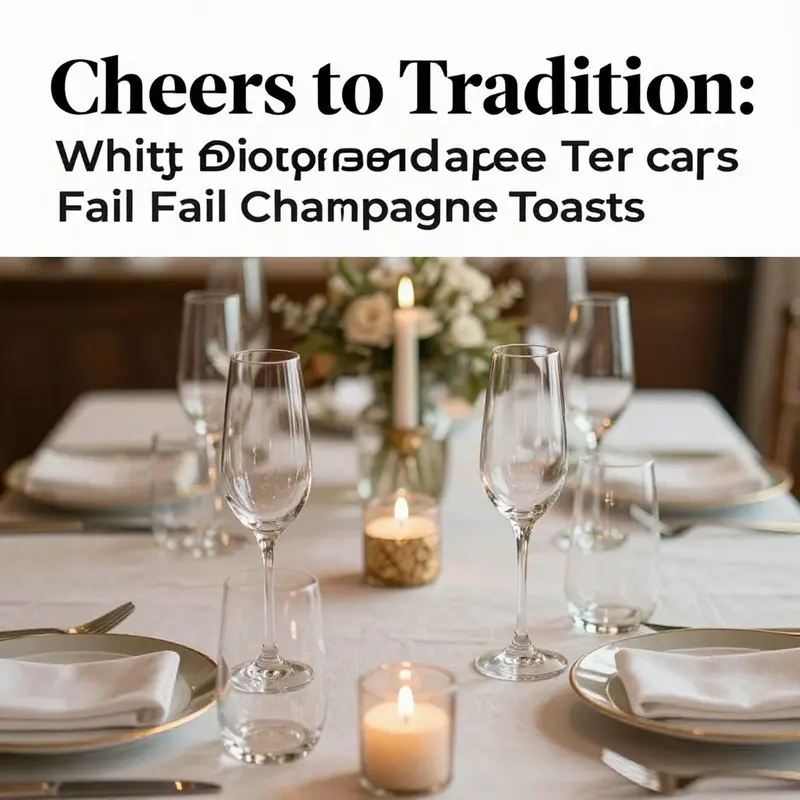
Champagne is as much a ceremony as it is a beverage, a ritual that hinges on more than the liquid itself. The moment the cork sighs and the flute—or any glass, for that matter—catches the fizz, a subtle dialogue begins among aroma, texture, temperature, and the visual poetry of bubbles. In this light, the vessel becomes an instrument. It shapes perception as surely as the wine shapes memory. The chapter that follows does not merely offer a shopping list of glassware; it invites a sensorial exploration of how form, material, and proportion direct the way champagne is seen, smelled, and tasted. It also softens the impulse to default to disposable cups in the name of convenience, reminding readers that the simplest tool—precisely chosen—can lift a toast from ordinary to memorable. When we talk about the best practices for toasting with champagne, the conversation inevitably returns to glassware, because glass is not ancillary to the experience; glass is a condition for it.
The most immediate effect of choosing the right glass is the preservation and delivery of aroma. Champagne wears its perfume lightly, yet with complexity that invites the nose to travel through citrus and brioche notes, through hints of yeast and mineral finesse, toward a final, nuanced finish. A narrow rim helps funnel these volatile compounds toward the nose at the moment of sniff, while a slender, straight walls guide the aroma upward as the glass is raised. In broad, open-mouth cups, the bouquet can dissipate far more quickly, and with it, much of the anticipation that makes a toast feel special. When a liquid’s fragrance escapes too swiftly, the tasting becomes less about discovery and more about a quick impression, a fleeting moment that lacks the chorus of refinement that a true champagne experience aspires to deliver.
Effervescence—champagne’s signature trait—also depends on the geometry and the surface feel of the vessel. The bubbles are not a mere decorative flourish; they are the chorus that carries the wine’s liveliness to the senses. The design of a flute, with its tall stem and narrow profile, concentrates carbonation by limiting the surface area across which the gas can escape. The bubbles form in the base, rise in a steady column, and linger with a grace that makes the drink seem lighter and more refreshing. A paper cup’s rough interior and porous surface, by contrast, offer countless irregular nucleation sites. The bubbles become fewer, larger, and more prone to bursting, which can yield a perceptual flattening of the drink—visually and in the mouth. A glass designed for champagne is, in part, an answer to the question of how to marshal the drink’s own physics to work in your favor rather than against it.
Health and safety considerations have sharpened the conversation around single-use vessels. Paper cups often rely on inner coatings—wax or plastic barriers—to keep liquids from seeping through. When a beverage as alcohol-rich as champagne touches these coatings, there is a real risk that the solvent properties of alcohol could interact with the lining. That interaction can alter flavor and, in some cases, introduce trace chemicals into the drink. Then there is the issue of whitening agents used to brighten the white surface. While the occasional exposure may be negligible in casual settings, repeated consumption over time can raise concerns for sensitive individuals. The combination of potential chemical migration, altered taste, and the ritual value of the glassy moment all argues in favor of using glassware designed for this purpose. The terrace of a toast, the clinking of rims, the refracted light through a flute—these are not just aesthetic pleasures; they are part of a mindful approach to savoring a premium product.
The design language of champagne glasses is not a static code but a living accord between tradition and sensory science. The traditional flute embodies a philosophy: that a narrow mouth and smooth, clear conical walls guide the drink’s aroma upward toward the nose and preserve the crown of bubbles along the way. It is a deliberate architecture, where height and diameter are in dialogue to optimize physics and perception. The coupe—wide, shallow, and romantic—offers a different emotional resonance. It conjures a vintage glow, the glamour of old world celebrations, and a moment of shared storytelling. Yet its geometry invites faster evaporation of carbonation and swifter aroma dispersal, which can dampen the long arc of the tasting experience when the goal is a prolonged, celebratory toast with several sips to spare. The choice becomes less about chasing a single “best glass” and more about aligning the vessel with the desired mood, the setting, and the pace of the gathering.
In modern settings, disposable champagne flutes present a compromise that attempts to balance convenience with a recognizable visual cue of form. Some models mimic the flute’s silhouette and even adopt textured bases to improve grip and stability. However, the constraints of single-use plastic or coated paper remain a constraint. The texture of a cup’s interior, the roughness of a surface, and the materials’ interaction with the liquid all influence the circle of influence around taste and mouthfeel. Even when a disposable option is adopted for reasons of cleanliness, safety, or logistics, it is useful to acknowledge its limitations rather than presenting it as a complete substitute for purpose-built glassware. Consider the scenario of a beach gathering or a large outdoor event where cleanup is a priority. In such cases, a disposable flute can be a practical choice, but it should be positioned as a temporary measure rather than the standard for an elevated toast. The aim is to preserve as much of the champagne’s spirit as possible while attending to the realities of the setting.
For those who plan events in which disposable tableware is a practical necessity, there remains an open conversation about how to approach the optimal compromise. One practical approach is to select a disposable vessel that preserves the most important attributes of a flute: a tall, slender profile, a relatively narrow rim, and a smooth interior surface that minimizes drag and surface roughness. This is not a call to abandon glassware altogether but an invitation to weigh context, budget, and logistics without sacrificing the sensorial core of the toast. It is here that the dynamics of decision-making become most visible. If the occasion emphasizes spectacle and scent, a traditional glass with its precise geometry remains the gold standard. If the occasion is more casual or mobile, a well-designed disposable option can serve as an acceptable stand-in, provided expectations are managed and the environment remains conducive to a celebratory experience.
Beyond the physics of bubbles and aroma, the social dimension of a champagne toast cannot be overlooked. The vessel participates in ritual as much as in taste. The clink of glass, the lift of the stem, the small tilt to release a final shimmer of spray—these gestures become part of the memory of the event. In formal settings, the presence of stemware signals intention, ceremony, and care for guests. It communicates that the moment is special enough to warrant a deliberate, crafted choice. In more casual environments, the same gestures can be translated into a relaxed, inclusive vibe, yet even here the design of the glass or cup matters for how the toast unfolds. The ritual of pouring, the way the wine swirls in the glass, and the way the bubbles catch the light—these elements shape collective sentiment as surely as the wine’s acidity or dosage.
When contemplating glassware as part of a broader toasting strategy, it helps to imagine the event as a continuous thread rather than a sequence of isolated decisions. The selection of glassware interacts with room temperature, beer or wine pairing, lighting, and acoustics. A flute placed under warm lighting will throw a brighter halo around its dainty rim, enhancing the perceived freshness of the drink. A coupe, exposed to soft, romantic lighting, can accentuate a nostalgic mood and create a slower, more cinematic toast. A disposable option, if used, should be chosen with attention to its stability and its ability to sit securely on outdoor surfaces without tipping during the moment of toast. The story of the toast, after all, is a narrative of how people come together to mark something worth remembering, and the vessel is the frame within which that memory is formed.
In terms of practical guidance, the ideal approach is to reserve glassware for moments when the toast is meant to glow with precision and to reserve portable or disposable options for situations where logistics, safety, or cleanup take precedence. The decision should be framed not as a false economy but as a thoughtful accommodation of context. For a formal reception, a lineup of slender flutes communicates a consistent, purposeful tone; for a tasting session, the same glass type can help coordinate expectations and guide the palate through the wine’s evolving profile; for a casual rooftop or beachfront event, a disposable alternative can support inclusivity and ease while still honoring the celebratory spirit. In every case, the toast remains the centerpiece, and the vessel is the conductor that enables the performance rather than merely its prop.
As you plan, consider the environment, the guest list, and the duration of the toast. A long, multi-sip celebration benefits from glassware that maintains carbonation and preserves aroma across several pours. A single-sip moment, although intense, may tolerate a coupe’s flirty charm, provided the mood aligns with a vintage or retro vibe. The flexibility of your approach should reflect a balance between sensorial integrity and practical feasibility. The underlying message is straightforward: glassware should be chosen to honor the champagne’s character and the social atmosphere in which it is enjoyed. If a reader takes away one principle from this chapter, let it be this—the vessel is not a mere container; it is an ally in the art of tasting, a co-creator of memory, and a signal of respect for the wine and the people sharing it.
For readers who want to explore broader options without abandoning the comfort of responsibility and style, an invitation to consider theme-appropriate disposables can be a meaningful next step. For example, many gatherings benefit from a curated set of disposable tableware that aligns with the event’s theme while still leaning toward a more refined experience than generic cups. This approach can be described as a thoughtful compromise rather than a concession. If you want to examine a practical entry point for such options, you can explore resources that discuss customized, theme-appropriate tableware for events. theme party disposable tableware offers a glimpse into how one might harmonize convenience with style when glassware cannot be the default. This is not a replacement for proper champagne glassware in most contexts, but it is a bridge that acknowledges real-world constraints and still preserves the celebratory essence of a toast.
The narrative about champagne glassware, then, is not simply about selecting a vessel. It is about recognizing how form and material influence sensation, memory, and mood. It is about resisting the urge to treat the toast as a mere procedural step and instead treating it as an opportunity to craft a shared experience. And it is about acknowledging that the choice of glassware—whether the classic flute, the romantic coupe, or a carefully chosen disposable option—speaks to values: attention to detail, respect for guests, and a commitment to preserving the integrity of the wine. As you move through the events you host or participate in, remember that each glass you pour is part of a larger ritual—one that, when done with intention, can heighten the senses and deepen the sense of connection among friends, colleagues, or family.
External reference for further reading on glassware design and champagne perception: Champagne flute on Wikipedia.
Final thoughts
Choosing the right vessel for a champagne toast is crucial not only for the sensory experience but also for health safety. As professionals in the beverage and event planning industries, elevating the toast from a casual gesture to a memorable experience requires a commitment to quality. Opting for glassware over disposable paper cups can enhance the aroma, preserve the effervescence, and eliminate potential health risks. This commitment to quality will not only improve the drinking experience but also elevate your brand’s reputation and client satisfaction.