
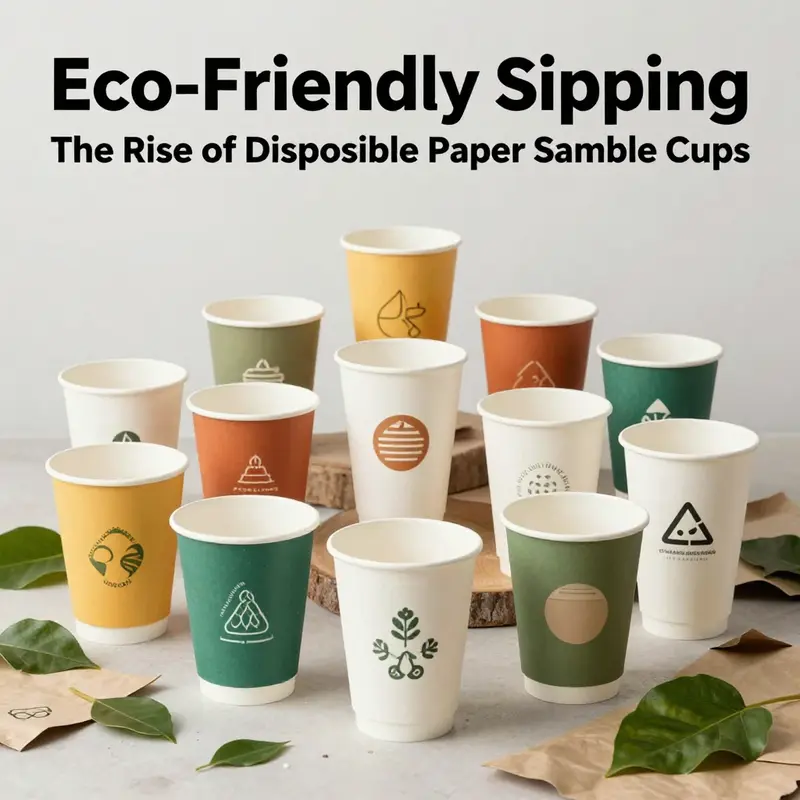
As the demand for sustainable solutions intensifies, disposable paper sample cups have emerged as a popular choice across various sectors, from bubble tea shops to event catering. These cups serve not only practical purposes but also reflect a commitment to environmental responsibility. This article delves into the environmental impact of disposable paper cups, examining their material composition, the latest market trends, and the regulatory standards that govern their use. By understanding these aspects, businesses can make informed decisions that align with consumer expectations and ecological aspirations.
Lifecycle Costs and Solutions: How Disposable Paper Sample Cups Affect the Environment
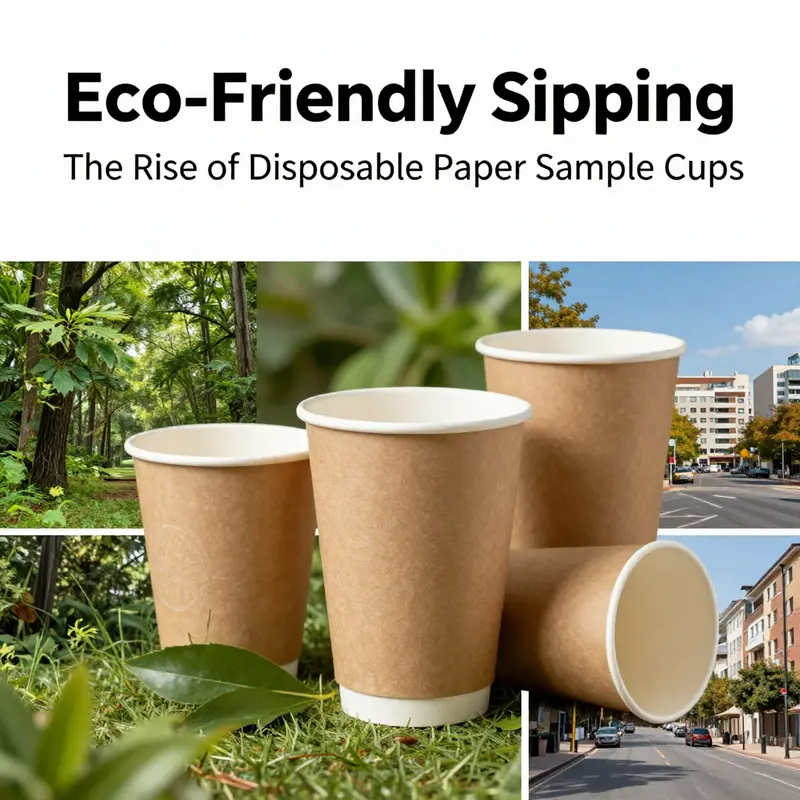
Disposable paper sample cups are often chosen as a seemingly greener alternative to plastic. Yet their environmental impact is complex and spans the entire lifecycle. From the forest to the landfill, each stage contributes to resource depletion, emissions, and waste management challenges. Understanding these effects helps businesses and event organizers make better choices. It also reveals where practical improvements can reduce harm without sacrificing convenience or hygiene.
The first environmental weight sits with raw material sourcing. Paper for cups originates from timber, and harvesting can lead to habitat loss and biodiversity decline. Even responsibly managed forests require careful oversight to prevent degradation over time. Beyond land use, converting wood to cup-ready paper consumes substantial energy and water. Pulping and bleaching processes demand heat and chemicals, and manufacturers must control effluents to protect local waterways. Choosing paper sourced from certified sustainable forests helps. But it does not eliminate the carbon and water footprint inherent to industrial papermaking.
Manufacturing adds another layer of impact. To serve liquids, most sample cups are given a thin plastic lining. That lining prevents leakage and preserves product integrity. However, it also complicates the cup’s end-of-life. Polyethylene linings resist water and oil, and most municipal recycling systems cannot separate the layers efficiently. As a result, many cups intended for recycling are rejected or forced into incineration and landfilling. Alternative coatings now exist, including compostable biopolymers like PLA. These materials can improve biodegradability under specific conditions. But they also require careful sourcing and processing to maintain performance during use.
Transportation magnifies the footprint as supply chains scale. Raw fiber, processing chemicals, and finished cups frequently cross long distances. For globally distributed manufacturers and sellers, shipping contributes notable greenhouse gas emissions. Local procurement reduces transport miles and supports lower embodied emissions. It also shortens lead times, which helps businesses order more precisely and avoid waste from overstocking. Smaller, local mills can sometimes offer lower-impact paper grades suited to single-use sample cups. Yet availability and cost remain barriers for many buyers.
Recycling is often presented as the solution, but paper cups reveal systemic limits. The composite structure of paper plus lining resists mechanical pulping. When cups enter a paper recycling stream, linings and residual liquids cause contamination. Recyclers then reject whole loads. Specialized facilities can separate plastics from paper, but such plants are scarce. Investment in shredding and hot-water flotation systems can increase recovery rates. Chemical recycling and emerging depolymerization techniques also show promise for separating and recovering linings. Still, scaling these technologies requires policy support and clear market signals for recycled content.
Landfill and incineration outcomes vary by local infrastructure. In landfill conditions, oxygen is limited, slowing biodegradation. Paper fiber may break down slowly, but plastic linings remain. This can prolong the presence of cup fragments in soils. Anaerobic decomposition in landfills also generates methane. Methane is a powerful greenhouse gas when not captured. Incineration reduces waste volume and recovers energy, but it emits CO2 and other pollutants. If energy recovery is efficient and emissions are well controlled, incineration can be preferable to uncontrolled decomposition. Yet neither path matches the climate benefits of reuse.
Compostable cups offer a hopeful alternative, but they carry caveats. Compostable coatings and fully compostable cup designs can biodegrade in industrial composting facilities. These facilities operate at high temperatures and manage moisture and aeration to accelerate breakdown. However, access is uneven. Many regions lack industrial composting capacity. As a result, compostable cups often end up in landfill or mixed recycling streams. In these environments, their compostable properties are not activated, and benefits vanish. Proper labeling, clear consumer guidance, and route-to-compost infrastructure are necessary to make compostable solutions effective.
Given these realities, the most effective environmental strategy is pragmatic: reduce consumption, increase reuse, and optimize single-use design. Reduction means minimizing situations that require disposable sample cups. Reuse shifts the model to washable sample vessels or returnable systems. Many businesses find cost benefits after initial investments when reuse reduces recurrent buying and disposal fees. Where single-use remains necessary, design improvements matter. Thicker paper, fewer additives, and compostable coatings enhance the chance of safe disposal. Purchase specifications should demand certifications from recognized bodies. Certifications ensure compostability or recycled content claims are verifiable.
Operational changes at the point of use amplify material improvements. Staff training ensures cups are routed correctly, whether to recycling, compost, or landfill. Signage at sampling stations reduces contamination rates and improves diversion. Incentives for customers to bring reusable vessels, or deposit-return schemes for sample containers, can shift behavior quickly. Institutions such as universities, laboratories, and food festivals can set procurement standards that prioritize lower-impact options. Over time, these policies change supplier behavior and stimulate better manufacturing choices.
Technology and policy must advance together to scale improvements. Investment in recycling infrastructure unlocks higher recovery rates for composite materials. Support for industrial composting expands options for certified compostable cups. At the same time, clear labeling standards and enforcement prevent greenwashing. When businesses require third-party verification for compostability and recycled content, markets respond. Governments and industry groups can incentivize domestic processing capacity to reduce transport emissions and improve material recovery.
Innovation continues to add practical alternatives. New biodegradable coatings derived from plant starches and other feedstocks aim to match polyethylene’s performance. Some designs use dual-layer approaches, combining a thin recyclable inner liner with easily compostable outer layers. Other projects focus on modular, returnable sample cup systems for events. These pilot programs demonstrate measurable waste reductions. Yet broad adoption depends on cost competitiveness and logistical feasibility. For many organizations, the immediate lever remains smarter procurement and staff practices.
Decisions by buyers shape outcomes more than any single technology. Choosing cups with responsibly sourced fiber, lower-impact coatings, and clear end-of-life instructions reduces harm. Purchasing in bulk when appropriate also lowers packaging waste. For example, businesses that purchase bulk disposable paper cups can often negotiate specifications and ensure better supply chain transparency. Transparent supply chains and contract terms with manufacturers help buyers demand lower embodied emissions and verified end-of-life options.
Reducing the environmental impact of disposable paper sample cups requires coordinated action. Manufacturers must innovate and disclose life-cycle impacts. Waste management systems must invest in recovery and composting infrastructure. Buyers and institutions must set standards and enforce them. Consumers and front-line staff should be encouraged to reuse where possible and to sort disposables correctly. Combined, these steps cut emissions and reduce landfill burdens. They also steer the market toward solutions that maintain convenience and safety.
For more technical guidance on waste management and the environmental implications of packaging materials, authoritative resources are available. The U.S. Environmental Protection Agency provides detailed information on waste reduction, recycling, and composting systems at https://www.epa.gov/.
Layers, Linings, and Lifecycles: The Material Story of Disposable Paper Sample Cups
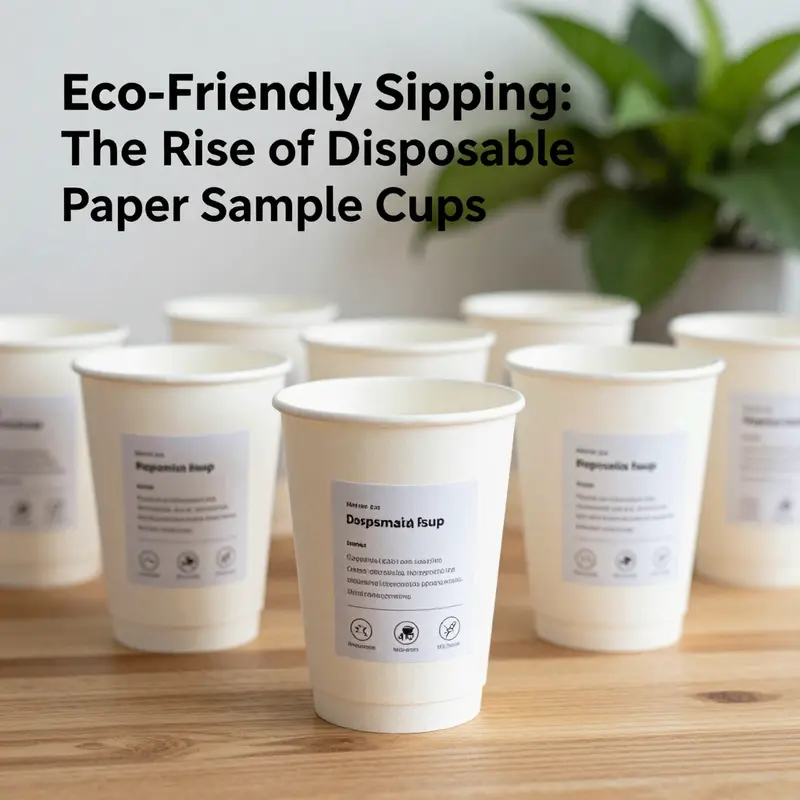
Disposable paper sample cups look simple at first glance. A small, white or kraft cup, ready to hold a sip or a sample, can feel unremarkable. Underneath that simplicity, though, is a carefully engineered stack of materials. Each layer responds to a set of competing demands: keep costs low, hold liquids safely, withstand heat, print well, and—ever more important—fit sustainability goals. Understanding what these cups are made of helps buyers choose better options and manage disposal responsibly.
The visible backbone of a sample cup is paperboard. This is not the same sheet you might use for printing flyers. Paperboard used for cups is selected for stiffness, foldability, and food safety. It often originates from wood pulp refined into a heavier base stock than common office paper. Depending on appearance and performance needs, manufacturers use bleached or unbleached pulps. Bleached paperboard yields a clean white interior and sharper print quality. Unbleached or kraft styles emphasize a natural look and can incorporate higher recycled content. Many suppliers balance virgin fiber with recycled fiber to retain strength while reducing environmental impact.
Paper alone is porous. To turn fiber into a functional cup, the inner surface requires a liquid barrier. The most common solution is a thin polyethylene (PE) lining. This plastic film bonds to the paper and seals the fiber network. The result is a lightweight, leak-resistant vessel that performs well for water, coffee, and many other liquids. PE linings are durable and inexpensive. They also allow heat sealing during manufacturing, which creates a reliable seam at the cup’s base. For businesses that need consistent performance, PE-lined cups are a practical choice.
That same lining creates recycling headaches. Standard curbside paper recycling streams are not always equipped to separate a plastic film fused to paperboard. When PE-lined cups enter the wrong stream, they can lower the value of recycled paper. Specialized facilities can handle paper-to-plastic separation, but they are not universal. This reality forces businesses to consider disposal infrastructure when selecting cup materials.
Alternatives to polyethylene have emerged in response to sustainability concerns. One widely discussed option is polylactic acid (PLA), a bioplastic made from renewable plant starches. PLA can be processed into a compostable lining. When paired with the appropriate paperboard, PLA-lined cups can break down in industrial composting environments. This makes them attractive where commercial composting service exists. However, PLA does not degrade reliably in home composts or landfills. It also requires careful sorting to avoid contaminating recyclable paper streams.
Other barrier approaches include water-based coatings and waxes. Water-based dispersions can impart water resistance without introducing conventional plastics. They work well for cold or short-duration uses. Waxes perform similarly but may soften at higher temperatures. These options often offer improved end-of-life performance but may trade off heat resistance or cost.
Beyond the basic cup shell and inner lining, modern sample cups include practical features that affect material choice. Double-wall constructions or corrugated outer layers increase thermal insulation while reducing the need for separate sleeves. These designs can use two paper plies with an air gap or a corrugated wrap to protect hands from hot beverages. Sleeves, when used, are usually kraft corrugated paper that can accept recycled content and be recycled or composted separately more easily than the inner-lined cup.
Lids and inserts add complexity. Paper lids exist but are less common; most lids are injection-molded plastics designed to snap on securely. For small sample cups used for tasting or testing, molded pulp lids or flat cardboard covers are sometimes used. When lids are plastic, they may be recyclable depending on resin type and local facilities. Choosing lids made from recyclable or compostable materials helps maintain a coherent disposal approach.
Manufacturing processes also shape material outcomes. Cup-making equipment forms paperboard, applies the chosen coating, and then shapes and seals the cup. Coating application methods vary. Extrusion lamination bonds a polymer film onto paper. In contrast, aqueous coatings use a sprayed or rolled-on emulsion that dries into a barrier. Heat and pressure create the final seam. These process differences influence bond strength, coating thickness, and final cup stiffness. They also affect how easy it is for recycling systems to separate layers.
Printability is another design driver. Paperboard allows high-quality graphics, which brands use for messaging, instructions, or compliance labeling. Some coatings accept print more readily than others. For example, certain water-based barriers allow overprinting without affecting adhesion. This interplay between material and print technology can determine whether a manufacturer chooses PLA, PE, or an alternative coating.
Performance under use matters. Heat resistance, grease resistance, and shelf life differ by material. PE linings perform well with hot liquids and oily substances. PLA coatings handle many everyday uses but can soften at very high temperatures. Water-based coatings and waxes may be ideal for cold samples and short-term tastings. Understanding the intended use can guide material selection. Event sampling, laboratory dosing, and food tastings each place distinct demands on the cup.
Sustainability claims require scrutiny. Terms such as “compostable” and “recyclable” mean different things in practice. A cup labeled compostable may require industrial composting temperatures to break down. A recyclable claim may rely on access to a specialized recycling facility. Certifications from recognized bodies add credibility. Organizations exist that verify compostability and recyclability standards. Businesses should look for independent verification when sustainability is a priority.
Material sourcing adds another layer of responsibility. Paperboard from sustainably managed forests reduces pressure on ecosystems. Certifications for responsible forestry indicate chain-of-custody controls. Likewise, using post-consumer recycled content reduces demand for virgin fiber. Both routes have trade-offs for strength and print quality, but careful specification helps meet both environmental and performance goals.
Waste management logistics close the loop. A material choice without matching disposal infrastructure can worsen environmental outcomes. For example, a PLA-lined cup that ends up in a recycling stream can contaminate recycled paper. Conversely, a PE-lined cup sent to an industrial composting facility will not break down properly. Many businesses therefore choose material strategies that reflect local collection systems. Some adopt a single-material philosophy: use only materials that the local system can process. Others invest in take-back or composting partnerships to ensure proper end-of-life treatment.
Small design choices matter. A lighter paperboard reduces raw material use while retaining function. A thinner coating can lower plastic content without compromising barrier performance. Printing with plant-based inks improves compostability. Clear disposal instructions printed on the cup reduce user confusion and sorting errors. These choices can make the difference between a product that truly reduces impact and one that shifts burdens elsewhere.
For buyers and specifiers, the key is to match material properties with operational realities. Identify whether sample cups will be disposed of in recycling, composting, or landfill. Then select cups whose composition aligns with that destination. When in doubt, seek verified certifications and ask suppliers about material origins, coating specifications, and manufacturing processes.
If you are evaluating off-the-shelf options, comparing product listings and material descriptions can speed selection. For instance, many suppliers offer standard kraft or bleached paper cups in multiple sizes. One commonly available listing is 20-50-200pcs disposable paper cups, which details options in kraft and bleached stock and clarifies coating types and sizes for hot drinks. Reviewing such listings helps balance cost, capacity, and sustainability considerations when buying cups in volume. (See the 20-50-200pcs disposable paper cups for a typical example.)
Understanding the material composition of disposable paper sample cups reveals why a simple object can have complex impacts. The paper shell, the inner barrier, insulation layers, lids, and printing inks all influence functionality and end-of-life outcomes. Thoughtful specification and clear disposal planning turn a humble sample cup into a pragmatic choice for performance and responsibility.
For technical guidance on material breakdown and disposal considerations, refer to the EPA resource on disposable cup composition and material management: https://www.epa.gov/sustainable-management-landfill-waste/understanding-material-composition-disposable-cups
How Market Forces and Economics Are Driving the Rise of Disposable Paper Sample Cups
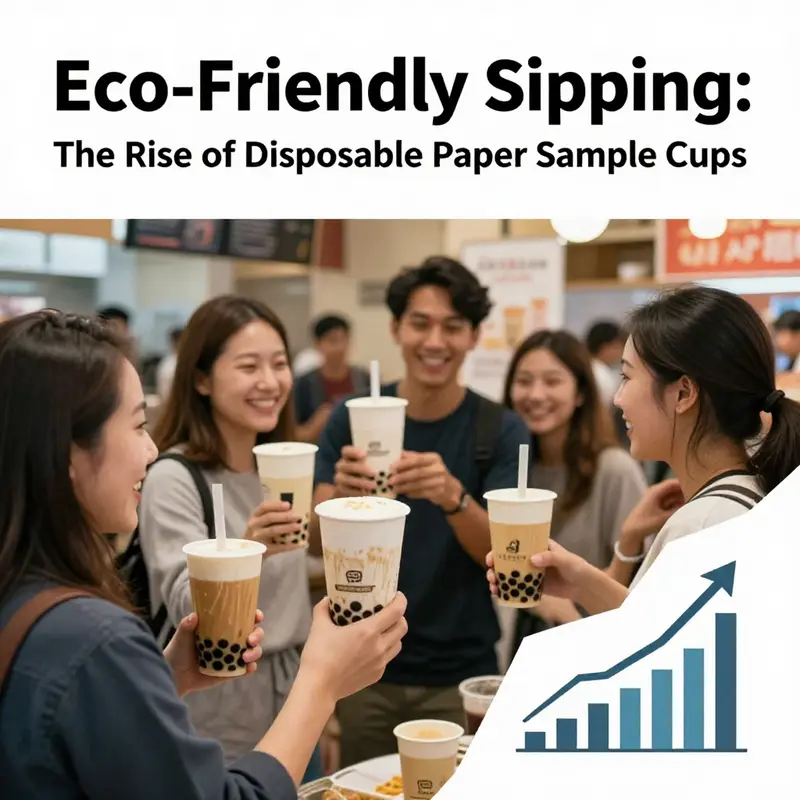
The disposable paper sample cup market is no longer a niche replacement for plastic. It has become a focal point where sustainability, regulation, cost, and innovation meet. Businesses across food service, cosmetics, and event sampling now view paper sample cups as more than a single-use container. They are instruments of brand positioning, risk management, and cost control. This chapter examines the market dynamics and economic factors behind that shift. It highlights what buyers and suppliers need to know to act strategically.
Demand for paper sample cups is rising for reasons that are both practical and reputational. Consumers expect reduced plastic use. Regulators are moving to restrict single-use plastics. These twin pressures change purchasing calculus. A simple cost-per-cup comparison no longer tells the whole story. Companies weigh lifecycle impacts, disposal pathways, and visible sustainability claims. The result is steady growth: the global disposable paper cup market stood at roughly USD 12.5 billion in 2023 and is projected to expand at about 6.5% CAGR through 2030. That trajectory reflects broad adoption across multiple segments and regions.
Several economic drivers explain why paper has gained ground. First, the rising cost and price volatility of plastic feedstocks make paper more attractive. When oil and petrochemical-generated polymers climb in price, the relative cost advantage of paper increases. Paper mills have also benefitted from long-term investments that stabilize supply. For buyers, this means more predictable procurement costs and fewer sudden price shocks tied to crude markets.
Second, regulation is reshaping demand. Regions with strict single-use plastic rules see faster adoption of paper alternatives. Taxes, bans, and extended producer responsibility schemes create financial incentives to switch. For companies operating cross-border, regulatory divergence matters. A policy in one market can drive global procurement changes if it affects manufacturing, packaging design, or brand consistency. Anticipating new regulations helps manufacturers and buyers avoid retrofits and disruptions.
Third, innovation in coatings and construction has closed performance gaps. Traditional paper cups relied on thin polyethylene linings to prevent leaks. New plant-based coatings and water-based polymers now offer leak resistance with improved compostability. Double-wall and corrugated constructions increase heat protection without adding nonrenewable materials. These technical advances expand applications. Sample cups now suit hot liquids and viscous formulations. That opens opportunities in coffee sampling, cosmetics testers, and lab disposables.
Corporate social responsibility amplifies market momentum. Sustainability commitments influence procurement decisions throughout supply chains. Brands often choose paper sample cups as visible proof of their environmental stance. A small sample cup presented at a tasting or product demo becomes a touchpoint for brand storytelling. Retailers and event organizers respond by demanding certified compostable or recyclable packaging. Certifications from recognized bodies provide the credibility many buyers require. Without them, sustainability claims carry little weight.
Recycling and composting infrastructure influences the real-world efficacy of paper solutions. In markets with established industrial composting, compostable-coated cups can complete a circular path. Where such infrastructure is absent, compostable products may still end up in landfill, eroding intended benefits. Improved public awareness and better sorting practices are gradually reducing contamination rates for paper cup streams. Municipal and private collection pilots are expanding, and that investment reduces disposal uncertainty for large buyers.
Segmentation matters. Food and beverage sampling remains the largest volume driver. Coffee tastings, sample kiosks, and food festivals use cups in huge numbers. The cosmetics sector is a high-value niche. Sample cups for creams, serums, and liquid fragrances favor higher-quality finishes and customized printing. Laboratories and healthcare settings require compliance with sterility and chemical resistance standards. Understanding each segment’s functional and regulatory requirements helps suppliers design profitable, fit-for-purpose products.
Supply chain dynamics also shape costs and availability. Raw material sourcing, manufacturing scale, and logistics influence unit economics. Large orders allow manufacturers to amortize tooling and printing costs. Smaller buyers can access competitive pricing through consolidated procurement or buying groups. Global manufacturers increasingly offer modular production runs that balance customization and cost efficiency. For buyers, negotiating lead times and minimum order quantities is as important as securing price.
Price positioning has evolved. There is a growing premium tier for high-performance, certified compostable cups. Many buyers accept a higher unit cost in exchange for verified environmental credentials and better user experience. Conversely, commodity-grade paper cups compete on price where cost sensitivity dominates. Suppliers that can offer both tiers capture broader market share. For brands seeking to elevate perceived value, modest investments in cup quality and design often yield strong returns in customer perception.
Investments in R&D are driving long-term shifts. Manufacturers are exploring fiber blends that increase strength while maintaining recyclability. Plant-based linings made from polylactic acid (PLA) and other bio-polymers aim to balance barrier properties and compostability. Advances in printing and ink technologies reduce volatile organic compound emissions and improve recyclability. These innovations reduce trade-offs between performance and sustainability, expanding the situations where paper sample cups are viable.
Economic risks remain. Feedstock shortages, trade tariffs, and energy price spikes can raise production costs. The compostable market faces the challenge of limited industrial composting capacity in some regions. If compostable cups are landfilled because of missing facilities, their environmental advantage diminishes. Also, consumer confusion about disposal can increase contamination in recycling streams. Successful programs require parallel investments in education and collection.
For procurement teams, assessing total cost of ownership is critical. Unit price is only one input. Consider disposal fees, compliance costs, and brand value impacts. A higher upfront cost may translate to lower long-term expense if it reduces waste management fees or avoids regulatory penalties. Companies should request evidence of certifications and ask for third-party testing results. Pilot programs help validate performance under real-world conditions.
For manufacturers and suppliers, market opportunities are clear. There is demand for scalable, certified products that meet functional needs. Value-added services, like custom printing, private labeling, and end-of-life collection programs, create differentiation. Innovation that reduces material use while improving strength and barrier properties can capture both cost-sensitive and premium buyers. Partnership models with composting facilities or waste haulers can close the loop and add value to corporate clients.
Regional trends will continue to diverge. North America and Europe lead adoption due to regulatory pressure and consumer awareness. Emerging markets show potential but follow a slower path, often constrained by infrastructure. Manufacturers targeting global expansion need flexible product portfolios and supply chains that can adapt to local regulations and disposal systems.
Finally, the market outlook combines growth with maturation. A steady CAGR suggests continued uptake across sectors. Yet the market will also experience consolidation and segmentation. Suppliers that combine technical performance, verified sustainability credentials, and reliable supply will dominate. Buyers that integrate procurement with sustainability strategy will realize both environmental and economic gains.
For practical purposes, buyers should verify certifications and ask suppliers about coating chemistry. Align product choice with available disposal infrastructure. Consider lifecycle costs rather than only sticker price. And explore partnerships that reduce end-of-life impacts. To view a typical supplier offering of bulk kraft paper cups commonly used for sampling and events, see this example of bulk disposable paper cups.
For an in-depth market analysis, growth projections, and segment forecasts, consult the full industry report from Grand View Research: https://www.grandviewresearch.com/industry-analysis/disposable-paper-cup-market
Meeting Standards: Navigating Regulation and Sustainability for Disposable Paper Sample Cups

Regulatory clarity shapes every decision about disposable paper sample cups. From material selection to labeling, the rules that apply affect safety, environmental impact, and how customers perceive a brand. Buyers and makers must understand what regulators require and how compliance aligns with sustainability goals. This chapter walks through the regulatory landscape, focusing on practical implications for product design, sourcing, and quality assurance.
Paper sample cups are simple in use but complex in regulation. They are food-contact articles and fall under food safety rules in most jurisdictions. Those rules govern raw paperboard, coatings, inks, adhesives, and permitted additives. They also address chemical migration, biodegradability claims, and clear consumer labeling. While laws differ by region, the underlying principles are similar: prevent harmful transfer to food, ensure durable containment for intended use, and avoid misleading environmental claims.
Material choices are often the first compliance hurdle. Many cups use a thin plastic liner to prevent leakage and maintain liquid integrity. Common liners include low-density polyethylene. Some manufacturers choose compostable coatings, such as polylactic acid (PLA). Each option has trade-offs. Plastic liners generally provide reliable liquid resistance and compatibility with recycling streams designed for coated paper. Compostable coatings may improve compostability, but they require industrial composting conditions to break down properly. Regulatory guidance typically requires that any coating used for food contact be approved for that intended use and be shown not to migrate harmful substances into beverages.
Chemical migration testing is not optional. Authorities expect manufacturers to demonstrate that constituents of paper, coatings, inks, and adhesives will not transfer to liquids at unsafe levels. Migration testing protocols vary, but they often simulate the most challenging use conditions. For hot beverages, testing uses higher temperatures. For alcoholic or fatty liquids, solvents or surrogate fluids assess worst-case migration. Producers should maintain test reports and certificates of analysis that trace back to raw material suppliers. That documentation forms the backbone of regulatory defense and supports procurement decisions.
Regulators also scrutinize certain chemical classes more closely. Per- and polyfluoroalkyl substances (PFAS), widely used for grease resistance, are increasingly restricted. These substances are persistent in the environment and may pose health risks. Many jurisdictions now limit PFAS in food-contact materials or demand explicit declarations when present. Businesses must ask suppliers about PFAS use and review material safety data sheets. Where possible, they should opt for PFAS-free grease barriers and keep proof of that substitution on file.
Across regions, specific laws codify these expectations. In the United States, food-contact materials fall under Title 21 of the Code of Federal Regulations. The U.S. Food and Drug Administration evaluates coatings, inks, adhesives, and paperboard specifications for safety. Any substance used must be permitted for food contact or be part of an accepted food-contact submission. In the European Union, Regulation (EC) No 1935/2004 sets the primary framework. Additional rules like Commission Regulation (EU) No 10/2011 provide detailed measures for plastic materials and coatings. The EU also limits certain chemicals and emphasizes that materials must not alter food or harm consumers.
One growing policy area is the regulation of single-use plastics. Laws and directives aimed at reducing plastic waste indirectly affect paper cups. Regulations favor compostable or recyclable solutions and discourage designs that undermine recycling streams. As a result, some manufacturers innovate with bio-based coatings or double-wall designs to improve thermal performance while reducing plastic content. Yet policy makers also emphasize real-world end-of-life outcomes, insisting that compostable claims align with available municipal or industrial composting infrastructure.
Certification can bridge buyer confidence and regulatory compliance. Labels from recognized schemes demonstrate that a cup meets compostability or biodegradability criteria. Certifications typically require independent testing that follows standardized methods and verifies that the product breaks down under industrial composting conditions within set timeframes. However, not all certifications are equal. Businesses should look for third-party certification bodies recognized by industry stakeholders. Certification letters and reports should be maintained and reflected on packaging as required.
Clear and accurate labeling is a legal necessity and a consumer expectation. Labels must state whether a cup is suitable for hot or cold liquids. They should identify compostability or recyclability, and note any conditions required for proper disposal. Vague environmental claims like “eco-friendly” or “green” can invite enforcement. Regulators expect substantiation for any sustainability statement. Labels that instruct consumers on correct disposal—composting vs. recycling—help reduce contamination in waste streams. They also support extended producer responsibility goals in regions moving toward producer-funded waste management.
Beyond materials and labels, procurement practices influence compliance. Buyers should require supplier declarations that list raw material composition, provide migration test reports, and confirm the absence of restricted substances. Good contracts include audit rights and specify corrective actions for non-compliance. Traceability is critical. A clear chain of custody from pulp source to final cup helps resolve issues and demonstrates due diligence if regulators question product safety.
Quality assurance must operate across the product lifecycle. Incoming raw material checks should include verification of certificates and spot chemical testing. Production line controls must prevent cross-contamination. Finished product sampling programs should test for leakage, thermal resistance, and migration under representative conditions. Records of these tests and of corrective actions are essential for compliance and for brand protection.
End-of-life considerations increasingly shape design choices. Recyclability depends on local infrastructure. Coated paper can be recyclable where facilities are equipped to separate and process it. Compostable cups require access to industrial composters. If composting facilities are unavailable, such cups may end up in landfill, losing their environmental benefit. Businesses that source compostable cups should confirm local waste infrastructure or provide clear disposal guidance to consumers.
Legal risk is a real consequence of non-compliance. Misleading environmental claims or failure to meet food-contact standards can trigger recalls, fines, and reputational damage. Even when no immediate safety risk exists, the public response to perceived greenwashing can harm brand trust. For companies that supply or use paper sample cups, conservative claims and transparent documentation mitigate these risks.
Operationally, creating a compliance-ready product requires coordinated efforts. R&D teams must select materials with documented food-contact safety. Purchasing departments must vet suppliers for certification and traceability. Regulatory or legal teams should track evolving restrictions, especially those targeting PFAS and single-use plastics. Marketing must ensure claims are supported by evidence and phrased accurately. Finally, sales and field teams should be trained to advise customers on proper use and disposal.
Adopting a compliance checklist simplifies this coordination. Key items include: supplier declarations for all materials, third-party migration test reports, certificates for any compostability claims, a documented chain of custody, labeled disposal instructions, and an internal review of marketing claims. Maintaining these records also eases entry into new markets where rules differ.
Regulatory landscapes continue to evolve. Policymakers respond to new science and to public demand for sustainable packaging. Anticipating change is prudent. Manufacturers and buyers who design flexibility into their products fare better. Options include modular linings that can be swapped to meet regional rules, and labels that clearly identify disposal pathways in multiple languages. Such adaptability reduces the cost of market expansion and shortens time-to-compliance in new jurisdictions.
Finally, compliance and sustainability are mutually reinforcing when approached strategically. Choosing non-toxic materials makes testing simpler. Prioritizing materials that match local end-of-life systems increases the likelihood of genuine environmental benefit. Transparent documentation builds trust with regulators and customers alike. In short, regulatory compliance for disposable paper sample cups is not merely a box to check. It is a design principle that shapes product value, reduces legal risk, and supports circular outcomes.
For businesses exploring inventory options, a practical example of bulk supply and typical configurations can be found in a listing for 20–50–200pcs disposable paper cups, which illustrates common sizes and packaging choices for sample and service use. (https://ecocupbowl.com/product/20-50-200pcs-disposable-paper-cups-kraft-paper-cups-coffee-milk-cup-paper-cup-for-hot-drinking-party-supplies-8-10-12-16oz-cups/)
For authoritative guidance on food-contact material regulation in the United States, refer to the U.S. Food and Drug Administration’s resources on food contact substances. (https://www.fda.gov/food/food-contact-materials)
Final thoughts
The shift towards disposable paper sample cups is not merely a trend; it is a reflection of a broader commitment to sustainable practices within the food and beverage industry. By considering the environmental impact, material composition, market trends, and regulatory standards, businesses can align their operational choices with the growing consumer demand for eco-friendly products. Investing in disposable paper sample cups is not just beneficial for the planet; it also enhances brand reputation and customer satisfaction.