
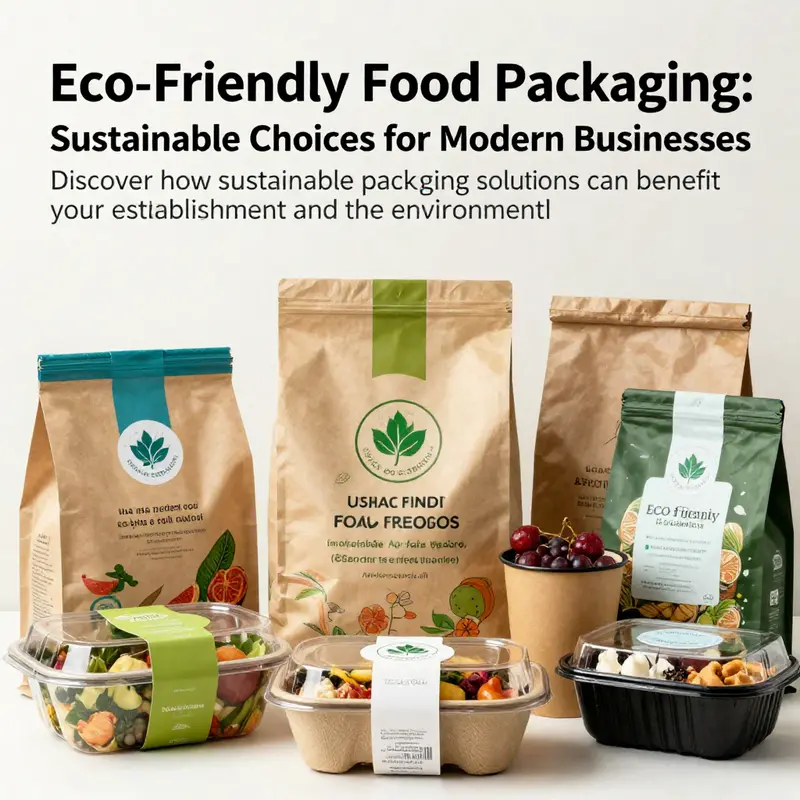
In an age where environmental concerns are at the forefront of consumer minds, eco-friendly food packaging emerges as a vital solution for businesses across the food and beverage industry. As bubble tea shops, restaurants, food trucks, catering services, event planners, and procurement teams navigate the challenges of sustainability, understanding the latest advancements in eco-friendly materials becomes crucial. This article explores the innovative packaging solutions available today, examines the economic implications and regulatory frameworks shaping this landscape, and highlights the growing societal trends driving the demand for sustainable practices. Each chapter builds upon the last, integrating knowledge that empowers businesses to make informed, eco-conscious packaging decisions.
Rethinking Eco-Friendly Food Packaging: Materials, Systems, and Sustainable Design
Eco-friendly food packaging is moving beyond a single material substitution toward an integrated design approach that weighs life-cycle impacts at every stage. From feedstock choice to end-of-life management, decisions about packaging influence resource use, emissions, and consumer behavior. This chapter surveys the ecosystem of materials, processes, and policies that enable safer, greener packaging without sacrificing performance.
Biopolymers, plant-based fibers, and recycled content are increasingly combined with advanced barrier technologies to extend shelf life while remaining compatible with recycling streams or composting networks. The benefits of these materials depend on the availability of appropriate waste infrastructure, consumer participation, and clear labeling. A realistic path to sustainability requires collaboration among producers, waste managers, policymakers, and retailers to align product design with regional waste realities.
Smart packaging concepts—such as time-temperature indicators, freshness sensors, and remote monitoring—illustrate how information can reduce waste and improve safety. When these features are paired with materials that respect end-of-life goals, they create a packaging ecosystem that serves both brands and the planet. The goal is not perfection in any one dimension but a balanced portfolio of options that can scale across product categories and markets.
Ultimately, the transition to sustainable packaging is a systems problem. It demands transparent environmental claims, standardized metrics, and investment in infrastructure that can treat diverse waste streams. By embracing a holistic view that links material science, supply chains, and consumer education, the industry can deliver packaging that protects food, respects resources, and supports a circular economy.
null
null
Regulatory Currents and the Roadmap to Eco-Friendly Food Packaging
Regulatory currents are central to the eco-friendly packaging story. They determine which materials can be used, how products are labeled, and what end-of-life options are considered. Policymakers confront the triple challenge of reducing plastic pollution, cutting greenhouse gas emissions, and conserving resources, while still ensuring food safety and shelf life. This chapter explores how rules push packaging toward renewable, recyclable, and compostable options, and why design teams must weave compliance into every step of development. The arc moves from bans on certain plastics to requirements that reward cradle-to-cradle thinking. Companies that align with these trajectories can reduce risk, access public procurement, and win consumer trust. The regulatory field is dynamic, evolving with science, consumer expectations, and the capacity of waste streams to handle new materials.
One clear pattern is the shift away from single-use plastics toward paper-based formats and other rapidly renewable sources. Regulators emphasize materials that degrade in real-world environments or can be separated in recycling facilities. Yet the path to true sustainability is not simple. A material may be compostable, but only in industrial facilities meeting specific conditions. If home composting cannot handle it, the end-of-life outcome may fall short. The tension between technical possibility and practical disposal drives the design brief. Designers must consider barrier performance, shelf life, and the viability of the waste stream where the product ends its journey.
Policy aims to reduce environmental footprints without compromising safety or food integrity. In the European Union, measures have redirected the market away from many conventional plastics. The Single-Use Plastics Directive targets items contributing most to marine litter, while the forthcoming PPWR aims to set ambitious targets for recycled content, recyclability, and renewable materials. The PPWR seeks to harmonize rules across member states, clarifying responsibilities for producers, retailers, and packaging manufacturers. While details evolve, the direction is clear: higher expectations for sourcing, recyclability, and recycled content. North America follows with Canada’s policies encouraging sustainable packaging and OECD members pursuing policy mixes that combine regulation with incentives for research and deployment of new materials. The overarching philosophy values predictable conditions that reward genuine environmental advantages.
A mid-2024 comprehensive review focused on paper-based and compostable materials and summarized regional compliance requirements and market adaptations. It highlighted labeling, compostability claims, and material sourcing traceability as central issues. For the value chain, this means aligning early-stage design with regulatory expectations. Credible certifications and standardized testing help reduce consumer confusion and protect public health. In practice, packaging should be labels’ truth-in-advertising aligned with waste-stream capabilities. The chapter that follows shows how these regulatory currents intersect with production, distribution, and retail needs, and which materials stand the best chance of regulatory acceptance and consumer trust.
From policy to practice, material choices, adhesives, and coatings become acts of compliance as well as design. Paper-based and compostable formats open doors to new manufacturing partnerships and testing regimes but also raise practical questions. How do you balance barrier properties with recyclability? How can inks, coatings, and adhesives avoid contaminating recycling or composting streams? How do you measure environmental benefits along the life cycle? These questions depend on local waste-management capabilities and the willingness of authorities to fund facilities. The consequences of regulatory choice are felt in bakery and café packaging, where premium presentation and sustainability goals must coexist with safety, hygiene, and ease of use. The interaction of law, science, and design becomes visible when a pastry box protects goods and signals responsible consumption to shoppers.
Designers increasingly adopt a lifecycle perspective, mapping materials to disposal routes and validating end-of-life outcomes. A pragmatic approach favors designs that maximize recyclability or compostability while keeping performance. For example, a three-compartment takeout box designed with compatible materials can reduce cross-contamination and enable sorting. See an example here: eco-friendly disposable three-compartment packaging box for fast food. Such design demonstrates how material choice, geometry, and finish align with regulatory expectations while satisfying the demands of restaurants and consumers. It is not a guaranteed compliance solution, but it shows how engineering toward waste-stream compatibility can yield environmental gains when regulations set the stakes.
Labels matter as much as materials. Regulators require precise labeling, standardized terminology, and third-party verification so that claims about recyclability or compostability are credible. The distinction between home and industrial composting is not merely semantic; it governs disposal routes and performance. For recycled content, regulators may set minimum thresholds and demand traceability. These labeling standards affect packaging aesthetics, printing processes, and coatings. The result is a tightly coupled system where policy, product design, and consumer perception reinforce accountability and reduce greenwashing risk.
Transparency and data are rising in regulatory importance. Regulators encourage environmental product declarations, lifecycle assessments, and sourcing disclosures. This data-rich environment pushes manufacturers to invest in traceability and to build supply chains that can prove reductions in energy, water, and emissions across the life cycle. It also calls for greater collaboration among brand owners, packaging suppliers, waste-management operators, and local authorities. The payoff is not only compliance but a more resilient value chain capable of absorbing waste-stream shifts and embracing new processing technologies. In short, regulation becomes a catalyst for better design, better data, and stronger partnerships.
Regional differences matter. Not every region has equal waste-management capacity for every new material, so designs must anticipate those gaps. It is not enough to claim biodegradability if facilities cannot handle it. The most forward-looking packaging strategies offer clear waste pathways alongside performance requirements. In bakeries, cafés, and gift packaging—contexts where premium aesthetics meet sustainability goals—the packaging choice must reflect regulatory compliance and consumer expectations for freshness, hygiene, and beauty. The interplay among law, science, and design becomes most visible when a box protects delicate pastries and signals responsible consumption to a shopper. The modern packaging designer thus wears multiple hats: scientist, policy translator, and storyteller who connect material facts with trusted claims.
Ultimately, regulation does more than set limits; it creates a canvas for material innovation and new business models. Those who align with environmental performance and rigorous validation will win when claims withstand scrutiny. The 2024 review suggests the future favors materials that satisfy recyclers and composters, deliver robust barrier properties, and scale in production while containing costs. It will reward packaging that fits existing waste infrastructure and carries transparent credentials. Firms that invest early in regulatory-informed design—mapping end-of-life routes, validating claims, and engaging with waste authorities—will reduce risk and unlock value as markets mature. The result is not a single magic material but a spectrum of solutions shaped by regional realities, waste-management capacity, and shared commitment to a healthier planet. External resource: https://www.mdpi.com/2306-5729/10/6/182
Shifts in Society, Systems in Packaging: How Consumer Culture and Regulation Drive Eco-Friendly Food Packaging
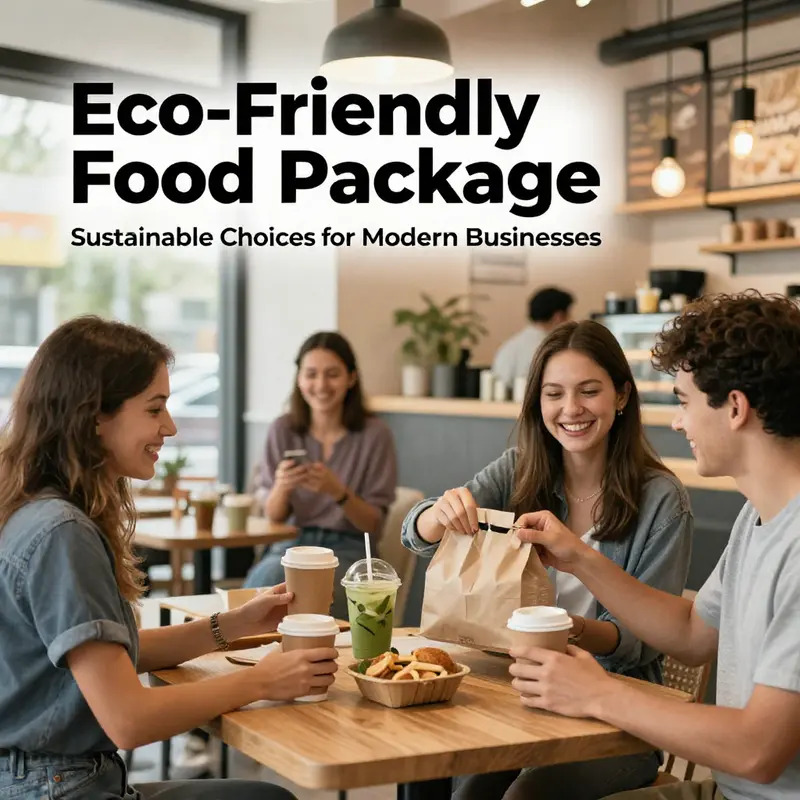
Where people live, what they eat, and how they think about waste converge on the packaging that touches every bite. Eco friendly food packaging is more than a material choice; it reflects broader shifts in values, economies, and infrastructures that shape daily life. Consumers increasingly scrutinize the footprints of products from producer to plate, pressuring brands to align packaging with a promise of less waste, less harm, and more transparency. This pressure comes from many forces that move in harmony and sometimes in tension. The strongest driver is consumer demand: people want packaging that can be recycled, composted, or reused and that communicates responsibility as clearly as taste and price. This demand travels beyond urban centers and reaches communities with variable access to waste systems. It incentivizes brands to invest in more sustainable formats and materials, not as a novelty but as a standard. Regulators layer requirements that push for higher recycled content and better end of life guidance, interacting with infrastructure and behavior. They signal market constraints that spur innovation, leading to a broader toolkit including bioplastics, molded fibers, and plant based films, each with trade offs in cost and performance.
The circular economy is a core element of this shift. Closed loop thinking favors reusable, refillable, and returnable packaging that can be used multiple times and kept in value across cycles. In food service this requires durable materials, reliable logistics, and clear consumer instructions. It also demands systems that make it easy for households to return or recycle packaging and for processors to separate materials. Public private partnerships and shared infrastructure help turn pilot programs into scalable solutions. The goal is to reduce waste while preserving product quality and convenience, not to degrade user experience. Cooperation among municipalities, waste companies, and producers expands the reach of recovery systems and improves overall environmental impact.
Advances in bio based materials drive many options. Polylactic acid PLA from corn or sugarcane offers renewables and compostability in industrial facilities. Mycelium based packaging provides cushioning with a lighter footprint. Other materials include kraft papers, molded fibers, and seaweed films that offer barrier properties. The challenge is balancing performance with cost and end of life. In many markets customers value environmental benefits but producers must maintain shelf life and heat tolerance. The best options work at scale with predictable disposal conditions and price points that enable broad adoption. For small and medium sized enterprises accessibility has improved through specialized suppliers and formats for ecommerce.
Smart packaging blends digital sensing with material science. Active bio packaging uses indicators and controlled environments to monitor freshness and adjust barrier properties. The idea is to extend shelf life without sacrificing recyclability. For consumers this translates into safer food and less waste; for producers it means better yield and more predictable quality control. These technologies are still maturing and interact with regulation and acceptance concerns. The trajectory is clear packaging will carry digital and material capabilities in one integrated solution to support sustainability goals and food safety standards. In the meantime brands test labeling that communicates a product’s environmental credentials without overwhelming the consumer with jargon. The balancing act between information and clarity remains central to trust at shelf and at home.
The digital and marketplace landscape shapes how packaging is sourced and used. Online commerce has boosted the need for packaging that travels efficiently, protects products during transit, and offers sustainability advantages as a marketable attribute. Buyers want light cost effective recyclable packaging that ships well and reduces returns due to damage. Sellers gain the ability to showcase sustainability credentials in listings, provide disposal guidance clearly, and tap into eco mindful communities. Ecommerce growth encourages standardized formats that streamline production, reduce waste, and enable predictable logistics. Packaging becomes an interface between digital platforms and physical goods, translating data about materials sourcing and end of life into consumer friendly information.
In closing the story is not a simple tale of greener plastics or greener paper. It is a complex, evolving system shaped by values, laws, technologies, and capital that connects consumer choices, policy design, and corporate strategy. Momentum points to growth in sustainable packaging options and a transformation in how products are designed, marketed, and returned to the economy for reuse or recycling. As the field matures, packaging materials can become more resilient, more recyclable, and more aligned with needs of both people and planet. This period also highlights the importance of credible metrics and transparent labelling. Consumers want data about recyclability rates, compostability in local facilities, and clear disposal paths. With credible lifecycle assessments and transparent messaging, brands can build trust and help shoppers make informed choices.
Final thoughts
The shift towards eco-friendly food packaging presents businesses with numerous opportunities to align with consumer preferences while actively contributing to environmental sustainability. As advancements in material technology continue to evolve, the benefits of adopting eco-friendly practices become clearer. By understanding the economic implications, navigating the regulatory landscape, and tapping into societal trends, businesses can make informed choices that not only enhance their market presence but also foster a healthier planet. It’s time to embrace these innovative solutions and position your brand as a leader in the sustainable movement.