
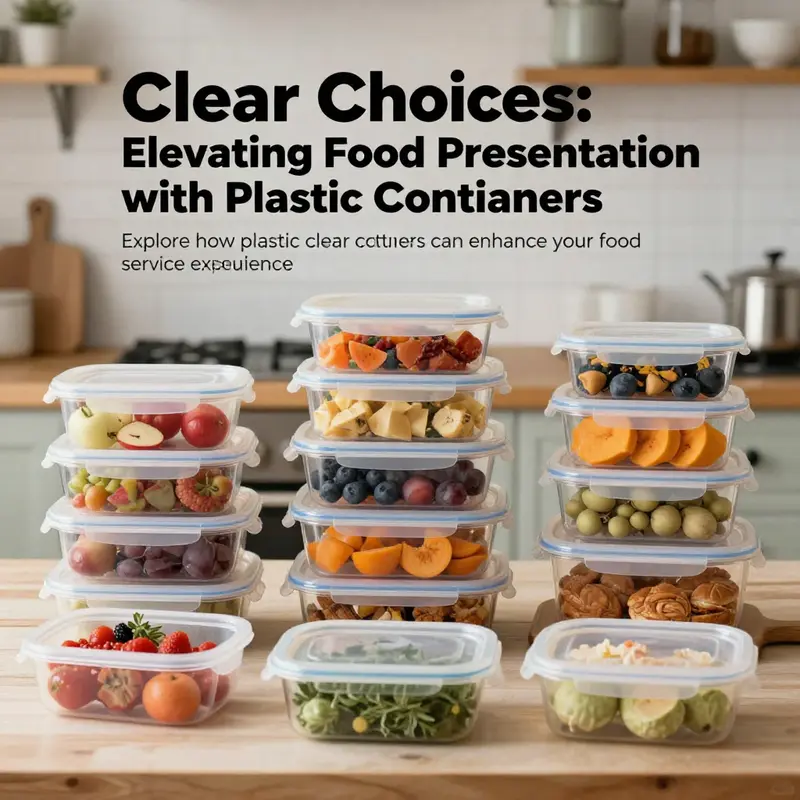
When it comes to food service, presentation and functionality are paramount. Plastic clear containers for food offer an ideal solution for Bubble Tea shops and beverage chains, providing a transparent view of colorful drinks and snacks that attract customers. Restaurants, food trucks, and catering services benefit from these versatile containers that enhance meal presentation while ensuring freshness and safety. Event planners and corporate procurement teams appreciate the blend of practicality and aesthetics these containers offer, making them a smart choice for any occasion. In this exploration, we’ll dive into the types and materials of these containers, their diverse applications, acknowledge their limitations and alternatives, and consider the trends shaping their future.
Clear by Design: The 5 Clear Plastics in Food Storage
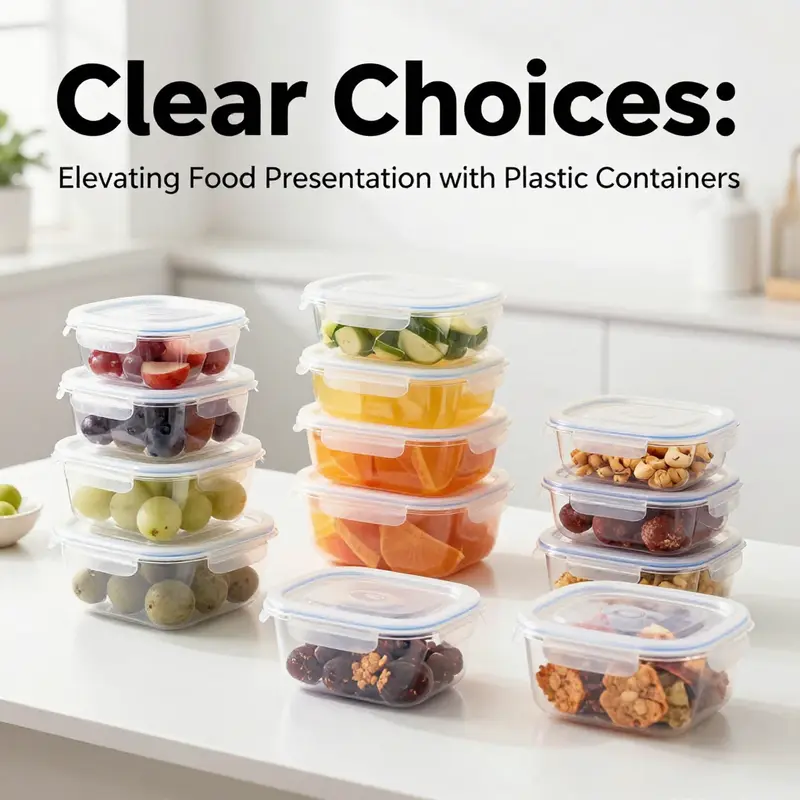
Clear containers play a foundational role in food service and home kitchens. This chapter surveys five common plastics you will encounter: PET, PP, PS, HDPE, and BPA-free alternatives such as Tritan. Each material has a distinct profile for clarity, heat tolerance, durability, and recyclability. Choosing the right one depends on how the container will be used, heated, cleaned, and disposed.
PET offers high clarity and light weight, making it ideal for cold storage and display. It is generally not designed for heating or repeated microwave use, and performance can degrade with high heat or acidic foods. PP provides better heat resistance and durability, making it a go-to for reusable containers and reheating, while remaining relatively clear to allow content visibility. PS delivers exceptional clarity but is brittle and not suitable for hot foods or microwaving, often used for cold applications. HDPE is tough and chemical resistant, usually more opaque but very reliable for durable, reusable storage and heavy-duty environments. Tritan, a BPA-free copolyester, combines clarity with strong heat resistance and dishwasher durability, offering a premium reusable option.
These materials also differ in recyclability and labeling. PET and PP are widely recycled in many regions, while PS and HDPE have variable acceptance depending on local streams. Tritan’s recyclability depends on local programs and labeling accuracy. Finally, the choice of container is inseparable from lid design, sealing, and care practices, all of which influence safety, odor retention, and life span.
Seeing Through Efficiency: The Living Role of Clear Plastic Food Containers Across Packaging, Service, and the Food Network

Internal link: In practice, examples of packaging that leverage transparency to bolster presentation and functionality can be found in flexible, windowed bakery and pastry packaging. See foldable cake boxes with window packaging for an illustration of how clear materials intersect with design to support product visibility and brand storytelling. foldable cake boxes with window packaging
From Clarity to Responsibility: Rethinking Plastic Clear Food Containers Through Limitations and Safer, Greener Alternatives
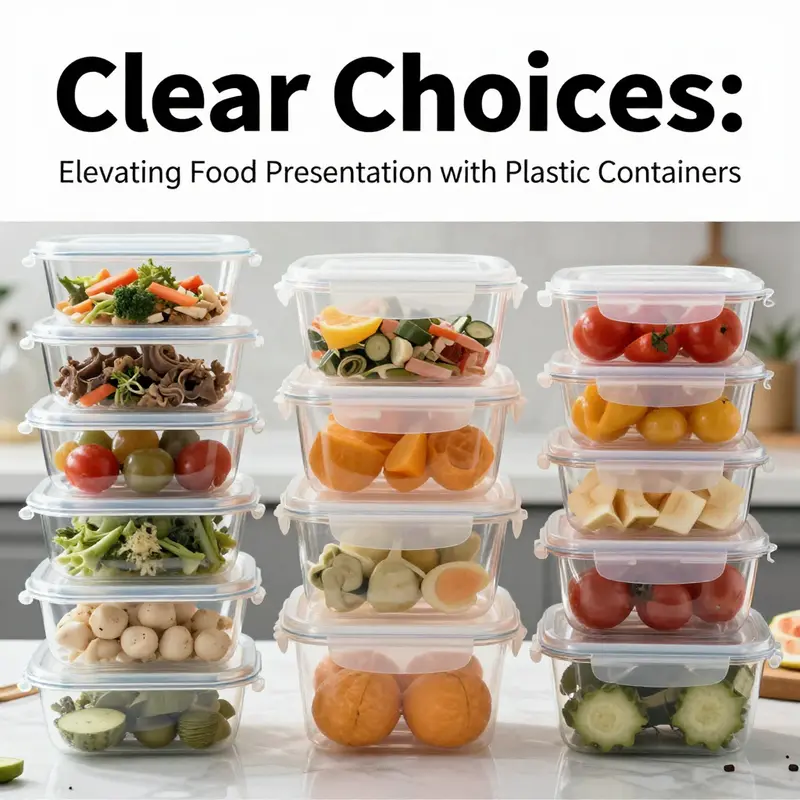
The appeal of plastic clear containers for food is rooted in visibility, convenience, and affordability. You can see the content at a glance, portion out meals with ease, and rely on a lightweight, shatter-resistant shell in busy kitchens and fast-service environments. Yet as the industry has grown and the research surrounding packaging materials has deepened, a clearer picture has emerged: the same transparency that makes these containers attractive also highlights their vulnerabilities. This chapter centers on the limitations of plastic clear containers and the practical, evidence-based pathways toward safer, more sustainable alternatives that do not sacrifice functionality. It is not a retreat from efficiency; it is a disciplined recalibration of material choice, lifecycle thinking, and design for reuse or safe end-of-life processing.
Environmental persistence is perhaps the most visible constraint. Conventional plastics—often composed of PET, PP, or related polymers—are remarkably durable in the short term, but their long tail is less forgiving. In ecosystems, plastics can persist for decades, even centuries, accumulating in landfills and the oceans. For the food industry, this translates into a paradox: products designed to preserve freshness and extend shelf life end up contributing to a global waste burden that undermines the very health benefits they support. Decomposition occurs at such a slow pace that microplastic fragments can form and disseminate through water, soil, and, ultimately, the food chain. The potential for microplastics to migrate into food increases when containers are exposed to heat or acidic contents. While the science continues to refine risk estimates, the precautionary principle guides many procurement decisions toward materials with lower long-term environmental footprints and reduced likelihood of fragmentation into micro-particles.
Alongside persistence, recyclability poses a set of practical challenges. The real-world recycling rate for plastic packaging remains uneven, often hampered by contamination and the complexity of sorting different plastic types. Even when facilities exist to process PET, PP, or PVC, the feedstock can be compromised by residues, grease, or multi-material designs that resist straightforward separation. The result is a loop that is only partially closed: the amount recycled remains smaller than the total produced, and some fraction ends up in landfills or the environment. This reality pushes engineers and procurement leaders to design for recyclability at the system level—favoring materials that are widely accepted in local streams, avoiding mixed polymers that complicate recycling, and selecting closures and labels that do not introduce additional contaminants.
Health considerations add another layer of complexity. Additives used to improve flexibility, durability, or processing performance—such as certain phthalates or, in some historical contexts, BPA—have been linked to endocrine disruption and other health concerns. Although many regions regulate or restrict specific substances, the broader lesson is that performance cannot be decoupled from safety. In practice, this means a careful audit of material compositions, migration testing under representative serving conditions, and clear, accurate labeling so food handlers and consumers understand the limits of a product’s safe use. For many applications, this translates into a preference for materials that minimize risk during everyday handling, heating, and washing, even when consumer education and label claims are robust.
Another limitation lies in performance under thermal stress. The core promise of clear plastic—transparency that survives repeated cycles of usage—meets a countervailing requirement: the material must withstand microwaving, dishwashing, and heat exposure without warping, clouding, or transferring unwanted compounds. The 2026 comparative analyses that weigh glass against plastic remind us that no single material is universally superior. Instead, performance must be matched to use cases. For deli counters and takeaway services that require leak resistance, portion control, and clear presentation, plastic’s convenience remains compelling. Yet the trade-offs—fugitive odors, surface micro-scratches that harbor bacteria, and the cumulative effect of repeated heat cycles—deserve careful management through cleaning protocols, storage guidelines, and design tweaks that reduce stress points.
In light of these realities, several alternatives emerge that preserve the strengths of transparency while addressing the major concerns. A striking development is the advent of biodegradable transparent packaging paper derived from plant materials. Reports of a world’s-first fully biodegradable transparent packaging paper highlight a material that can be processed into cups, bottles, and even straws, with microbes turning it into water and carbon dioxide. The advantages are clear: full compostability, non-toxicity, and true visibility of contents. This material challenges the traditional dichotomy of plastic versus glass by offering a compostable substitute that retains the perception of clarity and allows direct food contact. It is not a universal replacement yet, but it signals a potential trajectory where visibility, processability, and end-of-life stewardship converge in a single solution. The implications for producers and retailers are profound: revisiting supply chains, rethinking point-of-sale presentation, and aligning packaging choices with broader sustainability commitments.
Glass containers stand out as a well-established alternative that delivers exceptional clarity and chemical inertness. Glass offers infinite recyclability without degradation in quality, and it performs superbly in high-temperature contexts, making it suitable for reheating or hot holds. The caveat is practical: glass is heavier, more fragile, and often more energy-intensive to produce and transport. For applications where break resistance or ported-use in mobile environments is paramount, glass may require design concessions—such as reinforced rims or in-bulk handling strategies—to ensure that benefits are not overshadowed by increased breakage risk or logistical costs. Nevertheless, for environments where long-term storage, safety, and reusability take precedence, glass remains a persuasive option that preserves the visual appeal of content while delivering a robust, inert storage environment.
Stainless steel, when paired with clear lids made from tempered glass or food-grade silicone, offers another compelling pathway. Stainless steel is durable, non-reactive, and highly reusable, aligning with a philosophy of long-term reuse over single-use disposal. The combination of metal walls with a transparent lid product line introduces a clear window into the contents while preserving the durability and thermal performance of steel. This hybrid approach works especially well for meal-prep regimes, institutional kitchens, and consumer segments that prioritize longevity and minimalist waste streams. The challenge, of course, is the weight, the potential cost implications, and the need to optimize sealing systems to maintain leak resistance under routine handling and transport. However, for users who value safety, cold-to-warm temperature tolerance, and a high-grade aesthetic, metal-with-clear-lid designs provide a durable alternative that counters some of plastic’s perceived vulnerabilities.
Plant-based bioplastics, such as polylactic acid (PLA), represent another important class of alternatives. PLA is derived from renewable resources like corn starch and offers a lower carbon footprint in certain life-cycle analyses. However, its performance envelope is nuanced: while industrial composting facilities can facilitate its breakdown, home composting and natural environments do not always support efficient degradation. For hot or oily foods, PLA can perform inconsistently, and the disposal infrastructure required to realize its benefits is not universally available. These considerations do not negate PLA’s potential; they simply frame it as a material appropriate for specific contexts—where industrial composting is accessible and where the product design minimizes exposure to high heat and fats. In such niches, PLA can deliver the transparency and form-factor that users expect while reducing overall environmental impact relative to conventional plastics.
Beyond polymer options, reusable fabrics and bamboo containers offer compelling, low-impact choices for non-perishable or dry goods. While these materials cannot replicate the exact transparency of clear plastics, they embody a broader principle: reduce single-use consumption by emphasizing reuse, durability, and end-of-life simplicity. This approaches shifts the emphasis from the plastic-centric model to a design ecosystem that values material stewardship, reuse cycles, and consumer behavior that supports longer product lifetimes. It also encourages a rethinking of the concept of visibility itself—reimagining how users track contents when transparency is limited, and leveraging labeling, modular design, and smart storage practices to maintain efficiency.
The design and procurement implications of these alternatives extend beyond material selection. Engineers and buyers are challenged to integrate performance requirements with life-cycle thinking. A comprehensive technical baseline would include clear specifications for temperature tolerance, barrier properties against moisture and oxygen, mechanical strength, and compatibility with cleaning technologies. It would also require explicit end-of-life instructions, whether it is recycling compatibility, industrial composting suitability, or safe disposal. The goal is not merely to replace plastic with a different material but to pivot toward a packaging ecosystem that reduces waste, minimizes risk, and preserves the operational benefits that users expect from transparent storage solutions.
To translate these principles into practice, several strategic pathways can guide decision-making in enterprise settings. First, implement a material portfolio that segments use cases by temperature, friction, shelf life, and handling requirements. For example, hot-holding or microwave-reheating tasks might lean toward glass or steel for safety, while cold-prep or display-driven contexts might tolerate transparent paper-based solutions under appropriate processing conditions. Second, map end-of-life outcomes for each option within the local recycling or composting infrastructure. This ensures that packaging decisions align with available recovery streams rather than theoretical capabilities. Third, align product design with standardized safety and performance certifications for microwave and dishwasher use, ensuring that operators rely on consistent expectations for container longevity and safe reusability. Fourth, invest in clear, consumer-facing labeling that educates end-users about proper disposal, reuse guidelines, and any temperature limitations. Clear communication can dramatically improve recycling rates and reduce contamination in a mixed-stream system.
In parallel with material innovation, the supply chain has an essential role to play. A shift toward greener, transparent packaging requires collaboration among suppliers, manufacturers, retailers, and waste-management partners. For instance, the adoption of eco-friendly takeaway boxes or transparent, compostable papers hinges on reliable supply chains that can scale while maintaining quality and cost efficiency. It also necessitates a shared commitment to design-for-recovery, where packaging is not only fit-for-use in the kitchen but also ready for a practical end-of-life pathway. When teams work together—from product developers to sustainability officers and procurement specialists—they can craft a coherent approach that reduces plastic reliance without compromising the clarity and user experience that define plastic clear containers today.
In the spirit of thoughtful transition, many operations will find value in a phased approach. Start by cataloging current uses of plastic clear containers and documenting the performance requirements for each application. Then, pilot a mix of alternatives in limited volumes, tracking metrics such as leakage incidents, consumer acceptance, temperature stability, and post-use disposal outcomes. The data-driven insights from these pilots can guide broader adoption. The aim is not immediate elimination but an evidence-based migration toward packaging that sustains food safety, preserves product visibility, and minimizes environmental impact over the product’s entire lifecycle. This path recognizes that there is no one-size-fits-all substitute; rather, a carefully curated portfolio of options can meet diverse needs while steadily reducing the footprint of single-use plastics in food storage and display.
For readers seeking practical options that align with these principles, the market increasingly offers packaging lines focused on eco-friendly disposal and reusability. While naming individual brands is beyond the scope of this discussion, the concept remains central: explore options that emphasize recyclable or compostable substrates, materials with demonstrated safety for direct food contact, and designs that simplify cleaning and reuse. When selecting such options, prioritize compatibility with existing processes, the availability of recycling or composting streams in your region, and the ability to communicate clear disposal guidance to customers and staff. These considerations help ensure that a shift toward greener alternatives does not introduce new inefficiencies or safety risks.
In closing, the limitations of plastic clear containers are not merely obstacles to overcome; they are signals guiding a broader evolution in food packaging. The emergence of biodegradable transparent papers, the continued appeal of glass and stainless steel, the nuanced role of PLA, and the possibility of reusable fabrics all contribute to a more resilient packaging landscape. The goal is to preserve the advantages of visibility and convenience while reducing environmental impact and health-related concerns. By embracing a structured, evidence-based approach to material choice, design for end-of-life, and cross-functional collaboration, the food industry can honor its duty to safety, sustainability, and consumer trust without sacrificing the efficiency that clear containers have long promised.
For teams exploring sustainable packaging options for takeout and display, consider a range of eco-friendly takeout boxes and related solutions that align with these goals. [eco-friendly disposable takeout boxes for food packaging] focused on safety, microwave compatibility, and grease resistance can be a practical starting point as you evaluate how best to balance visibility, performance, and responsible disposal. By anchoring decisions in a holistic view of material performance, life cycle impacts, and user experience, organizations can navigates the transition with clarity and purpose. Internal collaboration, transparent communication with customers, and continuous monitoring of end-of-life outcomes will help ensure that the shift toward safer, greener alternatives remains steady, measurable, and aligned with broader sustainability objectives.
External resource for further reading: KeYin reports on the advancement of fully biodegradable transparent packaging paper and its potential to transform how we store and present food while reducing environmental impact. See: World’s First Biodegradable Transparent Packaging Paper Unveiled (June 17, 2025) https://www.kyinfo.com/news/123456
Clear Horizons: The Future of Plastic Clear Containers for Food
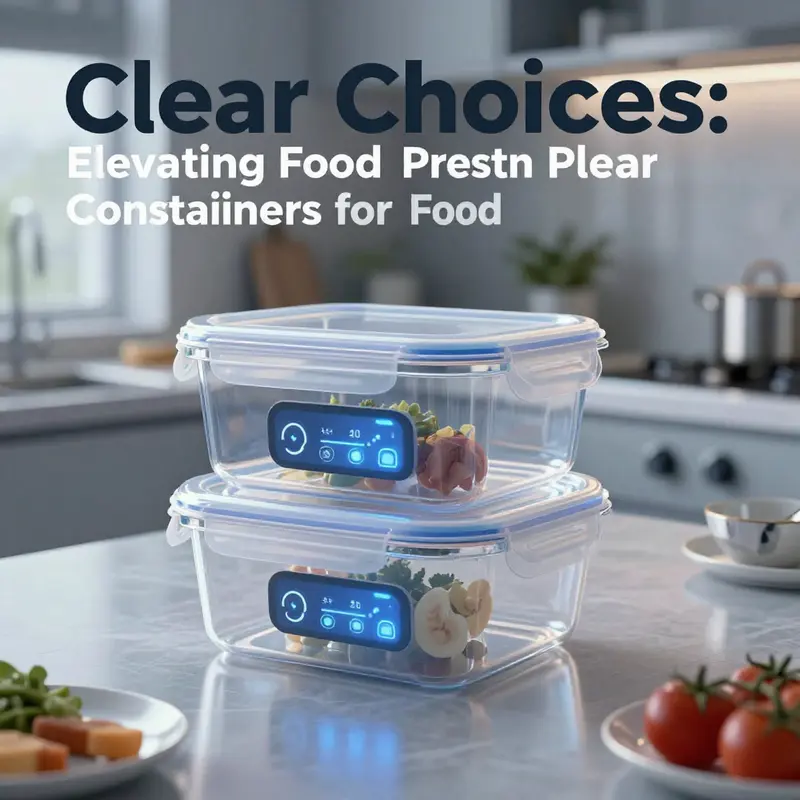
Transparency remains a defining feature of clear plastic containers for food, but the coming era combines visibility with responsible performance. The materials mix will emphasize durable, clear resins alongside compostable options, enabling high-use reliability while offering clearer end-of-life pathways. Sealing, rigidity, and resistance to heat and detergents will improve, and smart packaging features may monitor temperature and freshness to reduce waste and support traceability across supply chains. Reuse and recycling will be designed into the lifecycle, with modular designs that ease cleaning and refurbishment and help align with circular economy goals. Standards, labeling, and consumer guidance will be crucial to ensure proper disposal and safe reuse, while retailers and manufacturers work to integrate packaging with existing logistics and recycling streams. The future aims to preserve the practical benefits of clear containers, visibility, versatility, and convenience, while expanding their role as active partners in food safety, sustainability, and efficient operations.
Final thoughts
In an era where presentation and practicality go hand in hand, plastic clear containers are undeniable assets for various food-related sectors. Not only do they enhance the visual appeal of beverages and meals, but they also ensure convenience for both staff and customers. Understanding the types available, their diverse applications, and the limitations can guide businesses in adopting the right solutions that align with their operational goals. As the future unfolds, staying informed about innovations in material science and design will allow businesses to continue improving their service while addressing sustainability concerns.