
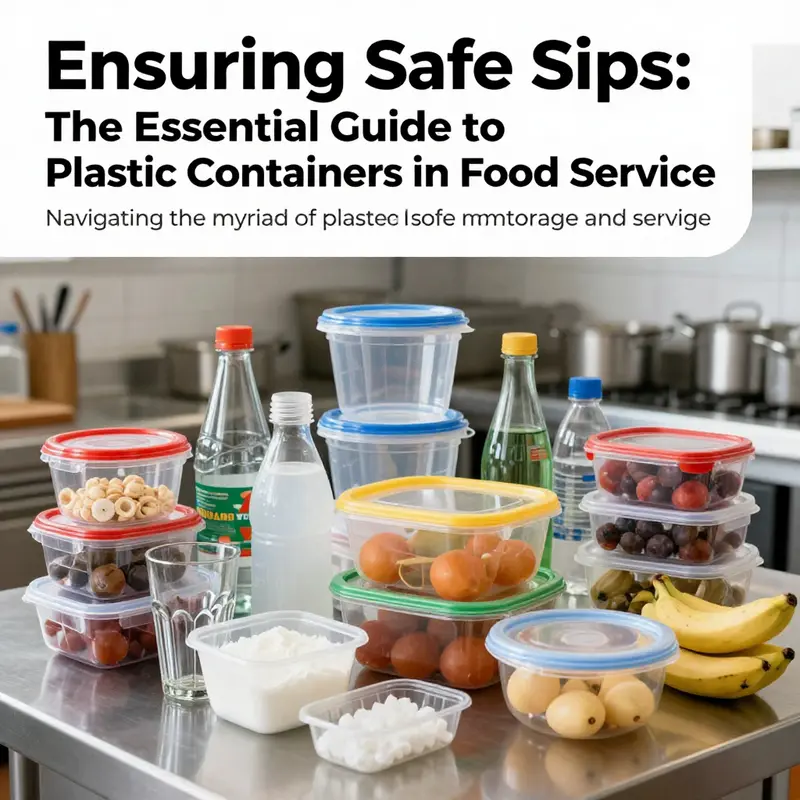
The rise of plastic food containers, particularly in beverage service, has made it crucial for establishments such as bubble tea shops, restaurants, food trucks, and catering services to understand the safety and efficacy of their storage solutions. With growing consumer awareness around health and safety, knowing the types of plastics used and their potential risks can help businesses make informed choices. This guide will explore various plastic types, the risks associated with both chemical migration and safe practices, ultimately linking these insights to relevant regulatory guidelines. Equip your team with the knowledge needed to ensure customer safety and satisfaction while maintaining compliance with established standards.
Resins, Reuse, and Risk: Navigating Plastic Food Containers and Real-World Safety
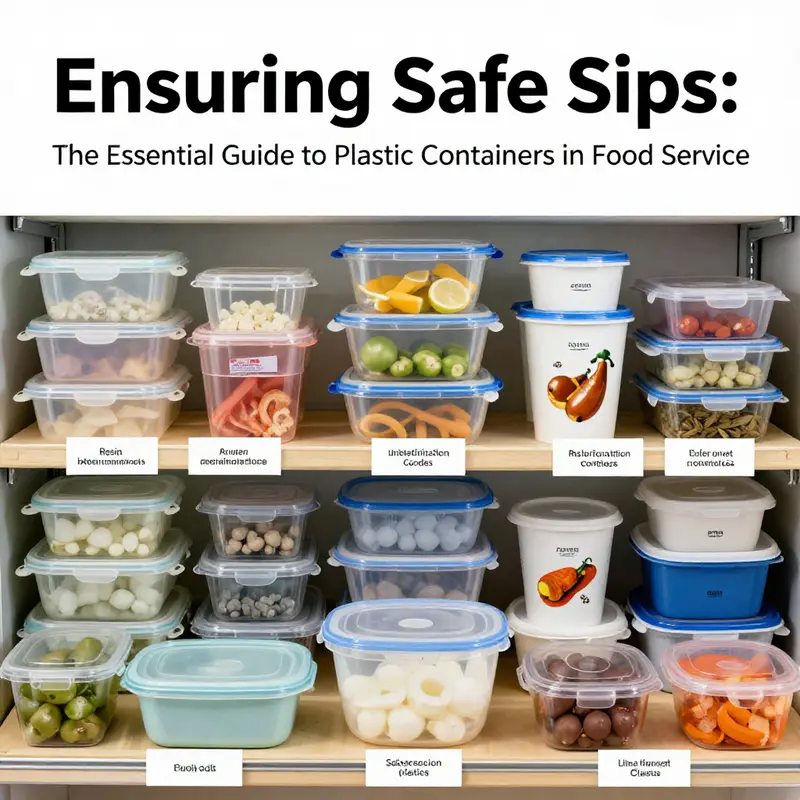
In kitchens around the world, plastic food containers are nearly invisible workhorses. They lighten the load of daily life, keep leftovers from going to waste, and enable convenient meal prep and transport. Yet beneath their practical ease lies a complex landscape of chemical composition, heat dynamics, wear, and regulatory nuance. To understand how these objects influence real-world food safety, we must move beyond glossy packaging claims and into the science of what the containers are made from, how they are used, and what happens when they age. The core of this discussion is not merely a catalog of plastics but a narrative about choices—about resin types, about the conditions under which a container can be considered safe, and about the ways in which everyday use can either minimize or amplify potential risks from chemical migration and physical degradation.
At the heart of plastic safety for food contact are the resins themselves. The resin identification code inside the recycling triangle serves as a quick map of the material’s identity, but it is only a first step. High-Density Polyethylene (HDPE) and Polypropylene (PP) stand out as relatively robust choices for food storage. HDPE, known for its chemical resistance and low permeability, has earned broad acceptance as a safe option for direct contact with many kinds of foods when used under typical conditions. It resists leaching under normal use, and when HDPE products are manufactured to established standards, they are designed to withstand the rigors of everyday refrigeration and short-term heating without releasing substantial levels of substances into food. PDAs from many health agencies emphasize that HDPE is recyclable and widely used in dairy jugs, milk containers, and oil-tiller bottles, underscoring a track record of safety in common applications. Until specifics are changed, this family of resins remains a cornerstone for those seeking practical, relatively inert storage options.
PP occupies a parallel space in safety discussions, and its popularity in microwave-safe containers reflects its superior heat resistance. With a melting point well above typical kitchen temperatures, PP is commonly used for yogurt tubs, lunch boxes, and takeout packaging that is intended to withstand reheating. The FDA recognizes PP as safe for food contact, a designation reinforced by its chemical robustness against acids and bases and its ability to resist deformation under repeated heating cycles. Still, even for PP, the cautionary note rings true: repeated heating can gradually degrade material properties, and long-term exposure to aggressive contents or high heat can alter the migration profile of trace chemicals. In everyday life, this means PP containers can be convenient and safe when used as intended, but they are not immune to the aging process.
Another resin that often appears in discussions of safety is LDPE, or Low-Density Polyethylene. LDPE is widely used for wraps, bags, and some softer, flexible containers. Like HDPE, it generally demonstrates a good safety profile for food contact, particularly at cold or room temperatures. The slide from safety to risk with LDPE, however, is temperature-driven: heating LDPE can increase the likelihood of chemical migration and deformation. This makes LDPE a practical choice for cold storage, but a less reliable option for hot foods or microwave use unless the container expressly carries a microwave-safe designation. In short, LDPE’s strengths lie in flexibility and barrier properties at lower temperatures; its caution lies in the potential for change when temperatures rise.
The literature grows more nuanced as we move toward other widely used plastics. PET, or PETE, is a staple for single-use beverage bottles and some jars, celebrated for clarity and rigidity and generally considered safe for cold, one-off applications. The warning that PET is not ideal for long-term storage or repeated use is important. Repeated cycling or exposure to heat can accelerate degradation, potentially releasing trace substances into food. This is not an indictment of PET itself but a reminder that the intended use matters as much as the material’s intrinsic properties. In contrast, Polystyrene (PS) presents a more contested picture. PS can be found in foam and rigid forms, and concerns about styrene migration have been raised by multiple regulatory and research bodies, especially when heated or used with fatty or hot foods. The EFSA has highlighted these concerns, advising caution in PS use for certain food contact applications. While polystyrene remains common in disposable cups and certain containers, this risk profile invites a thoughtful approach to when and how to use PS-based products, particularly with hot or fatty foods.
And then there is the long-discussed and increasingly scrutinized family of polycarbonates and other “7” category plastics. Historically associated with BPA, polycarbonate-based food-contact materials led to widespread reformulations as manufacturers replaced BPA with other monomers. Even with BPA substitutes like BPS or BPF, research suggests that these alternatives may carry their own health concerns, and modern standards have largely moved away from BPA in food contact materials. Yet caution persists: not all 7s are the same, and older or non-food-grade plastics can pose different hazards. The evolving regulatory landscape reflects ongoing scientific inquiry into how best to balance performance, safety, and environmental considerations in products designed to withstand heat, washing, stacking, and repeated use.
A crucial practical consequence of these material differences becomes evident when we consider how plastics behave under heating or with different food matrices. Chemical migration—the tiny movement of substances from plastic into food—depends on several factors: the type of plastic, the presence of plasticizers, the acidity or fat content of the food, and how hot the container gets. Fatty or acidic foods, heated foods, and foods stored for longer periods can all increase the potential for leaching. The migration process is not a dramatic, single-event strike; it tends to be a gradual, cumulative phenomenon influenced by time, temperature, and repeated use. This is why many safety guidelines emphasize not just the material’s baseline safety but its suitability for specific uses: can a particular container tolerate the intended heat, storage duration, and food type without compromising safety? Signs of physical degradation—cloudiness, scratches, warping, lid misfit—are not merely cosmetic issues. They indicate aging plastics that can trap bacteria or shed fragments, and they often accompany changes in how plastics interact with food. Odor retention can signal chemical off-gassing or microbial activity, both of which should prompt replacement rather than continued use.
Closely linked to these material and usage dynamics is the regulatory stance that guides consumer expectations. The FDA maintains that food-contact plastics approved for their intended uses are safe under labeled conditions. This is an important baseline, one that helps manufacturers and consumers align around test protocols and use cases. But the stance is not a blanket blanket of certainty for every scenario. Independent studies often push for caution, particularly when considering long-term exposure, repeated heating, and the cumulative effects of low-level chemical exposure. The EFSA’s assessments echo similar concerns about migration risks with certain materials and food types, especially for polystyrene and other plastics where migration can be influenced by temperature and the nature of the food. Taken together, these regulatory perspectives converge on the idea that safety is contingent on context: what the container is, how it is used, and for how long.
Given this landscape, everyday decision-making becomes a blend of adherence to labeling and an awareness of the conditions under which plastics perform safely. The simplest rule is to respect the label. If a container is marked as microwave-safe, it implies a tested compatibility with heating that is within certain temperature ranges and time frames. If the container is not labeled for heating, heating it is a step away from the tested scenario and into an area with uncertain risk. Reuse of single-use containers should be avoided—these designs assume a one-time use and may not withstand the rigors of washing in hot water or repeated heating without releasing substances or harboring bacteria. When damage becomes visible—cloudiness, scratches, warping, or loose lids—these items should be retired from food contact use, because wear is a marker of breakdown in barrier properties and a potential invitation for microbial growth or chemical migration.
In practice, many households optimize for safety by favoring materials that demonstrate strong performance across diverse conditions. HDPE, PP, and LDPE are often the favored options for everyday cold or room-temperature storage. HDPE’s chemical resistance and stability in contact with many foods make it a dependable baseline for containers that will hold leftovers or be used for refrigeration. PP’s high heat resistance makes it a natural choice for containers designed to reheat meals, while LDPE’s flexibility suits wraps and lids that need a snug fit without cracking. Yet even these choices come with caveats. Heat and aging can erode the barrier properties of any plastic, and the migration of substances—though typically at low levels—can accumulate with repeated exposure. This is why the best practice is to use plastic containers for appropriate tasks and to rely on alternative materials—like glass or stainless steel—when hot foods or long storage are involved. Glass is non-reactive, inert to most foods, and highly resistant to scratching and staining, while stainless steel provides robust durability and is less prone to leaching when used for hot foods or long-term storage.
The conversation about safety also intersects with environmental and waste considerations. HDPE’s recyclability is a notable advantage in reducing the environmental footprint of everyday storage. While safety and performance remain central to consumer decisions, the lifecycle of containers—how they are disposed of, recycled, or repurposed—adds another layer to the calculus. The push toward safer, reusable options does not contradict the reality that many households need quick, affordable solutions for everyday storage. The key remains the judicious use of plastics where appropriate, paired with a willingness to switch to safer or more durable materials when risk factors or wear indicators emerge. In this sense, the narrative around plastic safety is not a dichotomy of good or bad plastics but a practical, ongoing assessment of use case, material properties, and protective habits.
To translate these scientific and regulatory insights into everyday choices, consider the decision points that shape each storage scenario. If you are storing cold leftovers for a few days, HDPE or PP containers designed for cold storage may serve you well, provided they are intact and correctly labeled. If you anticipate reheating, prioritize containers explicitly labeled microwave-safe, and be aware that repeated heating or long-term exposure to high heat can still alter the container’s safety profile. For hot foods or long-term storage, leaning toward glass or stainless steel reduces the risk of chemical migration and makes it easier to avoid overheating of any plastic component. The choices we make in the kitchen ripple outward, impacting not only immediate safety but also the broader questions of waste, recycling, and the ecological footprint of our daily habits.
In recognition of the practical realities and the evolving science, many readers find it useful to connect with safer packaging options beyond traditional plastics. For example, there are packaging solutions explicitly designed for heat, grease resistance, and safe microwave use that blend paper and other materials in ways that deliver performance without relying on vulnerable plastic components. Such options illustrate a broader principle: when safety margins are uncertain or when foods are hot or fatty, alternatives that minimize or eliminate plastic contact can mitigate risk while still meeting the demands of modern life. Those who are curious about these avenues can explore dedicated packaging resources that emphasize microwave-safe, grease-resistant, and sustainable designs. For instance, an option worth considering is the eco-friendly takeout boxes for food packaging that prioritize safety in microwave contexts and emphasize grease resistance, which can help users navigate choices without compromising convenience. This approach aligns with an overarching goal: to reduce unnecessary exposure to potential leachants, especially in households with sensitive groups or long storage needs. You can read more about such packaging solutions here: eco-friendly takeout boxes for food packaging.
Ultimately, the story of plastic containers and food safety is about informed, flexible use rather than strict prohibition or wholesale replacement. It rests on recognizing the differences among resins, understanding how heat and age alter safety profiles, and applying best practices that align with the specifics of the food, the duration of storage, and the anticipated use. The dialog between regulatory guidance and independent research underscores a cautious optimism: plastics can contribute to safe, efficient food handling when used with awareness and care, but they demand ongoing attention as new evidence and new materials emerge. The recommendation is practical and straightforward: read labels, choose appropriate resins for the task, avoid heating non-microwave-safe plastics, retire damaged containers, and favor safer alternatives for sensitive applications. In a world where meals are increasingly prepared, stored, and transported in plastic, this approach helps anchor daily routines to principles that protect health while preserving convenience.
External resource: for authoritative guidance on how plastics interact with food and how to minimize risk, see the U.S. Food and Drug Administration’s official resource on food contact materials: https://www.fda.gov/food/food-contact-materials
Inside the Pack: The Hidden Chemistry of Migration from Plastic Food Containers
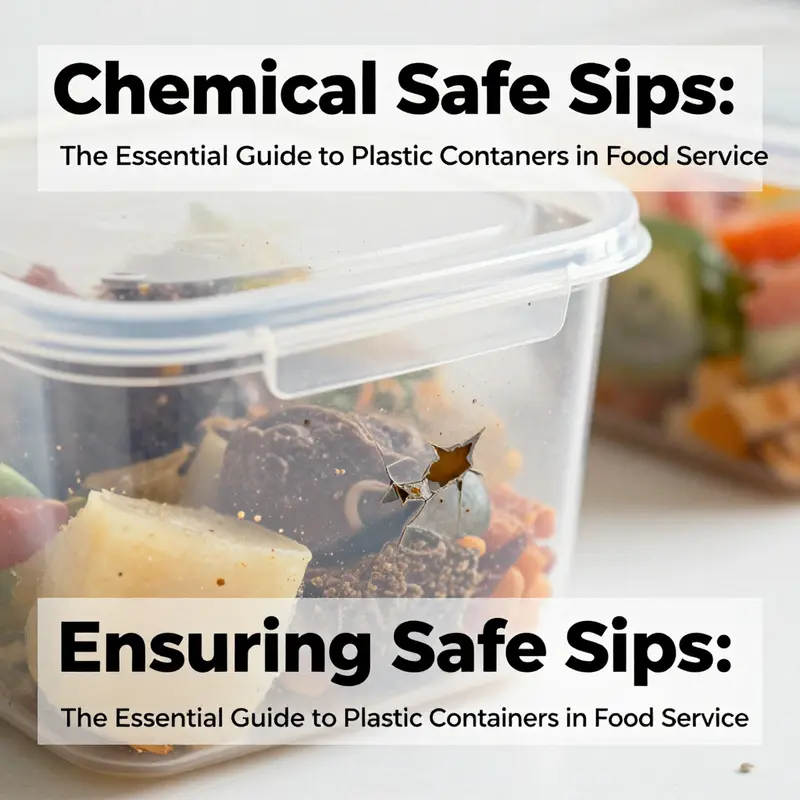
Plastic is everywhere in modern kitchens, yet its intimate contact with the food we eat means it is more than a container. It becomes a temporary chemical partner in every meal. When we store, reheat, or transport food in plastic, the matrix can release molecules into the contents we consume. The risk is not merely theoretical. It emerges from a combination of plastic type, product aging, usage patterns, and the interplay of heat and fat. In this chapter, we trace how these factors converge to shape what ends up on our plates and in our bodies, and why even labels such as microwave-safe fail to tell the whole story. The story begins with the chemistry inside the plastic itself. Many containers rely on resins that provide mechanical strength, clarity, or heat resistance. The markers we use, like the resin identification code, are supposed to guide safe use. Yet the migration of chemicals is governed by physics as well as chemistry. When a container is heated, or when it holds fatty or acidic foods, its molecules move more readily and can migrate into the food. This is especially true for substances with low molecular weight, small enough to slip through polymer matrices or to diffuse out of the polymer chains under heat. Antioxidants and stabilizers that are added to plastics to prevent degradation can themselves become migrants. Irganox 1076 and Irganox 1010 are among the antioxidants used to slow aging, while Irgafos 168 acts as a processing stabilizer. These additives are designed to protect the plastic, but they also have the potential to migrate, particularly when exposed to warmth and fatty matrices. The presence of such additives under real-world conditions is not just a theoretical concern; it has been demonstrated in careful laboratory studies that simulate typical household use. The pattern is often reinforced by the way the container is used. Repeated heating, long storage times, or aging of the container can increase the likelihood and amount of migration. The phenomenon is more pronounced for lipophilic substances. Fatty foods, oils, and sauces are more likely to dissolve migrating compounds and carry them into the meal. In other words, what we eat becomes a better solvent for leached chemicals than plain water or broth. A comprehensive study published in 2023 in Environmental Science & Technology illuminated this pattern with alarming clarity. In a simulated microwave scenario, researchers tested 50 commonly used plastic food containers and found detectable levels of bisphenols, including BPA and its substitute BPS, as well as several phthalates, in nearly 40 percent of samples after just two minutes of heating. The finding persisted even when containers were labeled as microwave-safe, suggesting a discrepancy between safety labeling and real-world migration. This is not a single cautionary note; it points to a broader regulatory gap. The FDA regulates food-contact plastics, but the framework largely relies on pre-market safety assessments and labeled conditions of use. Real-life cooking, especially with fatty foods and repeated heating, creates migration scenarios that are difficult to capture in pre-market testing. The study also highlighted the role of older or worn containers. Cloudiness, scratches, discoloration, warping, or lid misfit are not cosmetic flaws alone; they indicate structural degradation of the polymer matrix that can create new pathways for migrants or release microplastics into food. The message from these findings is simple yet unsettling: a container labeled microwave-safe does not guarantee absence of chemical migration under every home-cooking condition. The migration risk is not limited to BPA. The researchers detected BPA and its substitutes, as well as a spectrum of phthalates, illustrating that a family of chemicals can migrate under heat and fat. The emphasis on low molecular weight migrants is particularly important. These substances are more likely to migrate quickly and to be present at detectable levels in a short heating window, raising questions about chronic, low-level exposure through daily meals. The broader concern rests on cumulative exposure. Independent reviews and expert commentary underscore that even small amounts, repeated over weeks, months, and years, could contribute to a measurable body burden. Dr. Sarah Evans, a leading voice in this area, has argued that merely labeling plastics as microwave-safe is insufficient for public health when the conditions in a typical kitchen can differ so widely from controlled laboratory tests. The caution is not about alarmism but about improving labeling transparency and refining safety assessments to reflect real-life use. The migration risk is not confined to the kitchen alone. A related line of inquiry has documented contamination of ready-to-eat meals with double-phenolic compounds, with a striking majority of tested samples showing detectable levels linked to packaging materials. Cooking methods such as frying can further amplify both microplastic and chemical concentrations in food, potentially increasing cumulative exposure through diet. Together, these findings depict a packaging landscape in which the plastic component and the food component are not isolated; they engage in a chemical exchange. The consumer takeaway is clear: heating or storing hot, fatty foods in plastic is not a neutral act. It is a chemical experiment with variables that are hard to control in daily life. In response to these insights, the packaging and safety communities have begun to articulate a more cautious, multi-layered approach. The professional dialogue emphasizes safer materials, more robust detection technologies, and stronger, clearer regulatory standards. At a high-profile industry gathering—an international forum on food safety and quality control—experts underscored the need for a resilient packaging safety ecosystem. The call was for collaboration among scientists, regulators, and industry stakeholders to align testing methods with real-world use and to enhance transparency around migration potential. Given these conclusions, how should a consumer navigate the plastic landscape in the kitchen? First, pay attention to resin types and their known safety profiles. The classification scheme indicates that some resins are generally safer for food storage, particularly #2 HDPE, #4 LDPE, and #5 PP, with PP often singled out for microwave resistance due to its higher melting point. While longer-term reuse and heating of some of these containers remain a topic of study, they are commonly regarded as more robust under typical kitchen conditions. In contrast, resins such as #3 PVC, #6 PS, and the broader category #7 Other (which includes polycarbonate) carry a higher and more persistent concern profile, especially when labeled for food contact in the context of heating. The BPA-era worry about #7 polycarbonate has evolved into a broader caution about substitutes such as BPS and BPF, which regulators and researchers alike continue to scrutinize. Modern standards have largely phased out BPA in many food-contact materials, but this does not equate to risk-free use; cautious handling remains prudent because substitutes are not yet proven to be free from health concerns. The practical implications extend beyond lab findings. Real-world use must reflect aging, wear, and the realities of home microwaves and freezers. A container that begins its life with pristine labeling can, over time, accumulate scratches, cloudiness, and warping that alter its mechanical and chemical behavior. In other words, the container environment evolves, and so does the potential for migration. The consumer guidance that follows is designed to align everyday choices with the best available science while acknowledging gaps that remain in our understanding. When heating, only use containers explicitly labeled as microwave-safe and designed to withstand heating. The act of microwaving is a dynamic temperature spike, and not all plastics respond identically to that stress. If you notice cloudiness, a musty odor, or visible wear on any container, replace it. Do not reuse single-use containers for leftovers; their design typically anticipates one-time use and, under repeated stress, can release more migrants or fail mechanically. For long-term or hot-food storage, consider alternatives to plastic, such as glass or stainless steel, which do not contribute to the same level of chemical migration concerns. The best practice, when the food is sensitive to heat or fat, is to minimize contact with plastic during the most migration-prone phases of a meal. Additionally, in the context of public health communication, stakeholders acknowledge the complexity and variability of real-world exposure. If one must use plastic, opting for the safer resin categories—#2, #4, or #5—and avoiding the more problematic categories unless the labeling clearly indicates food-use safety can reduce risk. It is also prudent to avoid reusing containers that were designed for single-use purposes, particularly those that originated from takeout meals. These simple steps form part of a broader strategy to lower cumulative exposure while more comprehensive, systemic improvements take shape. The consumer, the scientist, and the regulator all have roles in shaping a safer packaging landscape. On the consumer side, there is growing interest in safer materials and better-informed usage. On the scientific front, researchers are expanding detection methods for migrants, refining the identification of low-mass chemicals, and exploring how real-life use patterns influence migration rates. On the regulatory side, there is movement toward more rigorous evaluation under real-use scenarios and clearer labeling that reflects the uncertainties that remain about long-term, low-dose exposure. The narrative that ties these threads together is not a warning against plastic per se but a call for smarter, more informed use. The goal is to preserve the practical benefits of plastic packaging—lightweight, convenient, and effective—while reducing the opportunities for unintended chemical transfer into our meals. One avenue that deserves attention is the development of safer, more stable materials that resist migration under common kitchen conditions. In parallel, detection technologies that can accurately quantify a wide range of migrants in food and packaging will help regulatory agencies set more protective standards. Finally, transparent labeling that communicates the limitations of safety claims, rather than simply asserting a label, will empower consumers to make choices aligned with their health priorities. A simple way to frame this is to recognize that food safety in the era of pervasive packaging depends on an ecosystem rather than a single material. It depends on chemistry, product design, manufacturing quality, usage guidelines, and informed consumer behavior. The ecosystem approach also invites consideration of safer packaging alternatives beyond plastics. There is a growing interest in paper-based and glass-backed packaging that can offer a lower migration profile for certain foods and uses, even as these options bring their own challenges in terms of grease resistance, durability, and microwave compatibility. For readers who want to explore practical packaging alternatives in daily life, one example in the broader ecosystem is the emergence of safer, paper-based takeout and storage options. These options illustrate how packaging can be designed to balance safety, functionality, and environmental considerations. See this example for context and design ideas: eco-friendly-takeout-boxes-for-food-packaging-stylish-food-containers-safe-microwave-craft-paper-lunch-boxes-leak-grease-resistant. By looking at alternatives that reduce contact with migrants, we acknowledge that the safest path for some uses may be to minimize plastic contact with hot or fatty foods. Yet the path forward is not a simple rejection of plastics; it is a nuanced strategy that emphasizes safer materials, better testing, smarter labeling, and thoughtful consumer habits. The overarching lesson from the 2023 migration study and related evidence is that real-world use matters. The lab can simulate certain conditions, but kitchens present a mosaic of variables: different foods, different heating devices, varying dishware, and fluctuating storage times. Understanding how these variables interact helps explain why a single label cannot capture every scenario a household will encounter. The chapter that follows this one will expand on practical approaches to balancing convenience with safety, including a closer look at how to choose alternatives in everyday meal routines and how to interpret safety guidance as it applies to busy lives. In the meantime, the core message remains anchored in evidence: chemical migration from plastic containers is a genuine, measurable phenomenon under conditions common to home use, especially for fatty foods and when heat is involved. This is not alarmism but a call to informed use, ongoing research, and thoughtful design that continues to improve how we package, store, and heat our meals. For readers seeking the most current and authoritative source on the migration phenomenon, the Environmental Science & Technology article provides the detailed study and data behind these conclusions. External resource: Environmental Science & Technology study. Environmental Science & Technology study to explore the rigorous research behind these findings.
Beyond Compliance: Navigating Regulation and Everyday Practice in Plastic Food Container Safety
The story of plastic food containers sits at the intersection of convenience, science, and regulation. In households and kitchens around the world, these containers promise to protect food, extend shelf life, and enable quick, practical meal management. But safety does not arise from convenience alone. It emerges from a careful balance of regulatory oversight, material science, and disciplined user practices. The regulatory framework that governs plastic food contact materials—especially in the United States—exists not to worship at the altar of risk avoidance but to create a scaffold that supports safe decision making in real life. The latest guidance, as of early 2026, emphasizes conditions under which plastics are tested, labeled, and used, while acknowledging that consumer behavior—how containers are heated, stored, cleaned, and reused—significantly affects risk. In this sense, the chapter that follows is not a simple catalog of do’s and don’ts. It is an invitation to read the everyday routines of food storage through the lens of evidence, labeling, and responsible use, so that people can act with confidence rather than uncertainty.
Regulatory oversight rests on several interlocking pillars. First, there is the labeling and testing regime. Containers marketed for microwave use bear a labeling signal—often a microwave-safe symbol—that indicates the item has undergone testing to ensure thermal stability and compatibility with heating without releasing harmful substances. The symbol is more than a decorative mark; it encodes a process of risk assessment that considers the potential for chemical migration, heat-induced degradation, and the physical changes that accompany repeated use. When the label is missing or ambiguous, the prudent consumer should treat the container as inappropriate for heating. Second, there is the spectrum of plastics themselves and what they are expected to contribute to safety concerns. The resin identification code, a small number inside the recycling symbol, is a shorthand for the polymer family. It helps consumers and regulators understand not only recyclability but also the general risk profile of a material under typical storage and heating scenarios. HDPE (#2) and PP (#5) have historically earned a reputation for relative safety in many food-contact contexts, with PP being especially valued for heat resistance and microwave compatibility. LDPE (#4) also has a favorable safety track in many common uses, though it is less common in rigid containers. PETE (#1) shines in cold, single-use contexts but is not designed for repeated heating, and it should be avoided for reuse or prolonged contact with hot foods. By contrast, PVC (#3) and PS (#6) have raised more persistent concerns, largely due to potential phthalate migration and styrene leaching, respectively, particularly under heat. The broader “#7 Other” category, which includes polycarbonate and BPA-containing variants, has historically stirred debate, though modern iterations strive to phase out or replace BPA with alternatives. In practice, the regulatory landscape continues to evolve as scientists scrutinize BPA substitutes and assess cumulative exposure from multiple sources. The chapter’s thrust is not to condemn plastic use in general but to empower readers to recognize which materials are more predictable under typical conditions and how to minimize risk through informed handling.
A closely related regulatory and scientific thread concerns chemical migration and the conditions that intensify it. Even plastics deemed acceptable for food contact can release trace chemicals into food when they encounter heat, acidity, or fatty content. The risk is not a binary one of “leak or not” but a continuum in which repeated heating, aging, and the presence of aggressive foods can steer the migration curve upward. This is particularly relevant for households that regularly reheat leftovers in the same container, or for containers that have developed wear and tear. Scratches, cloudiness, warping, or lid misfit are not merely cosmetic flaws. They frequently reflect microstructural changes that expand surface area and create micro-environments where bacteria can accumulate and microplastics can be released into food. Odor retention, meanwhile, can signal off-gassing or bacterial contamination that has altered the container’s internal chemistry. The practical implication is straightforward: safety is tied to the container’s condition as much as to its material origin. Regular inspection becomes a minimal preventive step, a simple habit that reduces both microbial risk and uncertain chemical exposure.
The idea of safety also hinges on how people use plastic in the kitchen. The temptation to reuse single-use packaging, or to employ non-microwave-safe plastics for heating, is understandable in the moment, especially when time and budget pressures mount. Yet these practices markedly elevate risk. Heating a non-microwave-safe plastic can distort its structure, intensify chemical migration, and accelerate degradation. A container that looks sturdy may actually be on the brink of failure, especially after several cycles of washing and heating. Similarly, relying on plastic wraps directly in contact with food during microwaving can create a channel for chemicals to migrate if the wrap is not explicitly labeled as safe for heat. These points echo a broader regulatory message: the mere perception of safety is insufficient. The specific testing, labeling, and recommended use conditions issued by manufacturers and regulators are what anchor real-world safety.
Beyond heating, proper storage and cleaning contribute to safety in meaningful ways. The FDA and other regulatory bodies emphasize that materials used for food contact should be cleaned in a way that does not promote chemical leaching or bacterial growth. Dishwashing practices, the choice of cleaning agents, and the avoidance of harsh abrasives all influence how a container behaves over time. Fatty and acidic foods, when stored in porous or damaged plastics, may serve as catalysts for chemical mobility and microbial colonization. In households where glass or stainless steel is used for hot foods, the risk dynamics shift again: metal and glass materials are generally inert under heat and less prone to chemical migration, particularly when compared with aging plastics that have visible wear. The practical takeaway is straightforward: when in doubt, reserve plastics for cooler storage and transfer hot foods to safer materials if long-term contact or high-temperature conditions are anticipated.
The regulatory stance also recognizes the tension between long-term health considerations and everyday necessity. The FDA states clearly that food-contact plastics approved for their intended use are considered safe under labeled conditions. This stance does not imply complacency; it invites ongoing vigilance. Independent studies continue to probe the long-term effects of low-level chemical exposure, repeated heat exposure, and cumulative dietary intake. The scientific conversation is still evolving, and regulations reflect the best available consensus while allowing for refinement as new evidence emerges. This is why the agency often updates guidance and why manufacturers are encouraged to minimize the use of controversial substances and to pursue safer alternatives whenever feasible. The end goal is to minimize risk without unduly constraining practical food management, a balance that depends on transparent labeling, robust testing, and consumer education.
In the realm of best practices, several themes repeatedly surface as practical guardrails for everyday life. First, always check the microwave-safe label before heating any container. The label is not a decorative flourish; it encodes an approved testing basis that considers the container’s thermal stability and chemical resistance under microwave conditions. If a container lacks this label or the label seems ambiguous, the safest course is to move the food into a container that is clearly labeled for microwave use or transfer the food to a non-plastic vessel such as glass or ceramic with a microwave-safe lid. Second, avoid placing plastic wraps directly onto food when microwaving unless the wrap itself is explicitly labeled as microwave-safe. A better approach is to cover with a microwave-safe lid or to use a vented cover that reduces direct contact between the wrap and the food. This practice helps prevent unintended migration and also reduces the risk of plasticization or deformation that might accompany longer heating cycles. Third, never reuse single-use containers for microwaving or long-term storage, even if they appear undamaged. These containers are designed for a single cycle or a limited usage pattern that does not account for repeated exposure to heat and mechanical stress. The cost of one extra container is negligible compared to the potential health and safety trade-offs of reusing non-designated packaging. Fourth, adhere to manufacturer guidelines. Containers are designed with specific temperatures, foods, and cleaning methods in mind. Deviations from those guidelines increase the probability of risk and undermine the assurances that the label provides. Fifth, when possible, opt for safer alternatives for sensitive applications. Glass and stainless steel are remarkably stable under heat and are less prone to chemical leaching in the conditions most households encounter. They do not eliminate risk in absolute terms, but they substantially reduce the likelihood of chemical migration and allow for straightforward cleaning and inspection.
The guiding principle here is not a rigid prohibition of plastic use but a disciplined approach to material choice and handling. A few practical steps can form the backbone of safer everyday use. First, choose plastics known to be relatively safer for food storage, such as #2 HDPE, #4 LDPE, and #5 PP, while minimizing use of #3 PVC and #6 PS, and avoiding #1 PETE for repeated heating or long-term reuse. When in doubt, move to non-plastic alternatives for hot, acidic, or fatty foods, or whenever storage times are extended. Second, inspect containers regularly for signs of wear: cloudiness, scratches, warping, odor, or loose lids should trigger replacement. Damaged containers are more likely to harbor bacteria and to release degraded material into food. Third, be mindful of the storage conditions: heighten caution with fatty or highly acidic foods, and avoid stacking and pressing containers in ways that promote micro-scratches or deformation. Fourth, consider the environmental and regulatory implications of packaging choices. Consumers are increasingly drawn to safer and more sustainable packaging solutions, not only for safety but also for reducing environmental impact. Safer packaging ecosystems often hinge on a combination of material science advances and consumer education, where responsible disposal and recycling complement safe usage.
An essential dimension of this discussion is the ongoing regulatory monitoring and the role of manufacturers in safeguarding public health. The FDA maintains a continuous watch over the safety profile of food-contact materials and updates its guidance as new data emerges. This process involves reviewing new evidence on chemical migration, exposure assessments, and real-world usage patterns. It also includes evaluating substitutes for regulated chemicals, and encouraging the development of phthalate-free, BPA-free, and more inert alternatives whenever feasible. Consumers benefit from transparent labeling and clear usage instructions, which translate regulatory intent into practical safety. In this sense, the consumer’s daily choices—how to heat, store, clean, and replace—become an extension of the regulatory framework itself. The cycle is iterative: research informs policy, policy guides industry practices, and everyday use generates data that can refine both. The net effect is a more reliable, evidence-driven approach to plastic food contact materials, even as new materials and new forms of packaging enter the marketplace.
To connect these principles to real-life choices, consider the value of accessible guidance that translates regulatory nuance into everyday action. For readers seeking practical packaging options aligned with safety and regulatory expectations, consider custom-takeaway-packaging-supplies-disposable-tableware-for-theme-party. Such resources illustrate how packaging can be designed with safety in mind—from material selection to labeling and reuse philosophy—while still meeting the demands of modern food service and home cooking. They also highlight the broader point that packaging decisions are embedded in a system of design, regulation, and consumer behavior. When a consumer selects a container that is labeled for safe heating, that choice is not merely personal preference; it is a deliberate step within a regulated framework that seeks to minimize risk while preserving convenience. Ultimately, safety is reinforced not by a single rule but by an ecosystem of testing, labeling, responsible use, and ongoing education that empowers people to make informed decisions every day.
The broader takeaway from regulatory guidelines and best practices is not a static checklist but a dynamic mindset. It is the habit of asking: Is this container designed for the task at hand? Has it been tested for heat, acidity, and repeated use? Is it in good condition, with a secure seal and intact lid? Am I using the right vessel for hot foods, and have I avoided direct contact with materials that have questionable safety profiles? Do I have safer alternatives available for situations that demand higher safety margins, such as feeding vulnerable populations or preparing meals for infants and toddlers? In short, safety is both a science and an everyday discipline. It requires attention to material properties, adherence to labeling, and a conscious, ongoing commitment to replace worn items and to favor safer options when appropriate. The FDA’s ongoing monitoring and the evolving body of independent research reinforce a practical conclusion: thoughtful, informed use of plastic food contact materials can be compatible with modern life, provided that users respect the conditions under which these materials are considered safe and remain vigilant about aging, heating, and reuse. The chapter thus closes not with a final decree but with a framework for ongoing discernment—one that keeps pace with science, respects regulatory guidance, and supports healthier, safer eating practices for households and communities alike.
External resource: For official regulatory context and updated guidance on food contact materials, see the FDA’s guidance on Food Contact Materials at https://www.fda.gov/food/food-contact-materials-ingredients/fda-guidance-food-contact-materials.
Final thoughts
In the world of food service, particularly in beverage-centric establishments, understanding the intricacies of plastic container safety is more than just compliance; it’s about earning trust and ensuring customer satisfaction. By recognizing the types of plastics and their associated risks, addressing chemical migration, and adhering to regulatory guidelines, businesses can mitigate risks while providing a safe environment for their customers. Make it a priority to stay informed and proactive about the materials you use, as this knowledge not only enhances operational efficiency but also fortifies your commitment to customer safety.