
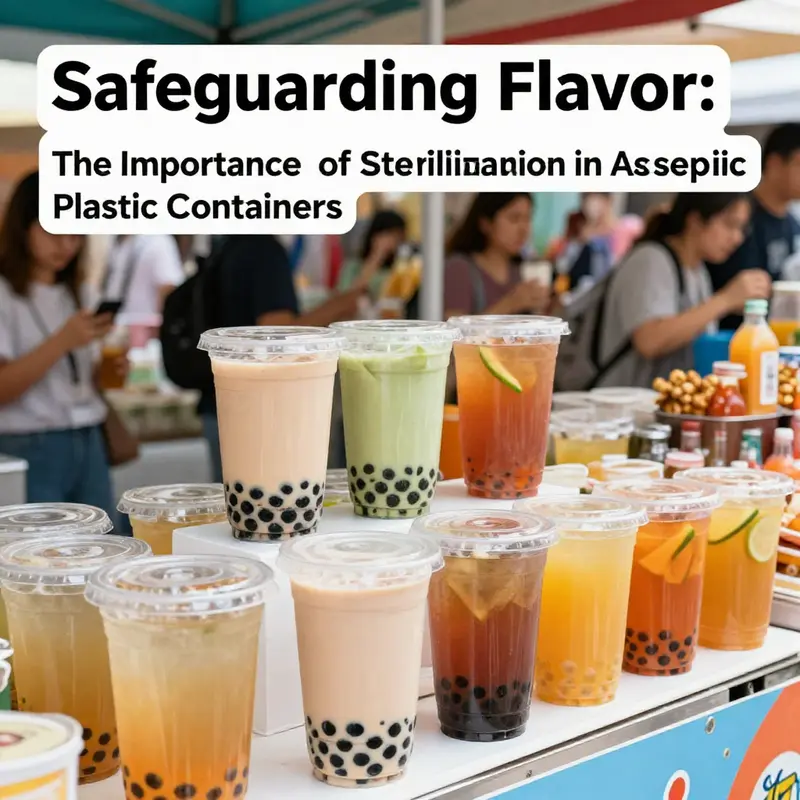
As the market for beverages, especially bubble tea and juices, continues to expand, the emphasis on safety, quality, and shelf stability has never been greater. The process of sterilizing plastic containers for aseptic food packaging serves as a cornerstone for preventing contamination and prolonging shelf life. Chapter by chapter, we’ll navigate through the critical chemical methods utilized for sterilization, uncover the latest technological innovations in aseptic sterilization, and analyze the economic implications these practices have on beverage chains and food service providers. Understanding this vital aspect of food safety not only supports safe consumption but also enhances the overall confidence of consumers in your brand.
Quiet Chemistry, Strong Barriers: Hydrogen Peroxide Sterilization of Plastic Containers in Aseptic Food Packaging
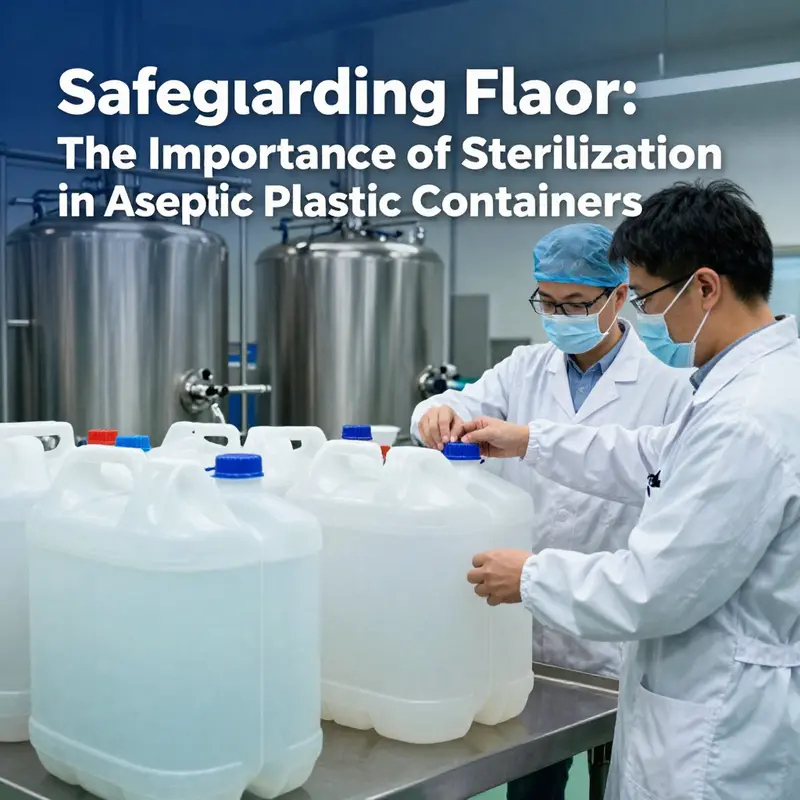
In the realm of aseptic food packaging, the sterilization of plastic containers is the quiet work that makes shelf-stable products possible. The containers themselves often form layered or coextruded structures that balance mechanical strength, barrier properties, and cost. The challenge is not merely to clean a surface but to deliver a decontaminating action that remains effective through filling and sealing, yet leaves no harmful residues in the final product. In this context, chemical sterilants have become the workhorse, with hydrogen peroxide (H₂O₂) standing out as the most widely deployed and accepted agent. Its prominence arises from a combination of broad antimicrobial activity, material compatibility, regulatory clearance for direct contact with food-contact surfaces, and a favorable residue profile. The broad consensus in the industry, and the regulatory framework that accompanies it, position hydrogen peroxide as the practical choice for sterilizing plastic packaging materials demanded by modern aseptic lines. The central evidence base points to hydrogen peroxide’s efficacy against bacteria, viruses, and spores, while its decomposition products—water and oxygen—present a relatively benign environmental and consumer footprint when properly controlled. This is why, in practice, the majority of container sterilization steps rely on hydrogen peroxide as the sterilant of record, applied to interior container surfaces in vapor or liquid form and subsequently activated by heat. The overall logic is straightforward: a clean starting surface is essential, but sterilization must be robust enough to prevent post-sterilization contamination, especially during the handling between container formation, sterilization, filling, and hermetic sealing in a sterile environment. The result is a system designed to keep the finished product free from microbial challenges throughout its shelf life, even in the absence of refrigeration for certain products. The science behind hydrogen peroxide sterilization rests on the agent’s ability to penetrate microdomains on interior surfaces, react with cellular components, and then break down into harmless by-products. The process is carefully tuned to maximize germicidal action while minimizing any impact on the plastic’s physical properties or its printed and laminated layers. The approach has matured alongside advances in packaging materials, enabling the use of common polymers such as polyethylene, polypropylene, and polystyrene, as well as multilayer laminates and coextrusions that deliver the necessary barrier performance without compromising process compatibility. This compatibility is a key advantage over many heat-based methods, which can distort delicate laminates or degrade adhesives in multilayer packaging structures. Hydrogen peroxide’s compatibility with such materials allows firms to employ flexible, cost-efficient packaging options, including low-temperature formats suitable for single-serve portions or bulk liquids, and to do so without sacrificing aseptic integrity. The practical upshot is that chemical sterilization enables a broader design space for plastic packaging, supporting both product variety and efficient manufacturing. The regulatory framework reinforces this choice. The FDA has approved hydrogen peroxide as a sterilant for direct contact with food-contact surfaces, allowing concentrations up to 35% for sterilizing packaging materials across a range of polymers. This approval rests on extensive research demonstrating that hydrogen peroxide can kill a wide spectrum of microorganisms, including spores, while leaving residues that are controllable and typically minimal in the final product. In properly designed systems, residual hydrogen peroxide in the packaged product is maintained well below 0.5 ppm, a level considered safe for consumption. Those residues are managed through process controls, post-sterilization aeration, and adequate dwell times that allow the sterilant to decompose before filling. The chemistry, the physics, and the regulatory oversight converge to create a practical, reliable, and scalable means of securing the sterility of plastic containers used for aseptic filling. The sterilization sequence itself—whether performed on interior surfaces by spraying or vaporizing hydrogen peroxide, followed by a heating step to activate the sterilant—illustrates a careful orchestration of chemistry and heat. The heating, which can be achieved with hot air or infrared radiation, accelerates the germicidal action by promoting peroxide decomposition and enhancing the generation of reactive species that attack microbial cells. The procedure has proven effective across a broad range of packaging geometries, from smooth inner surfaces to intricate laminates with internal adhesives. The success of this approach has a historical backdrop that informs current practice. In the development of early commercial aseptic packaging systems, hydrogen peroxide-based sterilization emerged as a practical alternative to high-temperature sterilization that could damage delicate packaging materials. The shift to chemical methods enabled the use of more flexible and lightweight packaging formats that still maintained sterility through the filling process. This transition, in turn, supported the rise of large-scale aseptic packaging concepts and the ability to produce, fill, and seal under sterile conditions in closed, controlled environments. The larger trend is one of aligning material science with process engineering: hydrogen peroxide sterilization marries material tolerance with microbial kill, enabling safer products and more versatile packaging configurations. It is worth noting that while other chemical methods, such as ethylene oxide (EO) gas, are used in some contexts, they are generally unsuitable for plastic containers of the types used in aseptic packaging. EO gas can pose deeper penetration challenges, potential toxic residues, and material compatibility risks, particularly with vinyl-based plastics or layers with sensitive adhesives. For plastic containers intended to hold beverages, dairy, or similar products, the combination of effective sterilization and safe residues argues strongly for hydrogen peroxide as the primary sterileant. The regulatory landscape further supports this stance. The official regulatory references describe how hydrogen peroxide can be used within specified concentrations and with established validation of residue control. While the agency continues to emphasize validated, validated, validated again processes to ensure consumer safety, the core guidance remains that hydrogen peroxide, at permitted concentrations, can deliver reliable sterilization with an acceptable residue profile. The procedural elements—spray or vapor deposition, surface contact, and a subsequent heat-activation step—are designed to ensure uniform treatment of interior surfaces, even in complex internal geometries. The result is a consistent, reproducible sterilization outcome that aligns with the high standards demanded by aseptic processing lines. In practice, the system is designed so that the container surfaces reach a sterilant equilibrium that penetrates microtopographies and adherent residues without compromising the physical integrity of the packaging. Any residual peroxide, if present, is controlled by design of the cycle, drainage or aeration steps, and the timing of the filling process to ensure that the final product remains within safe residual limits. This integrated approach underscores why hydrogen peroxide remains the chemical sterilant of choice for plastic containers used in aseptic packaging. The broader industry context recognizes that the consolidation of chemical sterilization with heat activation not only delivers effective microbial kill but also supports the adoption of low-cost, flexible packaging architectures. Modern systems can include pre-sterilized container components and large-volume sterile bags, sometimes with capacities around 1000 liters, that are sterilized prior to transfer into sterile filling lines. Such arrangements illustrate how sterilization strategies can scale from small, rigid containers to substantial, pre-sterilized bags used in fruit juice or ready-to-consume beverages. The broader implications for manufacturers are practical as well. By leveraging hydrogen peroxide, processors can pursue a wider array of packaging designs, including multilayer laminates designed to balance moisture and oxygen barriers with mechanical resilience. The same chemical approach can accommodate various polymers and laminates, a flexibility that translates into product diversity and supply chain resilience. The sterilization step is integrated into a broader sterile chain: container formation, pre-sterilization, sterile filling, and hermetic sealing within a controlled environment. The chain requires rigorous hygienic design of the equipment, reliable monitoring, and robust validation to ensure that any residuals never compromise product safety. To connect this with tangible choices in packaging strategy, it helps to consider how a modern aseptic line might be arranged in practice. A typical cycle begins with container fabrication, then moves to sterilization of interior surfaces by hydrogen peroxide, followed by a heating step to activate the sterilant. After sterilization, the containers move into a sterile handling zone where filling occurs under aseptic conditions, and finally, the product is hermetically sealed. Throughout, sterile barriers and controlled airflows maintain the process integrity. The use of heat-activated hydrogen peroxide is particularly advantageous for plastic containers because it reduces thermal stress on the materials while delivering deep microbial kill. This balance is essential for maintaining the mechanical properties of the container, the integrity of printed graphics, and the performance of adhesive laminates. It also minimizes the risk of warping or distortion that could jeopardize the seal. In addition to these technical considerations, the industry is mindful of accessibility and the broader ecosystem of packaging. The choice of sterilization method must harmonize with production schedules, line speed, and the availability of materials that can withstand repeated exposure to peroxide cycles. It must also align with waste streams and environmental controls. Hydrogen peroxide decomposes into water and oxygen, offering a relatively benign footprint compared with certain other sterilants. The approach supports sustainability goals by minimizing hazardous residues in the environment and by enabling efficient recycling streams for packaging materials where feasible. This holistic view reinforces why hydrogen peroxide remains the preferred option in many settings: it supports safety, material compatibility, regulatory compliance, and operational efficiency. It is, in short, a method that sits at the intersection of science, engineering, and policy. For practitioners and designers, the emphasis remains on robust process validation and meticulous control of every step. The inner surfaces of containers must receive even exposure, and the subsequent activation step must be tuned for the specific geometry and laminate structure in use. The cycle must be compatible with the entire line, including the handling systems that carry pre-sterilized components into the filling zone. The quality of the final product depends on all these factors working in concert. When considering large-scale operations, it becomes clear why hydrogen peroxide sterilization has endured as a core technique. The ability to sterilize plastic containers without subjecting them to damaging heat, while achieving deep decontamination and a favorable residue profile, has enabled a scalable, reliable route to aseptic packaging that protects products from spoilage and ensures safety through the product’s shelf life. The conceptual elegance of this approach lies in its integration: sterilant delivery, activation, and sterile transfer are designed to preserve the essential properties of modern plastic packaging while delivering the microbiological rigor required by aseptic filling. In this sense, hydrogen peroxide sterilization is not merely a chemical reaction; it is a carefully choreographed sequence that upholds the integrity of packaging materials, respects regulatory expectations, and delivers safety and convenience to consumers. For readers seeking additional detail on regulatory foundations and practical implementation, the official documentation provides deeper insight into the food-contact surface sterilants framework and the rationale behind residue limits and validation practices. As the field evolves, the core principle remains constant: chemical sterilants, when applied with precise control and in concert with heat activation, offer a robust, material-friendly, and regulatorily compliant path to sterile containers for aseptic foods. This chapter has drawn on the central results that position hydrogen peroxide at the heart of modern practice, while acknowledging the broader landscape of packaging materials and systems that shape how these sterilization steps are implemented in real-world facilities. In short, the science is clear, the regulatory guardrails are defined, and the technology continues to support safer, longer-lasting food products through the reliable sterilization of the containers that hold them. For a concise look at how contemporary packaging solutions weave into this sterilization framework, see this practical overview of eco-friendly packaging boxes that illustrate the kinds of containers that can be sterilized and filled in aseptic lines: eco-friendly-disposable-3-compartment-food-grade-packaging-box-for-fast-food-high-quality-takeout-boxes-for-fried-chicken-french-fries-packaging. The regulatory backbone guiding these practices is summarized in official standards that define permissible sterilant use and residue expectations, underscoring that hydrogen peroxide remains the normative chemical sterilant for food-contact surfaces in plastic packaging. For more on the formal regulatory framework, see the authoritative document from the regulatory agency that governs these practices: FDA Regulations on Food Contact Surface Sterilants. This reference provides the baseline rationale for concentration limits, contact times, surface compatibility, and residue controls that enable safe, scalable sterilization of plastic containers used in aseptic food packaging. FDA Regulations on Food Contact Surface Sterilants
Vapor Mastery and Smart Barriers: The Evolution of Aseptic Sterilization for Plastic Containers
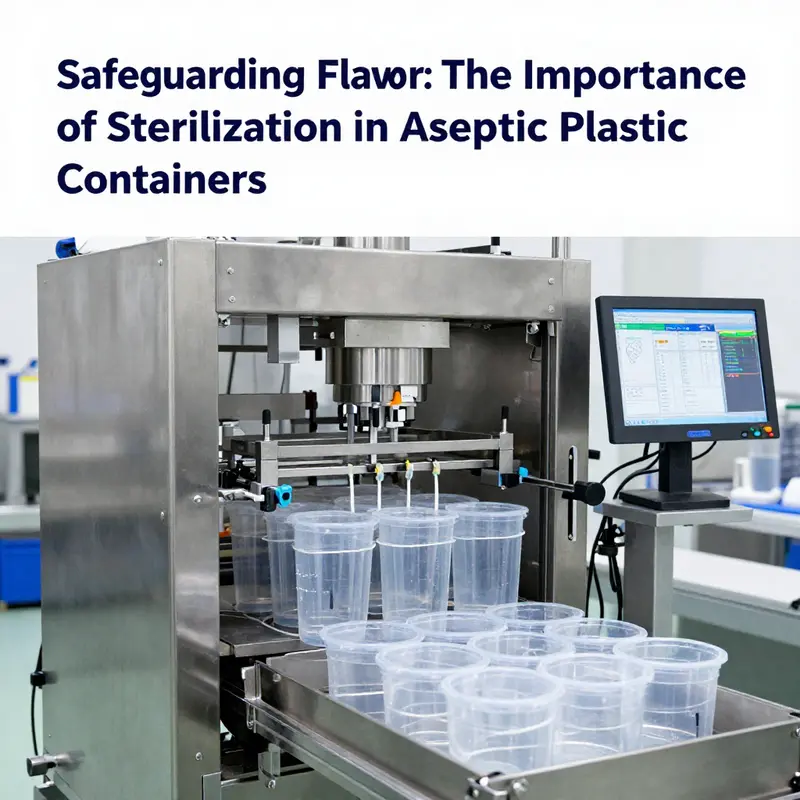
The sterilization of plastic containers used in aseptic food packaging stands at the threshold of safer foods and longer shelf lives. It sits at once in the chemistry of cleaning and the physics of materials, demanding a method that kills microorganisms—including spores—without deforming delicate packaging structures or leaving residues that could compromise taste, texture, or safety. Modern plastic containers—multilayer laminates, coextrusions, and copolymers—are engineered to be thin, strong, and resilient. They can form the geometry needed for flexible pouches or rigid bottles, while still traveling through the high-speed, sterile corridors of modern filling lines. In this context, chemical sterilants such as hydrogen peroxide and, in many facilities, peracetic acid, dominate the practice. They are applied as vapors or liquids to inner surfaces, then decomposed into harmless end products, usually water and oxygen, by heat, residual catalysts, or UV triggers. The advantage is clear: chemical sterilants can decontaminate complex interior geometries and porous interfaces without the thermal stress that would otherwise compromise the barrier layers or the material itself. This is a central reason why chemical methods have become a workhorse in aseptic lines that rely on flexible films and multilayer structures. The transformation from raw container extrusion to a sterile internal surface is thus a carefully choreographed sequence, where material science, process engineering, and microbiology intersect to create a sterile environment before the product is introduced. The chemistry is forgiving enough to operate at low moisture and with short contact times, yet rigorous enough to inactivate spores that would otherwise threaten shelf stability. In practice, hydrogen peroxide, in vapor or spray form, is widely used on commercial lines because it mobilizes across surface irregularities and then breaks down into water and oxygen, leaving no harmful residues. This property is especially valuable for packaging intended for single-serve or bulk beverages, where consumer safety and taste integrity are paramount. While the science is robust, the method is also adaptable. The same sterilant can be deployed on flexible laminates or rigid containers, as long as the process parameters are tuned to the material’s permeability, porosity, and surface energy. For high-speed lines, the ability to pre-sterilize container formats before they enter filling zones reduces the risk of post-sterilization contamination and supports hermetic sealing in a single pass. The emergence of 1000-liter aseptic bags for fruit juice and fresh foods exemplifies this trend: containers and packaging systems are pre-sterilized in a controlled, sterile subassembly stage, then filled under aseptic conditions. The broad principle is simple in theory: reduce microbial load to the lowest feasible level, then maintain that sterile state through rapid transfer into the filling and sealing sequence. Yet the practical implementation requires an integrated control system that accounts for the total lifecycle of the container, from formation to final product, including pre-washing, drying, and transfer, all conducted within a sterile envelope. The aseptic paradigm demands more than a single sterilization step. It requires an end-to-end approach where the container’s inner surface, its barrier layers, and the interfaces with the filling equipment all participate in a coordinated sterilization strategy. This coordination is where advancements in barrier materials and smart process control come into play. Barrier materials, for instance, are not just passive substrates; they actively contribute to sterilization efficacy. Modern barrier layers are engineered to resist microbial ingress while maintaining the integrity of the sterilization process themselves. Some formulations integrate properties that slow down the diffusion of residual agents, enabling more uniform exposure of complex interior geometries. Others are designed to tolerate repeated sterilization cycles without delamination or loss of barrier performance. When combined with sterilants that break down cleanly, these advanced barriers enable longer product stability without the burden of chemical residues. In some newer configurations, these advances converge with self-sealing pouch technologies that merge sterilization with packaging formation. In such systems, the pouch and its contents can be sterilized in-situ, or the pouch can be formed and sterilized as part of a continuous line. The net effect is a reduced risk of post-sterilization contamination, a streamlined production sequence, and fewer handling steps that could reintroduce microbes. The concept of integrating sterilization with packaging formation is not merely a matter of speed. It also addresses material integrity and consumer safety. By coupling barrier performance with sterilant compatibility, manufacturers can design streamlines that preserve product quality over extended shelf lives, even under challenging storage conditions. The capacity to keep beverages, dairy alternatives, and plant-based drinks safe during distribution depends on a robust chain of custody for sterile conditions from container formation to product completion. The discussion of sterilization must therefore extend beyond the inner surface to consider the broader ecosystem of the aseptic line. Real-time monitoring and sensor-based feedback loops are becoming key players in this ecosystem. Modern systems deploy a constellation of sensors that track temperature, humidity, chemical concentration, and sometimes optical or radiometric cues of surface cleanliness. These data streams feed into automated control logic that can compensate for small fluctuations in surface topology or material batch variation. The advantage is not simply safety; it is efficiency. With precise, responsive control, sterilization cycles can be shortened without sacrificing microbiological safety, reducing energy consumption and water use. In practice, this means that a line can maintain the rigorous standard required for sterile filling while adapting to fluctuations in container geometry or laminate composition. The result is a more sustainable operation, which is increasingly important given the pressures on industriaI supply chains and environmental stewardship. The contemporary practice also acknowledges the realities of post-sterilization handling. Even after the inner surfaces are deemed sterile, the risk of recontamination exists as the container moves into sterile filling zones. Therefore, the sterilization step is often complemented by strict environmental controls in the filling area, including air handling, controlled particle counts, and aseptic transfer devices. The goal remains the same: preserve the sterility from the moment the container is opened by the sterile filling line to the moment the hermetic seal is completed. In this land between science and engineering, innovation often appears as incremental shifts that accumulate into meaningful gains. The application of chemical sterilants—predominantly hydrogen peroxide—exemplifies this principle. On one hand, the chemistry is straightforward: a sterilant is deposited on the interior surfaces, then decomposed. On the other hand, the engineering is sophisticated: the delivery method, whether spray, vapor, or integrated with barrier materials, must be calibrated for each container geometry, laminate thickness, and processing speed. The interplay between chemical exposure and material tolerance defines both efficacy and income for the line. For example, while the chemical can rapidly inactivate a wide spectrum of microbes, excessive exposure could compromise some plastic layers or elastic sealants used in closures. Conversely, insufficient exposure could allow residual microbial risk. The balance is found through careful process validation and continuous monitoring. A growing body of practice supports the use of modular sterilization approaches, where different container families share common sterilant strategies but differ in cycle timing, surface energy requirements, and barrier compatibility. This modular approach is particularly valuable as packaging suppliers expand their portfolios with new formats, from flexible pouches to rigid bottles and hybrid structures. It enables operators to reuse a validated control framework while adapting to new shapes and thicknesses without restarting the entire qualification process. In addition to the chemical and mechanical considerations, there is a forward-looking emphasis on data-driven optimization. Real-time data streams are analyzed to identify patterns of drift in sterilant concentration, temperature uniformity, or surface dry times. These insights lead to proactive adjustments, reducing waste and ensuring more uniform sterility across lots. The integration of smart sterilization with real-time analytics aligns well with sustainability goals. Lower energy consumption, less water use, and decreased product waste translate into a smaller environmental footprint for aseptic lines. It is also worth noting that the innovations described here are not confined to a single factory or region. They reflect a global trend toward safer, more efficient, and more sustainable packaging. The driving forces include stringent food safety expectations, regulatory emphasis on clean production, and the economic pressure to reduce waste and downtime. Even when facilities use similar sterilants, the ways they apply them—surface pretreatments, spray or vapor distribution, and the sequencing with other decontamination steps—can vary, guided by local safety standards and the specific material being sterilized. In discussing the integration of chemical sterilants with modern barrier materials, one central theme emerges: compatibility. The sterilant must be compatible with each layer in the container’s wall and with any adhesives or coatings used to join the layers. This requires ongoing collaboration among material scientists, process engineers, and food safety specialists. It also means that new materials are evaluated not only for barrier performance and mechanical integrity but for their behavior under sterilization conditions. A carefully chosen combination of polymeric layers can allow fast sterilant exposure while maintaining seal integrity, preserving the transparency or opacity needed for consumer acceptance, and ensuring that the interior surface remains smooth enough to prevent micro-niches where microbes could shelter. The picture that emerges is not a single dominant technique but a spectrum of approaches, each tailored to the container format, product category, and distribution chain. The focus on chemical sterilants is a response to the demand for processing that harmonizes speed, safety, and material compatibility. The chemistry is robust enough to be relied upon in high-throughput lines, yet the engineering remains adaptable to evolving packaging formats and new barrier technologies. The chapter would be incomplete without noting how these innovations interact with the broader ecosystem of packaging design. When a supplier contemplates a new laminate or a new barrier layer, sterilization compatibility becomes a key criterion in material selection. In some cases, the self-sealing pouch concept has shown particular promise because it minimizes post-sterilization handling and thus reduces the probability of recontamination. The packaging line can proceed with greater confidence that the product will remain sterile through filling and sealing operations. For readers seeking a real-world sense of how these principles manifest in packaging design, consider exploring examples of eco-friendly takeout boxes for food packaging that reflect broader shifts toward sterile-ready packaging concepts while balancing sustainability goals. eco-friendly takeout boxes for food packaging.
If the discussion moves beyond the sterilant itself and considers the entire lifecycle of the container, it becomes clear that the future of aseptic plastic packaging lies in a carefully managed blend of chemistry, materials science, and intelligent manufacturing. The end goal is straightforward yet demanding: a sterile interior surface that remains uncontaminated from factory floor to consumer table, achieved with materials that tolerate sterilant exposure, reduce energy and water use, and support high-speed production without compromising product quality. The advances described here—advanced barrier materials, self-sealing pouches, and smart sterilization with real-time feedback—are not isolated achievements. They are part of a broader shift toward integrated, data-driven, and materially intelligent aseptic systems. As regulators and industry stakeholders continue to refine best practices, the discipline will increasingly rely on validated process parameters and transparent documentation to maintain consumer trust. For those seeking a regulatory perspective on aseptic packaging and the use of chemical sterilants, a comprehensive resource from regulatory authorities provides a framework for safe, compliant practice. Finally, the continuous evolution of plastic container sterilization signals a future where protective barriers, smart sensors, and clean chemistry work together to deliver safer foods with longer, more reliable shelf lives. For further reading on regulatory and technical dimensions, see the external resource linked here: https://www.fda.gov/food/food-contact-materials/aseptic-packaging-and-chemical-sterilants
Economic Implications of Aseptic Sterilization in Food Packaging
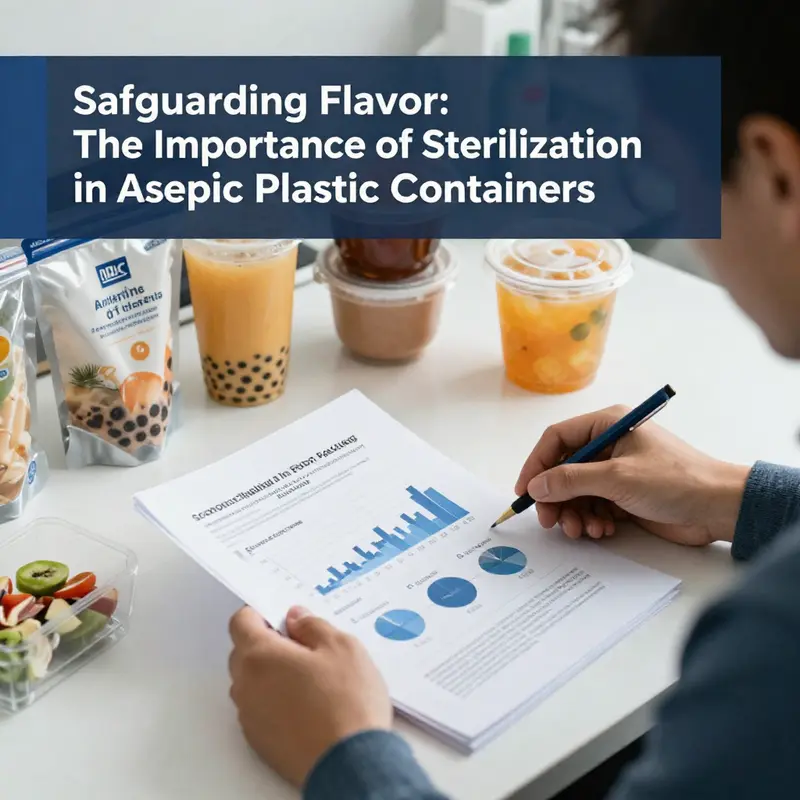
The economics of sterilizing plastic containers for aseptic food packaging traces a longer arc than the daily operation of a filling line. It sits at the intersection of materials science, process engineering, and market strategy, where decisions about equipment, chemistry, and logistics ripple through the entire supply chain. When a processor chooses to sterilize containers chemically rather than by heat, the immediate costs—capital, chemicals, energy, maintenance—are weighed against longer-term rewards: extended shelf life, reduced spoilage, and the ability to reach new markets with minimally processed goods. The resulting economic balance is not a single number but a dynamic system, where changes in any one component—how long a package stays sterile, how efficiently a line runs, how far a product can travel without refrigeration—alter the profitability of the entire operation. In this sense, aseptic sterilization is less a single step and more a strategic lever that can reshape a company’s value proposition, particularly for products that rely on delicate sensory attributes or that must travel across imperfect cold chains to reach distant consumers.
Aseptic sterilization supports a fundamental economic advantage: extended shelf life without relying on energy-intensive refrigeration. By enabling products to be stored at ambient temperatures, packages lightweight and compact, the cost of transportation and storage declines sharply. For perishable foods and beverages, this translates into lower energy use across the distribution network, reduced spoilage losses, and greater reach to consumer markets that previously depended on cold-chain logistics. The reduction in waste is not merely an environmental dividend; it is a direct financial bottom line. When a bag, bottle, or tray remains uncontaminated for longer, fewer units are discarded at the retailer’s back door or during transit. Every saved unit lowers the cost per sale and improves overall yield, which for many producers translates into improved gross margins even if unit prices stay constant. The economic logic extends to perishables that require post-packaging handling, such as fruit juices and dairy beverages, where the premium of aseptic packaging is offset by the elimination of costly cold storage and express logistics.
These savings feed into a broader supply-chain resilience strategy. In a world prone to disruptions—weather events, fuel price volatility, or sudden shifts in demand—having products that do not require constant refrigeration adds a buffer against risk. Aseptic packaging expands the geographic footprint of a brand by enabling longer distribution routes with fewer constraints on temperature, which in turn broadens market opportunities and spreads fixed costs over a larger volume. From a financial planning perspective, this means more predictable inventory turnover and more stable revenue streams, even when external conditions momentarily tighten the supply chain. The broader implication is a shift in the cost structure: higher upfront investment in sterilization infrastructure and quality control, but lower operating expenditures tied to energy, spoilage, and returns over the product’s lifecycle.
Capital expenditure is the most visible economic hurdle. Facilities must invest in sterilization systems capable of delivering reliable microbial decontamination on plastic containers. Vapor-phase hydrogen peroxide and peracetic acid systems, for instance, bring engineering complexity, require robust safety measures, and demand careful integration with downstream filling, sealing, and sterilized environment controls. The capital cost, however, should be understood in the context of the system’s lifecycle efficiencies. Modern aseptic lines often feature modular sterilization modules that can be scaled with demand, enabling a ramp-up that matches product introductions or seasonality without a complete plant overhaul. In other words, the equipment is not merely a cost center but a strategic investment whose value compounds through longer shelf life, reduced waste, and the potential to enter new markets without heavy refrigeration infrastructure.
Operating costs follow a similar logic of compounding benefits. The chemical agents used for sterilization—carefully chosen for efficacy, material compatibility, and residue profiles—constitute a recurring expense, but one that is balanced by high microbial kill rates and rapid breakdown into benign byproducts. Hydrogen peroxide, for example, decomposes into water and oxygen, leaving no harmful residues when applied correctly and allowed to complete its cycle. The cost per sterilization cycle must be weighed against cycle time, energy consumption, and required post-sterilization aeration or rinsing. Efficient sterilization processes minimize dwell times, reduce chemical consumption, and lower energy use. Maintenance and monitoring add to the bill, yet they safeguard the process against contamination risks that would otherwise trigger costly product recalls or waste. In this sense, rigorous process control is itself an economic hedge, protecting the brand’s reputation and the bottom line.
A related economic thread is the role of packaging materials. The shift toward lightweight, multi-layer laminates and coextrusions—often combining paper, plastic, and aluminum layers—has a direct impact on transport costs, material costs, and the feasibility of sterilization. Thinner walls reduce weight, lowering freight charges across long-distance distribution. At the same time, packaging must survive chemical sterilants without deformation or permeability that would compromise sterility. The compatibility of these materials with chemical sterilants enables manufacturers to use flexible, lower-cost substrates that standard heat-sterilization could not support. The economic payoff is twofold: material costs decrease due to lighter weights, and the performance envelope broadens to include a wider range of sterile packaging formats. This material economics narrative is particularly relevant as the aseptic packaging market scales and as brands experiment with new container shapes, sizes, and formats to meet diverse consumer preferences while maintaining sterilization integrity.
Market dynamics reinforce the case for aseptic sterilization through compelling growth signals. Recent market analyses place the global aseptic packaging market in a robust growth trajectory, with a value around eight billion dollars in 2025 and a projected compound annual growth rate north of 12 percent through 2033. Such growth reflects both enduring demand for convenient, shelf-stable products and a broader industrial alignment toward sustainability and supply-chain resilience. Companies that embrace aseptic sterilization can participate in this expansion by introducing products that tolerate long distribution channels, reducing spoilage-driven losses, and offering appealing price-to-value propositions that resonate with retailers, foodservice operators, and consumers who prize freshness and convenience without refrigeration. The economic value created by aseptic sterilization multiplies as firms optimize line efficiency, reduce waste, and expand into markets previously constrained by cold-chain requirements.
The sustainability dimension also enters the economic calculus, not as a polite afterthought but as a strategic financial driver. In practice, lower food waste driven by longer shelf life translates into fewer waste disposal costs and better resource utilization. Fewer spoilage incidents can improve yield, reduce the need for discounting or comped products at the retailer level, and maintain steady production planning. Moreover, the lighter packaging materials associated with modern aseptic formats contribute to lower transportation energy per unit, aligning cost minimization with environmental stewardship. In a climate where regulatory and consumer expectations increasingly favor sustainable practices, these benefits can translate into favorable capital access terms, enhanced brand equity, and stronger collaboration with retailers who prize reliability and reduced waste in their own operations. The economics of aseptic sterilization thus extend beyond the plant floor to influence financing decisions, strategic partnerships, and long-run pricing strategies that could differentiate firms in fiercely competitive food markets.
Despite the advantages, the economics of aseptic sterilization demand disciplined attention to risk management and process discipline. The initial cost of sterilization equipment must be justified against the reliability of the process and the quality of the final product. Interruptions in sterilization can lead to line downtime, costly rework, and potential contamination events that erode consumer confidence. Therefore, investments in intelligent control systems, sensor networks, and standardized operating procedures are not optional add-ons but essential components of the business case. The most successful adopters integrate sterilization with a broader quality-by-design framework, ensuring that every step—from container formation through filling and sealing—contributes to a robust, auditable, and repeatable sterile state. In that integrated view, sterilization becomes a core competitive capability rather than a standalone compliance activity. The economic narrative, then, is not simply about lower waste or longer shelf life; it is about building a resilient, scalable platform that supports product innovation, geographic expansion, and stable profitability in an increasingly dynamic food landscape.
To close the loop between theory and practice, consider the way packaging choices influence sterilization economics. The adoption of pre-sterilized containers or shells, for example, can reduce the sterilization burden on the fill-and-seal line and shift some risk controls upstream to suppliers. This approach can shorten cycle times, increase line throughput, and smooth the cost profile across a given production run. In environments where demand patterns are volatile, the flexibility to reallocate sterilization capacity or to switch between container formats without compromising sterility becomes a strategic advantage. Such adaptability often translates into better utilization of capital equipment, more consistent production planning, and improved service levels to customers. The cumulative effect is a more favorable total cost of ownership for aseptic packaging systems and a stronger platform for sustainable growth.
In the spirit of practical relevance, a brief, concrete illustration helps crystallize these dynamics. A manufacturer facing a steady demand for long-life beverages might allocate capital to install a modular sterilization module paired with an adaptable filling line. The upfront cost is sizable, but the modular approach allows the plant to scale as volume grows or as new product variants are introduced. Chemical consumption and energy use per unit decrease with improved process control, and the ability to distribute products without refrigeration expands the geographic pull of the brand. The resulting revenue impact comes not only from higher sales but from expanded market access, improved shelf presence, and better alignment with retailer logistics. In such a scenario, the economics of aseptic sterilization support a virtuous circle: more products reach more customers with less waste and lower energy intensity, reinforcing profitability across the value chain.
For readers who want a tangible thread to connect theory with a live context, consider the following linkage to packaging design choices that reflect sterilization economics. The move toward lightweight, multi-layer packaging not only lowers transport costs but also accommodates chemical sterilants without compromising barrier properties. This engineering alignment between materials science and microbial control is a quiet but decisive driver of cost optimization. It enables producers to realize the benefits of aseptic sterilization without prohibitive increases in packaging material costs, creating a favorable balance between performance and price. The result is an ecosystem in which packaging designers, process engineers, and commercial strategists speak a common language about value: sterility, shelf stability, lower waste, and market reach.
To explore a related thread on sustainable packaging formats and consumer perception, you can learn more through a resource that discusses eco-friendly takeout options and their role in modern food packaging. For a broader look at the evolving landscape of packaging choices that align with sterilization capabilities and market demand, see this example of a packaging category that emphasizes lightweight, safe, and versatile containers: eco-friendly takeout boxes for food packaging. The link illustrates how material choices interact with sterilization processes to support economic efficiency while meeting consumer expectations for convenience and sustainability.
In summary, the economic implications of aseptic sterilization in plastic containers for food packaging are multifaceted and deeply integrated with strategic choices about materials, process control, and distribution. The long shelf life, reduced waste, and expanded market reach create meaningful value propositions for producers. While the upfront investment in sterilization infrastructure is nontrivial, the downstream effects—lower energy costs, more resilient supply chains, better product integrity, and stronger market access—often justify the expenditure. As the aseptic packaging market continues to grow and as consumers demand high-quality, safe, and convenient products, sterilization economics will increasingly inform investment decisions, partnerships, and the design of packaging systems that maximize both safety and profitability.
External resource for further reading: Global Aseptic Packaging Market Size, Share & Trends Analysis Report, 2026-2033. https://www.grandviewresearch.com/industry-analysis/aseptic-packaging-market
Final thoughts
The sterilization of plastic containers using aseptic methods is undeniably a fundamental process that reinforces the safety and longevity of food products. By employing effective chemical methods, leveraging technological advancements, and understanding the economic benefits, beverage businesses can confidently innovate while ensuring product integrity. As the demand for safe, high-quality beverages grows, embracing these sterilization techniques will not only safeguard consumer health but also enhance business viability and market reputation.