
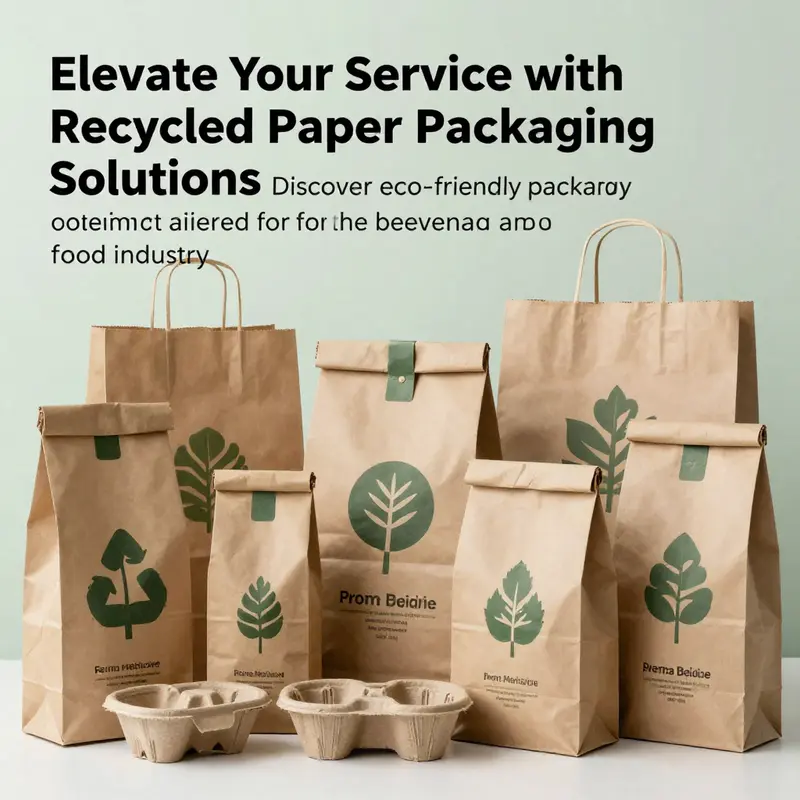
In today’s environmentally conscious market, recycled paper packaging stands out as a sustainable choice for businesses like yours. Whether you run a bubble tea shop, food truck, or cater events, understanding the types of recycled packaging, their environmental benefits, economic considerations, and industry applications can help you make informed decisions. This article offers valuable insights into these areas, showcasing how adopting recycled paper packaging can not only meet your operational needs but also resonate with eco-aware customers.
Beyond the Brown: How Kraft, Coated, and Corrugated Recycled Paper Packaging Shape a Modern, Sustainable System
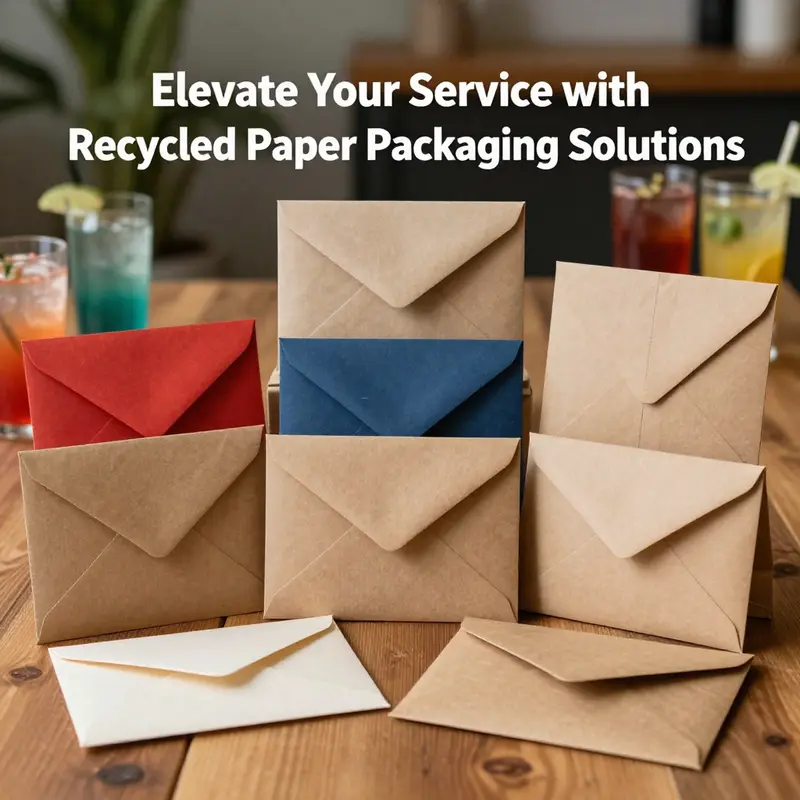
Packaging is more than a protective shell. It is a decision point where supply chains meet sustainability, branding, and practical constraints. When a company chooses recycled paper packaging, it signals a commitment to reducing landfill waste, lowering emissions, and embracing a circular economy. The chapter that follows moves through the three principal pathways that define recycled paper packaging today: Kraft, coated, and corrugated options. Each pathway sits on a different balance of strength, printability, and end-of-life consequences. Taken together, they illuminate how materials, processes, and consumer expectations intertwine to shape packaging strategies across industries.
Kraft packaging speaks to a timeless blend of resilience and responsibility. Kraft envelopes and boxes are rooted in recycled paper fibers and unbleached wood pulp, yielding that characteristic natural brown finish. The appeal is twofold: a robust tactile presence that many brands associate with authenticity and durability, and a recyclability profile rooted in straightforward fiber streams. In practical terms, kraft packaging is renowned for its tensile strength and reliable performance in transport, whether for bulk mailings or industrial shipments. It can be used for plain, no-nonsense corrugated boxes that crave rugged protection, or for folding carton formats that present a cleaner silhouette for consumer-facing packaging. The core advantage is clear: a high-strength material that often derives from post-consumer waste, which translates into lower virgin material demand and a smaller carbon footprint compared with many non-recycled alternatives.
Yet the beauty of kraft is also a constraint. The unbleached fiber and rough, textured surface resist some print processes, limiting the degree to which ink lays down evenly or yields crisp, high-contrast branding. For brands that prize a clean, graphics-driven look, the natural texture can be a hurdle rather than a feature. This tension helps explain why many kraft programs pair the material with printing or finishing techniques that respect its character while still delivering clear messaging. A common vehicle for kraft’s functional role is the kraft corrugated box. The layered assembly—fluted paper sandwiched between flat liners—delivers superior shock absorption and dimensional stability. This structure excels when shipping heavy or fragile items, providing dependable protection in stacking and handling environments. It is not merely about weight-bearing performance; it is about confidence in a supply chain. When a shipment arrives intact, that intact state reinforces the brand’s commitment to reliability and sustainability.
Within the kraft family, there are also folding carton variants and cylindrical tubes that adapt to specialized needs, including food safety considerations and user-friendly handling. The folding carton format can be designed to minimize material use while preserving structural integrity, a useful combination for retailers who want a modest footprint on the shelf and during transit. Cylindrical tubes, often used for specialty packaging or premium food products, demonstrate how kraft can be engineered into forms that feel premium and substantial without sacrificing recyclability. The overarching priority is to keep the recycled content intact through the product’s life cycle, while ensuring end-of-life options remain straightforward for consumers and waste-collection systems alike. The kraft path hence embodies a pragmatic equilibrium: strong performance with a transparent, simple recycling story. It is a reminder that sustainability is not about chasing the most high-tech solution, but about selecting materials that perform well in real-world use and re-enter the recycling stream efficiently.
Coated paper packaging adds another dimension to the recycled-paper narrative. Coatings—often a thin layer of polymer or wax—are applied to improve surface properties such as moisture resistance, abrasion resistance, and printability. The attraction is evident: a smoother surface that can carry vibrant branding and legible information, a perk for marketing mailers, gift packaging, and brand-focused communications. In a world where occasional dampness or scuffing can ruin a customer experience, coatings deliver a practical safeguard. Moreover, coatings can be formulated to be compatible with recycled-content papers, aligning with sustainability goals while enabling higher-quality packaging that stands out on shelves or in mail streams.
However, coatings introduce a nuanced sustainability conversation. The recyclability of coated paper depends heavily on the type of coating and the local recycling infrastructure. Some coatings can complicate recycling streams or affect compostability, while others are designed to separate or degrade during processing. This means brands must navigate a trade-off: you gain improved surface properties and durability, but the end-of-life story becomes more dependent on the coating used and the capabilities of the waste system serving a given region. The cost dimension also matters. Coated papers can be more expensive to produce and process, which may influence decisions for high-volume shipments or budget-sensitive campaigns. Yet for certain applications—where premium appearance and tight brand consistency are paramount—the coating route offers tangible value. It is a reminder that sustainability is not a fixed ladder with only one rung; it is a set of optimizing choices that must align with product performance, branding goals, and the realities of recycling and composting at scale.
Coated paper packaging also invites considerations around the lifecycle of ink and surface finishes. Printing on a coated surface can yield crisper, more saturated imagery, which enhances brand recognition. This is particularly relevant for marketing mailers and gift packaging, where the unboxing moment is part of the brand story. In such cases, the coating serves not just as a shield against moisture and wear, but as a vehicle for storytelling. The challenge lies in ensuring that the coatings chosen do not inadvertently hamper the post-consumer recycling process. Collaboration across designers, manufacturers, and recyclers becomes essential to select coatings that balance appearance with recyclability and to design packaging with adhesive systems and lamination that can be efficiently separated or processed within existing facilities.
A third pathway in this trio is the corrugated family, which extends the conversation beyond simple board stock to include the rugged, built-for-shipment reality of many consumer and industrial goods. Corrugated envelopes and boxes rely on a fluted core sandwiched between flat liners, delivering a remarkable combination of rigidity, cushioning, and resistance to crushing. This structure makes corrugated packaging uniquely suited to protecting delicate items during transit, while also offering scalability for different load requirements. In a lifecycle sense, corrugated packaging often employs recycled fibers, emphasizing that strength and resilience do not have to come at the cost of environmental performance. The visual language of corrugated—the warm, earthy texture and its intrinsic honesty—can also align with sustainability narratives that honor transparency and durability.
The channeling of recycled content into corrugated formats can take several forms. For industrial shipments, corrugated boxes may prioritize maximum protection with thick walls and reinforced seams. For consumer shipments, folding cartons and smaller corrugated enclosures can deliver a refined unboxing experience without sacrificing recyclability. The key design insight is that structural design and material choice are not separate; they inform each other. Stronger corrugation may allow for thinner liners without compromising protection, which in turn reduces material use. In the hands of a thoughtful designer, corrugated packaging becomes a performance story and an environmental one at the same time.
Taken together, Kraft, coated, and corrugated options do not compete; they complement one another in a portfolio that lets brands tailor their packaging to the product, the customer, and the supply chain realities. The decision matrix is not simply about choosing the most sustainable material. It is about selecting a combination of fiber content, surface treatment, and structural design that delivers the intended customer experience while maintaining a clear, recyclable end-of-life path. The choice, in other words, is about purpose—how the packaging supports protection, presentation, and recycling in a way that aligns with a brand’s values and with the capabilities of local waste-management systems.
In practice, this means brands should consider three questions as they evaluate options. First, what level of protection is required for the product during transit and handling? High-value or fragile items may justify the additional rigidity and cushioning of corrugated boxes, while bulk items or routine shipments might benefit from efficient folding cartons or sturdy kraft envelopes. Second, what is the priority for brand presentation? If a premium, print-rich look is essential, coated paper might be the best vehicle, provided that the coating can be managed within recyclability goals. If the brand emphasizes a natural aesthetic, kraft surfaces may deliver the right narrative with fewer embellishments. Third, what is the end-of-life expectation in the markets served? Coatings, inks, and laminations can complicate recycling or composting in some regions, so alignment with local infrastructure is critical. Answering these questions requires collaboration among product developers, packaging engineers, sustainability officers, and suppliers who understand how materials behave in real-world conditions and in end-of-life facilities.
The internal and external dialogues about recycled paper packaging extend beyond the shop floor. Designers and marketers increasingly demand packaging that not only protects the product but also communicates a clear sustainability stance to consumers. A natural brown kraft box can signal simplicity, earthiness, and a commitment to recycling, while a coated option can convey premium quality and care in presentation. Corrugated envelopes, with their robust structure, can advocate for resilience and responsible logistics. Each path supports different consumer expectations and supply-chain strategies, yet all paths share a common thread: the material life cycle from post-consumer or post-industrial waste to renewed fiber—and back again when possible.
To illustrate how these considerations unfold in practice, one can envision a typical packaging project. A company shipping premium snack items might lean toward a coated paper envelope for marketing impact and moisture resistance, paired with a corrugated inner tray to protect the product in transit. A brand prioritizing minimalism and rapid recyclability could opt for kraft corrugated boxes that deliver strength with a straightforward fiber loop suitable for standard recycling streams. Another player focused on industrial-scale shipments could deploy a mix of kraft corrugated boxes for outer packaging and rigid folding cartons for product presentation, optimizing for both durability and end-of-life simplicity. The strategic message here is not a one-size-fits-all solution but a carefully composed mix that aligns with product value, customer experience, and the realities of recycling infrastructure.
For readers seeking a concrete example of how kraft packaging translates to everyday food service, consider the kraft paper-french-fry-box-disposable-kraft-paper-french-fries-holder-snack-potato-chips-box-party-supplies. This instance embodies how kraft’s strength and recyclability can be applied in practical, on-the-go contexts while maintaining a clear link to sustainability values. It also highlights how design choices—such as minimizing coatings and selecting compatible inks and adhesives—can influence end-of-life outcomes. At the same time, it serves as a reminder that packaging decisions are never made in isolation. They ripple through branding, logistics, consumer behavior, and municipal waste streams.
As the industry continues to evolve, the conversation around recycled paper packaging will increasingly hinge on balance and transparency. Brands will need to weigh print quality against recyclability, strength against material use, and aesthetics against the realities of disposal. The best outcomes come from architectures that treat packaging as an integrated system—materials selected for compatibility with each other and with local recycling or composting practices, printing and finishing processes chosen to minimize impact, and product designs that reduce waste through efficient use of space and materials. When these elements come together, recycled paper packaging can achieve a compelling trifecta: strong performance, clear brand storytelling, and a credible path to circularity. This integrated perspective is not merely a technical preference; it is a strategic stance that aligns product integrity with environmental stewardship and consumer trust.
External reference for continued learning can be found in industry analyses that explore standards, types, and performance in kraft packaging and related corrugated formats. For readers seeking a detailed external resource, the following link offers a comprehensive overview of kraft packaging box standards and industry performance: https://www.alibaba.com/product-detail/Kraft-Packaging-Box-Wholesale-Complete-Analysis-of_1600495535223.html?spm=a2700.19174461.0.0.3c6e4d53WvP9xj
In sum, the three pathways—Kraft, coated, and corrugated—are not separate recipes but parts of a cohesive toolkit for sustainable packaging. Each path brings distinct strengths and challenges, and each can be optimized within a broader strategy that foregrounds recyclability, lifecycle thinking, and consumer experience. When brands embrace this broader view, recycled paper packaging becomes more than a material choice; it becomes a design philosophy that supports responsible consumption, resilient supply chains, and a healthier environment for future generations. The journey from post-consumer waste to renewed fiber is continuous, and the forms it takes—rugged kraft boxes, refined coated envelopes, and cushioning corrugated structures—are only the surface expressions of a deeper commitment to sustainability through packaging.
null
null
Balancing Costs and Conscious Consumption: Economic Forces Shaping Recycled Paper Packaging Markets
Balancing Costs and Conscious Consumption: Economic Forces Shaping Recycled Paper Packaging Markets
A shift toward sustainable packaging pivots on more than a noble intention. It hinges on the pressure of numbers, logistics, and a market that learns to value the long view. The economic landscape for recycled paper packaging reflects a tug of war between rising demand and the real costs of collecting, sorting, and turning waste paper into usable material. In recent years, the market for recycled packaging has shown robust growth. The sector was valued at about $51.28 billion in 2025 and is projected to rise to roughly $54.14 billion in 2026, then accelerate toward an estimated $87.85 billion by 2034. This trajectory signals not only environmental intent but a recognition that sustainable choices can be financially viable when the pieces of the puzzle align. As technology improves and scale builds, the cost gap between recycled and virgin materials has the potential to narrow, even as ongoing challenges remind participants that sustainability is an evolving balance between value, performance, and cost.
The drivers behind this balance are multifaceted. Corporations increasingly embed sustainability into strategy, translating values into procurement decisions. This corporate shift often accompanies regulatory frameworks that reward recycled content, minimize waste, and encourage design for recycling. Consumer preference for eco-friendly products also exerts pressure on supply chains to demonstrate verifiable environmental benefits. All of these forces push demand upward, creating a case for recycled paper packaging that persists beyond volatile raw material prices. Yet the same forces that propel demand also amplify cost awareness. Recycled packaging does not automatically outperform its virgin counterparts on every metric, and the economics of recycling remain sensitive to the specifics of geography, logistics, and the quality of collected material.
At the heart of the cost discussion is the lifecycle of recyclables. The journey begins at collection and transportation from households and businesses to sorting facilities. Transport costs can be substantial, especially in regions with dispersed populations or limited recycling infrastructure. Once at the facility, sorting and processing require energy, labor, and specialized equipment. Contamination—things like plastics, metals, or non-recyclable coatings—can derail the process, lower yields, and raise energy usage per tonne of recovered material. In some contexts, bring-bank or drop-off systems add a layer of transport expense that compounds with distance to sorting centers. Each of these steps carries a price tag, and those costs can be volatile with fuel prices, labor markets, and policy changes.
The cost structure also reflects the material’s quality and end-use requirements. Lower-grade paper might be abundant in post-consumer streams, but it often needs more intensive pulping or de-inking. Higher-grade fibers, while easier to process, command a different price in the supply chain depending on contamination levels and the presence of coatings or finishes. And coatings themselves carry dual implications. They can improve moisture resistance and print quality, enhancing product performance and brand appeal. But coatings may complicate recycling or reduce compostability, depending on composition and end-of-life infrastructure. These trade-offs between functionality and recyclability shape whether a given packaging solution is economically competitive in a particular market.
Beyond the material’s intrinsic properties, the scale of production matters. Economies of scale can reduce unit costs through better energy efficiency, equipment utilization, and bargaining power with suppliers. When producers invest in new deinking lines, automated sorting, or more efficient pulping technologies, they can drive down processing costs per tonne. The flip side is that early-stage investments carry higher capital expenditure and longer payback periods. In markets where recycling regimes mature, these investments often pay off sooner, as volumes rise and the cost per box or per pallet declines. Conversely, in regions with fragmented collection networks, the cost per tonne of recovered paper can stay stubbornly high, slowing adoption even when demand grows robustly elsewhere.
The market’s current growth trajectory is not just a story of raw economics; it is also a story of policy and competition with other materials. Public policy increasingly emphasizes cradle-to-cradle thinking, encouraging designs that keep packaging in circulation longer and at higher value. This policy environment tends to favor paper-based packaging because it is more readily recycled in many systems than multi-layer plastics. At the same time, the price volatility of oil and petrochemicals continues to influence plastics markets, indirectly supporting the relative appeal of paper-based options. When a company considers switching from plastics to recycled paper packaging, it weighs the latent value of a closed-loop system against potential cost surges in fiber, energy, and transportation. The outcome depends on local infrastructure, waste collection efficiency, and the ability to secure dependable fiber streams.
From a branding and performance standpoint, the choice among recycled paper options matters for cost efficiency as well. Kraft paper envelopes, coated recycled paper envelopes, and corrugated recycled paper envelopes each offer distinct performance profiles. Kraft paper envelopes, typically made from strong, unbleached wood pulp, provide high tensile strength and a natural, rustic aesthetic. They are biodegradable and relatively inexpensive on a per-unit basis, which makes them attractive for bulk mailings, industrial shipments, and e-commerce parcels. On the flip side, their textured surface can limit print quality, and the brown color may constrain brand customization unless additional finishing steps are taken. This is where cost considerations intersect with branding decisions: the need for legibility, color fidelity, and consistent appearance can push brands toward more expensive options that yield sharper printing and a more premium feel.
Coated recycled paper envelopes present a complementary trade-off. The smooth coating improves print quality, supports moisture resistance, and minimizes scuffing during handling. Such properties align well with marketing mailers, gift packaging, and brand-focused communications where image matters as much as function. Yet coatings can complicate recyclability and compostability. Depending on the coating type, the end-of-life options may be narrower, which can affect overall life-cycle costs. Even when coated envelopes remain recyclable, the process can require additional energy or sanctioned processing steps, subtly raising unit costs. For brands that prize a premium look and higher print fidelity, the premium price point can be justified by enhanced consumer engagement and perceived value. For others, the added cost may prompt a careful comparison of perceived benefits against budget realities.
Corrugated recycled paper envelopes add another layer to the cost-performance equation. Their fluted structure provides robust cushioning and structural rigidity, which translates into reliable protection for shipping fragile or heavy items. This can reduce damage-related costs in handling and returns, a factor that sometimes offsets higher materials costs through lower post-purchase losses. Corrugated options also tend to be bulkier, which influences transportation efficiency and storage space. In supply chains that handle large volumes of mixed items, the protection advantage can be decisive. In markets where the primary goal is to minimize waste and maximize recoverability, corrugated recycled options can offer the strongest alignment with both environmental commitments and operational cost controls.
If the conversation centers on cost, it is essential to recognize design and packaging optimization as a pathway to improved economics. Lightweighting, standardization, and modular design can reduce material use and streamline production. Design-for-recycling principles can lower end-of-life costs by simplifying deinking and sorting. By prioritizing fiber streams that deliver high-quality recyclates with minimal contamination, manufacturers can realize more stable input costs and better predictability across cycles. In turn, buyers—from merchants to manufacturers—gain clearer budgeting signals and reduced risk when planning for long-term packaging strategies. This is where the economics of recycled paper packaging begin to touch daily business decisions: cost awareness becomes an enabler of strategic choices about supplier relationships, packaging formats, and value creation.
Practical implications arise when brands weigh the benefits of recycled content against the potential for print quality limitations or coating-related recyclability concerns. It is here that the broader market trends intersect with supplier capabilities and packaging design. As demand for recycled content rises, suppliers invest in sorting and pulping technologies that can handle higher contamination levels and yield cleaner fiber at scale. These improvements, in turn, reduce processing costs and improve the quality of the end product. In parallel, advances in coating science and surface treatments are enabling better print outcomes without sacrificing recyclability in many contexts. The net effect is a gradually narrowing gap between the performance of virgin-paper packaging and its recycled counterparts, with the added advantage of reduced environmental footprint and improved public perception.
To connect theory with practice, consider the broader market dynamics that influence procurement choices. The global market outlook for recycled packaging points to sustained expansion, supported by regulatory momentum, consumer demand, and ongoing innovations. As scale grows, the cost of handling and processing recycled fibers tends to fall, while the value of recovered materials remains sensitive to fiber quality and market competition. In this milieu, the choice of packaging format becomes a strategic decision rather than a simple price comparison. A business might favor kraft paper for straightforward, cost-conscious shipments, or opt for coated or corrugated recycled options when the objective is stronger brand presence or higher packaging protection. Each choice involves a careful calculus of trade-offs, where environmental objectives are harmonized with financial performance and operational practicality.
For organizations seeking a concrete example of how these factors play out in everyday operations, many teams turn to packaging formats that balance aesthetics, function, and recyclability. A practical option involves kraft paper-based solutions that still offer visual appeal and printability through selective finishing. The idea is to achieve reliability and cost efficiency without compromising core sustainability goals. When brands want to elevate perceived value while retaining recyclability, they may lean toward coated alternatives that provide a smoother surface and moisture resistance. In cases where the shipment requires careful protection of delicate items or high-weight contents, corrugated recycled envelopes may be the most economical option once you account for reduced damage risks and simplified logistics. This spectrum of choices demonstrates how economic considerations are inseparable from design strategy, supplier collaboration, and the realities of end-of-life processing.
From a broader perspective, the chapter’s data point to a future where regenerative economies become more mainstream. As technology advances and recycling networks mature, the cost advantages of recycled materials can become more predictable. Investments in automation, better litter management, and more efficient sorting can drive down processing expenses. Regulatory clarity and standardized recycling streams also reduce operational risk, enabling brands to forecast packaging costs with greater confidence. In this environment, recycled paper packaging is not merely a green substitute; it is a resilient component of supply chains that seek reliability, traceability, and a credible environmental story. The market’s upward trajectory suggests that, with thoughtful design and strategic sourcing, the environmental benefits of recycled content can be achieved without sacrificing cost competitiveness.
In closing this exploration of economics and market dynamics, it is important to acknowledge that the cost picture is not uniform. Local infrastructure, fiber mix, and consumer behavior shape every decision. Yet the overarching trend is clear: demand for recycled paper packaging is rising, and with it the incentive to optimize the economics of recycling. The path forward rests on three pillars—quality-recycling compatibility, scalable processing, and demand-led innovation. When these pillars align, the industry can deliver packaging that performs well in the supply chain, resonates with ecologically minded consumers, and remains financially sustainable for producers and buyers alike. For practitioners curious about practical packaging options that illustrate these principles, consider kraft paper cake boxes with clear windows as a case study in balancing printability, aesthetics, and recyclability. They embody the idea that thoughtful design and material selection can harmonize environmental intent with business realities. kraft paper cake boxes with clear windows.
For further reading on market dynamics and the economic drivers shaping recycled paper packaging, see the external resource below. This broader perspective helps place the chapter’s figures in context and underscores the importance of ongoing investment in recycling infrastructure, process efficiency, and material science that can push recycled options further toward parity with virgin materials.
External resource: https://www.linkedin.com/pulse/growing-demand-recycled-paper-packaging-market-ayush-kumar/
Sustainable Pathways in Transit: How Recycled Paper Packaging Extends Across E-commerce and the Logistics Chain
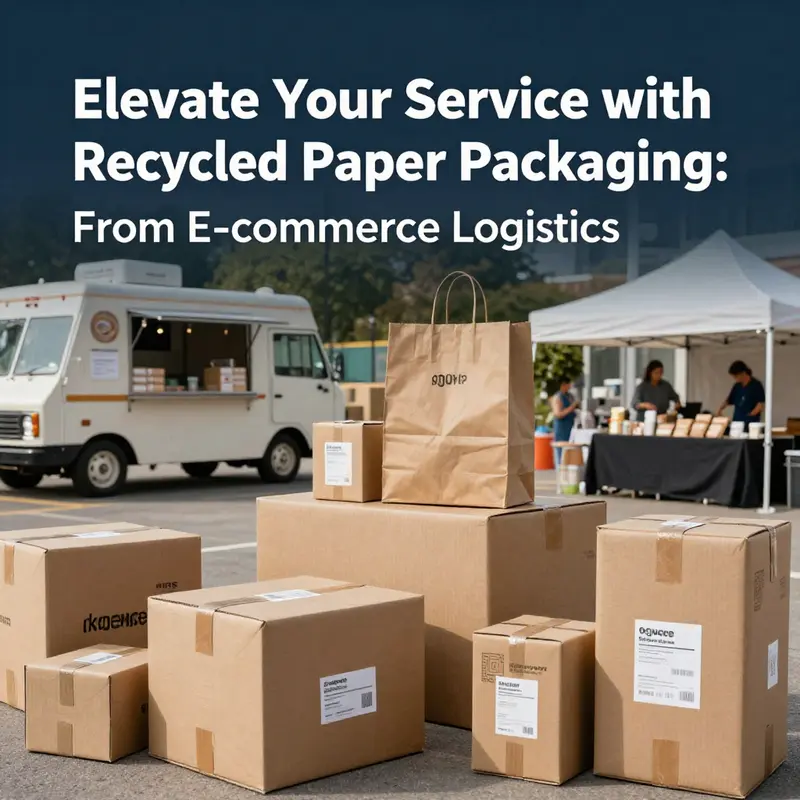
The shift to recycled paper packaging has moved from niche to core in e-commerce and logistics. In high-volume networks, recycled kraft and corrugated formats protect products, reduce waste, and support brand narratives. This chapter traces adoption from consumer-facing packaging to distribution centers, showing how material choices affect cost, reliability, and end-of-life outcomes. Three material families—kraft paper, coated recycled paper, and corrugated recycled envelopes—are examined for performance, branding, and recyclability. The discussion covers how coatings influence print quality, how strength and cushioning meet handling realities, and how closed-loop recycling drives supply chain resilience. In e-commerce, kraft boxes from post-consumer recycled content blend strength with an authentic aesthetic, while coated recycled envelopes offer a premium appearance with recyclability. Corrugated recycled options provide durable protection for heavier items. Standardized performance metrics—burst strength, edge crush, tear resistance—create a common language across brands, engineers, and logistics teams, enabling predictable throughput and waste reduction. The lifecycle integration of recycling infrastructure, procurement strategy, and design decisions shapes cost, emissions, and material recovery. Innovation in paper-based cushioning and minimal-plastic coatings further extends recyclability, aligning packaging with circular economy principles. Ultimately, successful adoption hinges on design choices that balance protection, branding, and end-of-life clarity, ensuring materials can re-enter recycling streams with minimal contamination and maximal value.
Final thoughts
Recycled paper packaging offers vibrant opportunities for beverage shops, food trucks, and catering services alike. By leveraging eco-friendly materials, businesses can not only enhance their sustainability profile but also appeal to a growing segment of environmentally conscious consumers. Understanding the different types of recycled packaging, the benefits they offer to the planet, economic implications, and diverse applications can empower you to make choices that align with both your business goals and environmental standards.