
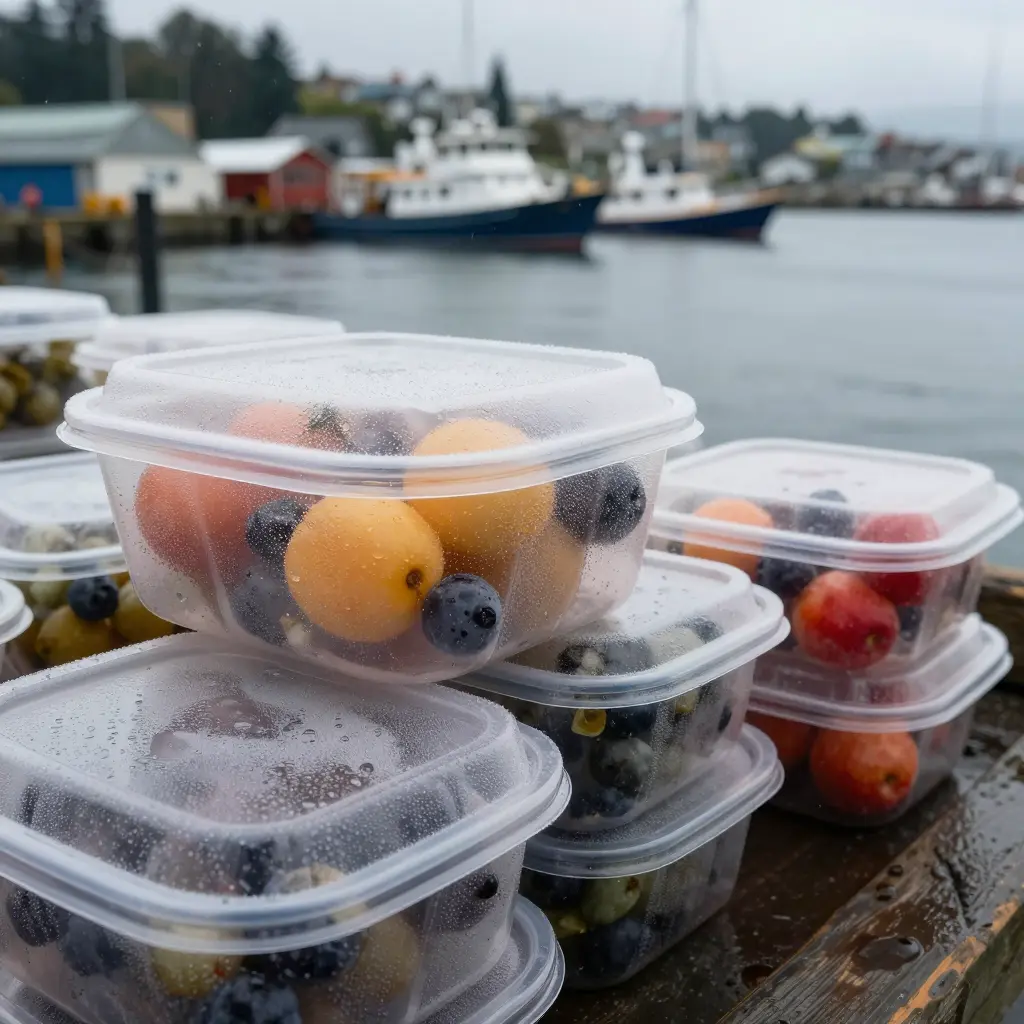
Importers who ship plastic food containers to Valdivia, Chile report the same problem again and again: the lids arrive fogged with condensation. The containers themselves are usually fine, and their molding tolerances check out. The moisture comes from the port. Valdivia sits on Chile’s wet southern coast, where terminal humidity often stays above 80 percent and cargo may wait days or weeks in damp, uninsulated conditions before it clears customs.
From there the physics is straightforward. Day-night temperature swings drive the air trapped in packed cartons toward its dew point, and the moisture condenses on the coldest surface in the stack, which is almost always the lid. The lid fogs, the contents look cloudy on the shelf, and some loads are rejected at receiving before a single container reaches a customer.
The fogging is preventable. It comes down to one specification written into the order before it ships.
The Science of Lid Fogging During Humid Port Storage
Leave a pallet of plastic food containers on the dock in Valdivia for a few nights and the lids come back streaked with fine droplets. Nothing is wrong with the molding. This is condensation, and the mechanism is well understood, which means a lid can be specified to resist it.
What Condensation Actually Is
Condensation is water vapor in the air turning back into liquid. It happens when air cools past the point where it can hold its moisture, and the surplus settles on the nearest cold surface, here the underside of a container lid.
Dew Point: The Threshold That Triggers Fog
Every volume of air has a dew point: the temperature at which it becomes saturated. Keep the air above that line and the lid stays clear. Drop a surface below it and droplets start to form. In coastal port storage, the line is crossed on most nights.
Temperature and Humidity Differentials Between Container and Port Air
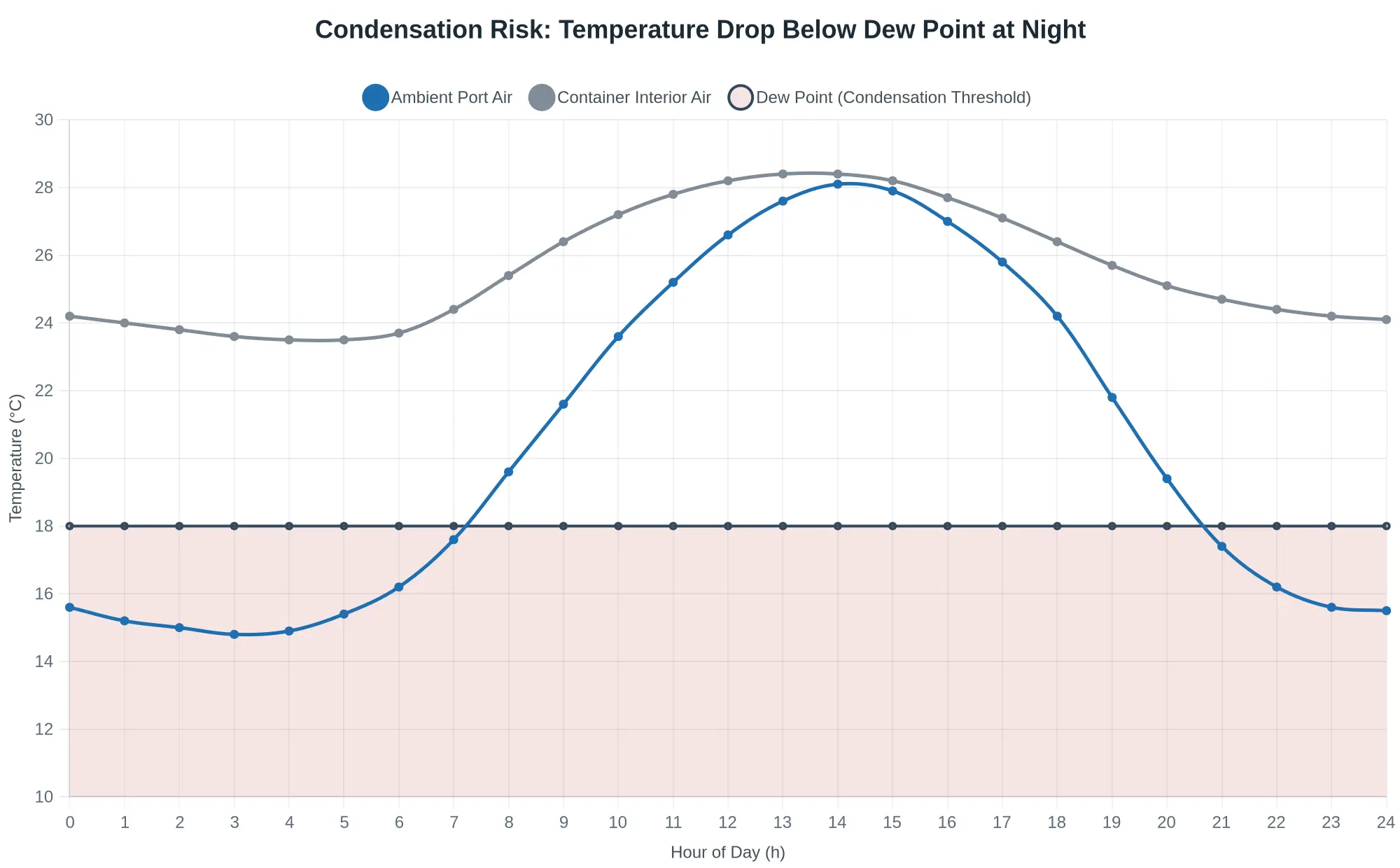
Air inside a sealed pallet and air on the dock are rarely at the same temperature or humidity. Sun warms the air trapped in the cartons, and the concrete below holds heat into the evening, so the package and its surroundings drift apart. A typical 24-hour pattern looks like this.
| Condition | Daytime Peak | Nighttime Low | Dew Point |
|---|---|---|---|
| Ambient port air | 21.3 C | 8.9 C | ~16 C |
| Container interior air | 24.1 C | 15.2 C | ~17 C |
| Lid surface (outer) | 26 C | 9 C | – |
How Trapped Warm Air Cools at Night
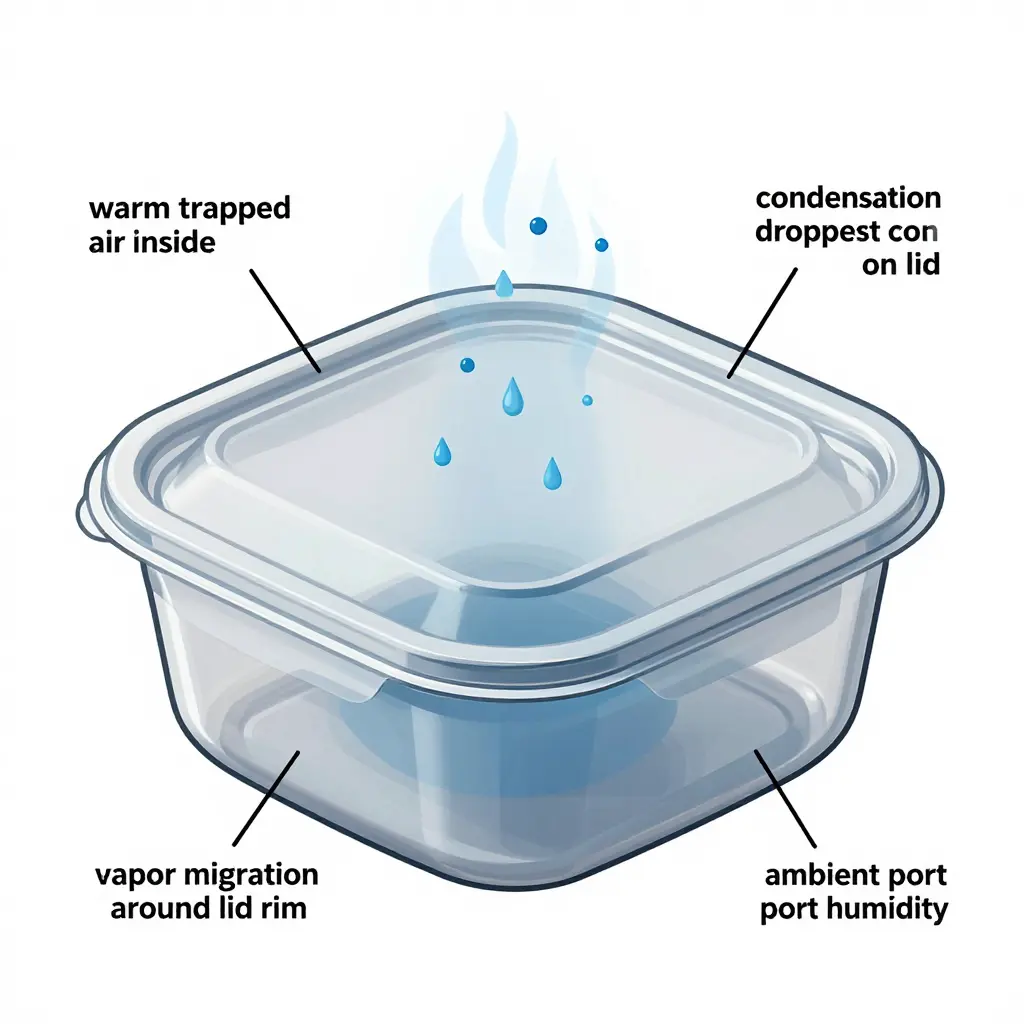
After sunset the trapped air cools from the outside in. The lid is the thinnest and least insulated part of the container, so it sheds heat fastest and drops below the interior dew point first. That is why the fog shows up on the lid and not on the walls.
How Liquid Water Migrates as Vapor
Condensed water does not stay put. Vapor passes through the polymer, or slips around the rim through micro-gaps, because the humid port air and the drier air inside sit at different pressures. The same route lets liquid water evaporate during the day and condense again at night, over and over, for as long as the cargo sits.
Why the Barrier Spec Matters for Valdivia Orders
Because fogging is a vapor-transmission problem rather than a cosmetic one, the moisture barrier belongs in the specification, measured as WVTR (g/m2/24h), before the order goes out. Comparing moisture-resistant container formats built for humid-climate export is one way to line up lid material, fit tolerances, and wall thickness with the conditions at the port.
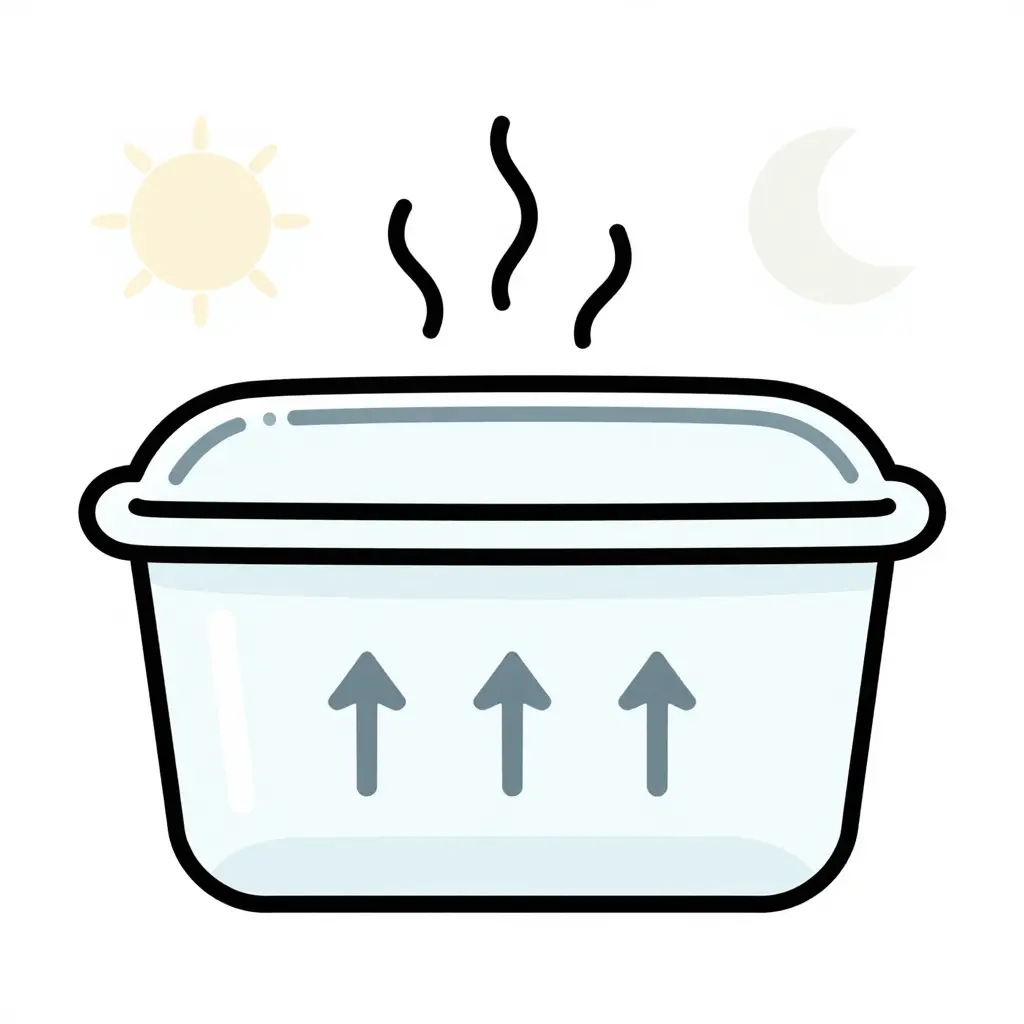
Figure 1. Warm humid vapor rises inside the sealed container, cools against the plastic lid as ambient temperatures fall overnight, and forms droplets on the lid surface.
Why Valdivia’s Climate Turns Port Storage into a Fogging Risk
Valdivia lies near 39°S in Chile’s temperate rainforest belt, a zone classified as oceanic (Köppen Cfb). Unlike the arid north of the country, it has no dry season: rain falls in every month, and annual precipitation normally runs past 1,500 mm. The steady moisture keeps the air near saturation for much of the year, and that is half of what produces fog.
High Humidity and Sharp Daily Temperature Swings
Relative humidity in Valdivia usually runs between 75% and 95%, and from late evening into early morning it often reaches 100%. With that much vapor already in the air, a small drop in temperature is enough to push it past the dew point and turn the vapor into visible liquid.
Day-to-night swings supply that cooling. Highs near 20°C commonly fall to around 8°C before dawn, a spread of 10°C or more.
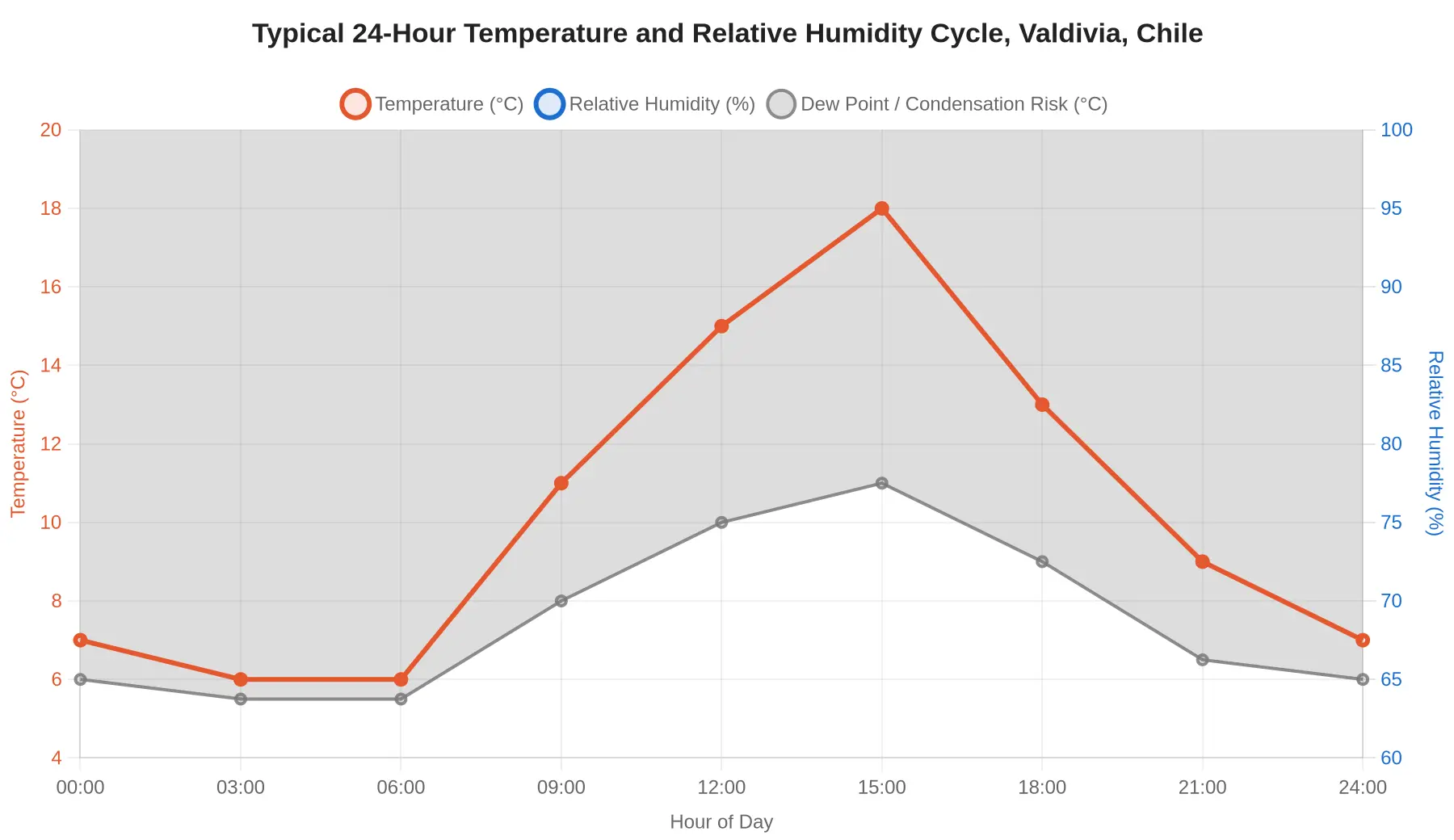
When warm, moisture-laden air meets a colder plastic surface, the surplus vapor settles as fine droplets on the lid, the same process that fogs a cold drinking glass.
How Port and Warehouse Storage Amplifies the Cycle
Containers held at Valdivia’s port or in nearby warehouses sit inside these cycles rather than escaping them. Without climate control, boxed lids and trays go through condensation and evaporation repeatedly, day after day, until the shipment clears customs and leaves the terminal.
Stacked corrugated cartons and palletized lids trap still air, so overnight condensation lingers into the morning and forms again the next night. Across a typical 5 to 10-day dwell in port storage, a lid can fog and bead water many times over. That is the reason to settle the moisture barrier specification on the food containers before the shipment is packed.
Monthly Humidity and Temperature Swings in Valdivia, Chile
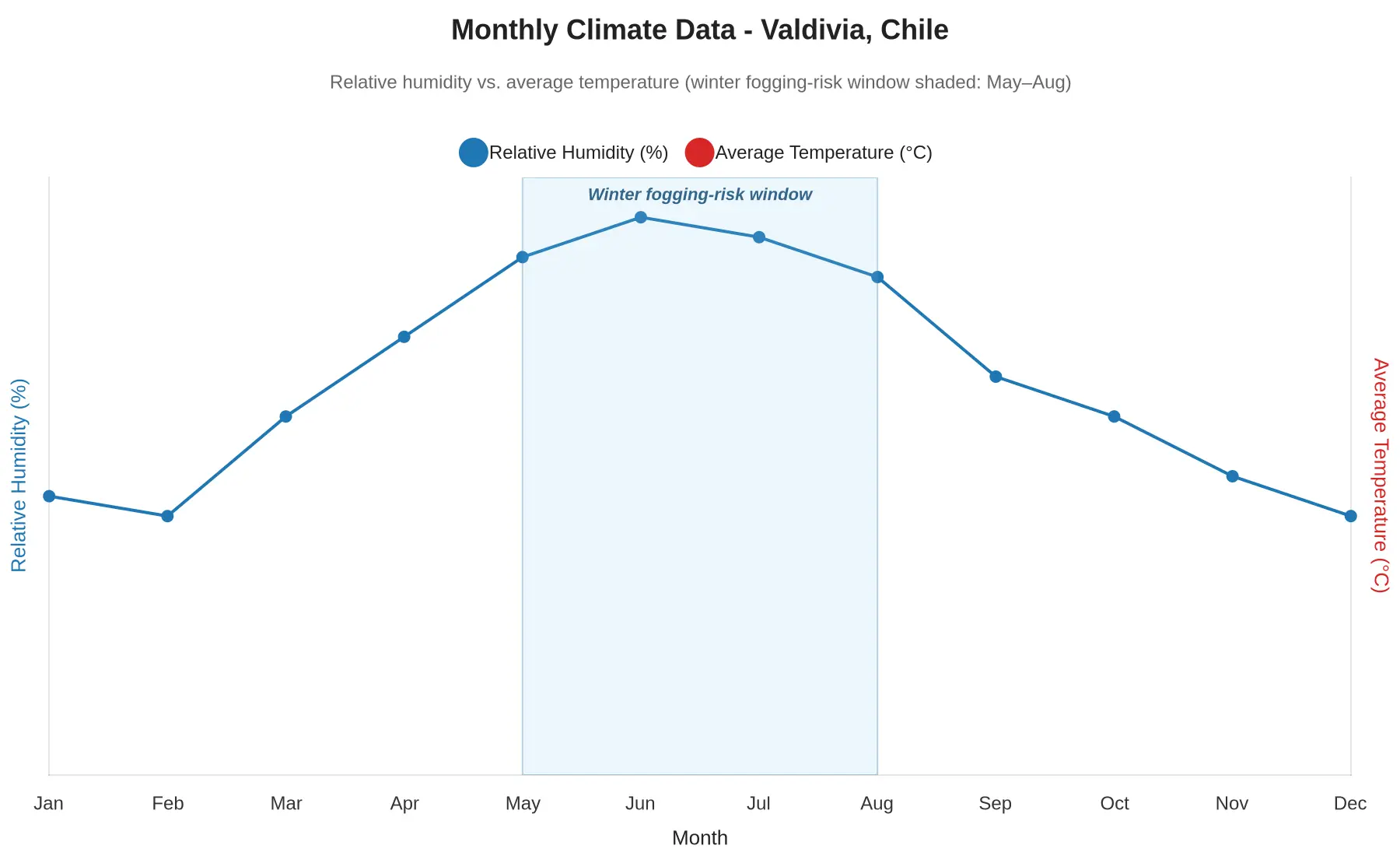
The chart plots typical monthly relative humidity and average monthly temperature for the Valdivia region across a year. Humidity reads on the left axis and temperature on the right. Where the curves pull apart, and where they come together in the blue fogging-risk window, is what matters for storage planning.
Reading the curve
- Humidity rises as the year cools. It sits in the low-to-mid 70s early in the year, climbs from March, and peaks near 88% in June as temperatures approach their annual low.
- Temperature bottoms out in mid-winter. Monthly averages fall from roughly 17°C in January to 8°C in June and July, then recover through spring.
- The shaded window, roughly May through August, is the fogging zone. Ambient moisture is high at the same time temperatures fall hardest, which is when a container surface slips below the dew point and condensation collects on the lids.
Why this matters for storage timing
For an importer, this curve works as a procurement calendar. A load that clears the port in the peak-humidity months and sits in humid storage is far more likely to show fogged lids and interior condensation than one that lands in the drier summer window. Two things follow:
- Schedule high-value or tightly sealed stock to arrive outside the May-August fogging window where you can, or move it straight into climate-controlled warehousing.
- Set the moisture barrier spec before you order. Scheduling will not remove winter humidity from an open port, and the barrier value written into the PO is what protects the lids when the air saturates.
Treat this profile as the baseline when you work out the moisture-barrier requirement. The peak of the humidity line is the load case your specification has to survive.
Reading the Moisture Barrier Specification: Five Parameters That Stop Lid Fogging
When a pallet moves from a cool inland warehouse into Valdivia’s humid port air, the lid becomes the coldest surface in the stack and condensation forms there first. Whether that moisture stays outside the pack or works inward to fog the lid is settled before you order, by the moisture barrier specification in the purchase contract. Five parameters decide the outcome.
Water Vapor Transmission Rate (WVTR)
WVTR, in g·m²·day, is the amount of water vapor that crosses one square meter of lid film in 24 hours. Lower is better. A commodity lid runs 15-30 g·m²·day; an engineered barrier gets close to 1 g·m²·day. Require the figure at 38°C / 90% RH, because ambient lab numbers understate what the lid meets at a humid port. Write it as a hard maximum rather than a target range, and make it a rejection criterion.
Barrier Film Thickness and Material
Film chemistry counts for more than gauge. Mono-layer PE or PP is cheap and resists moisture, but it lets a noticeable amount of vapor through. A moisture barrier layer changes that: EVOH coextrusions, metallized PET (a thin aluminum “metallized layer”), and EVOH-plus-metallized laminates cut WVTR by roughly an order of magnitude. Added thickness helps, yet a 12-micron metallized structure normally beats a 60-micron plain PE lid.
Desiccant Inclusion
On long ocean transits, a desiccant sachet or a desiccant-loaded liner absorbs the residual headspace moisture that seals cannot block. Size the desiccant to the container volume and the expected transit time. Too much adds cost; too little lets fog form before the container clears customs.
Gasket and Liner Sealing Efficiency
A low-WVTR film is wasted if the gasket leaks. Sealing depends on gasket compression set, liner fit, and consistent lid torque. In high humidity, a gasket that is undersized or too hard lets vapor travel around the rim and condense on the inside of the lid.
Rim-Closure Design
The rim closure, whether double-seam, snap-lock, or interference-fit, sets how far vapor has to travel. A deeper, tighter rim lengthens that path and backs up the film’s WVTR. Specify the closure along with the film and gasket so the three work together.
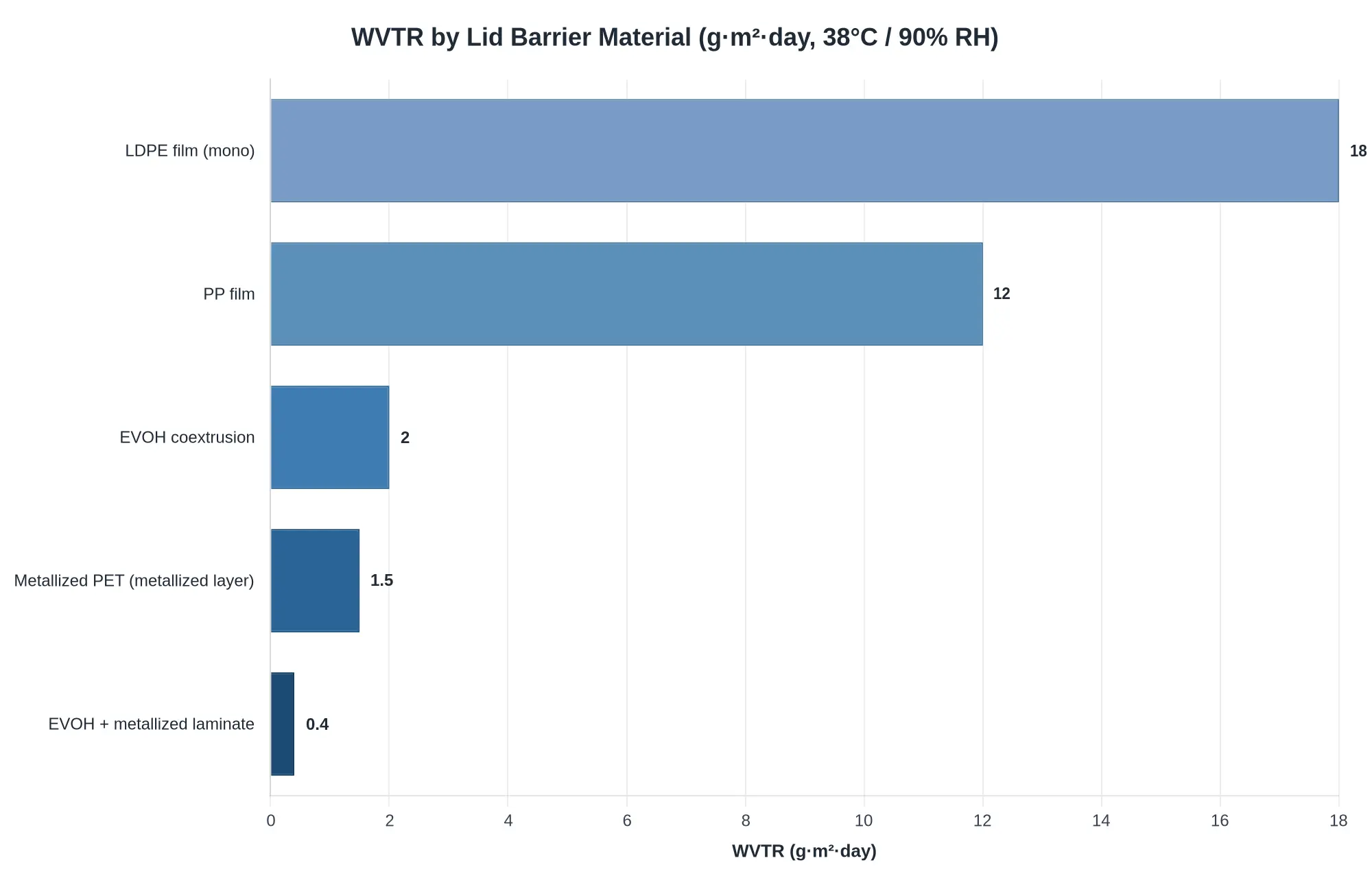
The chart shows how far material choice moves the number: plain PE to a metallized laminate takes WVTR from about 18 to below 1 g·m²·day. When you source the containers themselves, pair these barrier specs with formats already built for cold-drink and cold-chain packing.
Bottom line: lock WVTR, film material, desiccant load, gasket grade, and rim geometry as written, testable clauses before placing the order, not after the first fogged container reaches Valdivia.
Moisture Barrier Specification Tiers at a Glance
The matrix below matches a barrier spec to the humidity your Valdivia storage window will expose it to. Before you lock a PO, confirm with the supplier which of these food containers tiers fits the intended dwell time on the dock.
| Spec Tier | WVTR (g/m2/day, 38 deg C / 90% RH) | Barrier Material / Layer Structure | Desiccant Option | Liner / Gasket Type | Recommended Storage Duration | Relative Cost Index |
|---|---|---|---|---|---|---|
| Standard | 8 – 12 | Single-layer LDPE film bag, approx. 50 – 60 micron | None, or 1 g silica gel sachet | Foam or EVA lid gasket, no liner | Up to 3 months in low-humidity, ventilated storage | 1.0 (baseline) |
| Enhanced | 2 – 4 | Coextruded 3-layer LDPE / HDPE / EVOH, or metallized PET-poly laminate | 2 – 5 g clay or silica gel sachet | Silicone or PE foam gasket, optional PE liner | 6 – 9 months | 1.6 – 2.0 |
| High-Barrier | Below 0.5 | Multi-layer PET / aluminium foil / PE laminate, or 5-layer EVOH structure | 5 – 10 g molecular sieve or activated clay | Sealed foil lid plus silicone gasket, double-liner | 12 – 18 months or longer | 2.8 – 3.5 |
Reading the table: WVTR (Water Vapor Transmission Rate) is the best single predictor of whether lids will fog in humid port storage: the lower the figure, the less moisture gets in. The relative cost index is a multiple of the Standard tier (1.0), so an Enhanced spec at 1.8 costs about 80% more per unit than Standard. For most Valdivia shipments that face several weeks on the dock, the Enhanced tier clears up condensation fogging without the premium of a full High-Barrier build.
Locking the Moisture Barrier Specification: A Step-by-Step Guide
For importers shipping plastic food containers to Valdivia and other Chilean ports, the moisture barrier specification is the line item that decides whether lids arrive clear or fogged. Humid port storage fogs lids because warm, moisture-laden coastal air condenses on container surfaces whenever a temperature or humidity differential forms inside the carton. The remedy is a documented spec, not a slogan. Work through the six steps and write each number into the purchase agreement before you order.
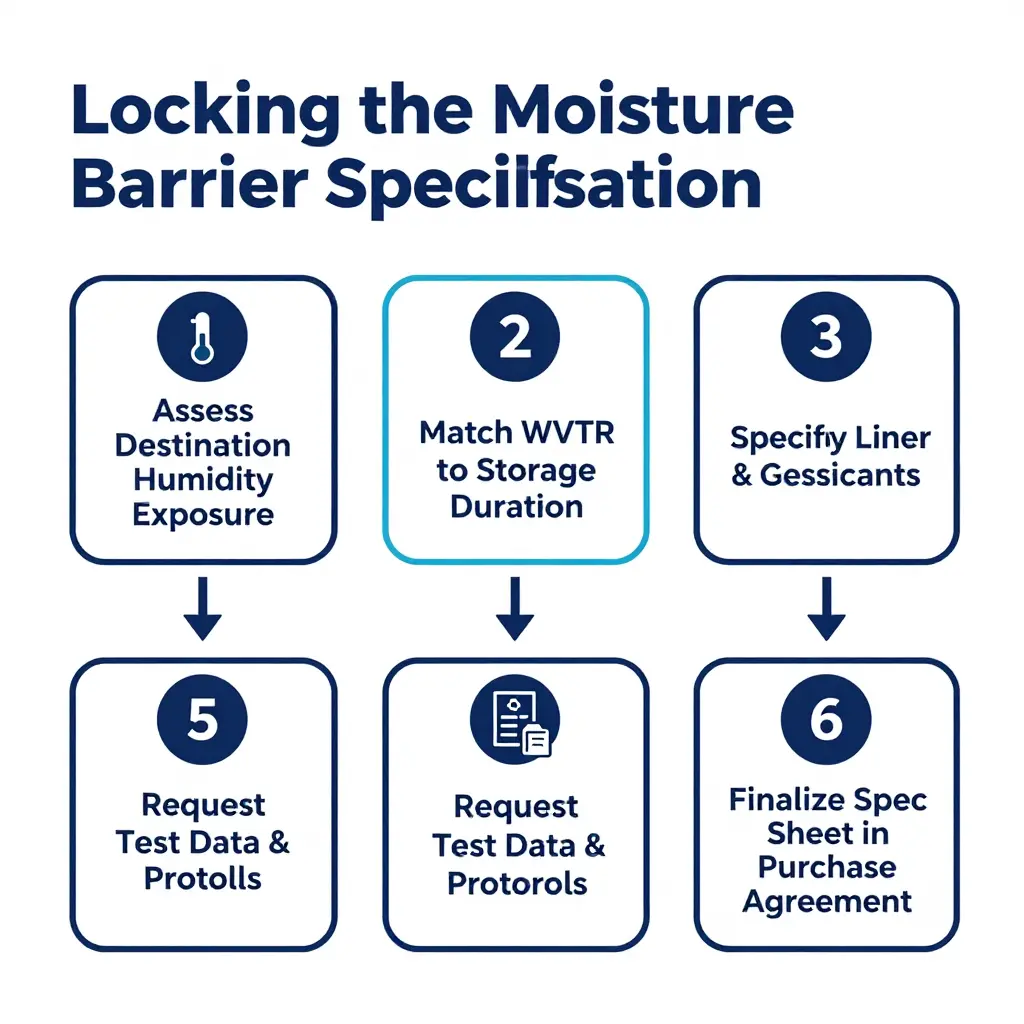
1. Assess destination humidity exposure
Map the temperature and relative-humidity range the containers will meet between factory and warehouse. Coastal Valdivia sits above 80% RH much of the time, and long holds in humid port storage raise the condensation risk on lids. Ask your freight forwarder for seasonal dew-point data, not a yearly average.
2. Match WVTR to storage duration
Water Vapor Transmission Rate (WVTR) measures how fast moisture crosses the barrier. A short domestic turnaround tolerates a higher figure; a container headed for months of humid port storage needs a low-WVTR structure, typically under 1 g/m2/day. Set the target from your worst-case dwell time and add a margin.
3. Specify liner and gasket seals
A barrier is only as good as its seal. Define the liner material, thickness, and compression set, and call for an EPDM or silicone gasket anywhere the pack is re-closed repeatedly. State the target seal compression percentage so a supplier cannot substitute cheaper foam on otherwise comparable sealed food packaging containers.
4. Decide on desiccants
If the pack has to absorb internal moisture, choose the desiccant type, unit weight, and placement. Silica gel covers general use; a molecular sieve is for demanding low-humidity targets. Specify units per carton and confirm the desiccant is food-contact compliant.
5. Request test data and protocols
Ask for WVTR reports that name the test standard, whether ASTM E96, ASTM F1249, or ISO 15106, along with sample thickness and test conditions. Require lot-level certificates, so the spec you bought is the spec you receive.
6. Finalize the spec sheet in the purchase agreement
Attach the finished specification as an appendix to the contract and cite it directly in the purchase order. Include acceptance criteria, a sampling plan, and a clause that any material change triggers fresh approval.
Get those six numbers right up front and humid port storage stops being a surprise on arrival.
Before you sign off on any purchase order for plastic food containers bound for Valdivia, work through the list below. Each item maps to a failure point seen in humid southern-Chile port storage, so use it as a go/no-go checklist.
- Confirm the moisture barrier rating and have it stated as a WVTR figure (g/m2/day), not a vague “high barrier” claim.
- Check the lid seal type (snap-fit, tamper-evident, or gasket-lined) and confirm it survives the intended temperature swing without fogging.
- For full-container or long-dwell shipments, approve a tested desiccant requirement with sachet size and placement.
- Get a documented moisture test report from the supplier, ideally against a simulated Valdivia profile above 80% RH.
- Agree a storage timeline that matches your real dwell time, and confirm the barrier spec still holds past the expected window.
- Check the resin grade and any EVOH or coating layer; these determine real-world performance, not the marketing.
- Verify carton and pallet protection so secondary packaging does not trap residual humidity in transit.
- Lock the QC sampling plan and inspection standard, and define how fogging and condensation defects are measured and rejected.
- Confirm labeling, food-contact compliance, and cold-chain assumptions fit your downstream distribution in Chile.
- Document the agreed lead time, incoterms, and reorder buffer so a spec-approved batch is not swapped out later.
A supplier who already documents these specs will clear the checks faster; the moisture-barrier food containers range is pre-qualified stock to compare against.
Matching the Moisture Spec to the Container Category
Barrier performance and fogging behavior change with the format, so the right spec for one container is not automatically right for the next. Lid surface area, headspace volume, and how the pack is stacked all shift the requirement. Broad flat lids on clamshell and rectangular takeaway boxes give condensation room to bead, which makes an anti-fog additive or a lower water-vapor transmission rate the priority. Bakery and sushi boxes work the other way: cold product meeting Valdivia’s warm, humid air fogs the lid fast, and because the pack doubles as a display, clarity matters as much as barrier strength. Open food trays release steam continuously from an exposed surface, so the coating has to resist moisture uptake rather than relying on the lid. Deep bowls hold a larger headspace where condensate drips back onto the contents, which is where a domed or vented lid earns its place. Cup accessories are easy to overlook, but sleeves, stirrers, and straws left in humid port storage can soften or warp as the material takes on ambient moisture.
Linked category quick reference
- Takeaway boxes – broad lids, anti-fog priority
- Bakery and sushi boxes – clarity plus barrier strength
- Food trays – exposed surface, moisture-resistant coating
- Bowls – deep headspace, drip control
- Cup accessories – humid-storage material stability
Frequently Asked Questions: Humid Port Storage & Moisture Barriers
Why do lids fog even on sealed containers?
Fogging is condensation, not leakage. A tightly sealed container still traps air that carries water vapor. When a carton moves from a cool ship’s hold or a cold night at the port into warm, humid Valdivia air, the lid surface falls below the dew point and the vapor condenses into droplets. A gasket or snap-fit seal blocks liquid water and bulk moisture, but it does not stop vapor migration or temperature-driven condensation, so a perfectly sealed lid can still fog. That is why sealed takeaway containers need a vapor-aware spec and not just a tight fit.
What WVTR value is sufficient for Valdivia’s climate?
Valdivia is temperate and consistently humid, with relative humidity often above 80% and rain year-round. For cold-chain or extended port storage, target a water vapor transmission rate (WVTR) of 1 g/m2/day or lower at 38C/90% RH for the barrier film or container wall. For shorter domestic distribution, 3-5 g/m2/day is usually acceptable. Put the target in the purchase spec before ordering, and confirm the test conditions, because the same material reports very different WVTR numbers at different temperatures and humidities.
Are desiccants necessary inside food containers?
Usually not for the container itself. Desiccants protect moisture-sensitive product, not the plastic. If you pack dry, hygroscopic foods such as crackers, powders, or dry snacks, a food-grade silica gel sachet or an oxygen absorber helps. For most wet or fresh food-service containers, a desiccant is unnecessary, and a non-food-grade sachet raises food-safety concerns. Match it to headspace volume and expected storage duration rather than adding one by habit.
Does lid material affect fogging?
Yes. Materials differ in surface energy and thermal conductivity, which changes how quickly condensation forms and how visible it is. Clear anti-fog (AF) PET or PP lids carry a hydrophilic coating that spreads droplets into a thin, transparent film instead of letting them bead, so the lid stays clear. Untreated PP or PS lids fog more readily. For chilled displays and humid port storage, specify anti-fog treated lids.
How do I verify a supplier’s moisture barrier claims?
Ask for third-party lab reports (ASTM E96, ASTM F1249, or ISO 15106) that show WVTR at clearly stated conditions, not a marketing label. Ask for the resin grade and any barrier coating or EVOH layer. Then check with a sample shipment: hold cartons in a controlled humid chamber and inspect for fog and moisture ingress before committing to volume.
Conclusion and Key Takeaways
Lid fogging is not a cosmetic defect. It is predictable physics: containers packed in warm, humid conditions reach Valdivia’s cool, damp port, the temperature drops, and moisture condenses on the coldest surface, the lid. The outcome is controllable, but through specification rather than luck.
Three specs belong in the order:
- WVTR, matched to the container’s realistic storage and transit window.
- Seal integrity, backed by a documented seal or leak test, because vapor also enters through gaps, not only through the film.
- Desiccant, sized for the residual internal moisture and able to handle the port’s humidity swing.
Match WVTR, sealing, and desiccant choices to Valdivia’s humidity profile and the lids arrive clear, so buyers get presentable plastic food containers instead of rejected stock.
For a procurement manager the ask is blunt: get documented WVTR figures and a seal test report from the supplier, and confirm the desiccant grade in writing before signing the purchase order. These three specs are order conditions, not optional extras.