
Custom-printed clear plastic cups, like the clear plastic disposable cups most cafes order, look flawless on the shelf. Fill them with iced coffee, cold brew, or a chilled soda, and the logo can peel, smear, or flake away within minutes. That is not random bad luck. When a custom logo print flakes off in a chilled drink, the cause is a predictable, preventable adhesion failure between the ink and the plastic substrate. Cold temperatures, condensation, and ice-bath handling all stress that bond, and without the right ink and surface treatment the print cannot hold. The cost lands on beverage brands, cafes, and food-service buyers: reprints, wasted inventory, and a customer staring at a smudged logo. Below are the technical causes of flaking under cold-drink conditions, followed by the ink adhesion spec to verify before you place an order.
Why Custom Logos Flake Off in Chilled Drinks
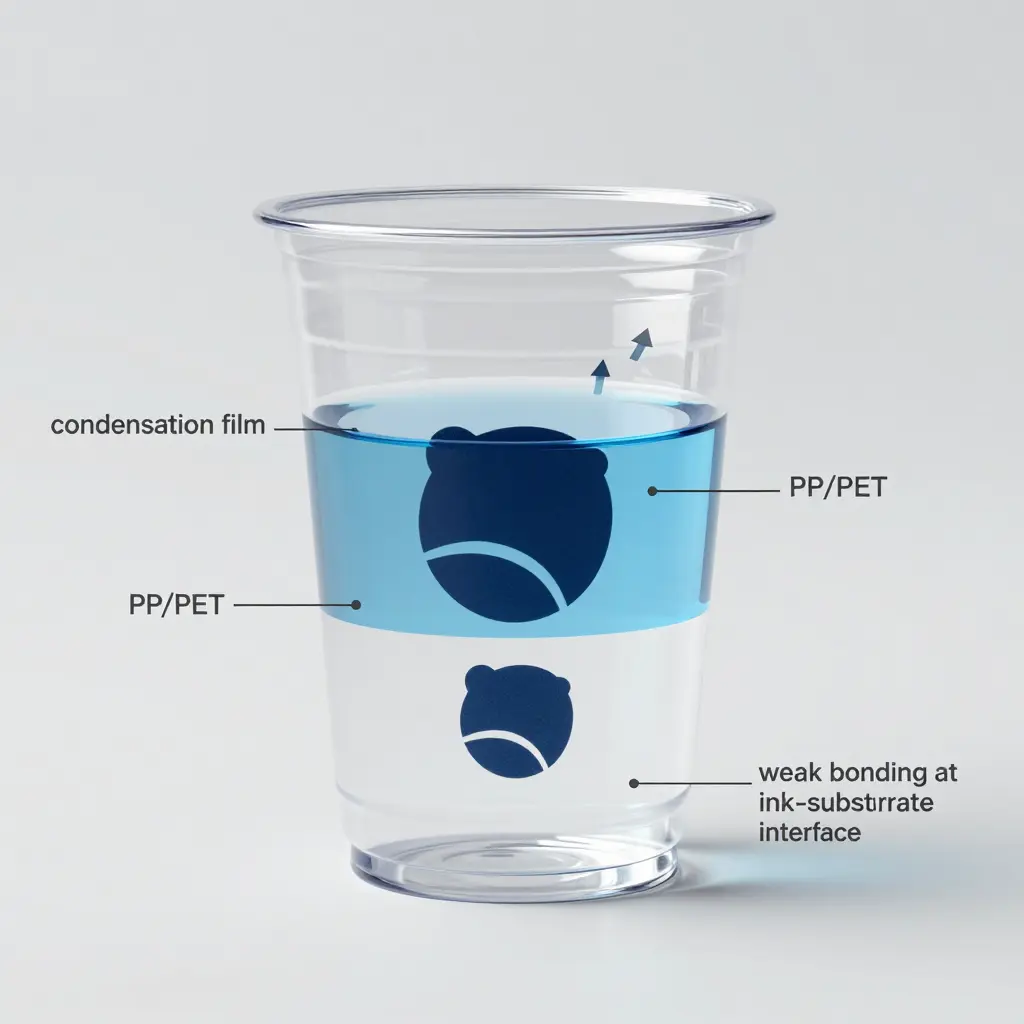
Logo flaking is a bonding failure, not a beverage problem. When a printed logo peels off a chilled clear cup, the drink is rarely to blame. The breakdown starts at the ink-substrate interface – the microscopic boundary where the printed ink layer meets the PP or PET cup wall.
Four Mechanisms Behind the Breakdown
Condensation film. A chilled drink cools the cup wall and draws moisture into a thin film trapped between the printed ink and the substrate. That water layer directly undermines ink adhesion – the bond strength holding ink to plastic.
Differential thermal contraction. The rigid cup and the ink layer cool at different rates and shrink by different amounts, which generates shear stress along the interface.
Surface energy deficiency. Plastic naturally has low surface energy, so it resists being “wetted” by ink. Without adequate corona or plasma treatment (electrical processes that raise surface energy), the ink cannot anchor and wetting stays weak. This is why surface treatment during production matters so much.
Inflexible ink. Low-flexibility inks crack rather than stretch as the cup contracts, opening channels that let condensation seep beneath the print.
The Takeaway
Flaking starts at the ink-substrate interface, not in the drink, so the ink adhesion spec matters more than the beverage. Before ordering, check the corona/plasma treatment level and the cold-flexibility grade of the ink.
| Ink Type | Base Chemistry | Best Substrate | Cold/Wet Adhesion Rating | Typical Use Case |
|---|---|---|---|---|
| Solvent-based ink | Volatile organic solvent carrier | Treated PP, PE, PS | Moderate – carrier softening can cause edge-lift under condensation | Dry-goods labeling, general signage |
| UV-curable ink | Acrylate monomers + photoinitiator | Treated PET, PP | Good when fully cured; poor if under-cured – well suited to chilled clear cups | Customized clear plastic cups for iced drinks |
| Water-based ink | Water/co-solvent acrylic emulsion | Paper, coated board | Low – re-wets and smears on condensation contact | Paper cups, dry environments |
| Epoxy / screen-print ink | Two-part epoxy resin | PS, glass, coated PET | Excellent – resists condensation, abrasion, and prolonged chill | Premium branded cups, frozen/iced service |
Match the ink to both the substrate and the service temperature. UV-curable and epoxy/screen-print systems hold up best on customized clear plastic cups used with iced drinks.
Which Ink Adhesion Spec to Check Before Ordering
The spec you approve at the sample stage is the best predictor of whether a logo survives a chilled drink. A standard ink can look flawless on a room-temperature cup and still fail once condensation and ice-bath soaking reach the print. A promise of “food-grade ink” says nothing about how the print behaves under ice. Before you commit to a full run, ask for a quantified adhesion number, not a visual thumbs-up.
Spec Evidence
The industry benchmark is the ASTM D3359 cross-hatch test: a lattice cut is scored into the coating, a tape is peeled at a 180-degree angle, and adhesion is scored on a 0B-to-5B scale. Because cold drinks are the real stressor, a wet cold-soak test (24-hour ice-water immersion) matters as much as dry adhesion.
| Classification | Ink Removed | Verdict for Cold Drinks |
|---|---|---|
| 5B | 0% | Excellent |
| 4B | <5% | Acceptable |
| 3B | 5-15% | Marginal |
| 0B-2B | >15% | Reject |
Suppliers must also document surface energy values (dyn/cm). An untreated polypropylene or PET surface below roughly 38 dyn/cm will not hold ink reliably. Those figures are the backbone of enforceable ink adhesion standards, and they are set during the surface-treatment stage of the printed cup manufacturing process.
Recommendation
Ask for 4B or 5B retention after cold-soak, plus the supplier’s report on adhesion after temperature cycling. If the vendor cannot show that documented report, walk away. Reliable partners share cross-hatch and soak data without hesitation.
How Ink Type Affects Logo Survival After Cold-Soak Cycling
Inks do not hold onto a chilled cup equally. The chart compares adhesion retention for four common ink systems after repeated cold-soak and humidity cycling, the same stress a logo sees inside a refrigerated drink or an iced beverage.
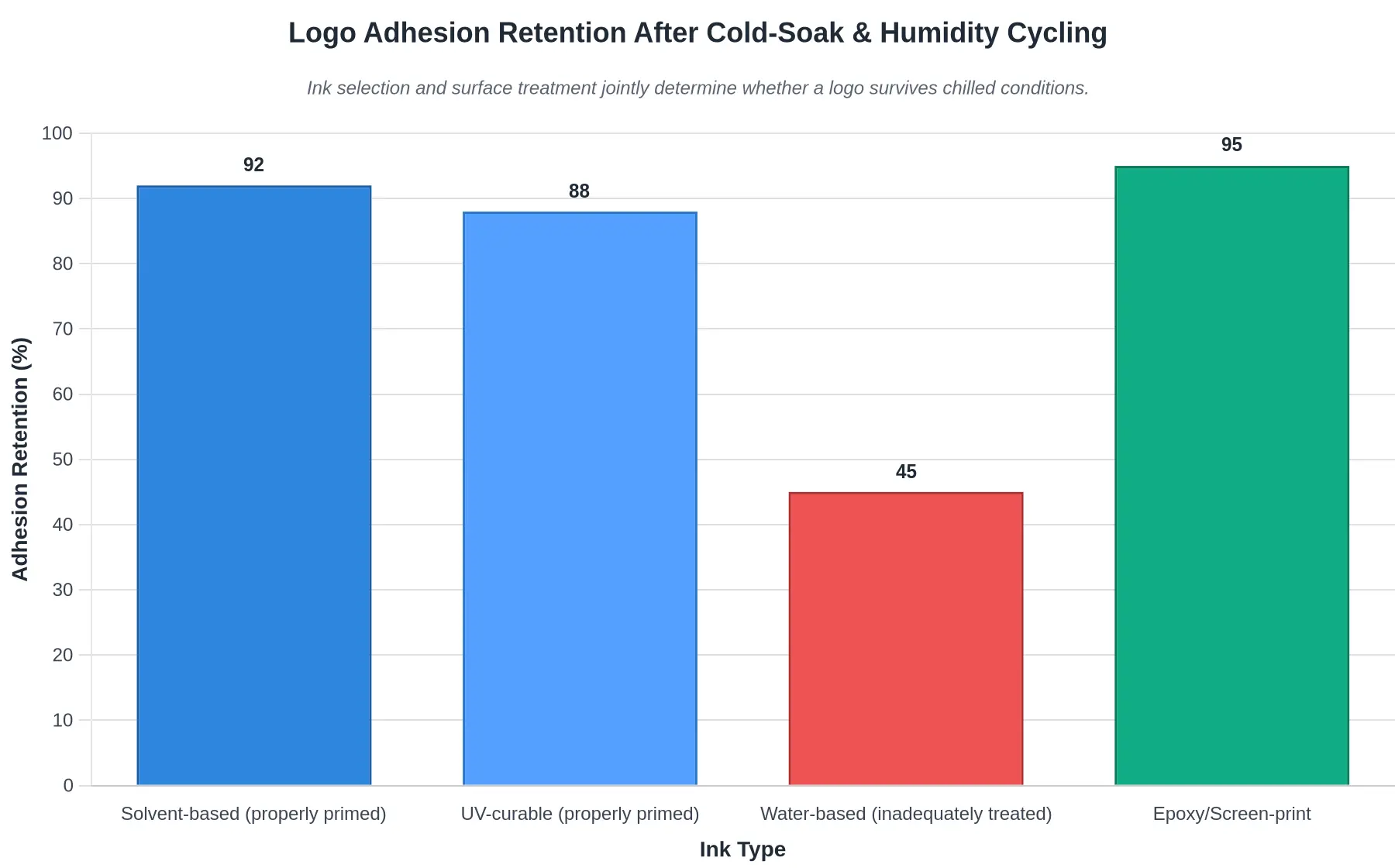
Ink choice and surface treatment decide together whether a logo survives a chilled drink.
Properly primed solvent-based and UV-curable inks keep most of their bond; inadequately treated water-based inks lose more than half. When you specify print on clear disposable plastic cups, confirm the primer and the corona or flame treatment along with the ink type. The substrate alone tells only half the story.
Cross-Hatch Tape-Peel Adhesion Test (Schematic)
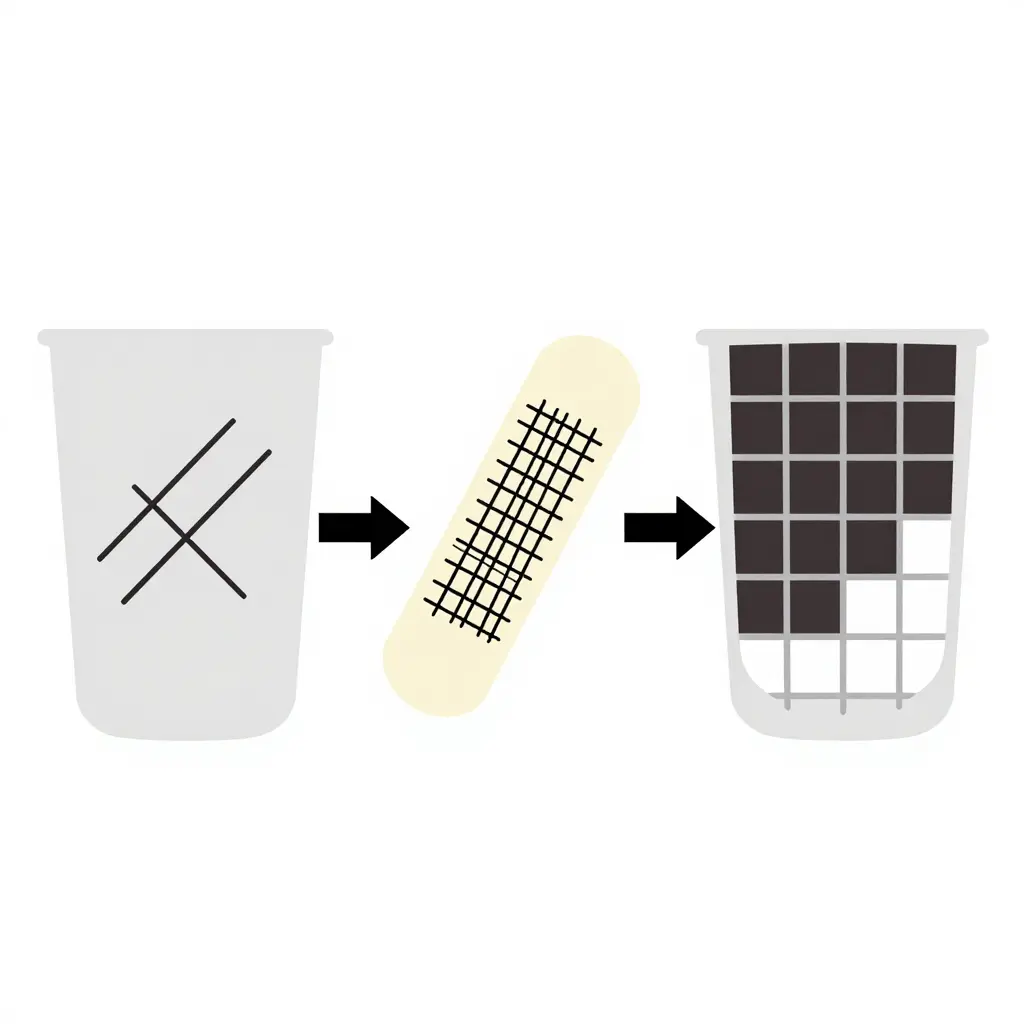
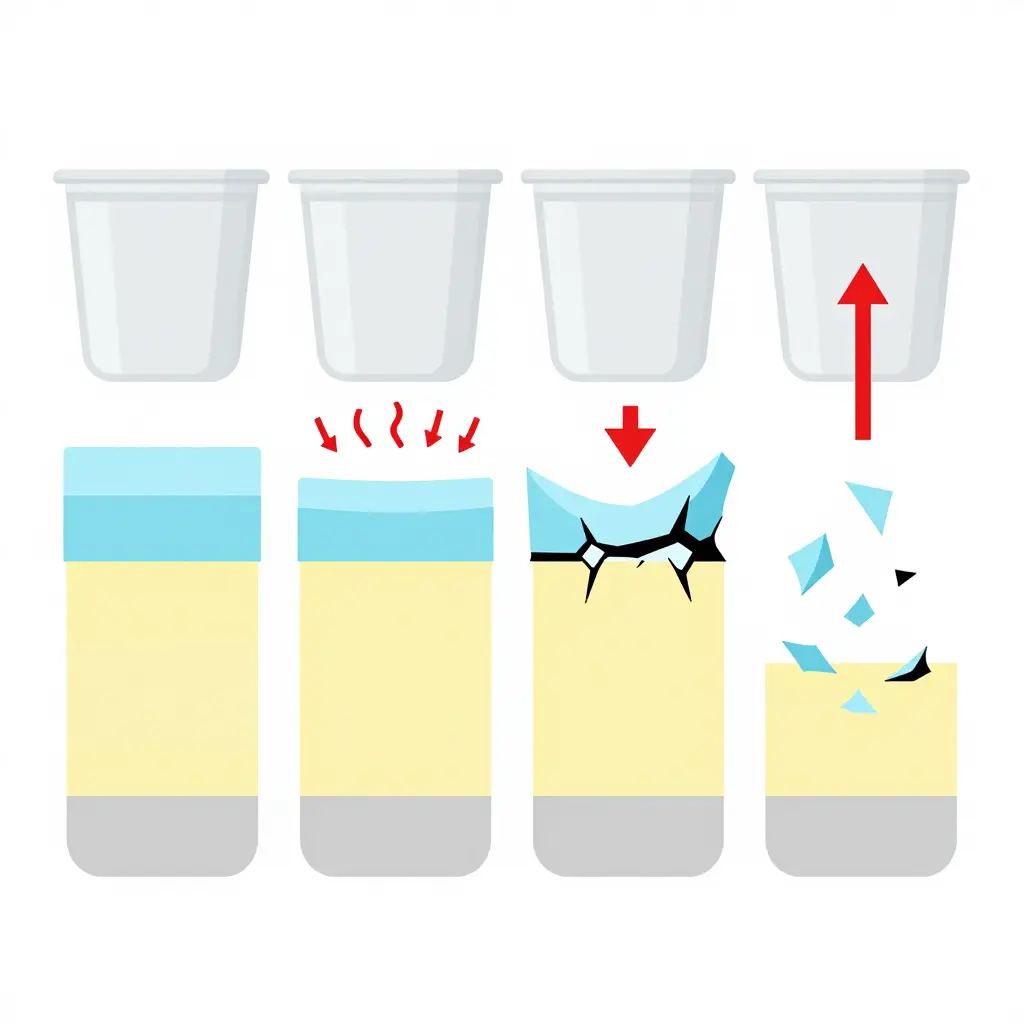
The three-step cross-hatch tape-peel test shows how well printed ink bonds to a plastic cup surface:
- Cross-hatch cut – a lattice grid is scored through the ink layer down to the substrate.
- Tape peel – an adhesive strip goes over the grid and is pulled away at an angle.
- Result readout – retained and removed ink squares show the adhesion quality. The removed squares are the same failure mode that makes logos flake off in chilled drinks.
Pre-Order Checklist for Custom-Printed Clear Plastic Cups
Before you approve a purchase order for custom-printed clear plastic cups, work through this checklist with your printer and confirm every number in writing. Done properly, it prevents the flaking failure mode and holds the supplier to recognized ink adhesion standards.
- Confirm the cup substrate’s surface energy (target 38-42 dynes/cm for polypropylene) and request the measured dyne value documented per production lot.
- Specify the exact ink chemistry (UV-curable, solvent-based, or pad-print) and its matching primer. Leaving out the primer is a leading cause of cold-drink adhesion failure.
- Request a cold-soak adhesion report showing print integrity after 24-48 hours at 2-5 C with ice and condensation present.
- Verify the tape-test classification using ASTM D3359 (insist on 4B or 5B) on a finished, production-representative cup.
- Hold a signed sample approval and keep a physical gold sample that both parties reference for release.
- Document the surface pretreatment or flame/plasma treatment method and its quality-control check frequency.
- Check cure parameters (UV dose in mJ/cm2, or oven dwell time and temperature) to confirm full ink cross-linking.
- Ask for condensation and abrasion results, including ice-tumble and hand-rub evaluations.
- Lock in lot traceability, rejection criteria, and a reprint remedy clause in your PO terms.
FAQ: Printed Clear Plastic Cups and Cold-Drink Logo Failure
Why does the logo flake off only when the cup is chilled?
Chilling causes condensation and slight substrate contraction. Polypropylene cups shrink differently than cured ink, so stress builds at the interface. If adhesion is below 4B on a cross-hatch tape test, that stress lifts the print edges. Cold liquid can also draw low-molecular-weight additives to the surface and weaken the bond.
Which ink adhesion spec matters most?
The cross-hatch tape test, rated 0B to 5B. For any chilled-drink application, demand 4B or higher plus a rub-resistance check at 50 cycles. That rating tells you the print survives cooling, condensation, and normal handling.
Can water-based ink be used for iced drinks?
Generally no for prolonged cold exposure. Water-based inks lose water and rub resistance once chilled; solvent-based or UV-cured systems keep better adhesion on cold cups. If a supplier insists on water-based, require 4B minimum and confirm an overprint varnish.
How long should a cold-soak test run?
At least 24 hours at 2-4°C, then check tape-pull and rub adhesion immediately while the cup is still wet. For high-risk runs, a 72-hour soak is better. That verifies the spec under realistic chilled-drink conditions.
Does cup material affect print durability?
Yes. Substrate surface energy and treatment drive adhesion. Virgin polypropylene with a corona or flame treatment above 38 dynes/cm holds printing reliably; recycled or blended resin with inconsistent surface energy flakes. Match the spec to the exact cup resin, and review clear plastic cup specifications before ordering.
Conclusion: Buy to the Spec, Not the Sample
Logo flaking is not bad luck. It is a predictable adhesion failure, and it is preventable when you buy to a spec instead of a single sample. Before ordering: verify the cup’s surface energy so the ink can bond, get cold-soak tape-test results that hold through condensation and ice, and choose an ink system built for cold, wet use rather than a general-purpose formula. Settle these at the quote stage and you avoid reprints, missed launch dates, and a logo peeling in a customer’s hand. Explore our custom clear plastic cups guidance to build the right spec.