
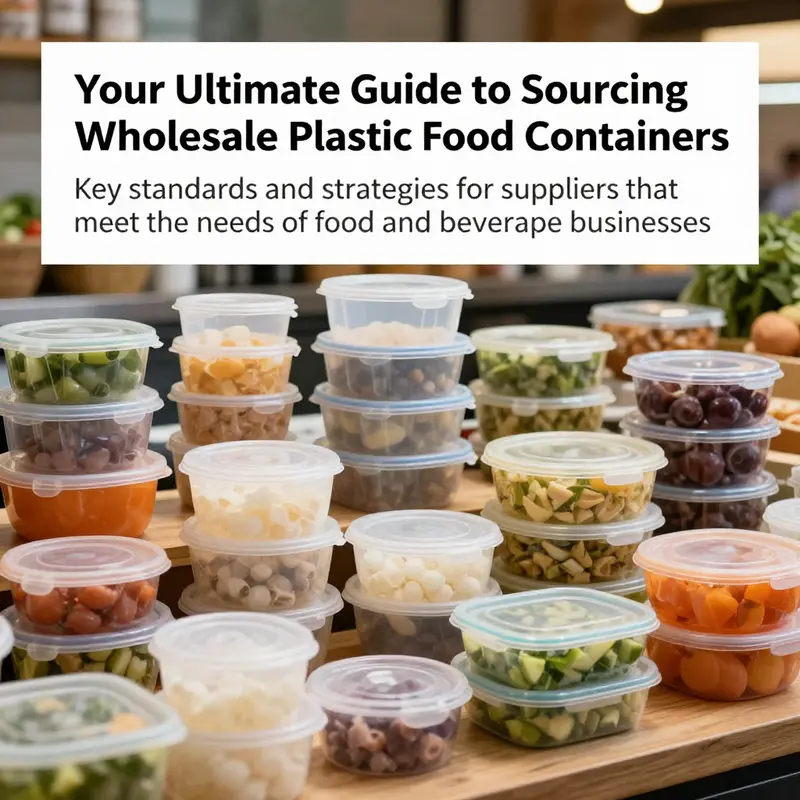
Finding the right wholesale plastic food container supplier is vital for businesses in the food industry, from bubble tea shops and restaurants to catering services. As sustainability becomes increasingly critical in this realm, understanding how to choose the best partners while navigating compliance, production capabilities, and innovative materials is essential. This guide addresses core supplier selection criteria, highlights China’s role as the leading manufacturing powerhouse, and outlines effective methods for validating suppliers and obtaining samples—all tailored to fit the needs of your business.
Choosing Core Suppliers: Building Durable Partnerships for Wholesale Plastic Food Containers
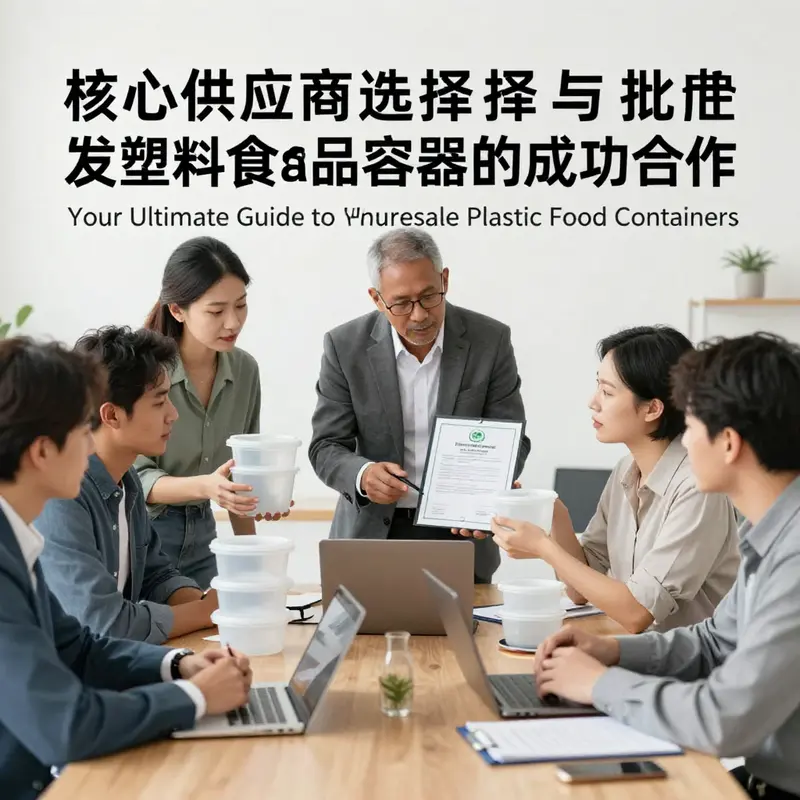
In the world of wholesale plastic food container supply, procurement is less about chasing the lowest price and more about engineering a resilient, compliant, and collaborative ecosystem. The most successful buyers treat supplier selection as a strategic process that binds quality, cost discipline, dependable delivery, organizational maturity, and long-term growth potential into a single, coherent relationship. When the market faces rapid changes in regulations, raw material prices, or consumer expectations for sustainability, the difference between a volatile supply chain and a steady, thriving operation often comes down to how well suppliers are screened, tested, and integrated into the business model. The core question becomes not only what the containers can do for today’s orders, but how a supplier will adapt to tomorrow’s requirements, how quickly they learn a customer’s process, and how openly they share risk as a true partner.
At the heart of this approach lies a five-dimensional framework that industry practice and authoritative guidelines increasingly regard as essential. First is quality, which for plastic food containers means more than stiffness or impact resistance. It encompasses food safety compliance, material authenticity, and migration behavior under various temperature regimes. A genuine supplier will present a complete package of certifications and test reports that demonstrate adherence to target markets’ food-contact regulations. In the United States, this translates to alignment with FDA rules for food-contact materials, while in Europe it requires conformity with standards that govern safety, leachables, and overall suitability for different food categories. A second pillar is total cost of ownership, a concept that redefines value beyond the unit price. Transportation, handling, warehousing, batch-to-batch variability, downstream waste, and the risk of recalls all contribute to the true cost of a container over its useful life. A supplier who can deliver stability in quality and lead times often reduces the aggregate cost more effectively than a marginal price cut that invites premium returns, rework, or failed shipments.
Third, delivery performance anchors the supply chain’s reliability. A supplier with ample production capacity, a well‑managed inventory, and an integrated logistics network reduces the likelihood of stockouts that stall downstream manufacturing or retail operations. When demand curves oscillate between peak seasons and routine days, the difference in supplier responsiveness becomes the clearest signal of a partner’s true capability. A fourth dimension concerns internal organization and management. Suppliers with robust governance structures, transparent financial health, and certified quality management systems offer greater assurance of continued performance under pressure. ISO 9001 certification, for instance, signals that a company has standardized processes, objective measurement, and a culture of continual improvement. In addition, traceability, document control, and supplier development programs reveal whether a vendor can sustain performance as business needs scale or shift.
Finally, the market competitiveness and long‑term potential of a supplier determine whether a relationship can endure the rough weather of market cycles and regulatory updates. A supplier who invests in R&D for better formulations, more recyclable or compostable materials, and process innovations demonstrates a willingness to align with reformulated packaging standards and evolving consumer expectations. This is not merely about being able to supply today’s standard container but about being a partner who can co-create solutions for new product lines, new certifications, and new sustainability targets.
To translate these five dimensions into a practical evaluation, buyers should pursue a disciplined, evidence-based approach. Start with a request-for-information package that asks for complete product specifications, material declarations, and the exact certifications relevant to the target markets. In the packaging sector, the regulatory alphabet often reads like a matrix: product composition, migration testing results, heat resistance data, and barrier properties must be verifiable through independent or accredited laboratories. A credible supplier will supply not only the data but the laboratories’ names, test methods, and the date stamps that show recent validation. That documentation forms the backbone of trust and minimizes the likelihood of late-stage compliance surprises. It also creates a common reference point for cross-functional teams—procurement, quality assurance, regulatory, and operations—to align on technical expectations.
Beyond paperwork, getting tangible evidence of performance matters. Request physical samples early in the process, not as a formality but as a decisive quality checkpoint. The most telling evaluation lies in practical tests: how an item seals under typical consumer usage, how it behaves under repeated microwave cycles or freezing temperatures, and whether it shows any odor transfer or surface migration after prolonged contact with fatty or acidic foods. A conservative, data-driven approach to sample testing dramatically reduces the risk of post‑production failures. It is equally important to observe how a supplier handles samples for customization and branding. Customization is more than a cosmetic exercise; it often entails deeper design work, tighter tolerances, and specialized surface finishes. A supplier capable of precise, repeatable customization with consistent quality is a strong signal of long-term reliability.
The decision-making framework should also consider the supply base’s scale and capacity. The majority of the world’s plastic food container production is concentrated in certain regions with established ecosystems, such as major manufacturing hubs that boast integrated injection molding, film extrusion, printing, and assembly lines. A supplier operating at scale can manage variability in demand, absorb occasional raw material disruptions, and preserve delivery performance when the market tightens. Conversely, smaller or single-site producers can still be highly competent but require different risk-mitigation strategies, such as tighter second-source arrangements or shorter procurement cycles to keep inventory lean and responsive. In either case, the supplier’s ability to forecast demand, implement production schedules, and communicate constraints promptly is a fundamental indicator of future performance.
Material trends are another key element in the vendor evaluation. While traditional polymers such as polypropylene (PP) and polystyrene (PS) remain ubiquitous, a growing number of buyers seek materials that offer improved environmental profiles, recyclability, or reduced reliance on fossil-based feedstocks. Producers that circulate alternatives like bagasse, polylactic acid (PLA), or engineered bio-based blends may align better with regulatory and brand commitments in North America and Europe. Understanding these choices requires careful scrutiny of performance trade‑offs, including heat resistance, flavor or odor interactions, and compatibility with existing production lines. The right supplier will present a clear path for material substitutions without compromising safety or functional requirements, supported by testing data and regulatory mapping that shows how each alternative maps to specific markets.
Custom functionality is another dimension that deserves attention. In wholesale packaging, the ability to tailor dimensions, shapes, and branding elements through advanced tooling can be a decisive advantage. The most capable suppliers offer design-for-manufacture collaboration, rapid prototyping, and short-run testing to verify fit with downstream packaging lines, automated labeling, and consumer-facing features such as microwave safety or leak resistance. A truly competent partner will treat customization not as a one-off order but as a long-term capability, with documented change control processes, ongoing quality monitoring, and a track record of delivering on time in response to evolving brand requirements. This approach delivers not only a better product but a smoother path to scale as demand grows or shifts.
In practice, the five‑dimension framework informs a procurement calculus that weighs both quantitative metrics and qualitative signals. Cost alone is insufficient; the procurement team must factor in delivery reliability, supplier risk, and potential for product evolution. A helpful mental model is to view each supplier as a portfolio asset: a mix of high-quality, high-certainty suppliers who can ensure regulatory compliance and stable deliveries; and a more agile subset that drives innovation and provides flexibility for new product introductions. The objective is to curate a supplier ecosystem that balances efficiency with adaptability, enabling the business to meet current commitments while remaining prepared for regulatory changes, market shifts, and sustainability goals.
A concrete example helps illustrate how this framework translates into real-world outcomes. Consider a major supplier that faced a bid outcome with a large retail partner due to aggressive tender criteria. The episode underscored that excellence in one domain cannot compensate for gaps in others. The winning narrative belonged to a company with a diversified production footprint, robust quality controls, and a demonstrated track record of on‑time, defect-free delivery—even when bids demanded complex customization and a high degree of process transparency. By contrast, a competitor with aggressive unit pricing but inconsistent performance saw margins erode from late shipments, higher return rates, and elevated risk exposure. The lesson is clear: successful wholesale container sourcing hinges on a holistic view of capability, not a singular focus on price.
Another practical point concerns the verification rituals buyers should embed in their process. The best buyers require certification documentation tailored to each target market—FDA or equivalent authorities for the United States, LFGB or EC-based standards for Europe, and any local regulatory requirements in other regions. They request physical samples for evaluation of density, seal integrity, and thermal performance, with test protocols that mirror real-use conditions. They also insist on evidence of a reliable supplier development program and a transparent track record of on-time delivery across multiple seasons. Such diligence is more than a compliance exercise; it creates a foundation of trust that makes future projects smoother, whether expanding into new product lines, adopting eco-friendly materials, or navigating regulatory revisions.
The value of this approach becomes even more apparent when considering the supplier’s organizational maturity. A well‑governed supplier with clear leadership, documented risk management practices, and a culture of continuous improvement is more likely to honor commitments during disruption. These attributes matter not merely for the present order, but for the entire engagement arc—from initial qualification and sample validation to long‑term supply stability and continuous improvement programs. In the long run, the most reliable suppliers become strategic allies, contributing to cost stability, faster time-to-market for new packaging concepts, and the ability to maintain compliance in increasingly complex regulatory landscapes.
A useful illustration of these principles emerges from a case where an established plastics producer developed a multi-base network to ensure consistent quality and delivery. With ten production bases and a capacity exceeding tens of thousands of tons annually, they could rapidly reallocate output in response to demand spikes and regulatory shifts. Their approach to customization—encompassing functional additives for heat resistance, UV stabilization, and anti‑static properties—showed how a supplier can support downstream applications across appliances, foodservice, and consumer packaging. Their operational model included short lead times, standardized change-control processes, and clear communication channels with customers. The result was an ability to deliver a broad range of container formats with reliability and speed, while maintaining rigorous QA checks that safeguarded safety and performance.
In practical terms, what should a buyer do next to translate these insights into action? Start by mapping the five dimensions into a structured supplier evaluation worksheet. Ask for documentation that demonstrates compliance, traceability, and testing methodologies. Request a balance of price quotes and lead-time commitments, but emphasize total cost considerations, including potential penalties for non-conforming shipments or late deliveries. Initiate a controlled sampling program, using standardized tests that reflect the end-use environments for microwave use, freezer storage, and hot-fill scenarios. In parallel, begin a supplier development dialogue focused on the organization and management dimension: governance, key performance indicators, audit schedules, and a roadmap for continuous improvement. Finally, cultivate discussions around long-term planning—joint product development opportunities, sustainability targets, and the potential for dual‑source arrangements to mitigate risk.
As a practical anchor for readers, consider the following synthesis: the strongest wholesale plastic food container partnerships are built on quality assurance backed by verifiable data, an aligned cost view that accounts for total ownership, steadfast delivery performance under varied conditions, a disciplined and transparent organizational structure, and a forward-looking stance on innovation and sustainability. The synergy of these elements creates a dependable supply chain capable of supporting growth, regulatory compliance, and evolving consumer expectations. In the end, the goal is not a single perfect supplier but a carefully curated network that can respond with agility, protect margins, and safeguard brand integrity across markets and over time. For teams tasked with scaling packaging programs, the emphasis should be on cultivating partnerships that offer both reliability and adaptability, with clear milestones, open communication, and shared accountability that extends beyond one-off orders.
To further explore industry references and current supplier landscapes, readers can consult leading industry guides that compile supplier profiles, production capacities, and environmental considerations. Within this chapter, one practical internal reference that complements the discussion is a resource focused on customized takeaway packaging and disposable tableware. It offers concrete examples of how customization capabilities align with brand strategy and supply chain efficiency, while remaining compliant with safety standards. Explore this resource through the following link: custom takeway packaging supplies disposable tableware for theme party. This example underscores how a supplier’s technical capabilities and design collaboration mindset can translate into tangible value for wholesale buyers seeking differentiation and reliability. For broader market context and regulatory guidance, researchers and procurement leaders can consult external industry references that synthesize market dynamics, certification requirements, and global supply network structures. An authoritative external resource is available at the following industry page: https://www.made-in-china.com/products-search/hot-products/WholesaleDisposableFood_Containers.html. This external link provides additional perspective on top suppliers, regional strengths, and general procurement considerations that align with the standards discussed in this chapter.
China as the Global Manufacturing Hub for Wholesale Plastic Food Containers: Scale, Compliance, and the Backbone of the Supply Chain
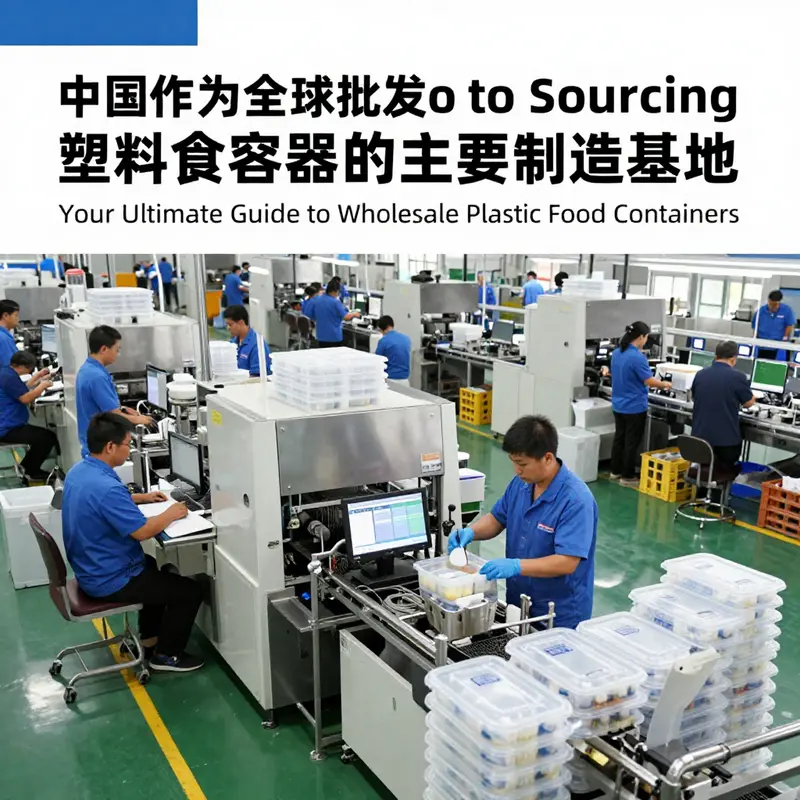
Across the global economy, the wholesale plastic food container sector stands as a quintessential example of how scale, technical capability, and regulatory clarity can converge to create a reliable, responsive supply chain. When we view this landscape through the lens of China—the country steadily guided by massive manufacturing clusters, advanced automation, and an ecosystem that links raw material suppliers, mold makers, functional converting operations, and end-market distributors—the narrative becomes less about a single price point and more about the durable, often invisible, infrastructure that supports every carton, tub, lid, and takeaway box that moves from factory floor to consumer or food-service operation. The central truth is simple but powerful: in wholesale plastic food containers, value is increasingly defined by compliance, capacity, and consistency as much as by cost. That shift has deepened over the last several years and has become especially pronounced in the wake of tightening food-contact regulations, heightened consumer awareness about safety and sustainability, and the persistent need for agility in handling sudden demand surges from retailers and foodservice platforms alike. In this environment, China has leveraged its vast and mature plastics sector to become the global engine for supply, production, and innovation in food-contact packaging, while at the same time pushing forward environmental and functional innovations that matter not just to one market, but to multiple regions with divergent regulatory frameworks and consumer expectations.
The most compelling evidence of this dynamic comes from the continued expansion of both production capacity and product sophistication within the Chinese plastics ecosystem. Industry analyses from 2025 onward show that the country remains the primary production base for a broad spectrum of plastic food containers used around the world. The synthesis of scale and capability is evident in the way manufacturers in key coastal and inland provinces have built dense, integrated supply chains that can deliver high-volume orders with tight lead times while maintaining a robust portfolio that accommodates custom shapes, sizes, and features. This orchestration is not incidental but the result of deliberate development: the migration of tooling and automation from artisanal to fully automated lines, integration with downstream labeling and branding, and the deployment of data-driven quality control that sustains consistent performance across millions of units per month. Such a system is ideally positioned to support wholesale buyers who require not only low unit costs but also reproducible, certifiable quality at scale, including the ability to trace batches and demonstrate compliance with regulatory standards across markets.
The broader market context reinforces this narrative. In 2025, the combined market size for plastics used in food contact—spanning bottles, containers, and related packaging—reached a significant magnitude, with China serving as both the largest producer and a rapidly expanding consumer market. This dual role matters for wholesalers because it means supply arrangements can be structured around a stable base of output while exploiting the early access and favorable terms that accompany longstanding supplier relationships. The evidence points to growth beyond the immediate product categories of PP and PS, as a growing segment of manufacturers introduces greener alternatives such as bagasse-based solutions, polylactic acid (PLA) bioplastics, and other biodegradable or compostable materials. For buyers facing increasing regulatory scrutiny and consumer demand for responsible packaging, this diversification is not a mere trend but a strategic capability that can help secure long-term compliance and brand integrity while maintaining competitive cost structures.
At the heart of this capability lies a geographic and industrial mosaic that has earned a well-known reputation within the plastics community. Zhejiang and Guangdong provinces, in particular, anchor a network of manufacturing clusters with deep specialization in molded parts, rigid containers, and a wide array of lids, separators, and inserts. The phrase often repeated within industry circles—though colloquially and informally—reflects a real ecosystem: a region where tooling, injection molding, extrusion, and downstream processing coexist in a symbiotic loop that can respond quickly to shifting demand patterns. The Taizhou corridor, for example, has become widely recognized as a focal point of this ecosystem. It is not simply the presence of a large number of manufacturers that matters, but the existence of a mature supply chain that includes mold makers, precision instrument suppliers, quality assurance labs, and sophisticated logistics networks. The result is a capacity that can cover a broad range of production requirements—from low-volume trials that test new formats for a limited product launch to multi-million-piece rollouts for major retail programs. For wholesale buyers, the implication is clear: the supply base can absorb fluctuations in demand without sacrificing quality or delivery reliability, a capability that translates into fewer production bottlenecks and more predictable procurement calendars.
This infrastructure also aligns closely with the growing emphasis on compliance and safety in global markets. The core regulatory standards that define food-contact materials—whether in the United States, the European Union, or other jurisdictions—are demanding in terms of documentation, testing, and material performance. In the United States, for instance, compliance with FDA 21 CFR 177 covers materials that contact food, while in the EU, standards such as (EC) No 1935/2004 and EFSA guidelines set the bar for safety and migration limits. Leading suppliers in China typically provide a full package of documentation, including non-toxicity assessments, heat resistance data, and migration test reports that verify material behavior under realistic usage scenarios. This is not an afterthought; it is a core part of the vendor value proposition, and it helps wholesale buyers minimize regulatory risk when introducing new product lines or expanding into new markets. Such capabilities make supplier selections less about negotiating the lowest price and more about aligning with vendors who can deliver certified products consistently, across multiple batches, and with a clear trail of compliance documentation that supports global distribution.
From a procurement perspective, the widespread automation and the scale of manufacturing facilities translate into tangible benefits. Modern lines enable rapid changeovers, tight process controls, and real-time yield optimization. The result is shorter lead times for standard orders and the flexibility to schedule multi-variant runs without compromising the overall production rhythm. For wholesale buyers, this translates into a more resilient supply chain that can accommodate new SKUs, packaging sizes, or custom branding while maintaining uniform performance. The integration of automated inspection, weight check, and migration testing provides a level of quality assurance that can be costly to replicate in lower-volume or less integrated supply chains. In practice, buyers who partner with Chinese manufacturers frequently experience a high degree of predictability in both product performance and delivery windows, a combination that enables more precise planning and inventory management for retailers and food-service operators alike.
Sustainability remains a central dimension of this evolving landscape. The push toward eco-friendly packaging—driven by consumer demand and by tightening regulations—has pushed many manufacturers to explore alternative materials and end-of-life solutions. Bagasse, PLA, and other biodegradable options are increasingly integrated into the product mix, sometimes as complementary lines alongside traditional PP and PS offerings. The ability to produce these materials at scale in a cost-effective manner is a hallmark of the Chinese plastics ecosystem, and it provides wholesalers with broader options to meet environmental requirements and to address retailer sustainability commitments. The operational question for buyers is how to balance cost with performance across a mixed-material portfolio, ensuring that migration limits are understood and that the chosen materials meet the specific regulatory expectations of target markets. In this sense, the Big Picture becomes a practical exercise in supplier selection and portfolio design rather than a single decision about price parity.
The narrative of China as a manufacturing hub also offers a practical route for buyers seeking to verify and sample suppliers. The process typically begins with a careful review of documentation—certificates for food-contact compliance, batch testing results, and supplier qualifications—followed by sample testing that checks sealing integrity, thickness uniformity, and visual quality. The logic is straightforward: sampling small quantities at a minimal cost can prevent larger, more expensive mismatches later in the supply chain. It is precisely this disciplined approach, combined with the supplier ecosystem’s scale and regulatory familiarity, that makes the Chinese manufacturing base uniquely suited to wholesale procurement. The ability to move from a few hundred or thousand units for pilot runs to several million units for mass distribution without reinventing the workflow is the kind of capability wholesalers value most when planning seasonal campaigns or responding to sudden shifts in consumer demand.
To assist buyers navigating this landscape, consider the following orientation: first, prioritize vendors that demonstrate robust compliance records and transparent reporting, including documentation aligned with FDA, EU, LFGB, or other relevant standards. Second, evaluate capacity and flexibility by looking at lead times for standard orders and the ability to scale for large-volume programs across multiple SKUs. Third, assess material options, including traditional polymers and emerging sustainable alternatives, and ensure that migration testing and heat resistance data are available for each material in use. Fourth, verify the presence of a well-functioning quality system, ideally ISO 9001 certified, with traceability and batch-level QA checks. These criteria, while standard in mature procurement discussions, are particularly critical when sourcing from a manufacturing powerhouse where the sheer number of players can overwhelm even seasoned buyers. As you work through supplier negotiations, the emphasis should remain on total value—the combination of cost efficiency, compliance reliability, production agility, and the supplier’s willingness to provide the necessary documentation and support for a global distribution footprint.
For buyers seeking a practical compass, a concise reference point to prioritize supplier information in China is a well-curated sourcing guide that distills top suppliers and competency signals. This resource, updated to reflect current market dynamics, provides a structured way to navigate the China-based supply ecosystem while keeping sight of quality and regulatory expectations. It also offers real-world examples of how wholesalers successfully align supplier capabilities with diverse market requirements across North America and Europe, underscoring the importance of choosing partners who not only supply containers but also actively support distribution readiness through documentation, testing, and responsive service. See the following link for a practical orientation that translates the broader market intelligence into actionable procurement steps: Wholesale Disposable Food Containers: Top China Suppliers & Sourcing Guide.
The implications of this manufacturing footprint extend beyond single orders. The scale of production and the depth of the supply chain generate a kind of economic resilience that supports steady prices and reliable delivery calendars even when demand spikes occur—for example, during peak holiday seasons or promotional campaigns where foodservice chains and retailers run large, time-constrained programs. The integration of production with packaging design, branding, and logistics means wholesalers can often coordinate multiple components of their packaging strategy with less friction. In a market where the product itself is simply a platform for food, the container matters as much as the contents, and having a stable, compliant, and capable manufacturing base behind the container translates into better product performance on shelf and in consumer hands. This is the implicit value proposition of China’s role as the global manufacturing hub for wholesale plastic food containers: scale paired with quality, enabled by a mature ecosystem that supports rapid market entry and sustained regulatory compliance across major markets.
Looking forward, the trajectory remains consistent with the current megatrends. The global market is projected to expand significantly through 2032, with China continuing to be a primary driver of both supply and innovation. The regional clusters will refine their specialization—continuing to optimize automation, extend material portfolios, and deepen capabilities around testing and regulatory documentation—while also intensifying collaboration with downstream retailers and food-service chains to streamline packaging solutions that address both performance and sustainability. In practical terms for wholesalers, this means continuing to invest in supplier due diligence, expanding the scope of materials accepted in the product mix, and embracing the logistical sophistication that the Chinese manufacturing base routinely delivers. The net effect is a procurement environment where the supplier relationship is less about a one-off transaction and more about a long-term, collaborative framework that can adapt to evolving consumer expectations, regulatory landscapes, and global distribution patterns. For organizations aiming to scale their packaging programs with confidence, the Chinese wholesale plastic container ecosystem offers a proven, resilient path that combines reliable quality, regulatory compatibility, and the operational flexibility needed in a dynamic, global market.
External resources can provide additional context and data points that complement the narrative above. For readers who want to explore a broader synthesis of 2025–2032 market dynamics and the global positioning of major container markets, a comprehensive external reference offers deeper statistical detail and trend analysis: https://www.baike.com/wiki/2025%E5%B9%B4%E5%85%A8%E7%90%83%E5%8F%8A%E4%B8%AD%E5%9B%BD%E5%A3%B6%E5%9D%90%E5%92%8C%E5%AE%B9%E5%99%A8%E5%B8%B8%E6%88%90%E6%83%85%E4%B8%8E%E5%8F%91%E5%B1%95%E8%B6%8B%E5%8A%BF%E5%88%86%E6%9E%84%E6%8A%A5%E5%91%8A; readers can use this as a supplementary entry point to cross-check market scale estimates, regional production shares, and the evolution of competitive dynamics across global packaging markets.
Ensuring Trust and Transparency: Vetting Wholesale Plastic Food Container Suppliers and Safely Securing Sample Prototypes
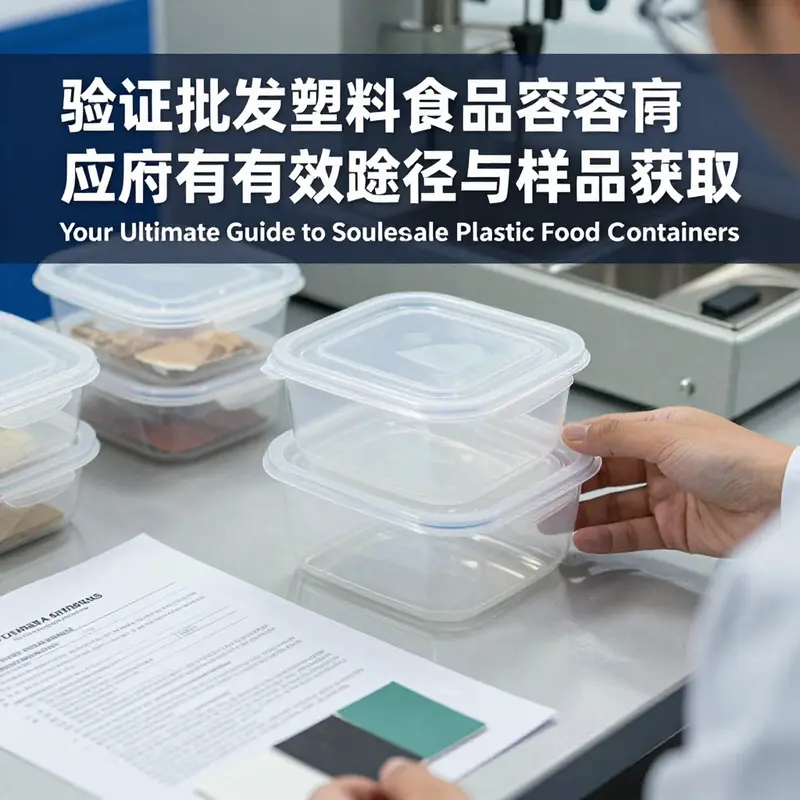
Vetting wholesale plastic food container suppliers is less about chasing the lowest price and more about building a dependable, compliant, and responsive partnership that can endure shifting supply chains and evolving regulatory landscapes. In the contemporary sourcing environment, where demand for safe, reliable packaging intersects with sustainability expectations, the most effective supplier verification blends documentary proof with practical testing. The following narrative weaves together the core criteria that guide prudent buyers, the operational steps that reduce risk, and the pragmatic tactics for obtaining and evaluating samples. It is a holistic approach that supports not only immediate procurement needs but also long-term resilience in the packaging value chain.
A fundamental truth emerges early: compliance is the anchor. The initial screening must confirm that a supplier can meet the specific regulatory demands of the markets you serve. For direct contact with food contact materials, national and regional standards are non-negotiable. In many jurisdictions, this means evidence of conformity with food-contact material standards, stability under heat, and acceptable migration test results. A reputable supplier will readily provide a portfolio of certifications and test reports beyond a simple compliance statement. While the exact standards differ by geography, the underlying principle holds: traceable conformity reduces risk of product change notifications, recalls, or consumer safety concerns that could disrupt a brand’s reputation and bottom line. In addition to foundational certifications, international quality management systems—ISO 9001 for process control, and in some cases more prescriptive schemes such as BRC or FDA-related attestations for export readiness—signal a mature control environment. Environmental stewardship adds another layer, with ISO 14001 or equivalent audits indicating a supplier’s commitment to reducing emission, waste, and resource use. For organizations pursuing more sustainable material options, it is prudent to verify whether a supplier can provide migration data and independent testing that demonstrates performance with bio-based or biodegradable alternatives. The 2026 industry analysis underscores that these environmental and safety assurances are increasingly decisive for customers who must demonstrate responsible packaging across North American and European markets.
Beyond certifications, the scale and capability of a supplier matter. A robust supplier should reveal a transparent production footprint, including the geographic clusters where manufacturing occurs, the scale of automation, and the capacity to flex from pilot runs to voluminous, repeat orders without compromising lead times. The geographic reality of plastic packaging is well understood: major production ecosystems concentrate in areas with mature tooling, molding, and supply networks. Buyers benefit from factories that can demonstrate end-to-end control—from resin selection and handling to finished part inspection and packaging. A reliable partner will also present clear evidence on raw material sourcing, including the provenance of resin and the management of supplier lot integrity. The risk of contamination from recycled or mixed resins is a frequent concern; thus, a documented material control plan—often referred to as “专料专放” in practical procurement language—provides comfort that ingredients stay within their designated streams throughout production. When capacity data is provided, a buyer can validate whether a supplier can accommodate peak seasons, special campaigns, or sudden order spikes without sacrificing quality or delivery reliability.
Material choices themselves carry strategic significance. PP and PS remain standard for many containers, but a growing cohort of suppliers offer more sustainable or performance-enhanced alternatives, including bagasse, PLA, or even compostable paper-based composites. The ability of a supplier to present tested performance data for these materials—especially under microwaving, refrigeration, or freezing—can be a differentiator. It also aligns with regulatory expectations that emphasize migration, thermal stability, and potential interactions with food contents. For buyers, the decision to pursue eco-friendly alternatives should be balanced with practicality: whether the target markets permit such materials for the intended product categories, whether the supply chain can support the desired volumes, and whether the cost delta is justified by compliance and consumer perception benefits.
Customization and functional versatility are increasingly central to wholesale container sourcing. A mature supplier should offer a spectrum of customization options that extend beyond color and branding. They should be able to discuss precise dimensional tolerances, wall thickness consistency, and the feasibility of value-added features such as venting, micro-venting, or integrated sealing options. The most capable manufacturers can integrate branding directly on the mold, deliver pre-printed or embossed logos, and support variations suitable for microwaving, freezing, or dishwasher use. This depth of capability often correlates with the presence of advanced tooling and a structured product-development pipeline, where sample lead times and prototyping cycles are predictable and trackable.
Quality control embodies the relationship between intent and outcome. A vendor with a sound quality system will provide documentation on inspection regimes, incoming raw-material checks, and process controls. This typically includes first-article inspection protocols, in-process sampling plans at defined intervals, and end-of-line functional tests that verify seal integrity, drop resistance, and leakage performance. Traceability remains essential: batch numbers, lot traceability, and the ability to reproduce a lot from the same resin stream are critical features that enable a buyer to isolate and resolve issues quickly if a defect arises. For a buyer, requesting ISO 9001 certification is a baseline attribute; additional quality marks, supplier audits, and customer references help confirm that what the supplier claims aligns with external practice.
The procurement journey grows more reliable when it combines these formal assurances with experiential insight. A practical path begins with a documentary check, followed by remote or on-site facility reviews, and culminates in tangible, hands-on sample testing. The documentary phase typically requires the supplier to furnish a current business license and a verified scope of operation that explicitly covers plastic product manufacturing. It then extends to the collection of key safety documentation, including food-contact approvals, migration reports, material datasheets, and environmental management records. If the supplier operates in regulated markets, cross-checking with local regulatory repositories or registries can be a prudent step, ensuring there are no open compliance flags that could disrupt the supply chain later.
The next phase—evaluation of production scale and process maturity—often benefits from remote tours or carefully staged site visits. A buyer should seek to understand the automation level of the production lines, whether there are dedicated lines for specific product families, and the practice of preventive maintenance that minimizes downtime. A transparent supplier will share machine inventories, production calendars, and capacity graphs that allow the buyer to forecast risk exposure during peak demand. An honest supplier will also discuss resin sourcing arrangements, including who supplies resin and how substitution policies are managed should material vendors experience shortages. Materials control remains a subtle but essential discipline: an effective facility will demonstrate a disciplined approach to receiving, storing, and segregating materials to prevent cross-contamination, while also maintaining documented procedures for material changeovers during product line transitions.
Equally important is the supplier’s risk-management posture. The most dependable suppliers articulate their approach to supplier qualification, sub-suppliers, and chain-of-custody records for critical components. They discuss how they monitor quality variation across batches, how non-conforming material is segregated, and what root-cause analysis methods are used to determine the source of defects. They should be able to describe the escalation pathways that trigger corrective actions, including timelines for response, containment, and verification of effectiveness. The buyer’s due diligence should also extend to a review of customer references. Direct conversations with established clients can reveal practical realities—how on-time delivery rates withstand perturbations, how responsive the supplier remains during product changes, and how issues are resolved when a problem touches the end-user experience. The objective is to cultivate confidence that the supplier not only meets specifications on paper but consistently delivers in the field.
With compliance, capacity, material integrity, customization, and quality control in view, the practical process of validating suppliers moves into the domain of samples. A thoughtful sampling strategy starts with explicit requirement definition. Before requesting anything, a buyer should describe the exact product category, material type, intended usage scenario, size, shape, and performance targets. Whether the goal is a cushion of margin for a new line or a confirmation of suitability for a hot-fill process, the sample package should mirror the intended production run as closely as possible. In many wholesale channels, a nominally tiny sample—perhaps a few cents in unit cost—serves as the starting point for a deeper evaluation, but the requested characteristics should be comprehensive. Beyond visuals, the sample package should include a data sheet that lists material composition, thickness tolerances, density, and any relevant migration test outcomes, when available.
An abundance of vendors offer “free” samples as a mechanism to win business. This is a useful entry point, yet it should not replace due diligence. The critical requirement is that the samples provided are representative of the final batch in all material respects: resin grade, colorants, printer fidelity, and the integrity of lidding or sealing features. When samples arrive, the testing protocol should be disciplined and multi-faceted. A basic physical inspection includes dimensions verification with calibrated tools, wall thickness checks across several points to identify non-uniformities, and seal integrity tests that challenge whether the lid remains closed under typical handling. A more rigorous assessment involves functional testing under simulated operating conditions: exposure to typical food acids, temperatures ranging from freezer to microwave, and a test for leaching or odor. Sensory evaluation, especially the presence of residual solvent smells, must be conducted with care, and any off-odors should raiser red flags about the material or manufacturing solvents. A cost-effective, comparative analysis among samples from multiple suppliers strengthens decision-making: side-by-side evaluations offer tangible benchmarks for appearance, weight, rigidity, and barrier performance, which ultimately affect consumer experience and product safety.
Within this framework, it is prudent to structure a formal sampling plan that links outcomes to supplier rankings. The plan should specify: which samples will be tested, the exact tests to be performed, the acceptance criteria, and the decision gates that determine whether a supplier advances to the next stage of engagement. This is also the stage at which commercial terms such as defect-claims, return policies, and weighty topics like the cost of lead-time variability should be incorporated. A well-structured contract can formalize expectations about material integrity, batch traceability, and the remedies available if critical defects are discovered after production starts. For robust risk management, buyers frequently negotiate a short-term trial period with a dedicated account manager and a clearly defined service level agreement. The goal is simple: move from a relationship defined by promises to one governed by documented performance and accountability.
The procurement journey benefits from a balanced perspective that marries internal requirements with market realities. The literature on supplier evaluation and performance consistently emphasizes a few practical behaviors that separate high-performing suppliers from the rest. First, the ability to provide timely, accurate documentation and to respond with credible data when asked is indicative of a mature quality culture. Second, the willingness to participate in pilot runs and to adjust tooling or molds within reasonable timeframes signals technical adaptability. Third, a transparent cost structure—where raw material variability, processing costs, and overheads are clearly explained—builds trust and reduces the likelihood of budget shocks later in production. Importantly, the buyer should be alert to red flags that suggest hidden costs or potential quality drift. Very low price points often camouflage hidden compromises in resin quality, process control, or long-term reliability. While price comparisons remain part of the equation, they should be interpreted in the context of total cost of ownership, which includes lead times, defect rates, post-sale support, and the regulatory clarity of the supplier’s documentation.
To keep the narrative grounded in accessible practice, it helps to anchor the journey in a concrete, end-to-end workflow. Begin with a structured supplier-screening brief that enumerates mandatory documents and certifications, followed by a supplier-by-supplier capability assessment that captures equipment, capacity, and material controls. Then, request samples designed to mimic actual production runs and specify strict testing protocols with objective pass/fail criteria. After collecting data, compare suppliers along a standardized rubric that weights regulatory compliance most heavily, followed by quality-control maturity, delivery reliability, and total cost considerations. Finally, translate the assessment into a decision about pilot production, long-term engagement, or a strategic supplier development program. The overarching aim is not merely to select a vendor but to cultivate a stable source of supply that can adapt to evolving product requirements, new regulatory expectations, and shifting consumer preferences.
For readers seeking a practical starting point that complements this narrative, consider exploring a practical overview of leading wholesale suppliers and their market positions. The linked resource offers a current compilation of top China-based suppliers, their production capabilities, and core considerations for evaluating fit. WholesaleDisposableFood_Containers.html.
In closing, the chapter’s core takeaway centers on the idea that supplier validation is a dynamic, multi-dimensional discipline. The most trustworthy partners combine documentary substantiation with firsthand demonstration of capability—through site visibility, transparent material controls, and rigorous sample testing. This integrated approach not only safeguards product safety and regulatory compliance but also nurtures a dependable supply channel that supports speed, scale, and strategic flexibility in an increasingly demanding market. The result is a procurement culture that prioritizes reliability over price alone, quality over quick fixes, and long-term resilience over short-term convenience. External diligence, ongoing performance monitoring, and a well-structured sampling program together form the backbone of confidence in wholesale plastic food container sourcing, ensuring the goods you bring to market meet expectations for safety, performance, and sustainability over time. For practitioners, the disciplined combination of documentation, remote verification, and hands-on testing remains the most effective guardrail against risk in a complex, interconnected packaging ecosystem.
External reference for further reading: https://ecocupbowl.com/product/eco-friendly-disposable-3-compartment-food-grade-packaging-box-for-fast-food-high-quality-takeout-boxes-for-fried-chicken-french-fries-packaging/
Final thoughts
Choosing a reliable wholesale plastic food container supplier not only supports operational efficiency but also enhances customer satisfaction through quality and compliance. By understanding the core selection criteria, recognizing China’s pivotal role in manufacturing, and implementing effective validation methods, businesses can secure partnerships that foster growth and sustainability. Investing time in this process can lead to significant benefits for your food-related business, positioning it for success while meeting the evolving demands of the market.