
How to Recycle Plastic Food Containers
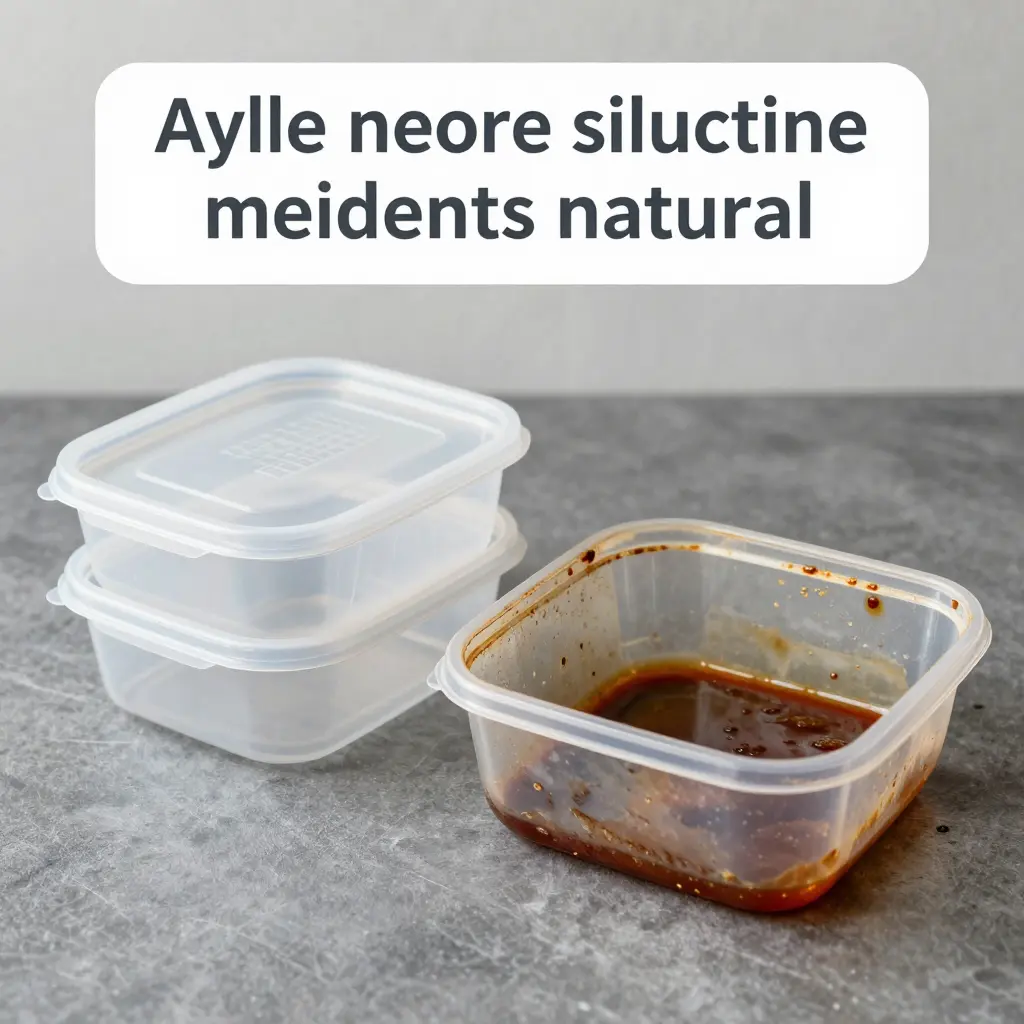
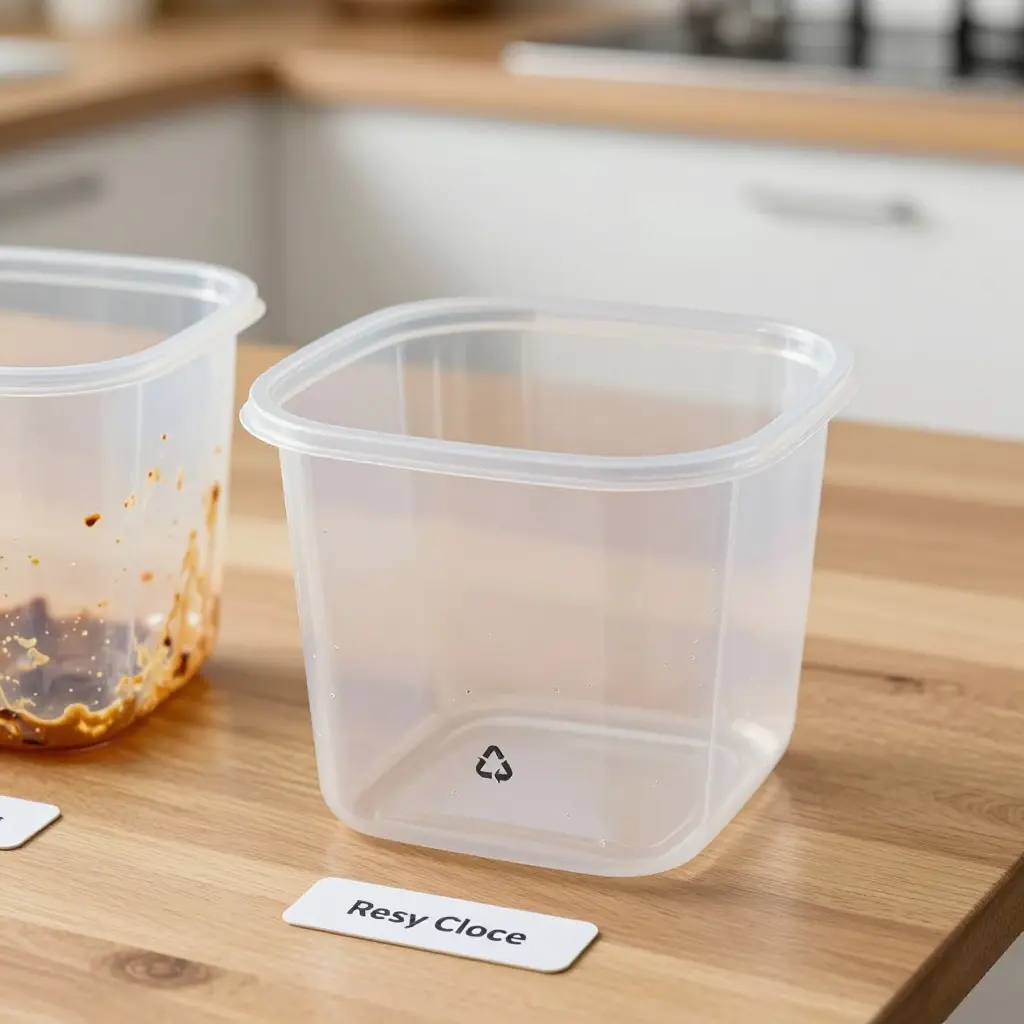
Two things decide whether a plastic food container gets recycled: whether it is free of grease, and what its resin code says. The resin code is the number stamped inside the triangle on the bottom. Miss either check and the tub is more likely to end up in landfill than in a new product.
Two Rules That Decide Your Container’s Fate
Grease and food residue are among the most common reasons recyclable material gets rejected. Oil clings to a tub, transfers to paper and cardboard in the same load, and lowers the value of the bale a recycler is trying to sell. A container that still holds sauce or a slick of oil counts as contamination even when it looks empty.
The resin code tells you what kind of plastic you are holding. Codes run from #1 to #7, and each one is a different polymer that has to be sorted and processed on its own. A local MRF (materials recovery facility), the plant that sorts your curbside bin, accepts only some of them, so the number on the bottom goes a long way toward deciding whether your tub gets recycled at all.
Rinsing off the residue and checking the resin code are the two habits that keep plastic food containers in the recycling stream. When a tub fails both, switching to plant-based food containers takes the question out of the equation.
Why Greasy Residue Sends Plastic to Landfill
Understanding why a smear of oil matters starts with one fact: plastic is not a sealed, glass-like surface. It is a web of long polymer chains with gaps between them, and fats and oils are chemically compatible with many of those polymers. Water beads up and rolls off a container. Grease does not.
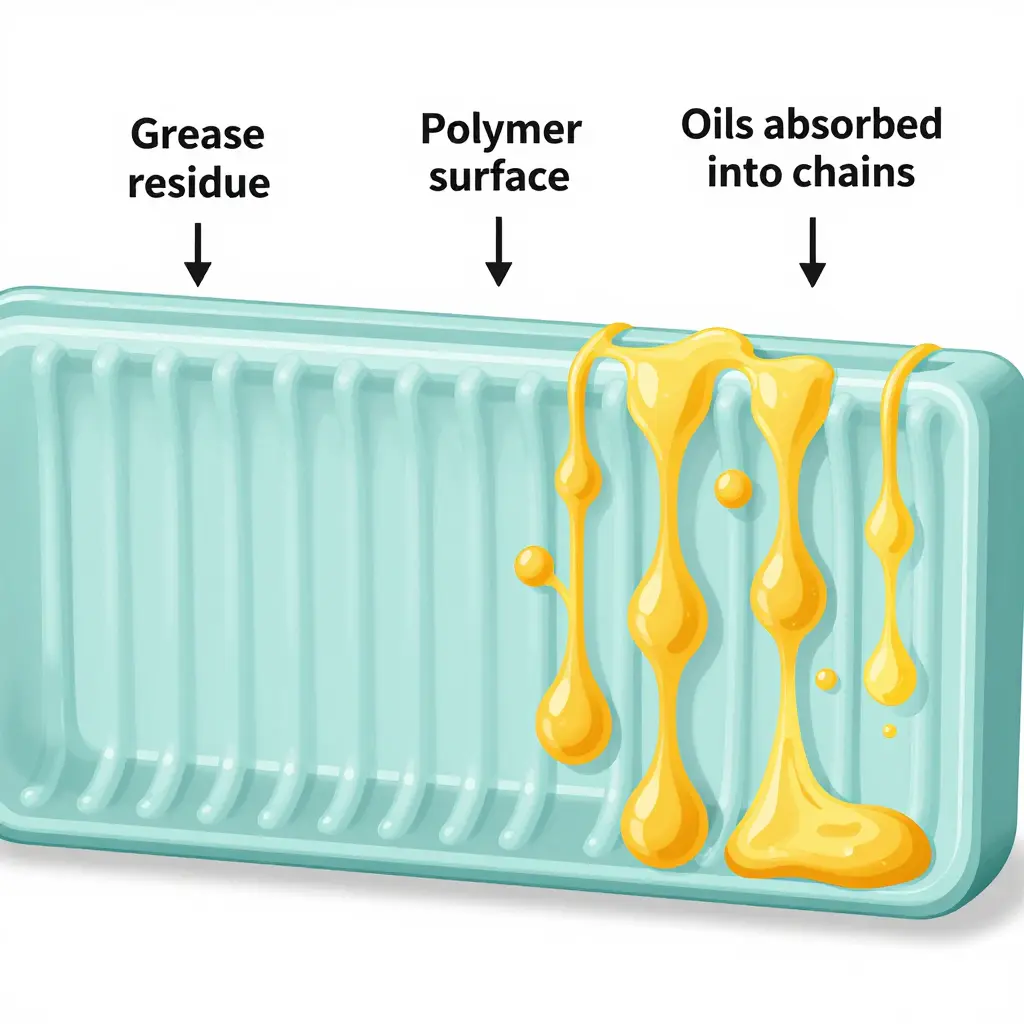
Most surface oil does rinse away, which is why the usual advice is to scrape and rinse rather than scrub. The trouble is residue that has been left to sit. Oil sitting in a tub for a day or two can soak into the surface of softer plastics such as polyethylene and polypropylene, and a quick rinse will not lift all of it. A container can feel “clean” to the touch and still carry enough grease to cause problems downstream.
An MRF does not wash containers. The sorting line that curbside recycling relies on pulls out labels, caps, and loose debris, then bales what is left and sells it. Washing happens later, at a reprocessor, and it adds cost. Oily material arrives at the buyer still carrying its contamination.
That matters because baled plastic is graded and sold on how clean and consistent it is. Grease spreads during handling and compaction, so residue on some containers stains the ones around them and drags down the value of the whole bale. A bale that is too contaminated gets downgraded to lower-grade uses or refused outright, and a refused load often ends up in landfill.
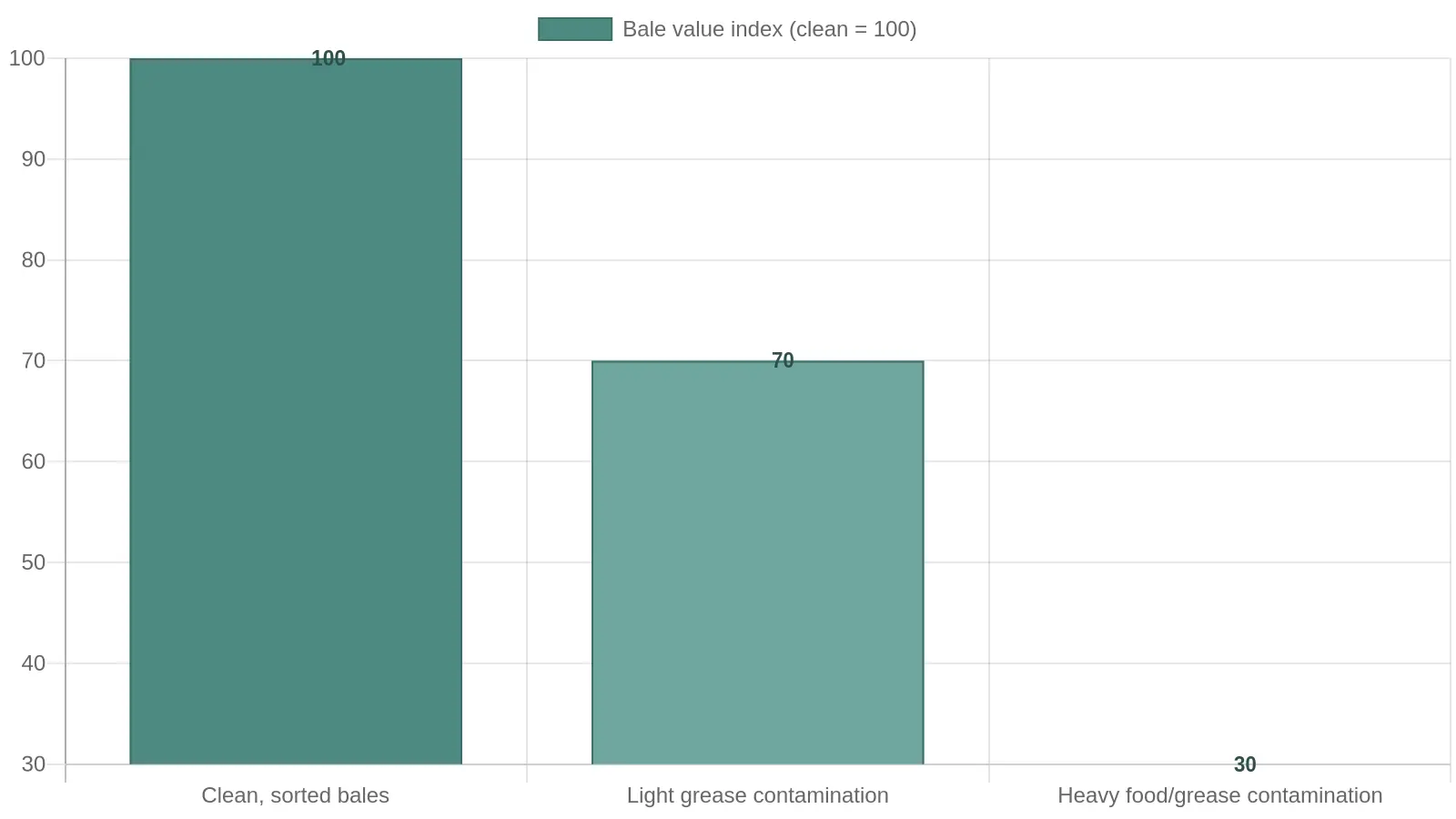
Recyclers resell bales to reprocessors who turn them into new products, so a greasy bale can be downgraded or turned away at the gate. A refused load is often landfilled, the very outcome the recycler was trying to avoid.
“Clean enough to recycle” is not “spotless.” Scrape out the solids, give the container a quick rinse, and most programs will take it. What it cannot be is coated in lingering grease, because that is the contamination that tips a whole batch from “recyclable” into “waste.”
The routine is short: scrape, rinse, let dry, then bin. When grease will not come out, grease-resistant food packaging keeps the material stream clean from the start.
How to prep plastic food containers for recycling
A tub takes about a minute to prepare, and it is the easiest way to keep contamination out of your local materials recovery facility (MRF). Follow this checklist before anything hits the curb.
- Scrape solids into the trash or compost – knock leftovers, rice, and sauces into the bin so the container arrives mostly empty.
- Wipe greasy tubs with a used napkin – a napkin soaks up oil without spending a fresh paper towel.
- Rinse with a short burst of cold water – hot water and soap are unnecessary; a few seconds flushes out the residue.
- Skip the dishwasher cycle – a quick hand-rinse saves far more energy and water than running an appliance for one container.
- Peel off paper labels where possible – paper fibers and adhesive gum up sorting equipment and lower the value of the bale.
- Keep lids with their tubs – in most curbside programs lids and tubs can be recycled together, so snap them back on or drop both in the bin.
- Double-check the resin code – a #1 or #5 tub is usually welcome, while #6 foam and #7 mixed plastics often are not.
- Let the container air-dry upside down – dry plastic discourages mold and keeps your bin lighter for haulers.
- Bin it loose, never bagged – loose items sort better than recyclables stuffed inside a plastic bag.
If you want packaging that is easier to rinse, sort, and replace, look at these recyclable trays and plates built for takeaway food.
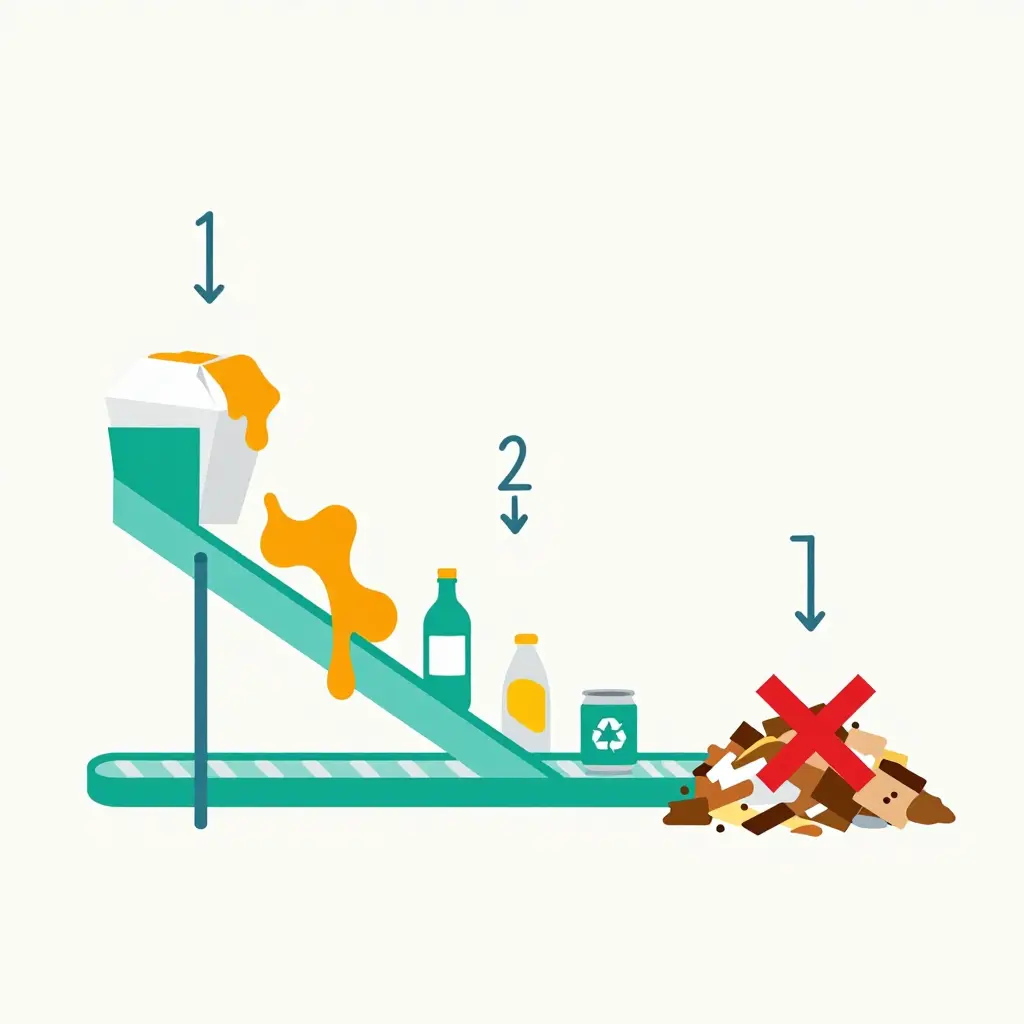
How Grease Contamination Spreads Through a Recycling Stream
The diagram below shows how grease from one container reaches everything else sharing the line.
Layout (left to right):
- Entry – A soiled takeout container carrying oily residue onto a recycling conveyor.
- Spread – Dark grease smears transferring from that container onto neighboring clean bottles, cans, and paper items sharing the same line.
- Rejection – A compressed mixed-recyclables bale marked with a rejection symbol and diverted to landfill.
Elements: flat geometric shapes, thin directional arrows linking each stage, and simple icons (container, conveyor, bale, landfill pile).
Color palette: teal and light gray base, white space, orange/yellow grease accents, a red rejection mark, and green recycling arrows.
The Seven Resin Codes: A Field Guide for Household Recyclers
The resin code is the small number stamped inside a triangle on the bottom of most plastic food containers. It identifies the base polymer, telling your local MRF (materials recovery facility) what material it is handling. The table below is a quick reference; the notes matter as much as the acceptance column.
PET #1 (Polyethylene Terephthalate) – Clear, lightweight, and strong. Commonly used for single-use beverage bottles, water bottles, and some food trays. Highly recyclable and accepted curbside in most regions.
HDPE #2 (High-Density Polyethylene) – Opaque and rigid. Found in milk jugs, juice bottles, and some food tubs. One of the most recyclable plastics and accepted by most curbside programs.
PVC #3 (Polyvinyl Chloride) – Rarely used in food packaging, occasionally appearing in cling films and some containers. Difficult to recycle and not accepted by most curbside programs.
LDPE #4 (Low-Density Polyethylene) – Flexible and soft. Used for plastic bags, wraps, and squeeze bottles. Rarely taken curbside; many supermarkets offer drop-off bins instead.
PP #5 (Polypropylene) – Heat-resistant and sturdy. Common in yogurt cups, margarine tubs, bottle caps, and takeout containers. Increasingly accepted curbside, but local rules vary.
PS #6 (Polystyrene) – Includes rigid foam (often called Styrofoam) and clear clamshells. Used for egg cartons, meat trays, and takeout clamshells. Rarely recyclable curbside and a frequent contamination source.
OTHER #7 (Mixed/Other) – A catch-all for polycarbonate, PLA, and layered plastics. Often found in compostable and multi-material food packaging. Recycling options are limited and typically not curbside.
Even rigid plastic cups used for cold drinks carry these codes, which is why checking the number matters before you decide how to dispose of them.
| Resin Code | Common Food Packaging Use | Typically Recyclable Curbside? | Notes |
|---|---|---|---|
| #1 PET (PETE) | Water and soda bottles, some clamshells | Yes – widely accepted | Clear and rigid; empty and rinse, and check whether caps stay on |
| #2 HDPE | Milk jugs, juice bottles, yogurt tubs | Yes – widely accepted | Opaque and rigid; one of the easiest plastics for most MRFs |
| #3 PVC (V) | Cling film, deli wrap, some oil bottles | No – rarely accepted | Contaminates other streams; look for a specialty drop-off |
| #4 LDPE | Bread bags, grocery bags, squeezable bottles | No – rarely accepted curbside | Usually film, not rigid; take to a store drop-off bin |
| #5 PP | Yogurt cups, butter tubs, takeout containers | Sometimes – increasingly accepted | Growing acceptance; check locally before tossing |
| #6 PS | Foam clamshells, cups, and trays | No – rarely accepted | Foam crumbles easily; banned or restricted in many cities |
| #7 OTHER | Mixed plastics, some rigid containers | No – rarely accepted | Catch-all category; relies on niche drop-off programs |
A resin code is an identifier, not a guarantee of acceptance. A number on the bottom does not mean your local program actually recycles that plastic, and curbside rules vary widely by region. Check your municipality’s current accepted list before placing a container in the bin.
Before you toss that container, whether it is a greasy takeout tub or a disposable plastic cup, it helps to know which resin code your local facility actually wants. The little number inside the chasing arrows is the best clue to whether it belongs in your bin.
These labels describe typical programs only. Confirm the accepted resin codes and preparation rules with your local material recovery facility (MRF); what your neighbor’s city takes may not match your own.
What Your Local MRF Actually Accepts
Every materials recovery facility sets its own list of accepted items, and that list decides whether your plastic food containers get recycled or quietly head to landfill. No single national rule applies. A local MRF takes a container only when it can sort it and sell it.
Sorting Equipment Decides a Lot
A modern MRF runs optical sorters, magnets, eddy-current separators, and human pickers, and the equipment is usually tuned to specific shapes, sizes, and resins. A facility built to capture PET bottles and HDPE jugs may not be set up for clamshells, cups, or dark microwave trays. If a container tumbles off the belt without being captured, the MRF cannot process it, even when it looks perfectly recyclable.
End Markets and Regional Buyers Call the Shots
Recycling is a business. An MRF recycles only what it can sell to a buyer, such as a regional processor or a manufacturer that turns flakes and pellets into new products. Strong demand for a resin or a color pulls more containers onto the accepted list; when a buyer walks away, whole categories can disappear from your program. Markets and regional buyers, not good intentions, shape what your bin allows.
Why Programs Differ From Town to Town
Because sorting equipment and buyers vary by region, a container accepted in one community may be rejected in the next. Two towns an hour apart can run completely different rules for tubs, cups, and takeout clamshells. That is not an oversight. Each MRF answers to its own machinery and its own markets.
How to Check Your Own Program
Rules shift, so a quick check beats guessing. Three ways to find the answer:
| Method | What to Do |
|---|---|
| Municipal website | Search your city’s recycling page for accepted plastics and resin codes. |
| Recycling app | Use your council’s app or a tool like Recycle Coach for a fast answer. |
| Quick call | Phone your local MRF or public works office and name the exact item. |
When in doubt, leave it out and reuse it instead. If you would rather skip the guesswork entirely, compostable paper food trays sidestep the plastic sorting question.
Chart Brief: Top Contamination Sources in Curbside Recycling Streams
Chart type: Doughnut (55% cutout, white slice borders at 3px)
Purpose: Rank the most common contaminants found in curbside recycling streams, with food residue and grease leading, to reinforce why greasy plastic tubs drive so many rejections.
Data series (label – illustrative share of contamination by weight; actual shares vary by program and study):
| Label | Value | Slice Color |
|---|---|---|
| Food residue & grease contamination | 38% | #E8A33D (warm amber) |
| Non-recyclable plastics | 24% | #6B8CAE (slate blue) |
| Bagged recyclables | 18% | #4FA88B (muted teal) |
| Tanglers (hoses, cords, string lights) | 9% | #D9765A (soft coral) |
| Other materials | 11% | #C9C4B8 (neutral beige) |
Legend: Positioned to the right, using circular point-style markers, each label shown with its percentage in parentheses.
Labels: Percentage values rendered in bold white directly on each slice for instant readability.
Caption: Food residue and grease are among the largest contributors to curbside contamination, which is exactly why rinsing plastic tubs before binning them matters.
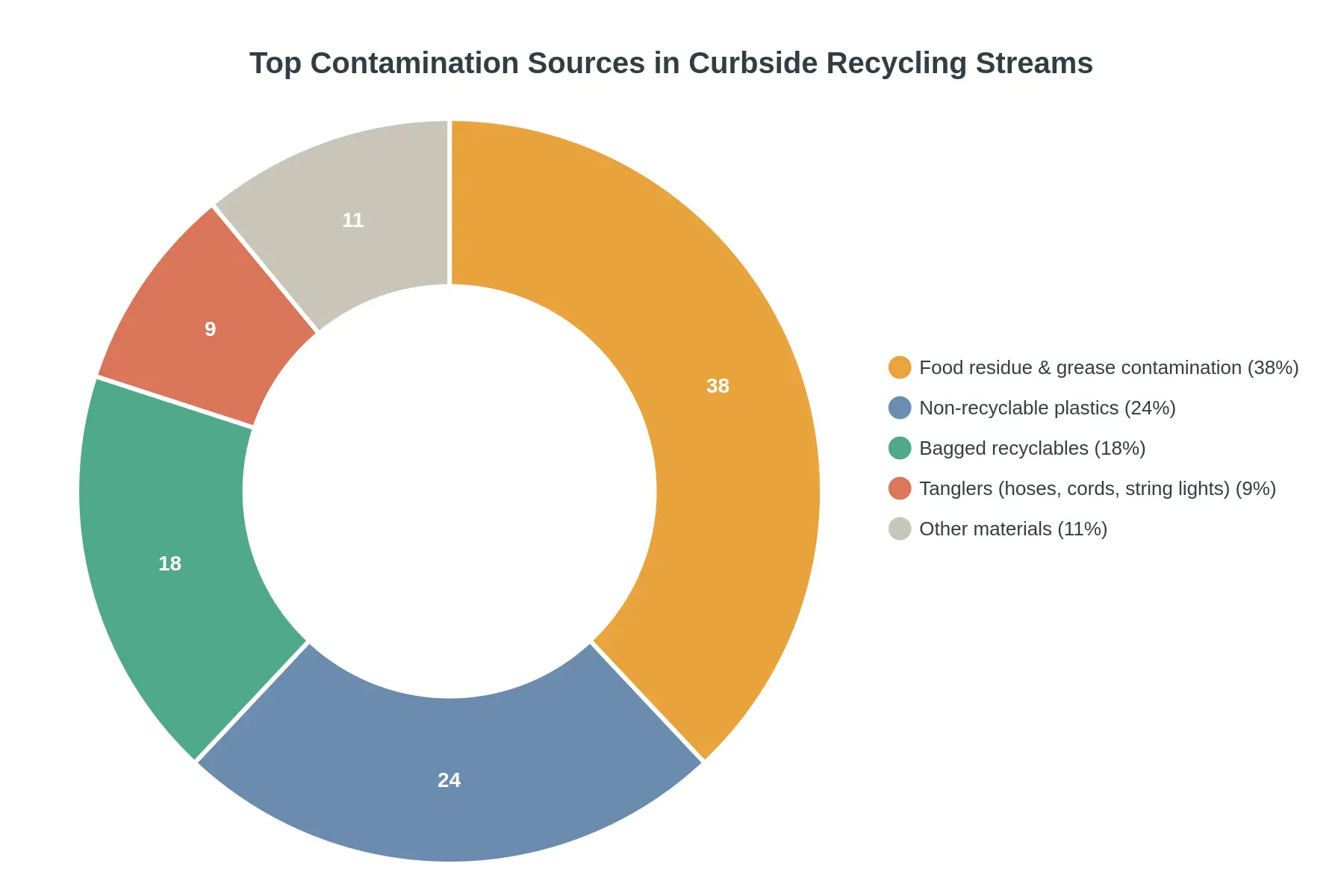
Why this supports the grease-contamination discussion: Making food residue and grease the dominant slice turns a general warning into a concrete picture. Readers can see that grease is not a minor footnote but a leading cause of rejected loads, which motivates the scrape-and-rinse habit. If you’re setting up a low-waste kitchen or packing station, choosing food trays made from compostable materials can also reduce the greasy plastic entering your bin.
Sustainable Alternatives That Cut the Need to Recycle Greasy Tubs
The surest way to keep greasy plastic out of the waste stream is not to create it. If food never touches a tub, there is no oily film to rinse and no guess about whether your local facility will take it.
Reusable containers come first
A durable lunchbox or bento-style box replaces hundreds of single-use tubs over its life. Pack leftovers, sauces, and noodles in a washable container and the recycling question disappears. Keep a set of reusable food plates on hand for eating on the go, and you rarely need a disposable at all.
Compostable fiber for the meals you can’t pack
When a disposable really is easier, molded fiber is the practical pick. Bamboo pulp products are pressed from fast-growing bamboo, hold hot and oily foods without leaching, and break down in commercial compost instead of sitting in a landfill for decades.
Paper packaging that survives grease
Paper-based food packaging has caught up. Paper food trays and sturdy takeaway boxes use thin plant-based coatings rather than wax or plastic film, so they carry saucy meals and still fit many recycling and composting streams.
We manufacture and supply disposable tableware and packaging, and we design each item around safety, durability, and easier disposal. The goal is not more things to throw away, but better ones that are easy to reuse, compost, or recycle cleanly.
Quick Decision Flowchart: Does Your Container Belong in the Bin?
Two questions settle most cases at the curb. Run your yogurt tub or takeout box through them before you toss it.
Image-generation brief
- Layout: Left-to-right flow on a clean white background, single row of decision logic.
- Entry node: A small light-gray rounded rectangle marking the starting point.
- Gate 1 (decision diamond, navy blue outline): Represents the resin-code check. Two black arrows branch out: an upward-right path continues the flow, a downward path drops straight to the reject box.
- Gate 2 (decision diamond, navy blue outline): Represents the clean-and-dry check. From here a green arrow leads right into the accept box, while a red arrow leads down into the reject box.
- Terminal nodes: A green rounded rectangle (accepted for recycling) and a red rounded rectangle (goes to landfill).
- Arrows: Thick, clean, straight black arrows only; green and red arrows used solely for the final accept/reject outcomes.
- Style: Flat simple geometric shapes – rounded boxes, diamonds, and arrows only. No realistic scene, no gradients, no drop shadows.
- Color palette: White background, light gray, navy blue outlines, green for the accept path, red for the reject path.
- Text rule: No text, letters, or numbers anywhere in the image.
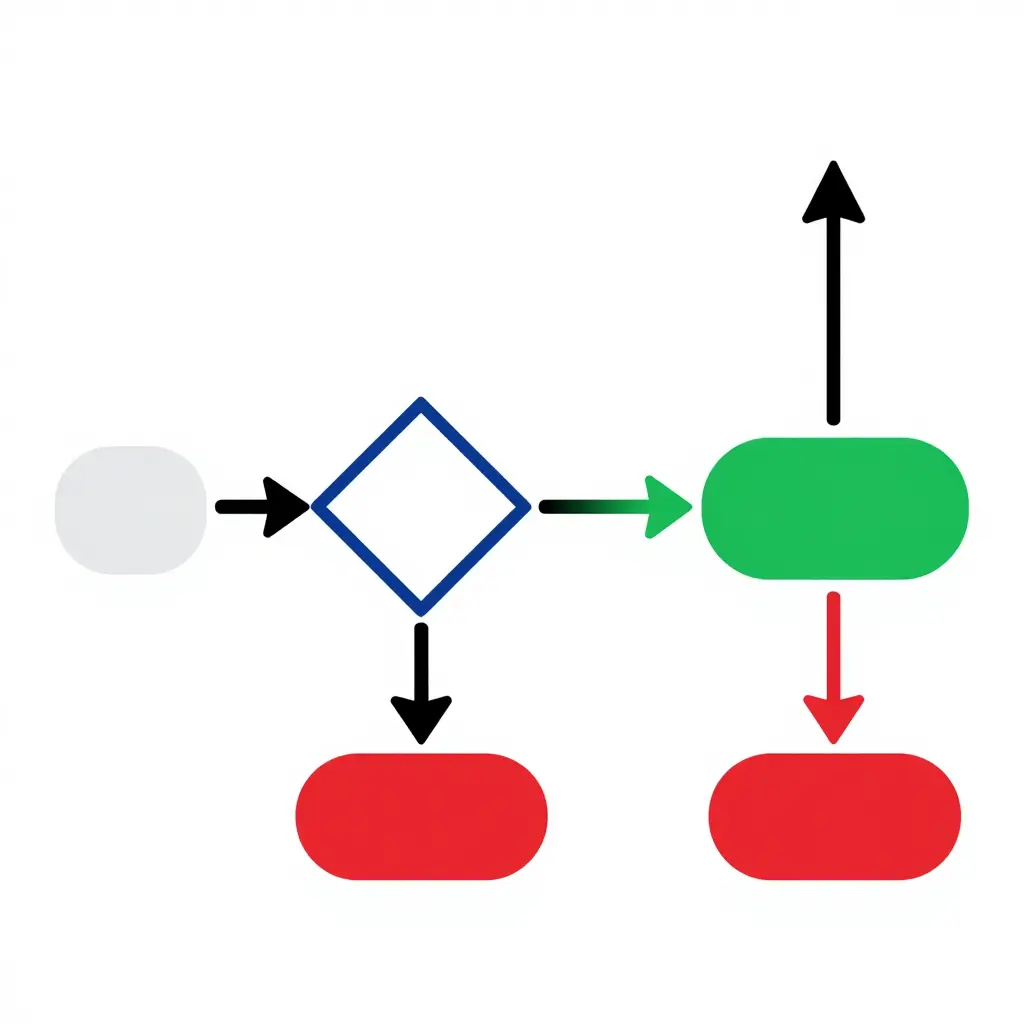
Clear both gates and the container earns a spot in the bin. Fail either one and the safer choice is the trash. Swapping in a reusable or fiber-based alternative removes the decision entirely.
Frequently Asked Questions About Recycling Plastic Food Containers
Can I recycle a greasy pizza box or food tub?
A pizza box soaked with oil and cheese is trickier than it looks. Grease weakens paper fibers and can contaminate a batch at the mill, so a heavily soiled box usually belongs in the compost or the trash. If only the base is stained, tear off the clean lid and recycle that portion instead. Rigid plastic tubs are more forgiving, but scraping them first keeps grease out of the stream.
Do I need to wash containers until they are spotless?
No – “clean enough” is the standard. Empty and scrape the container, then give it a quick rinse so no food is left behind. Hot water, soap, and a spotless shine are not required, and scrubbing until a container sparkles wastes water and energy without making the plastic any more recyclable.
Does the number on the bottom mean it is recyclable?
Not exactly. The number is a resin code that identifies the plastic type, not a promise that your program accepts it. Codes 1 (PET) and 2 (HDPE) are widely recycled curbside, while 3 through 7 are often excluded. Match the code to your local MRF’s accepted list.
What about black plastic and clamshells?
Black plastic is one of the hardest materials to recover because optical sorting machines cannot detect it, so it often ends up in landfill even when it goes in the bin. Clear clamshells are sometimes accepted, but many facilities reject them because of their shape and resin type. When in doubt, leave them out.
Can lids stay on?
Yes for plastic – keep lids and caps screwed on, since loose items fall through sorting equipment and become litter. Make sure the lid is larger than a credit card so it does not slip through the screens. Metal lids from glass jars are the exception; remove those and recycle them separately.
Where can I find my local MRF rules?
Start with your city or county recycling website, which lists exactly which plastics your material recovery facility (MRF) accepts. You can also check tools like How2Recycle or Earth911 and search by ZIP code. Once you know the local rules, you can recycle plastic food containers with confidence, or switch to recyclable food trays when curbside options are limited.