
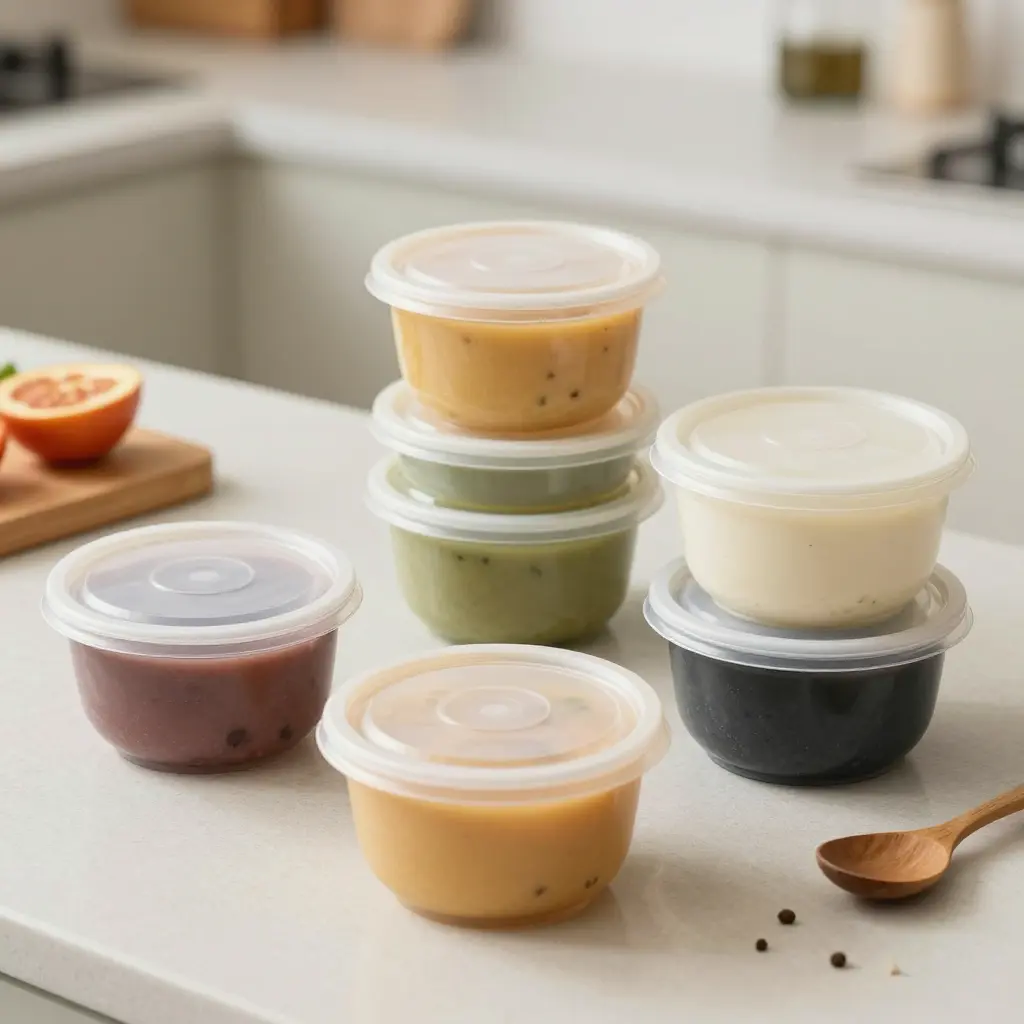
Introduction: Why Your Lids Dome and Pop Loose, and How to Fix It Before You Order
If you freeze soup in freezable disposable soup containers with lids and the lids dome upward or pop loose once the soup solidifies, the cause is physics, not bad luck. Soup is mostly water, water expands as it turns to ice, and the expanding liquid pushes outward with nowhere to go. With no headspace above the fill line, that force lifts the lid, creating a lid dome, and on weaker rims it will pop loose entirely. The fix is to order a container whose capacity leaves room for the expansion and to fill it to a measured line.
This guide is for food service professionals and bulk buyers — restaurant, deli, catering, meal-prep, and ghost kitchen operators — who need packaging that comes out of the freezer without leaks, cracks, or blown lids. Below: why expansion pushes lids up, how much headspace different container shapes and sizes need, and which specifications to confirm before you commit to a bulk order. If you would rather compare formats first, start with our freezer-ready disposable bowls and lidded containers.
The Science of Freezing Expansion: Why Water in Soup Pushes Back
Fill lines, headspace, and locking lids all come back to one fact: water expands when frozen. Once that is clear, a lid that domes overnight stops looking like a mystery.
A Rigid Lattice Demands More Room
Whatever is in the pot — soup, stew, broth — is mostly water. As a liquid, those water molecules tumble freely past one another and pack together tightly. Drop the temperature below freezing and that freedom ends: the molecules lock into a rigid, open hexagonal lattice, and that crystal framework takes up more space than the same molecules did as a liquid. Nothing has been added. The water has simply rearranged itself into a roomier, ordered cage.

Inside a sealed container, that growth follows a predictable sequence:
- The outer edges freeze first and grip the container walls.
- The center freezes last, expanding outward as it locks into the lattice.
- With nowhere to escape, the growing ice presses against the lid rather than the walls.
- The lid either domes upward or pops loose to relieve the pressure.
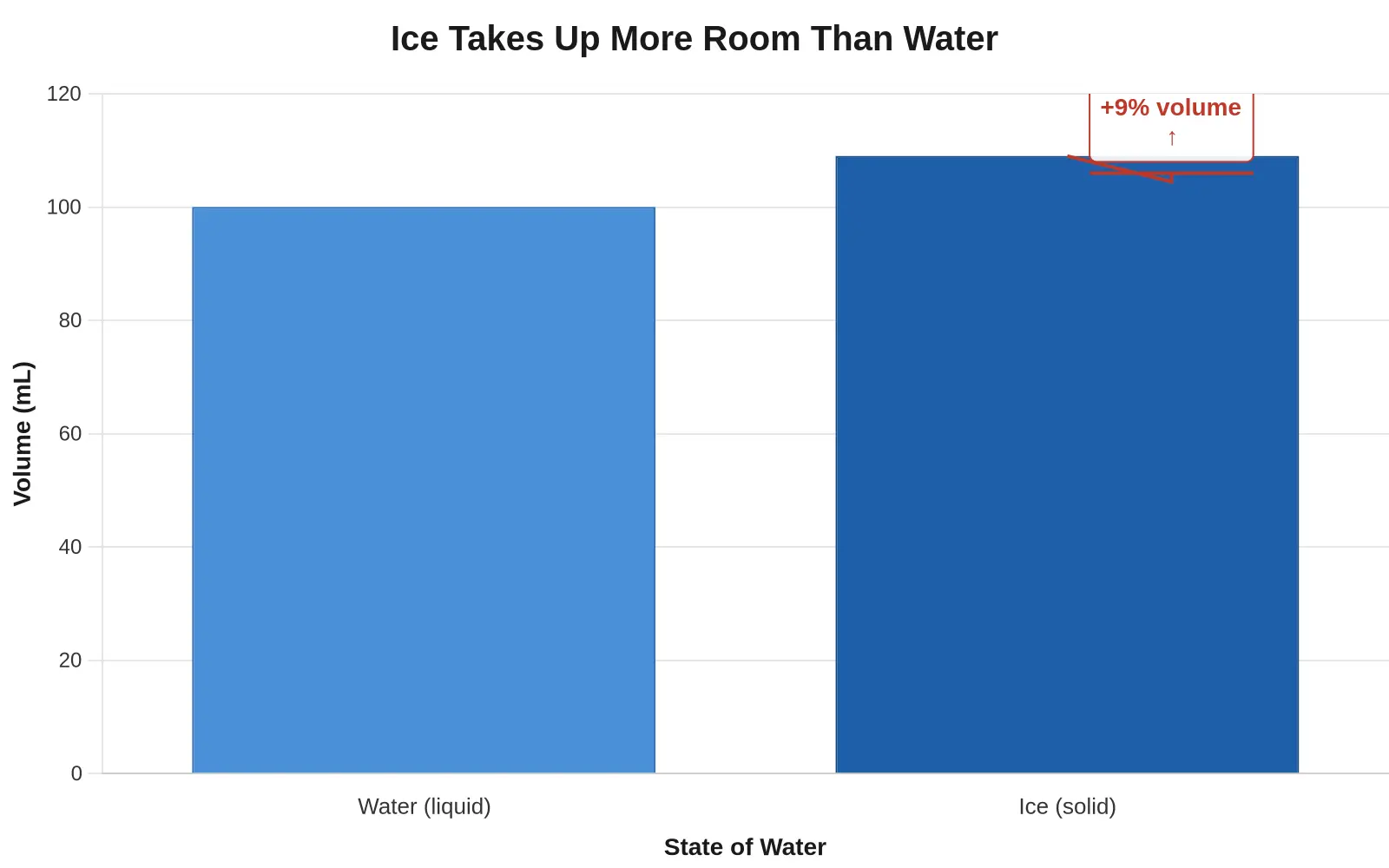
Roughly 9% More Volume
Ice takes up roughly 9% more volume than the water it formed from. That sounds modest until you scale it up. A high water content soup freezes almost exactly like plain water, because its bulk is water, and foods with high water content expand proportionally. A 32 oz portion can therefore need nearly 3 oz of extra room once it freezes solid — space a filled-to-the-brim container does not have.
Expansion Is the Root Cause of Lid Failure
Put those two facts together and the conclusion is hard to avoid: ice expansion is the root cause of lid failure. The lid is not defective, and the container is not too flimsy. The frozen contents demand more room than the package holds. That is why experienced buyers pair disposable soup containers with lids with measured headspace, never with a full pour.
Why Lids Dome, Then Pop Loose
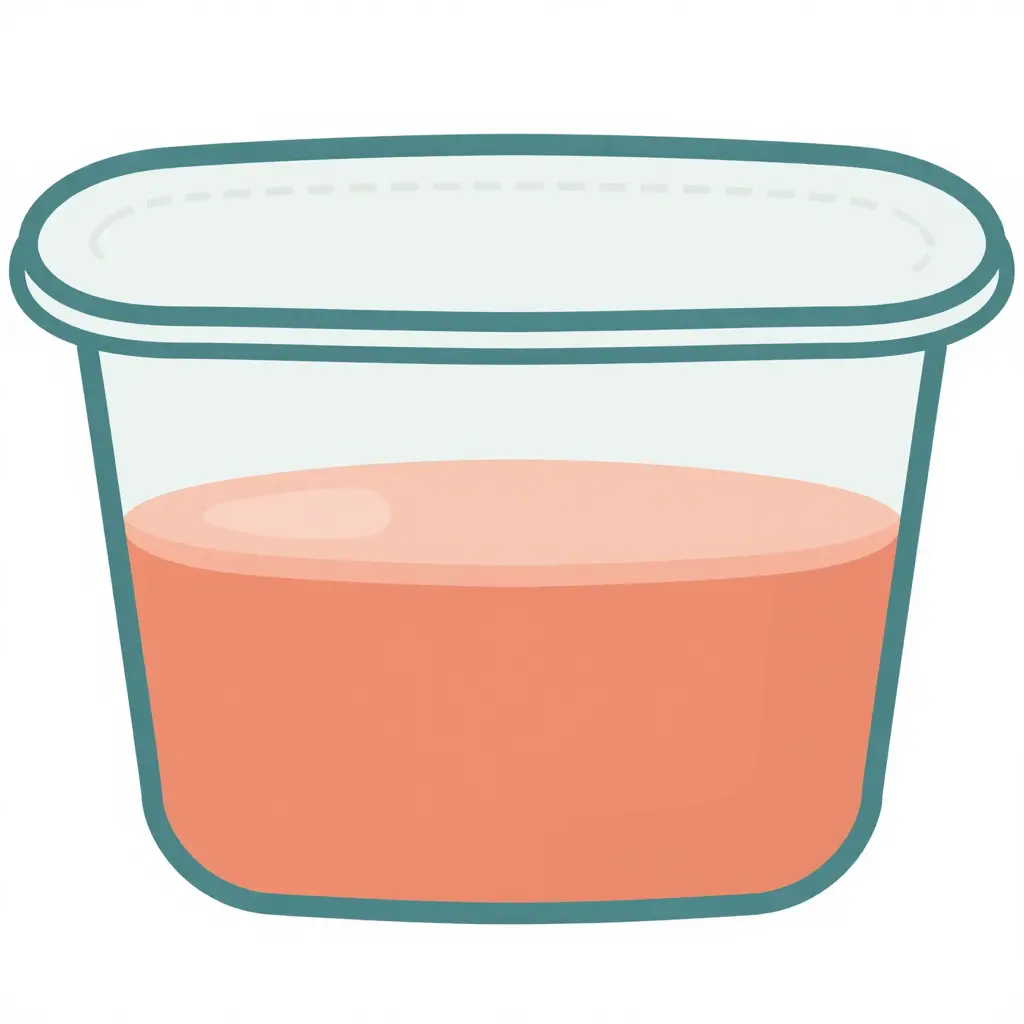
Fill a container past its headspace and it stops acting like a bowl and starts acting like a sealed pressure vessel.
As the soup freezes, trapped air and forming ice push upward against the lid. There is nowhere for that force to go, so the lid bows into the visible dome. Keep filling and the internal pressure keeps climbing until it exceeds the grip holding the lid in place. At that moment the seal releases and the lid pops loose. Headspace, lid design, and fill level together decide which of those happens.
This is not abstract physics. It is the failure mode buyers of freezable soup containers with lids see in real kitchens: frozen stock arriving dented, domed, and leaking, with the customer blaming the product. Matching headspace to your specific round bowls or square tubs before you order is what prevents it.
If you want lids to stay sealed through a full freeze-thaw cycle, the number to pin down before ordering is headspace — the empty air gap at the top of the container. As soup freezes, its water content expands by roughly 9% by volume, pushing the surface upward. Leave too little room and the ice shoves the lid up until it domes and pops. Leave too much and you waste capacity, invite freezer burn, and give the contents room to slosh in transit.
Use the table below to match headspace to the format you are buying. Treat the percentages as a reliable starting point, then fine-tune against your actual recipe, fill temperature, and freezing method.
Recommended Headspace by Container Type and Fill Level
| Container Type | Typical Capacity | Recommended Fill Level | Minimum Headspace | Best Use Case |
|---|---|---|---|---|
| Small round soup bowl | 12 oz (355 ml) | 10-10.5 oz (300-310 ml) | ~1.5 oz / 10-12 mm (about 12-15% of volume) | Single-serve soup, cup-a-soup, a side soup paired with a sandwich or salad |
| Larger round soup bowl | 24 oz (710 ml) | 20-21 oz (590-620 ml) | ~3 oz / 15-18 mm (about 12-15% of volume) | Entree soup, chowder, ramen, and generous single portions |
| Rectangular soup container | 32 oz (950 ml) | 27-28 oz (800-830 ml) | ~4 oz / 18-20 mm (about 12-15% of volume) | Meal-prep portions, layered stews, deli-style soup, and bulk single servings |
| Square bowl | 26 oz (770 ml) | 22-23 oz (650-680 ml) | ~3 oz / 15-18 mm (about 12-15% of volume) | Compact freezer stacking, grain bowls, and thick pureed bisques |
| Paper bucket / bowl | 16 oz (470 ml) | 13-14 oz (390-410 ml) | ~2 oz / 15 mm (about 12-15% of volume) | Takeout soup, noodle bowls, cold-set soups, and street-food service |
How to read this at a glance: fill any soup container to roughly 85-90% of its total volume, leaving the remaining 10-15% empty as headspace. That gap gives expanding ice somewhere to go without levering the lid off its seat. On the round soup bowls most operators default to, that works out to about 10-12 mm below the rim on the small size and 15-20 mm on the 24 oz and 32 oz formats — the same 10-15% of volume, just measured against a wider bowl.
A few practical reminders that keep the numbers honest:
- Measure headspace after the soup has chilled, not while it is hot. Hot soup sits slightly higher in the container, so a gap measured on a hot fill is not the gap you will have in the freezer. Check the level again once the soup is cold.
- Domed lids buy you extra room. If your chosen container ships with a domed lid rather than a flat one, you can often reclaim 5-8% of usable capacity without risking a pop.
- Thicker soups need more headspace. Chunky stews and starch-heavy chowders trap air and freeze unevenly, so stay toward the upper end of the 12-15% range.
- Consistency across formats is what prevents returns. Standardizing on one fill percentage per container size lets your team eyeball portions fast and keeps every lid seated the same way.
Choosing the Correct Fill and Headspace Level
One rule should govern every order of freezable disposable soup containers with lids: never fill to the rim. Pouring soup right up to the top is the single most common mistake behind domed lids and messy, popped-open packaging. The empty room you leave behind — the headspace — is not wasted space. It is a working buffer, and it is the reason lids stay sealed.
Here is why. When soup freezes, the water inside expands, and that growing volume has to go somewhere. Pack the container full and the expanding ice pushes straight up against the lid, bows it upward, and eventually forces it off. Headspace absorbs the volume created by ice expansion, giving the soup room to rise without pressing on the lid. No gap means no give, and the pressure finds the weak point every time.
As the table above shows, the recommended air gap in millimeters widens as containers grow larger, while the share of volume it represents stays roughly constant at 10-15%. Bigger vessels leave a deeper gap and hold more soup; the percentage barely moves.
To turn that science into a rule you can apply on the line, leave a measurable air gap between the soup surface and the rim before sealing — 10-20 mm depending on bowl size, about a finger-width. Measure it instead of eyeballing it. Matching your fill level to the container size is the most reliable way to prevent lid pop, whether you are buying small cups or large round soup containers.
The chart below makes the fill-level tradeoff hard to argue with. When a freezable soup container is filled to the rim, the lid failure and pop-loose rate climbs to roughly 55% — more than half of all units doming or springing open after a freeze-thaw cycle. Drop the fill to 95% and failures fall to about 38%. The real inflection point sits at 90% filled: failures drop to 18%, and by 85% filled they collapse to 6%. At 80% filled, the failure rate bottoms out near 3%.
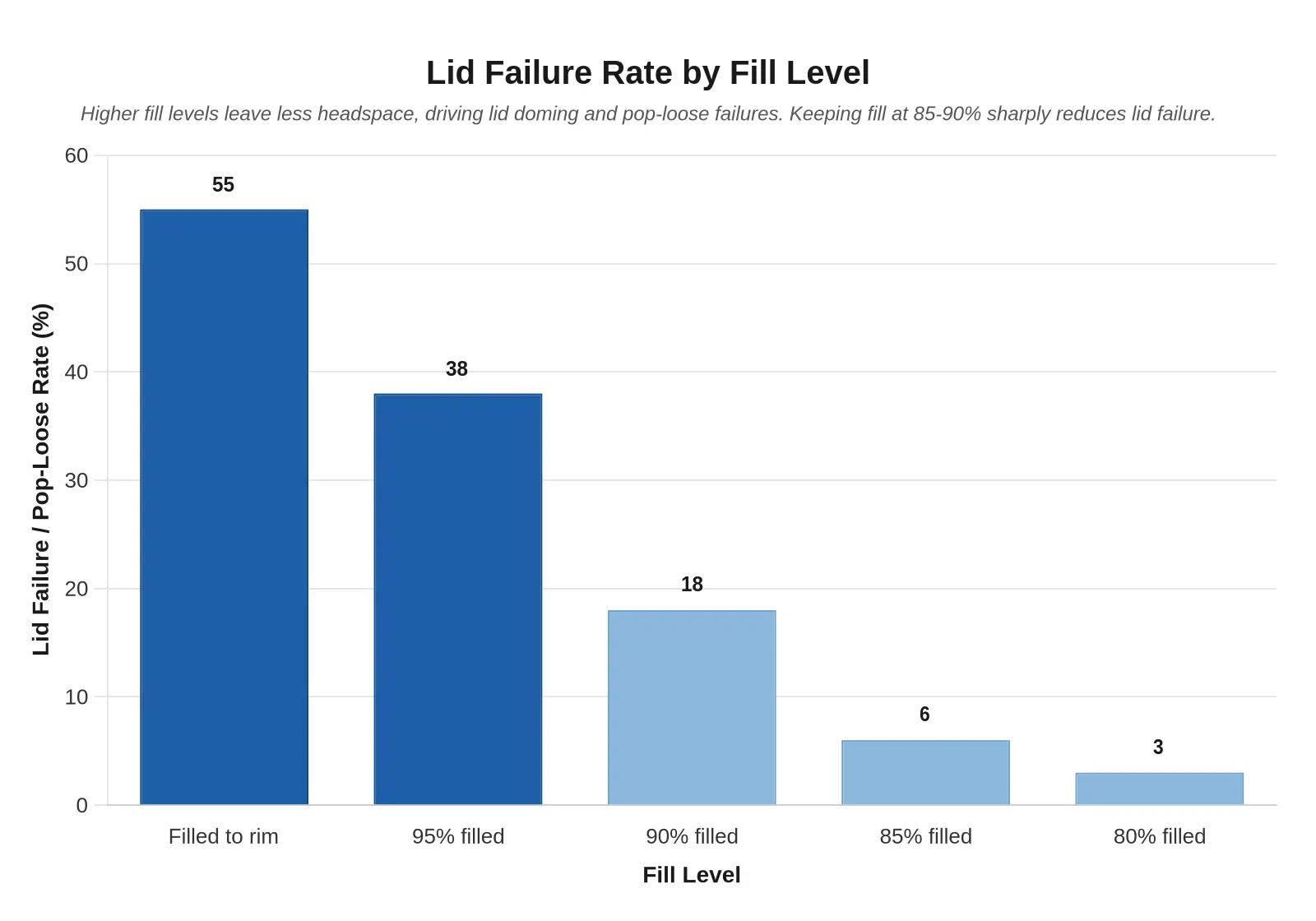
The pattern points to a clear operational rule: leave headspace. Each additional percent of soup you push toward the lid shrinks the air cushion that absorbs the roughly 9% volume expansion water undergoes as it freezes. Remove that cushion and expanding ice has nowhere to go but up, doming the lid, stressing the seal, and eventually popping it loose. Locking your fill at 85-90% keeps headspace in the safe zone while still delivering a full-looking, sellable portion.
Quick takeaway: the difference between a 90% fill and a rim fill is roughly a 37-percentage-point swing in lid failures. That is the single biggest lever you control before you ever place a packaging order.
Filling and Sealing: A Best-Practices Checklist
Fill and seal freezable soup containers correctly and you eliminate the domed, popped lids, cracked seals, and freezer leaks that waste product and frustrate customers.
- Cool the soup to room temperature or below before filling. Sealing soup while it is hot traps steam under the lid, and that steam condenses into a wet film that weakens the seal and leaves thin plastic soft.
- Leave the recommended headspace at the top of every container — roughly 1/2 inch (12 mm) for thin, watery soups and up to 1 inch (25 mm) for dense, chunky, or starch-heavy soups.
- Fill cooler, denser soups with more headspace than watery ones, since thick soups freeze unevenly and build more internal pressure against the rim.
- Never overfill: pouring to the brim leaves no room for ice expansion and all but guarantees the lid will dome and lift.
- Wipe the rim and the inner sealing channel completely dry and clean so the lid can grip and seat properly.
- Seal the lid by pressing it fully around the entire rim, working from the center outward in a circle until it clicks into every groove.
- Confirm the lid sits flush and even on all sides, because a single lifted section is the first sign of a weak seal.
- Use containers sized to the portion rather than oversized ones half-filled with air, since trapped air accelerates lid lift.
- Stack or support filled containers in flat, level layers, and never stack heavy containers on lidded ones while the base is still warm.
- Freeze containers upright on a level shelf with space between them so cold air circulates and residual expansion stays even.
- Keep containers away from the freezer wall and fan, where uneven freezing can warp lids.
- Label and date each container, then do a quick lid press-down check after 24 hours to catch leaks before they start.
Treat this as your checklist: cool, leave headspace, seal the lid with a full rim press, support the stack. Containers handled that way come out of the freezer sealed, leak-free, and ready to sell.
Why Lids Dome and Pop Loose: The Freezing-to-Lid-Pop Process
The diagram below traces the cause-and-effect chain from filling to failure, moving left to right through four stages: soup is filled into the container, the lid is sealed on, freezing triggers expansion, and the growing ice volume finally domes the lid upward until it pops loose.
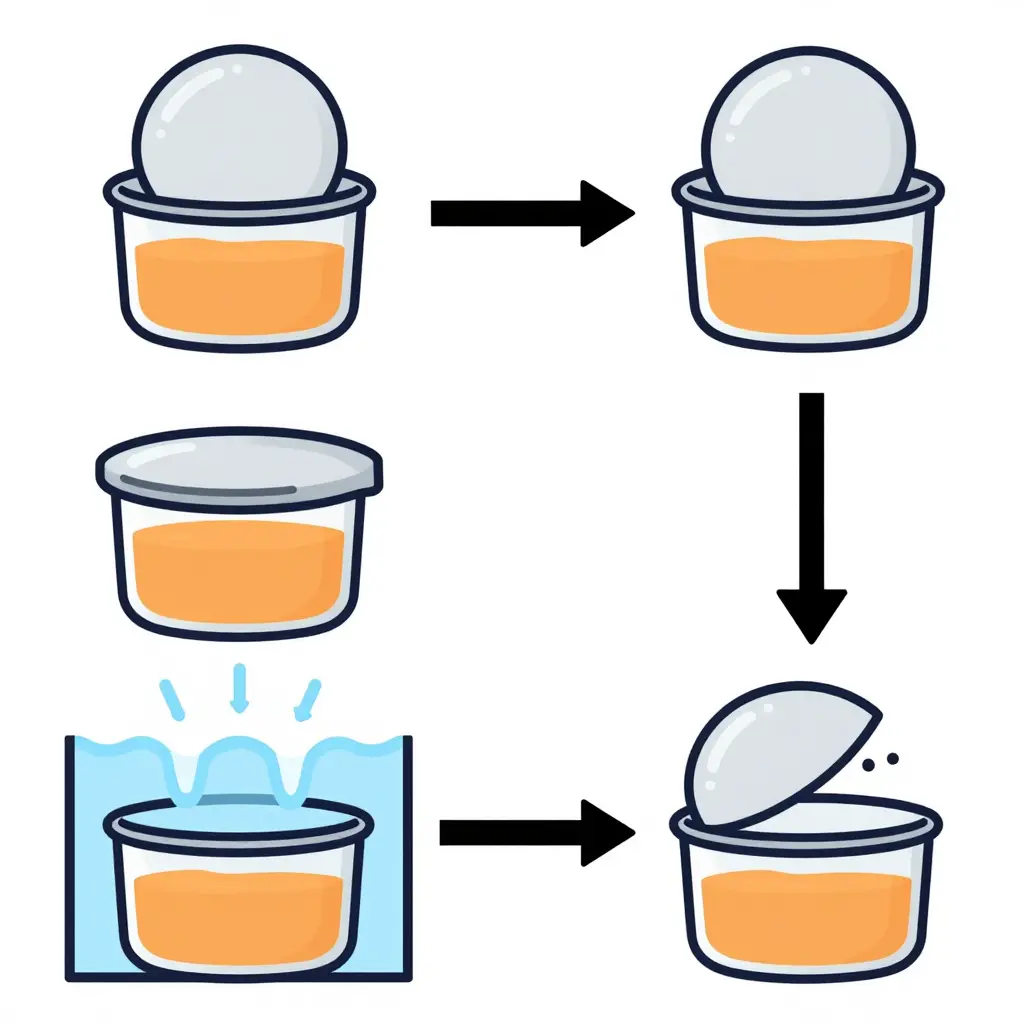
Each stage feeds directly into the next. Freezing is the pivot point: once the water in the soup turns to ice, it expands, and that expansion has to go somewhere. With no headspace to absorb it, the force travels upward into the lid.
Frequently Asked Questions: Freezing Soup in Disposable Containers
These are the questions buyers ask most often before ordering freezable disposable soup containers with lids. They all come back to how water, air, and plastic behave in a freezer.
How much headspace should I leave when freezing soup?
About 0.5 inch (roughly 1 cm) of headspace for shallow containers and up to 1 inch (2.5 cm) for deep or tall ones. Water expands by roughly 9% as it turns to ice, so the soup needs room to rise without pressing on the lid. Under-filling wastes capacity; over-filling guarantees a blowout. When in doubt, give it a little more room.
Why did my lids dome and pop loose?
A lid dome and a pop loose both come from expansion. As the soup freezes from the outside in, trapped air and the last liquid to solidify push upward against the center of the lid, forcing it into a dome until the seal fails. The cure is straightforward: more headspace, and let the soup cool before you lid it.
Can I refill to the rim if the soup is thin?
No. Thin, watery soups are the biggest offenders for lid dome and blowouts because they freeze faster and more uniformly, driving more pressure straight up. Filling to the rim leaves zero headspace, so expanding ice has nowhere to go but into your lid. Even when the soup looks settled, stop below the fill line. If you want tighter, freezer-ready options, browse our rectangular containers with secure lids.
Do certain lid styles hold better against freezing?
Yes. Flat snap-on lids with a deep skirt and a positive lock resist a pop loose far better than thin friction-fit lids, because they grip the rim across a longer contact area. For heavy freezer rotation, choose freezable disposable soup containers with lids rated for low temperatures so the plastic stays flexible instead of cracking.
Should I cool soup before lidding and freezing?
Always. Cooling to room temperature before the lid goes on cuts the steam and condensation that weaken the seal. Trapping heat under a lid creates a warm pocket that softens plastic and invites a lid dome once freezing starts.
In practice: match headspace to container depth, cool before lidding, and pick lids that lock. That combination keeps seals intact and lids flat in the freezer.
The Bottom Line: Match Headspace to Freezing Reality
Every point in this guide traces back to one physical fact: water expands as it freezes, and soup is mostly water. That expansion pushes upward against the lid, and when the fill level leaves too little headspace, the pressure has nowhere to go. The result is the familiar sequence: a lid that domes, then pops loose, exposing the contents to freezer burn and leaks. The same chain plays out across container shapes, volumes, and freezing speeds, which is why the takeaway is so direct: the size of the gap at the top decides whether your lids stay sealed.
For buyers, that chain turns into a single rule. Before committing to bulk orders of freezable disposable soup containers with lids, confirm the recommended headspace and fill level for frozen use — not just hot fill — by checking specs on products such as our round soup containers. Settle that specification up front, because the cheapest container is the one that never fails in the freezer. Freeze expansion is inevitable; lid failure is a purchasing decision.